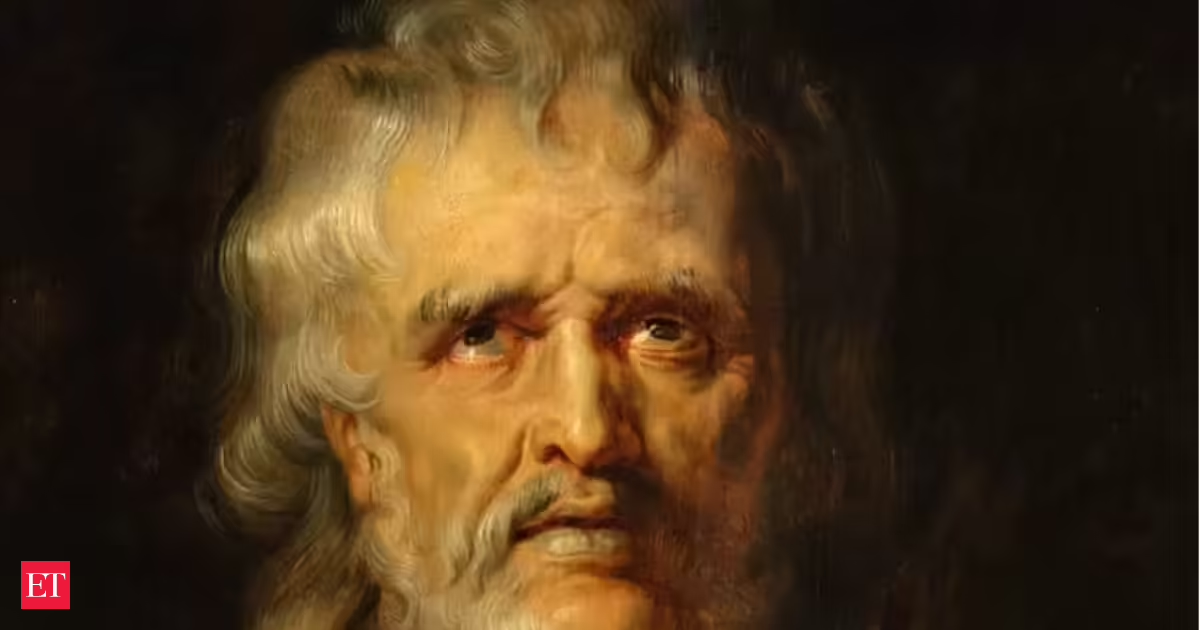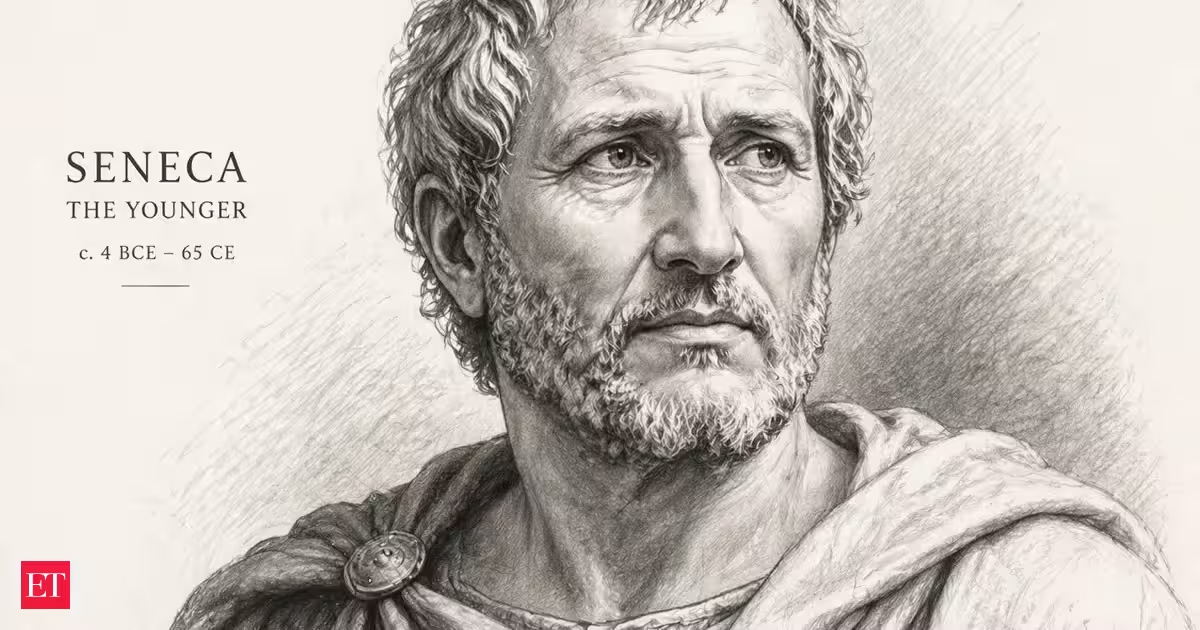
In today’s reflection from ancient Stoic philosophy, a well-known thought attributed to Roman thinker Seneca the Younger continues to be widely discussed for its focus on discipline, responsibility, and self-development. The idea connects personal effort with the kind of life a person ultimately experiences, and it is often linked to Seneca’s writings on fate and human character, especially in his work On Providence (De Providentia).The quote of the day goes: “You cannot ask fate for the life you want while neglecting the man who must deserve it.”The line has remained popular because it brings attention to a simple tension many people deal with: wanting better outcomes in life while not putting in the internal effort required to change habits, mindset, and behavior. It reflects a core Stoic belief that external outcomes are not fully in our control, but personal actions and discipline are.The idea behind the quote is closely tied to personal responsibility. It suggests that people often focus on results—success, stability, recognition, without paying enough attention to the internal growth needed to reach those results. In that sense, the “life you want” is not separate from the “person you are becoming” in the process.It also points to a Stoic way of thinking where fate or external circumstances are not the main deciding factor. Instead, what matters more is how someone behaves daily, how they handle challenges, and whether they are building the kind of character that can handle the future they are asking for.Another way to understand it is through consistency. The quote quietly highlights that change is not instant. If someone keeps wishing for a different outcome but continues with the same patterns, nothing really shifts. The gap between desire and discipline is what Seneca is pointing at here.Seneca and His Stoic PhilosophySeneca the Younger was one of the most important figures of Stoic philosophy in ancient Rome. He is known for turning philosophical ideas into practical guidance meant for everyday life. Instead of focusing only on theory, he often wrote about emotions, decision-making, time, and personal conduct.In his works, Seneca repeatedly emphasizes that life should be shaped through reason and self-control rather than impulse or external pressure. His writings were meant to guide individuals in how to live better, not just understand philosophy in an academic sense.The quote fits into this larger approach because it reflects the Stoic belief that character formation is central. According to this view, fate does not simply hand out a life randomly in a way that matters most. What matters more is how a person prepares themselves internally for whatever life brings.Early Life and BackgroundSeneca was born around 4 BCE in Corduba, in what is now Spain, and was raised in Rome. He came from a wealthy family, and his father was a respected teacher of rhetoric. From a young age, Seneca studied both philosophy and public speaking, which later shaped his writing style.He also struggled with poor health throughout his life, dealing with serious respiratory illness. These early health challenges influenced his thinking about mortality and the fragile nature of human existence, themes that appear often in his writings.Political Career and ExileDespite his philosophical interests, Seneca became involved in Roman politics. He rose to important positions within the imperial system but later faced exile in 41 CE under Emperor Claudius. He was sent to Corsica under accusations that were widely believed to be politically motivated.During his years in exile, Seneca continued writing. This period became important for his philosophical development, as he reflected deeply on suffering, control, and how people should respond to hardship.He was later recalled to Rome and eventually became the tutor and advisor to Emperor Nero. For a period of time, he was highly influential in governing decisions, though this position later became complicated as Nero’s rule grew more unstable.Later Life and DeathAs Nero’s leadership became increasingly harsh, Seneca tried to step away from political life. However, he remained tied to the court and was eventually accused of involvement in a conspiracy against the emperor.In 65 CE, he was ordered to take his own life. Historical accounts describe his death as calm and philosophical, consistent with his Stoic beliefs about accepting fate and maintaining dignity even in final moments.Seneca’s writings continued to influence philosophy long after his death. His works were widely read during the Renaissance and remain important today for readers interested in Stoicism and practical ethics.What makes his ideas still relevant is their focus on everyday behavior. He does not treat philosophy as distant theory but as something that directly connects to how people manage stress, time, ambition, and emotions.
Quote of the day by Seneca 'You cannot ask fate for the life you want while neglecting the man who must deserve it...' - A lesson on why success in life must be earned with discipline by the Stoic philosopher
The reflection on Seneca the Youngers Stoic philosophy emphasizes that a better life depends on personal discipline and inner growth rather than external fate. The quote of the day highlights the idea that people cannot expect positive outcomes without becoming the kind of person capable of achieving them. It points to the Stoic belief that while external events are beyond control, daily actions, habits, and character are fully within it.
764 words~3 min read