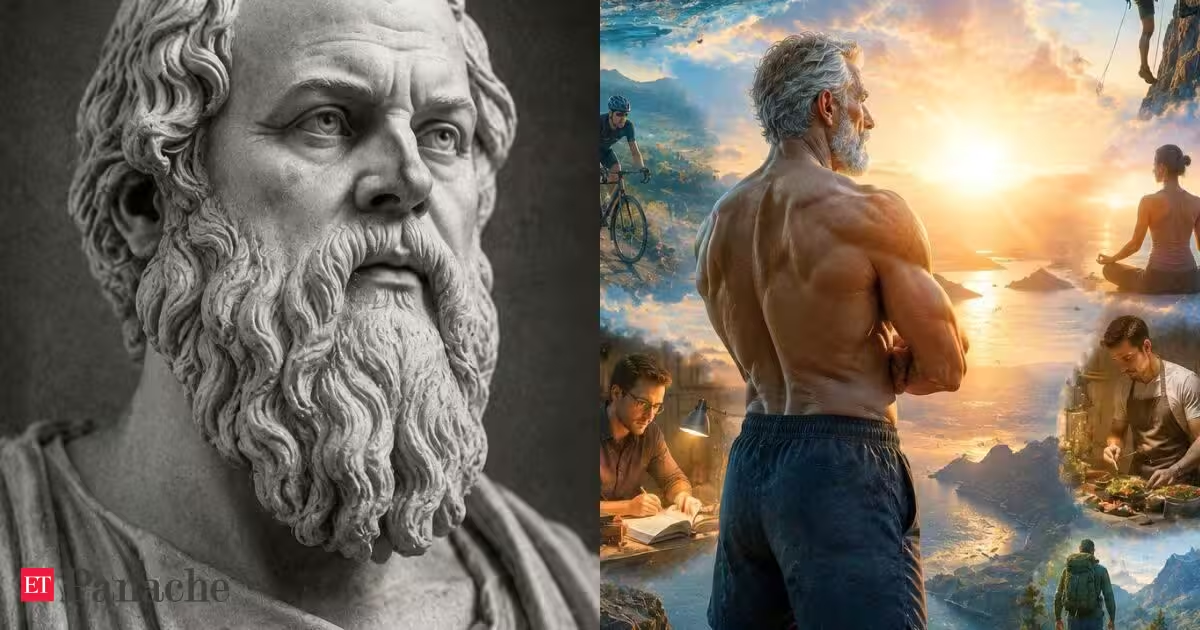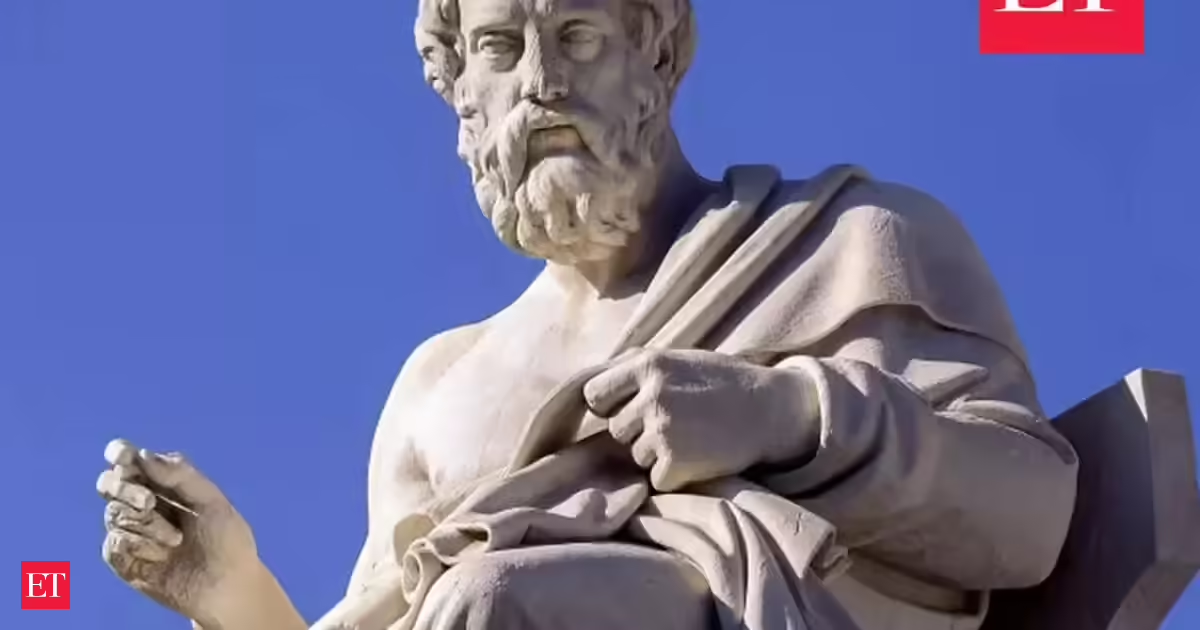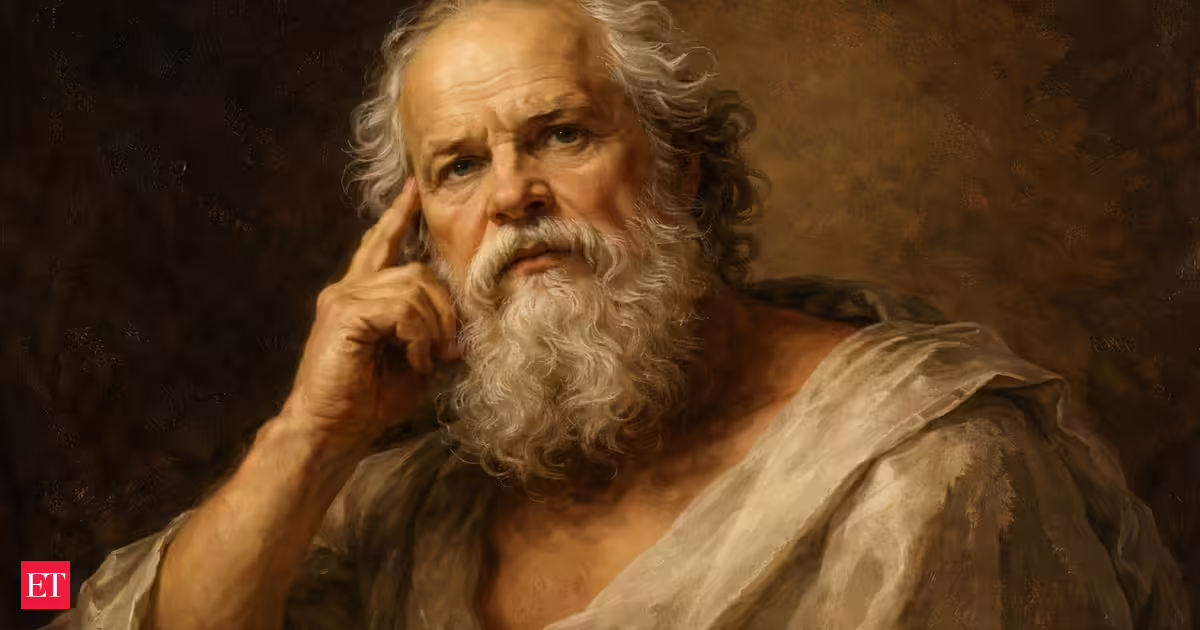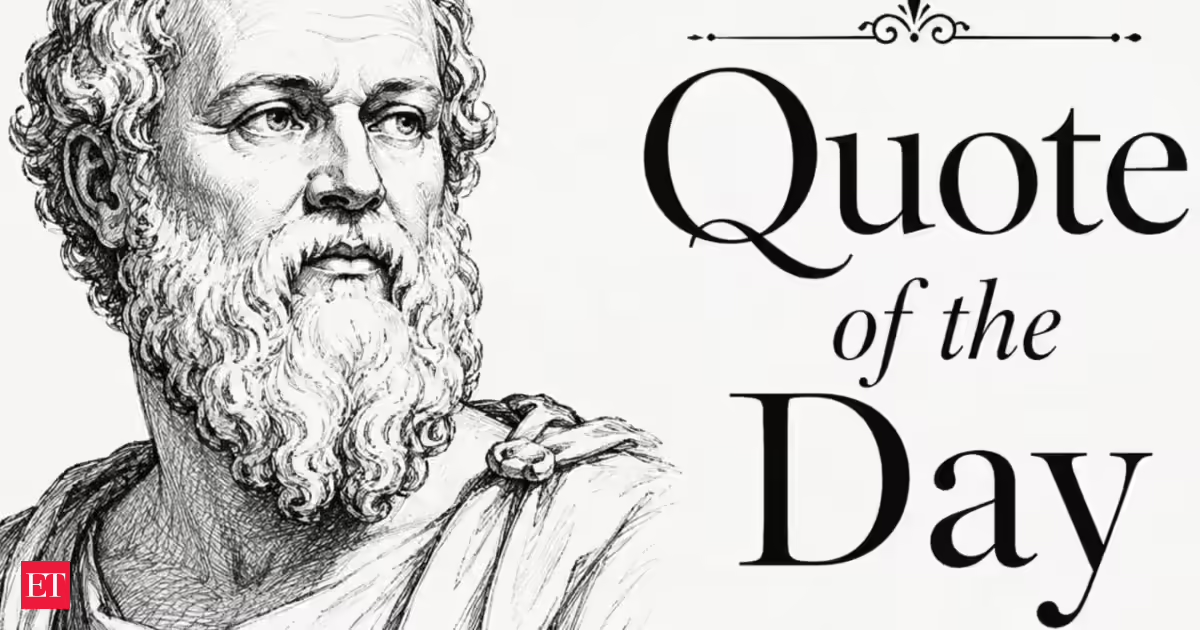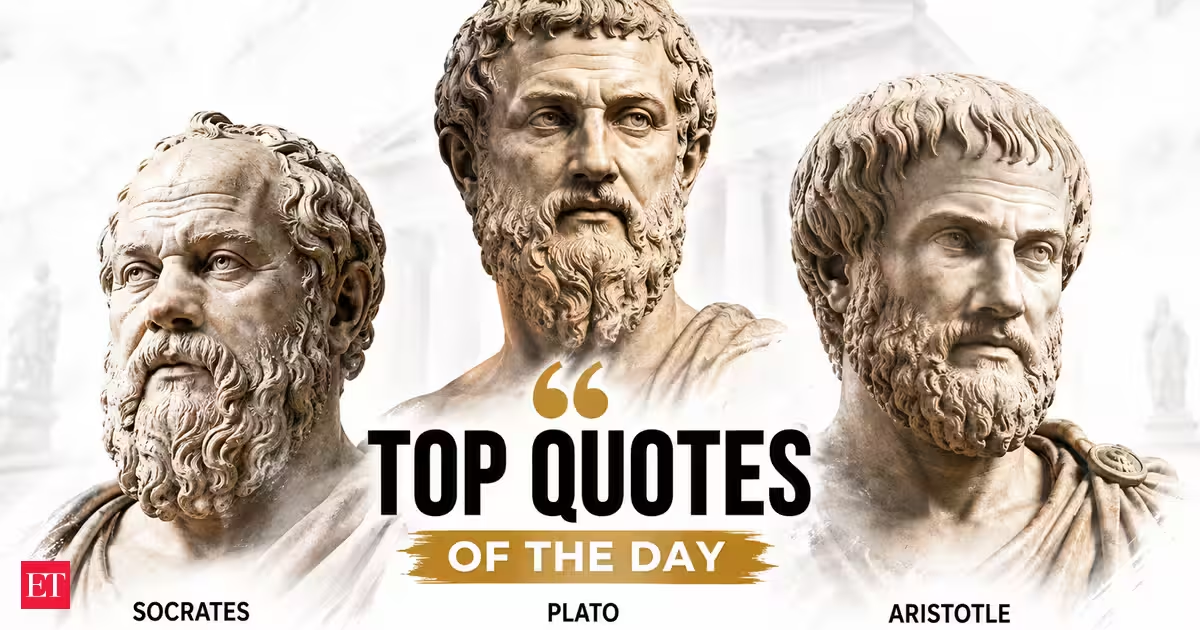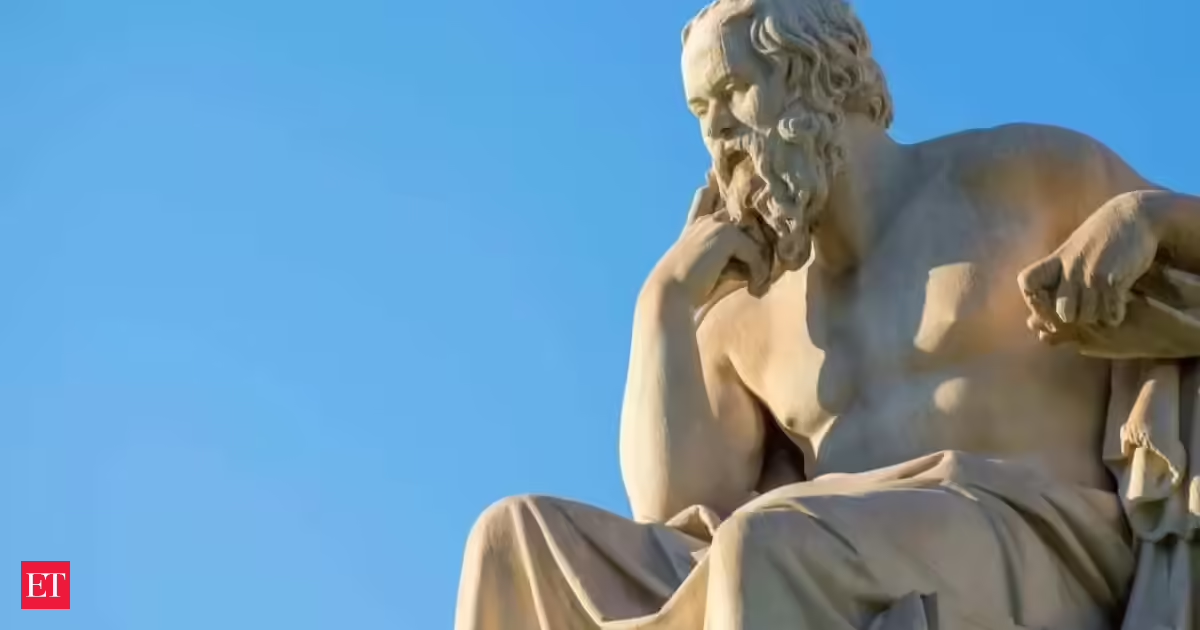
Quote of the Day by Socrates: Socrates, one of the greatest philosophers of ancient Greece, is widely regarded as the founder of Western ethical thought. His teachings focus on discipline, self-knowledge, and the pursuit of a meaningful life. The quote, “No man has the right to be an amateur in the matter of physical training. It is a shame for a man to grow old without seeing the beauty and strength of which his body is capable,” reflects his belief that physical fitness is not optional but an essential part of human development.This powerful statement emphasizes the importance of caring for the body with the same seriousness as the mind. Socrates believed that every individual has untapped physical potential, and failing to develop it leads to a life of neglect and regret. His message encourages discipline, consistency, and respect for one’s own body.Quote of the Day Today: Socrates on discipline, physical training, and self-developmentQuote of the Day by Socrates: “No man has the right to be an amateur in the matter of physical training. It is a shame for a man to grow old without seeing the beauty and strength of which his body is capable.”Meaning of the Quote of the Day: What Socrates’ quote really means? The quote by Socrates emphasizes the importance of treating physical health and training as a serious responsibility rather than an optional activity. When he says that no man has the right to be an amateur in physical training, he is stressing that neglecting the body is a form of wasted potential.The deeper meaning is about self-discipline, balance, and personal growth. Socrates suggests that human beings are capable of far more strength, endurance, and vitality than they usually develop, but only if they commit to consistent effort. The phrase “without seeing the beauty and strength of which his body is capable” points to the idea that many people live their lives without ever fully discovering what they are physically capable of achieving.Overall, the quote encourages a life of awareness and responsibility, where taking care of the body is seen not as vanity, but as an essential part of living fully and realizing one’s potential.Also Read: Quote of the Day by Leo Tolstoy: “I sit on a man’s back, choking him and making him carry me, and yet assure myself and others that... – Inspiring quote on hypocrisy, social injustice, moral responsibility, suffering and why you must turn sympathy into action by the Russian writer and philosopher known for War and Peace and Anna KareninaSocrates: Life, Philosophy, and Enduring LegacySocrates was one of the most influential philosophers in world history and a foundational figure in Western thought. Born in Athens around 470 BCE, he devoted his life to examining ethics, knowledge, and human virtue. Unlike many thinkers of his time, Socrates did not write down his ideas; instead, his philosophy is known through the works of his students, especially Plato. Through dialogue and questioning, he developed a method of inquiry that encouraged people to think deeply about truth, morality, and self-awareness.Socrates is best known for his Socratic method, a form of teaching that uses questions and discussion to challenge assumptions and uncover deeper understanding. His ideas focused heavily on ethics, emphasizing that a good life is more important than wealth, status, or power. He believed that self-knowledge and moral integrity are the highest forms of wisdom.Philosophical contributions and historical influence Socrates did not write philosophical texts, yet his influence shaped centuries of thought. His teachings laid the foundation for Western philosophy, influencing Plato, Aristotle, and countless later thinkers. His emphasis on questioning beliefs and seeking truth through reason became a cornerstone of intellectual inquiry.He was famously sentenced to death in Athens for “corrupting the youth” and challenging traditional beliefs, but he accepted his fate calmly, reinforcing his commitment to principle over personal survival.Ethics, discipline, and human development Beyond abstract philosophy, Socrates also emphasized practical virtue, including discipline, self-control, and responsibility toward one’s own development. His ideas suggest that neglecting any part of human potential, whether intellectual or physical is a form of incomplete living. His teachings continue to inspire modern discussions on ethics, education, and personal growth, reminding people that a meaningful life comes from constant questioning, self-examination, and the pursuit of truth.Life Lessons from Socrates’ QuoteDiscipline is a form of self-respect One of the key lessons from Socrates is that physical training is not optional, it reflects how seriously a person values their own body and life. Taking care of physical health is a basic responsibility toward oneself.Human potential should not remain unexplored Socrates emphasizes that every individual has the capacity for strength, endurance, and physical excellence. Failing to develop this potential means living without fully discovering what the body is capable of achieving.Consistency matters more than intention The quote highlights that simply knowing the importance of fitness is not enough. Real value comes from consistent effort, training, and discipline over time.Neglect leads to regret over time Socrates warns that growing old without having developed one’s physical abilities leads to a sense of missed opportunity. The body weakens naturally, but lack of care accelerates that decline unnecessarily.Balance between mind and body is essential A meaningful life requires attention to both intellectual growth and physical well-being. Ignoring one side creates an incomplete form of self-development.Why this quote is still relevant today Socrates’ message is highly relevant in the modern world, where sedentary lifestyles, digital dependency, and lack of physical activity are common. Many people prioritize work, study, or screens while neglecting fitness, leading to long-term health issues. At the same time, fitness culture today often swings to extremes, making Socrates’ balanced idea even more important.His quote challenges a simple but powerful question: Are we taking care of our bodies with the same seriousness that we give to other parts of our lives, or are we treating physical health as something optional until problems arise?Also Read: Quote of the Day by Albert Einstein: “There are only two ways to live your life. One is as though nothing is a miracle. The other is as though everything is a miracle.” – Inspiring quote on perspective, gratitude, positivity, and why seeing miracle in everyday life is important by the theoretical physicist and Nobel Prize–winning scientistMore Inspiring Quotes by SocratesHere are few more famous quotes by Socrates“The only true wisdom is in knowing you know nothing.” As per Goodreads“I cannot teach anybody anything. I can only make them think” As per Goodreads“There is only one good, knowledge, and one evil, ignorance.” As per Goodreads“Be kind, for everyone you meet is fighting a hard battle.” As per Goodreads“The unexamined life is not worth living.” As per Goodreads
Quote of the Day by Socrates: “No man has the right to be an amateur in the matter of... – Inspiring quote on health, discipline, fitness and why realizing human potential matters by the Greek philosopher, who is the founding father of Western philosophy
Quote of the Day by Socrates: Socrates powerful quote emphasizes the importance of physical discipline, self-respect, and lifelong self-improvement. It highlights the idea that no individual should treat physical training as something casual or optional, because the human body is capable of remarkable strength, beauty, and resilience when properly developed. The timeless message encourages people to take responsibility for their health and not allow age or neglect to diminish their potential.
1,107 words~5 min read