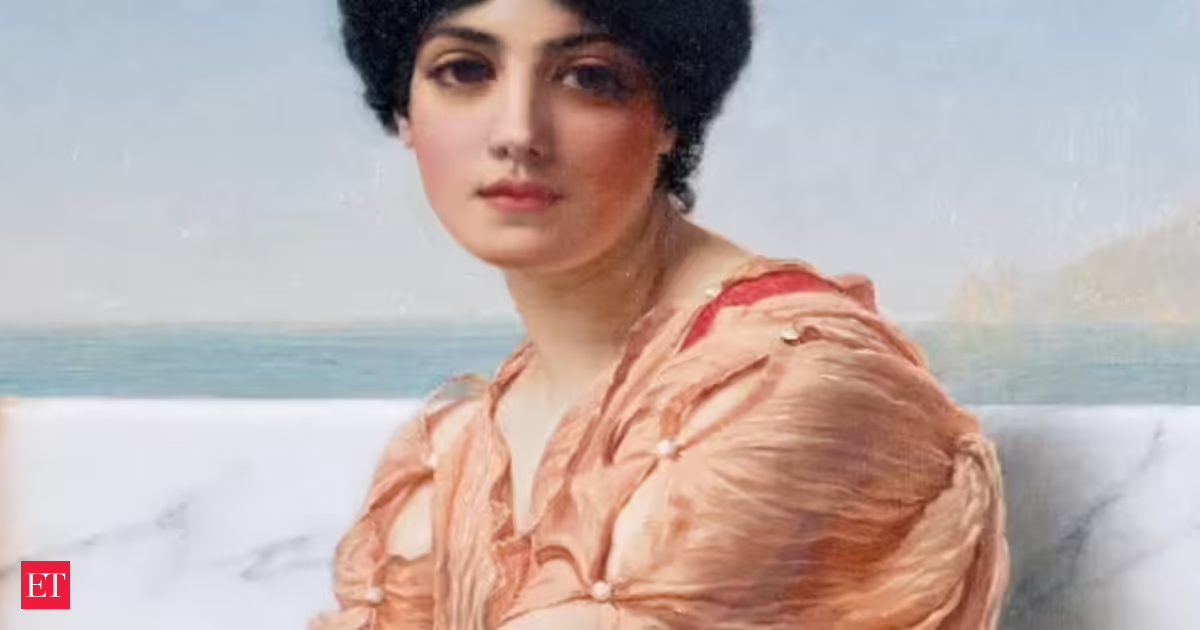
Quote of the Day by Sappho: In a world where appearance, success, and outward beauty often receive the most attention, the words of Sappho offer a timeless reminder of deeper human values. Society today is highly influenced by visual culture, where beauty is often judged by what is seen in the moment. However, her reflection encourages a shift in perspective, reminding us that what is external is temporary and constantly changing.At the same time, her words highlight the importance of inner qualities such as kindness, goodness, and moral strength, which remain meaningful beyond time and appearance. These ideas feel especially relevant in a modern world where people are frequently evaluated based on looks, status, or first impressions. Sappho’s wisdom gently reminds us that while physical beauty may fade, the goodness within a person continues to hold lasting value and influence, shaping relationships and leaving a deeper impact on others.Quote of the Day Today: Sappho on perception, beauty and character Quote of the Day by Sappho: “Beauty endures only for as long as it can be seen; goodness, beautiful today, will remain so tomorrow.”Meaning of the Quote of the Day: What Sappho's Quote Really Means?Sappho’s quote suggests that value is often understood through two different lenses: one based on outward appearance and immediate perception, and the other based on inner qualities that endure over time. In simple terms, people tend to notice physical beauty quickly because it is visible, but it can change or fade with time. Goodness, however, is experienced through behavior and character, which continue to hold meaning even when appearance is no longer present. This perspective shows that what people consider “valuable” is shaped not only by what is seen in the moment, but also by what remains consistent and meaningful across time and experience.Quote of the Day May 14: Why Looks are temporary, character is foreverLooks are temporary, character is forever because physical appearance is naturally subject to change over time, while a person’s character is built through consistent values, choices, and behavior. Appearance can be influenced by age, health, and external circumstances, making it something that is seen and appreciated in the present moment but not permanent. Character, however, reflects deeper qualities such as honesty, kindness, integrity, and how someone treats others in different situations. These traits define how a person is remembered and respected long after outward looks fade. In relationships, careers, and society, it is character that builds trust and lasting impact. This is why the phrase emphasizes that while looks may attract attention initially, it is character that determines true worth and lasting legacy over time.Who was Sappho?Sappho was an ancient Greek poet from the island of Lesbos, believed to have lived around the 7th–6th century BCE. She is one of the most important lyric poets of classical antiquity, known for her deeply emotional and personal style of writing. Much of her poetry explores themes of love, beauty, relationships, and human emotion. Although only fragments of her work survive today, her influence on literature and poetry has remained significant for centuries. Sappho’s writing is considered some of the earliest expressions of individual emotion in Western literature.Key Ideas of SapphoSappho’s poetry centers on human emotion, especially love, desire, and the intensity of personal relationships. She often expresses how deeply feelings shape human experience, showing love not as something abstract, but as something powerful, immediate, and deeply felt. Her work highlights beauty as an emotional and sensory experience, closely tied to perception and presence.Another key idea in Sappho’s writing is the contrast between external appearance and inner emotional reality. She suggests that while physical beauty is visible and temporary, deeper qualities connected to emotion and character carry lasting significance. Her poetry also reflects the importance of personal experience, focusing on individual feelings rather than grand public events. Through her lyrical style, Sappho presents a worldview where emotion, beauty, and human connection are central to understanding life.Sappho: Life, Background, and Philosophical JourneySappho was an ancient Greek poet from the island of Lesbos, believed to have lived around the 7th to 6th century BCE. Very little is known about her personal life with certainty, but she is widely recognized as one of the greatest lyric poets of antiquity. She likely came from an aristocratic background and was part of a cultural environment where poetry and music played an important role in social and religious life. Much of her work was performed with musical accompaniment, reflecting the artistic traditions of her time.Sappho’s philosophical outlook is expressed through her poetry rather than formal philosophical texts. Her work focuses on human emotion, especially love, desire, beauty, and the complexity of personal relationships. She explores how feelings shape human experience and how beauty is perceived in both physical and emotional forms. Through her lyrical expression, Sappho emphasizes the depth of inner emotion and the importance of lived, personal experience. Her surviving fragments suggest a worldview where emotional truth and human connection hold lasting significance beyond surface appearances, making her one of the earliest voices to center individual feelings in literature.English Equivalent and Related ExpressionsOther English expressions that reflect similar ideas to “Beauty endures only for as long as it can be seen; goodness, beautiful today, will remain so tomorrow” by Sappho include:“Beauty fades, but goodness lasts.”“Inner beauty matters more than outer appearance.”“What is seen may not last, what is within does.”“True beauty is found in kindness and character.”“Appearances change, but values remain.”“Real worth is measured by goodness, not looks.”“Outer beauty is fleeting, inner virtue is lasting.”“A good heart is the most enduring beauty.”“What you are inside defines your true beauty.”Each of these expressions highlights the difference between external appearance and inner character. They reflect the idea that while physical beauty is temporary and dependent on perception, goodness and moral qualities have a lasting presence that continues to hold value over time.
Quote of the Day by Sappho: “Beauty endures only for as long as it can be… — Life lessons by Ancient Greek poet on perception, appearance and why looks are temporary but character is forever
Quote of the Day by Sappho: Sapphos philosophy suggests that physical beauty is temporary and dependent on perception, while goodness is enduring and rooted in character and action. What appears beautiful in the present may fade with time, but moral qualities such as kindness and integrity retain their value across changing circumstances. This perspective encourages looking beyond external appearance and recognizing the lasting importance of inner virtue in shaping how individuals are remembered and respected.
970 words~4 min read