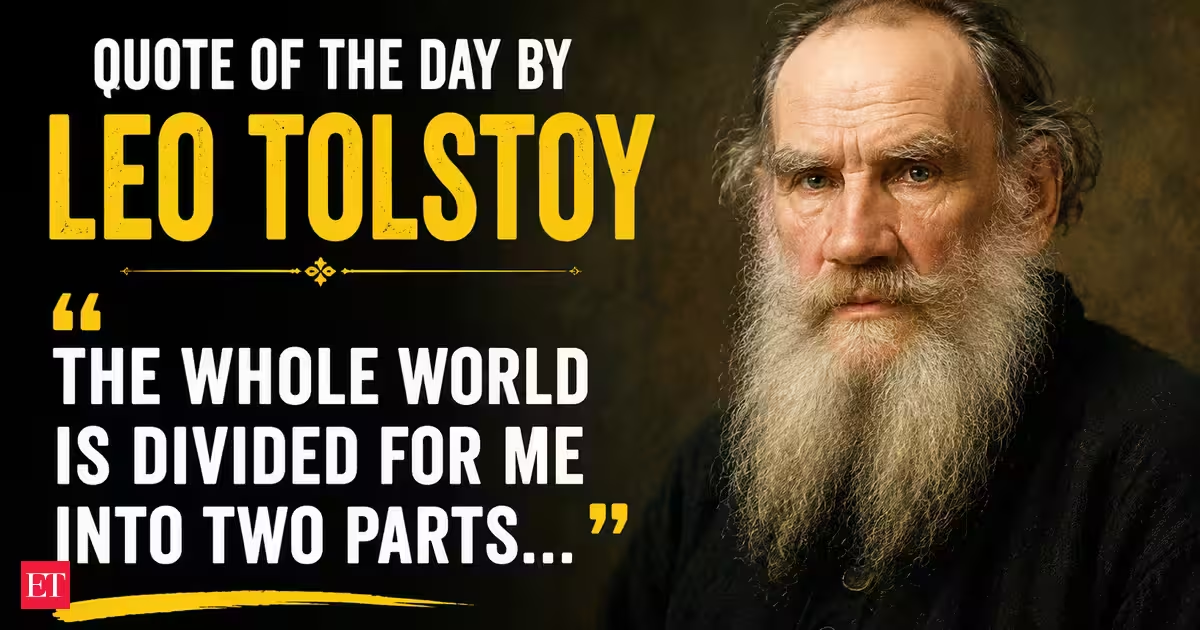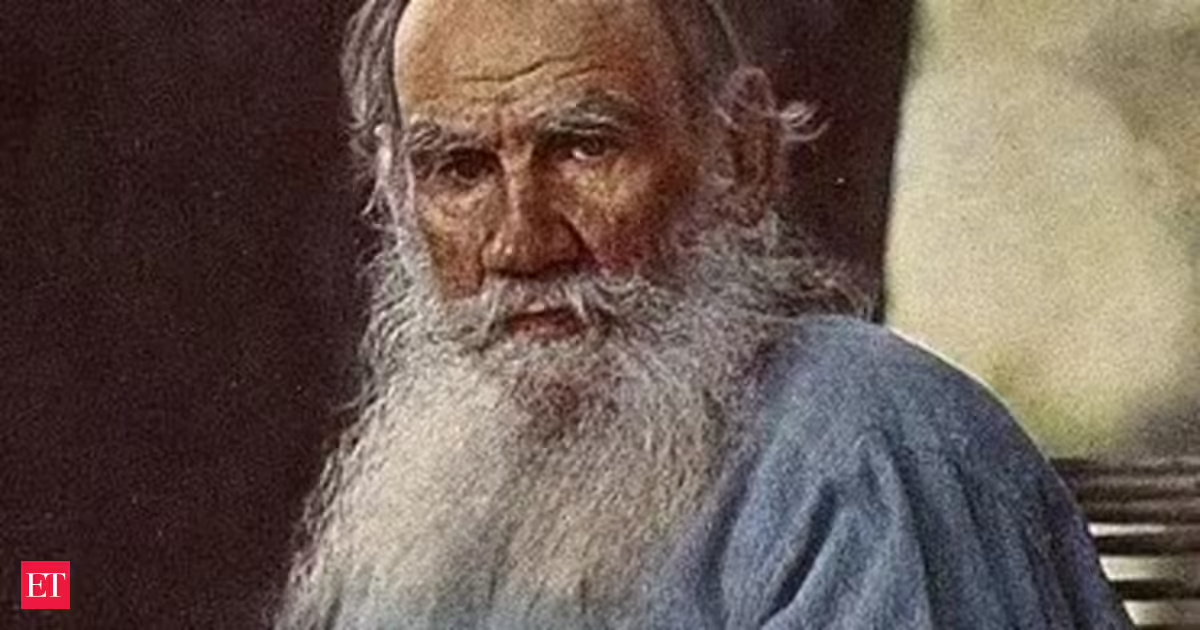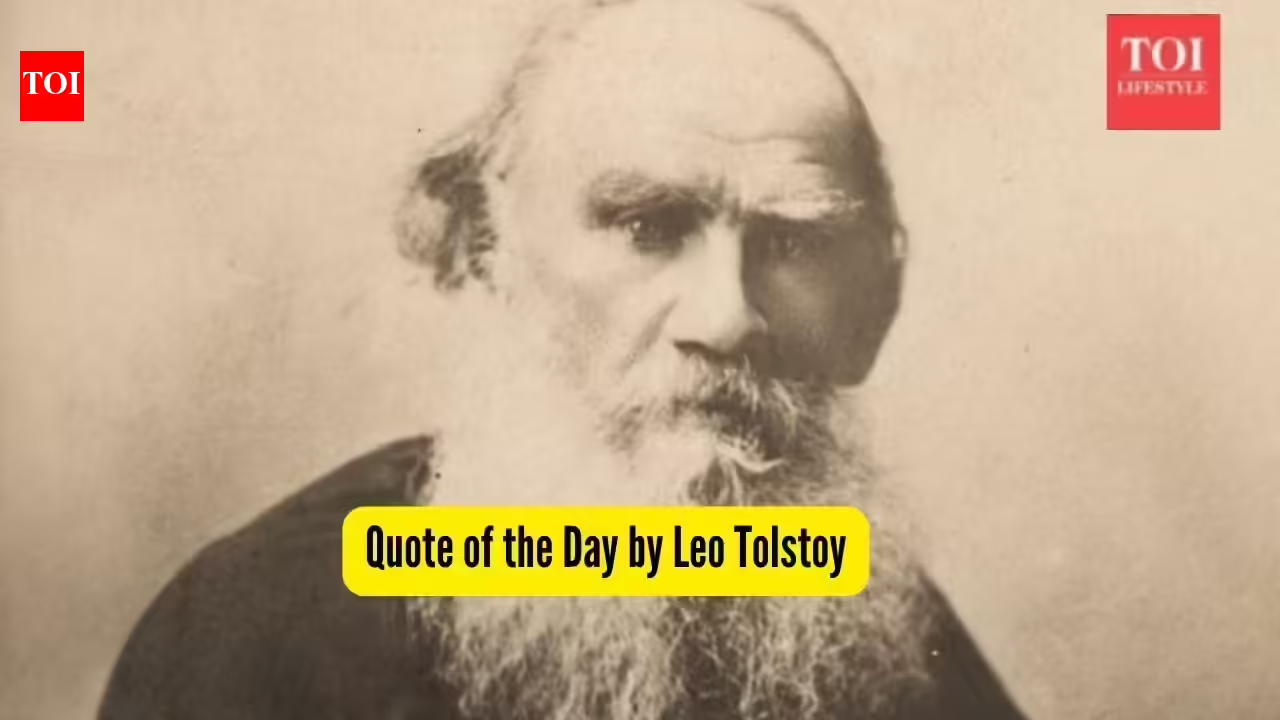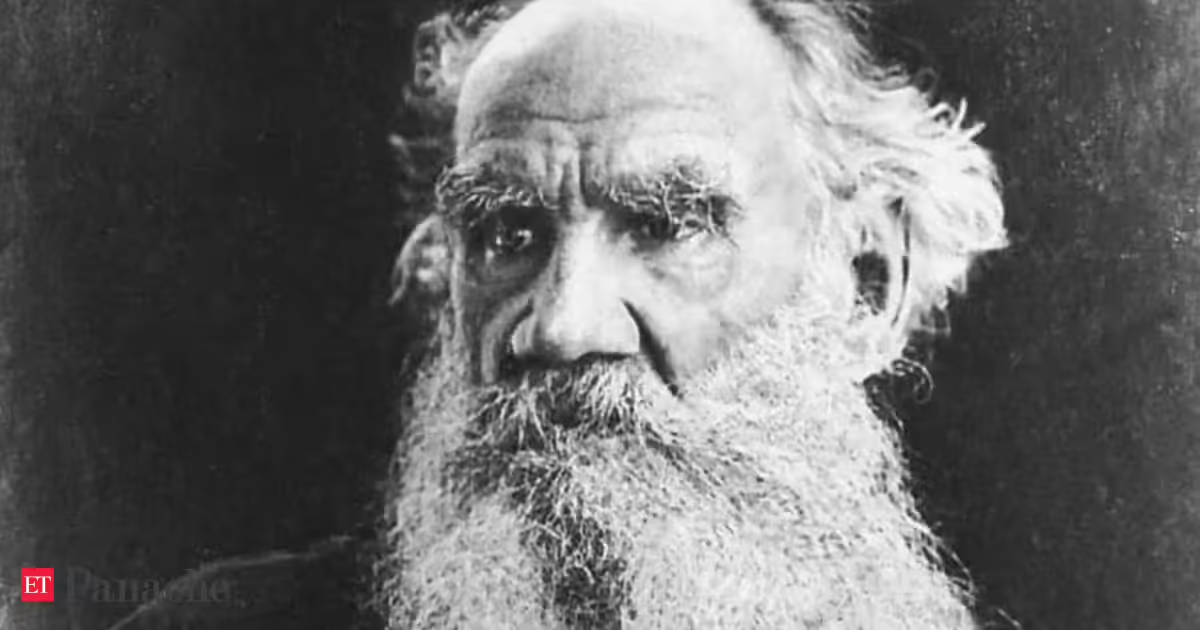
Russian novelist and thinker Leo Tolstoy left behind many quotes that are still discussed more than a century after his death. One of his most debated quotes comes from his famous novel War and Peace. The phrase speaks about marriage, love, disappointment and the fear of losing oneself in relationships. Even today, people revisit the quote because it sounds deeply personal and honest, almost like advice from someone who has lived through emotional confusion and regret himself.The quote of the day reads: “Never, never marry, my friend. Here’s my advice to you: don’t marry until you can tell yourself that you’ve done all you could, and until you’ve stopped loving the woman you’ve chosen, until you see her clearly, otherwise you’ll be cruelly and irremediably mistaken. Marry when you’re old and good for nothing…Otherwise all that’s good and lofty in you will be lost.”This quote was spoken by Prince Andrei Bolkonsky to Pierre Bezukhov in Book 1, Chapter 8 of War and Peace. In the story, Prince Andrei is deeply unhappy in his marriage and speaks from a place of frustration and emotional exhaustion. The quote is not presented as a universal rule for everyone. Instead, it reflects the emotional state of a man who feels trapped and disappointed by married life. That is one reason why the line still feels real to many readers. It does not sound polished or idealistic. It sounds tired, hurt and brutally honest.The deeper meaning behind the quote is less about rejecting marriage and more about understanding people clearly before making lifelong commitments. Tolstoy seems to suggest through Prince Andrei that people often fall in love with ideas, fantasies or emotions rather than truly seeing the person in front of them. The warning about “seeing her clearly” points toward emotional maturity. It is about knowing oneself first before trying to build a life with someone else. Many readers also interpret the quote as a reflection on how personal ambitions, dreams and inner peace can sometimes get lost inside unhappy relationships.Even though it was written in the 19th century, people today still struggle with questions around commitment, emotional readiness and identity in relationships. Some see the quote as cynical. Others see it as practical advice from someone speaking after disappointment.Leo Tolstoy’s Early Life Was Marked By LossLeo Tolstoy was born on September 9, 1828, at Yasnaya Polyana in the Russian Empire. Born into an aristocratic family, he carried the title of Count. But despite the wealth and social position around him, his early years were difficult. His mother died when he was very young and his father passed away a few years later. Tolstoy and his siblings were raised by relatives after that.He studied at Kazan University but never completed his education. Reports from his early life describe him as restless and distracted. He spent time gambling, partying and struggling to find direction. During this period he also kept journals, something he continued for much of his life. Those diaries later became important in understanding his thoughts, fears and beliefs.His experiences as a young man slowly shaped the themes that later appeared in his novels. Feelings of guilt, confusion, morality and self-examination became central parts of his writing.Military Service Changed His ThinkingTolstoy joined the Russian army in the early 1850s and served during the Crimean War. His experiences during the war had a major impact on him. He witnessed violence, death and suffering up close, especially during the siege of Sevastopol.These experiences later influenced works such as “Sevastopol Sketches,” where he described war in a raw and realistic manner instead of glorifying it. Unlike many writers of the time, Tolstoy focused on ordinary soldiers, fear, exhaustion and chaos. The horrors he witnessed eventually pushed him toward strong beliefs in non-violence and moral reform.A visit to Paris also deeply affected him after he witnessed a public execution there. That moment reportedly increased his distrust of governments and systems of power. Over time he became more vocal about moral responsibility and social justice.The Writer Behind ‘War and Peace’ and ‘Anna Karenina’Tolstoy became one of the most respected literary figures in the world because of novels like War and Peace and Anna Karenina. “War and Peace,” published in 1869, explored Russian society during the Napoleonic Wars and included hundreds of characters. The novel examined war, politics, family life and history itself.“Anna Karenina,” published later, focused more on relationships, social pressure and emotional suffering. The novel followed Anna’s tragic personal journey while also exploring the life of Konstantin Levin, a character many readers believe reflected Tolstoy’s own thoughts and struggles.Tolstoy’s writing style became famous for its realism. He paid close attention to everyday life, emotions and human contradictions. Readers often connected with his work because the people in his stories felt believable and flawed.Marriage, Family and Personal ConflictTolstoy married Sophia Behrs in 1862. She was much younger than him and played a major role in his literary career, helping edit and copy his manuscripts. Together they had 13 children, though not all survived childhood.In the early years, their marriage was reportedly passionate and supportive. But over time their relationship became strained. Tolstoy’s growing spiritual and philosophical beliefs created tension within the family. He increasingly rejected wealth, luxury and material possessions, while his wife worried about finances and the future of their children.Many biographers believe Tolstoy’s difficult views on marriage were shaped partly by his own personal experiences. That is one reason why readers often connect the quote from War and Peace with his real life, even though the line belongs to a fictional character.His Later Years Focused on Morality and SpiritualityAfter the success of Anna Karenina, Tolstoy went through a major spiritual crisis. He became deeply concerned with questions about life, faith, morality and death. He moved away from fiction for a period and began writing essays and philosophical works.Books like The Kingdom of God Is Within You focused on non-violence, simple living and moral responsibility. His ideas later influenced figures such as Mahatma Gandhi and Martin Luther King Jr..Tolstoy also criticized organized religion, state power and social inequality. His beliefs eventually led to his excommunication from the Russian Orthodox Church in 1901. Still, he continued writing and speaking about moral reform until the end of his life.Death and Lasting LegacyIn 1910, near the end of his life, Tolstoy secretly left his home during winter after growing tensions within his family. While traveling, he fell ill and developed pneumonia. He died on November 20, 1910, at a railway station in Astapovo in the Russian Empire.More than a hundred years later, Tolstoy remains one of the most influential literary voices in history. His novels are still widely read across the world and his philosophical writings continue to be discussed in classrooms, books and public debates.
Quote of the day by Leo Tolstoy: 'Don’t marry until you’ve stopped loving the woman you’ve chosen, until you see her clearly, otherwise...' - The dark reality of love and marriage explored by the legendary Russian novelist
Russian author Leo Tolstoy continues to spark debate through a memorable quote of the day from his novel War and Peace, where Prince Andrei warns against marriage without emotional clarity and self-understanding. The line reflects the characters disappointment and exhaustion rather than a universal rejection of love, while also touching on timeless themes of commitment, identity and emotional maturity.
1,125 words~5 min read