Film music helps create the magic of cinema. But who works on this key creative process behind the scenes? French film music supervisor Pierre-Marie Dru tells RFI what it takes to match movies with the perfect soundtrack.
Being a film music supervisor demands a finely tuned ear, a talent for coordination, creative vision and above all, patience. Pierre-Marie Dru has been honing these skills for over 20 years. One of the go-to professionals in the industry, his credits include Jacques Audiard's 2024 musical Emilia Perez – a four-year collaboration which went on to win a slew of prizes, including the Oscar for Best Original Song. Four more films he worked on were featured at this year's Cannes Fim Festival: World War I drama Coward, directed by Belgian Lukas Dhont; Agnès Jaoui's opera comedy Crescendo; the animation Lucy Lost by Olivier Clert, and biopic De Gaulle by Antonin Baudry. RFI met him in Cannes to discuss how he got into film music, his career highlights, industry challenges, and whether artificial intelligence could one day impact his profession.
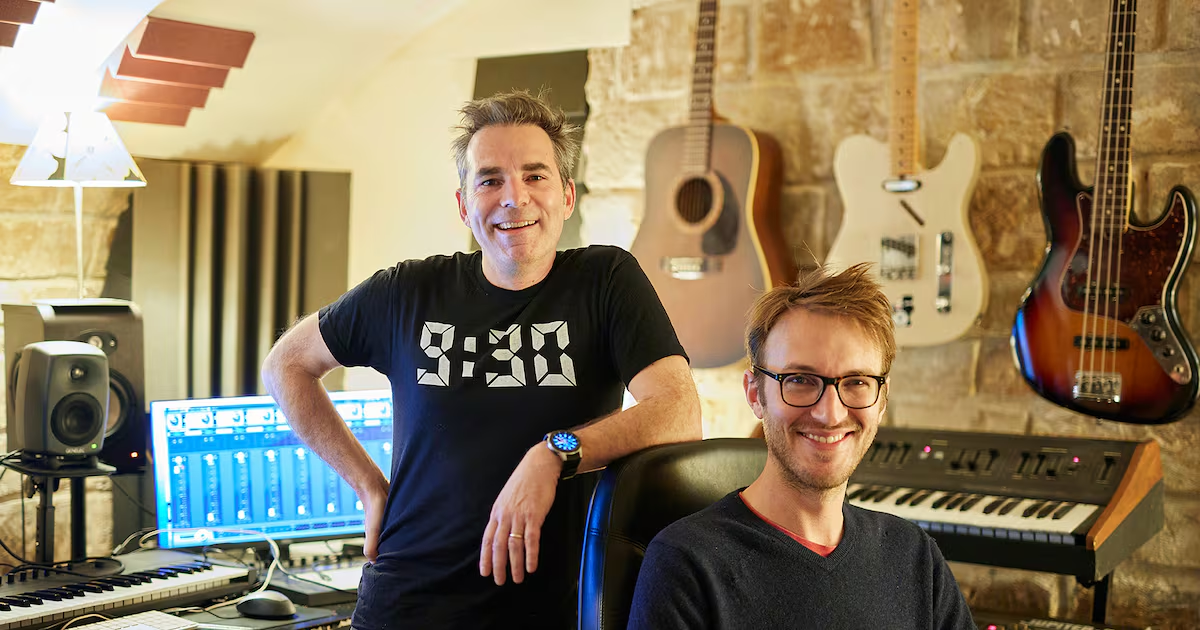
Pierre-Marie Dru has been working for more than 20 years as a film music supervisor. © RFI / Ollia Horton
RFI: What does a film music supervisor do? Pierre-Marie Dru: A music supervisor is someone who works behind the scenes and helps the composer, director and producer create the music. Sometimes it's very technical, sometimes legal, sometimes artistic, sometimes it's about the composer and director communicating with each other. At the beginning, it's a delicate process. Telling them they're on the right track is about building trust, because when you listen to a finished film score, you think it's great – but before that, you hesitate, you don't know if it's the right music, and so you have to help them through that. It's very intuitive. There are more structured things, like how you work with a singer or an orchestral musician on a film set. How do you shoot a film with music, how do you record it? And then there's a whole other aspect: how we go from the original music to the additional music. Sometimes we buy music, so we have to negotiate – that's the legal side of things. And we manage the overall music budget. So in discussion with the composer and the director, we decide where we're going to spend the money, when, whether we need to record a soloist very early on to introduce the theme to the rest of the team... It's always different. But the idea is to guide this trio – composer, producer, director – to create the best possible music in the end. How singing has shaped human history, from rituals to resistance RFI: Are you a musician by training? What led you to this career? PMD: The starting point is that I'm a music lover. From my childhood to my adolescence, I spent all my time listening to music... I was interested in all kinds of music, but in a very amateur way. I also play guitar, but it's more for myself. I studied architecture, which is another part of building my career. It means thinking about how, when you have a script, a film will come together. It’s like building a house. What is the floor plan? Which entrance, door, window; how many floors do you want to design? I think a bit about space, the spatialisation of a film. Choosing to study architecture helped me with that.