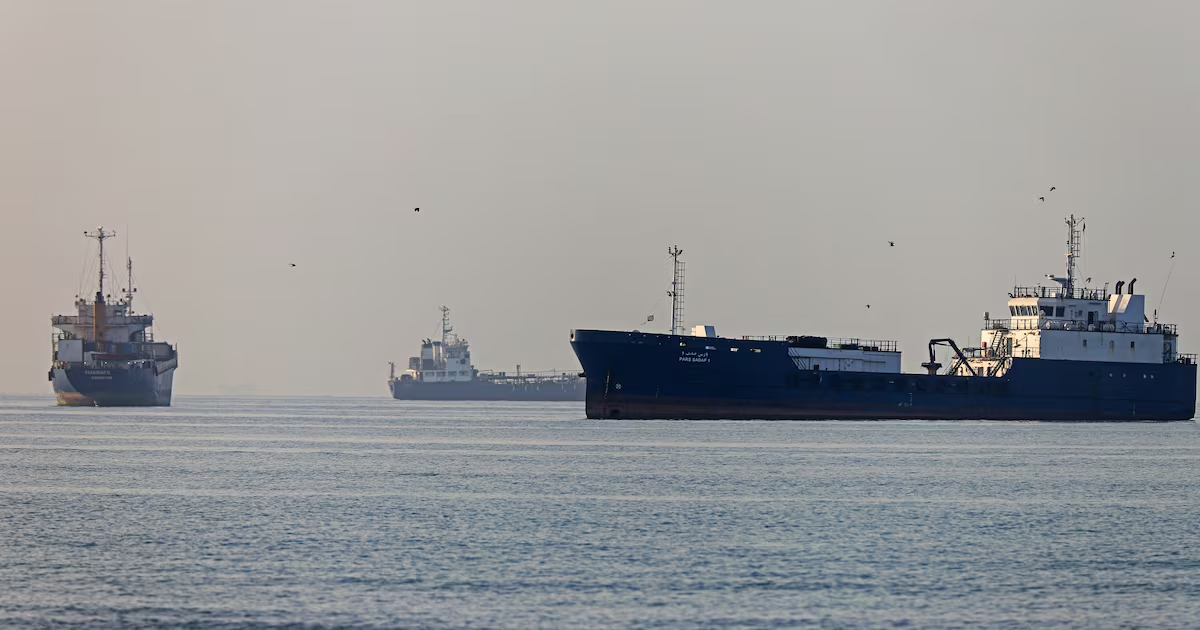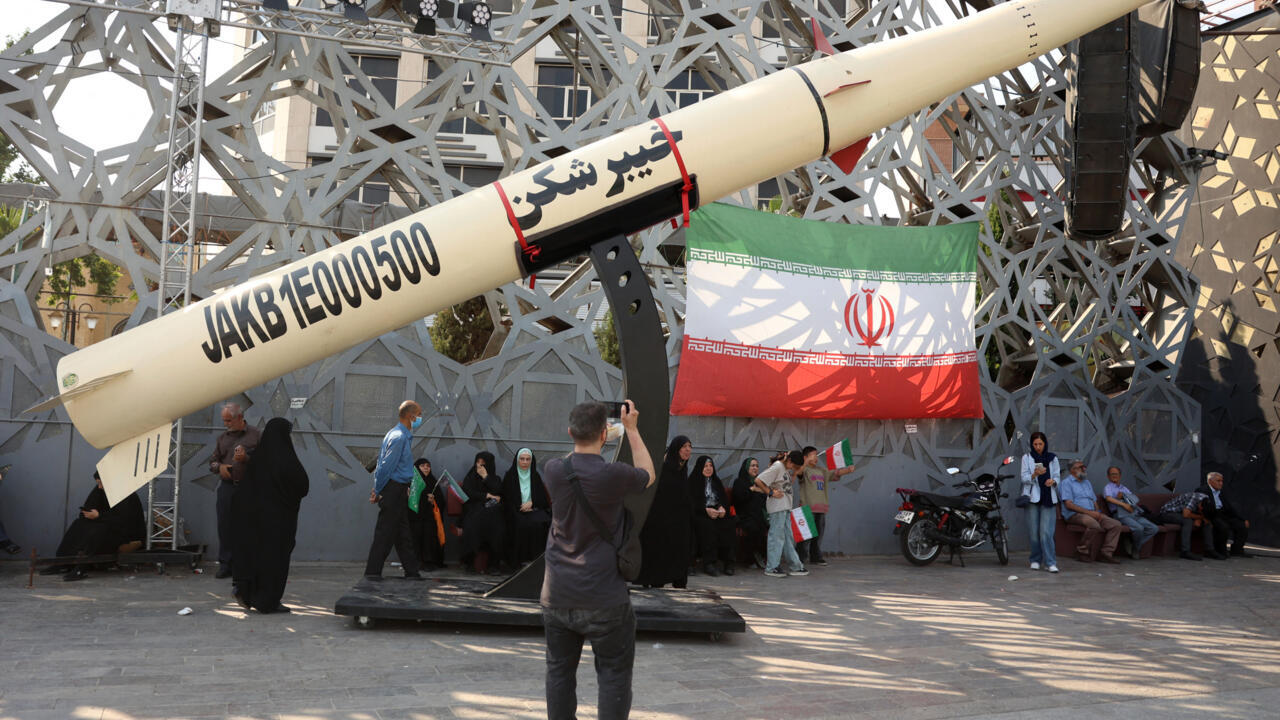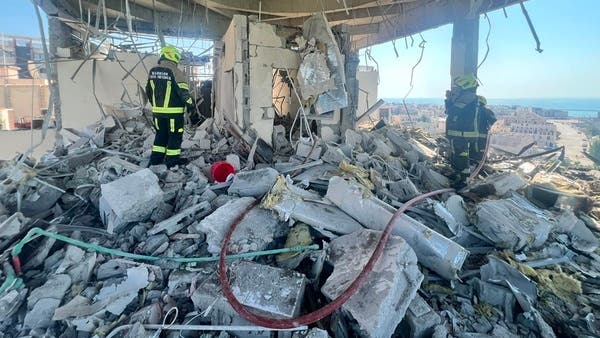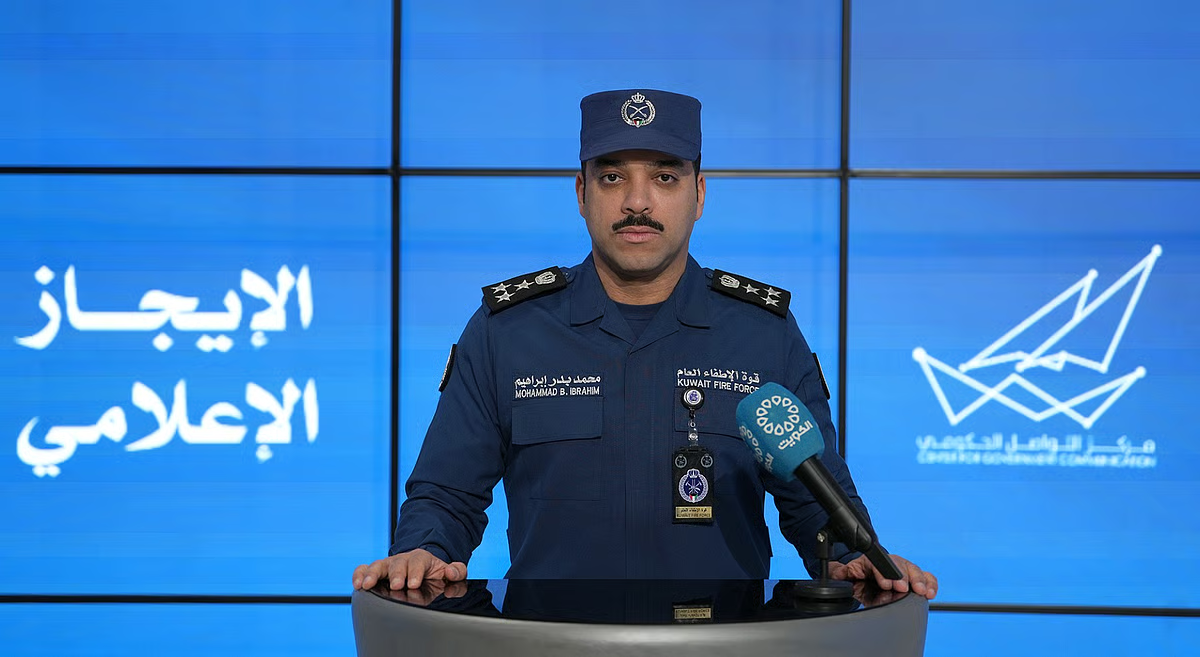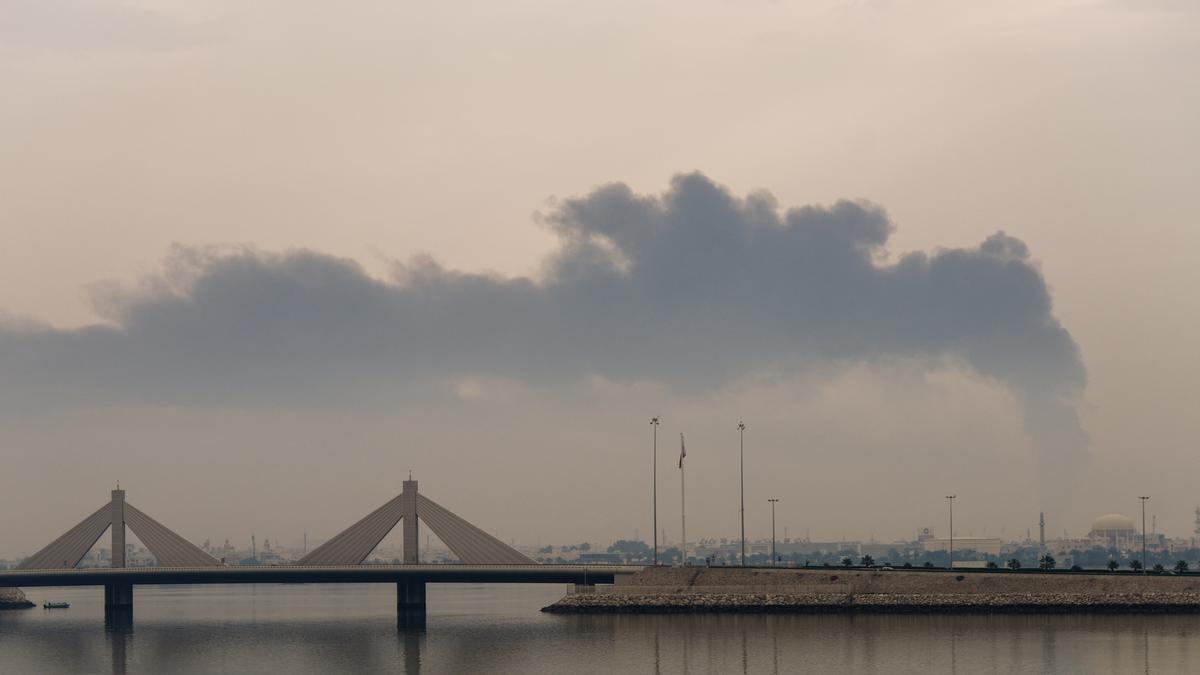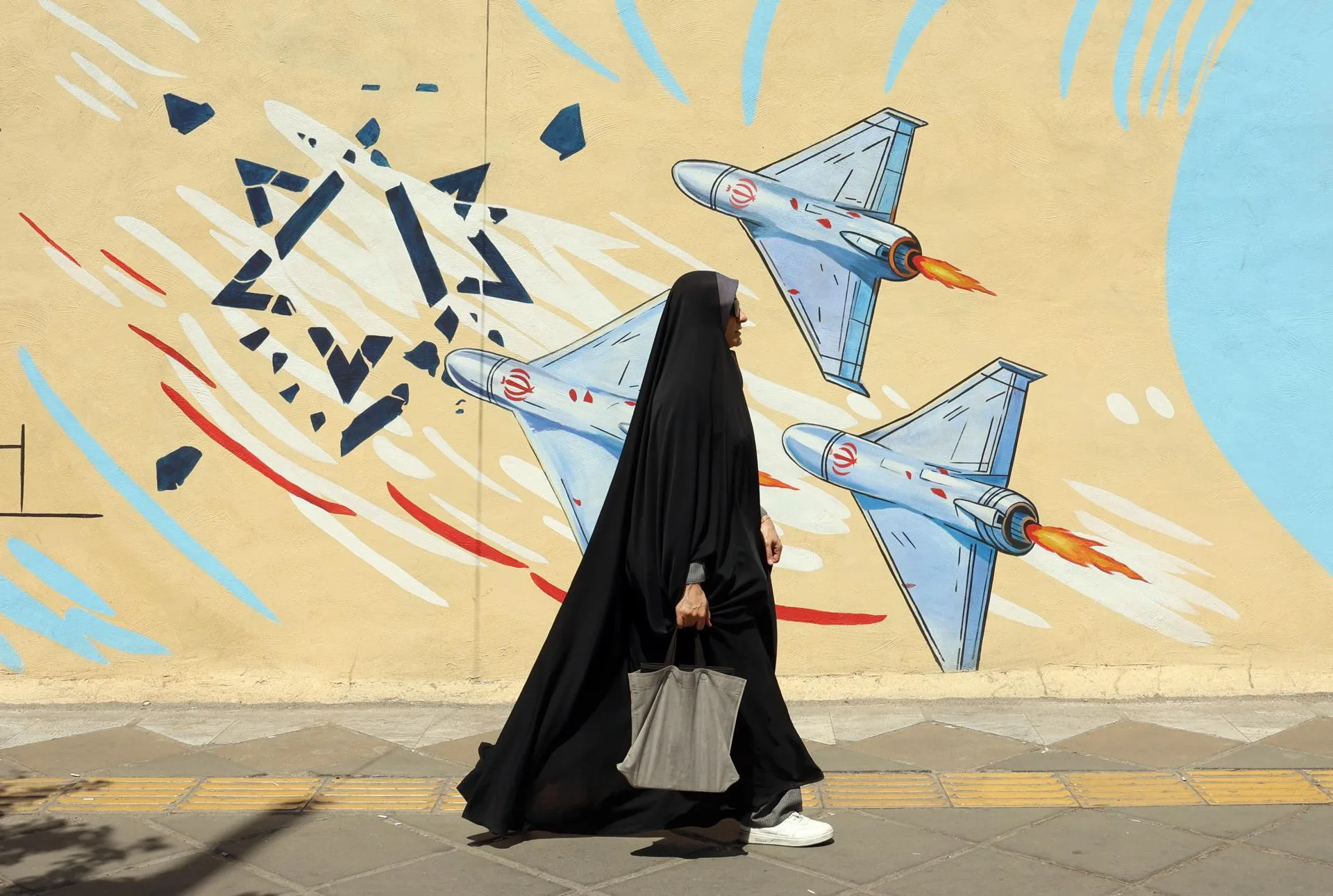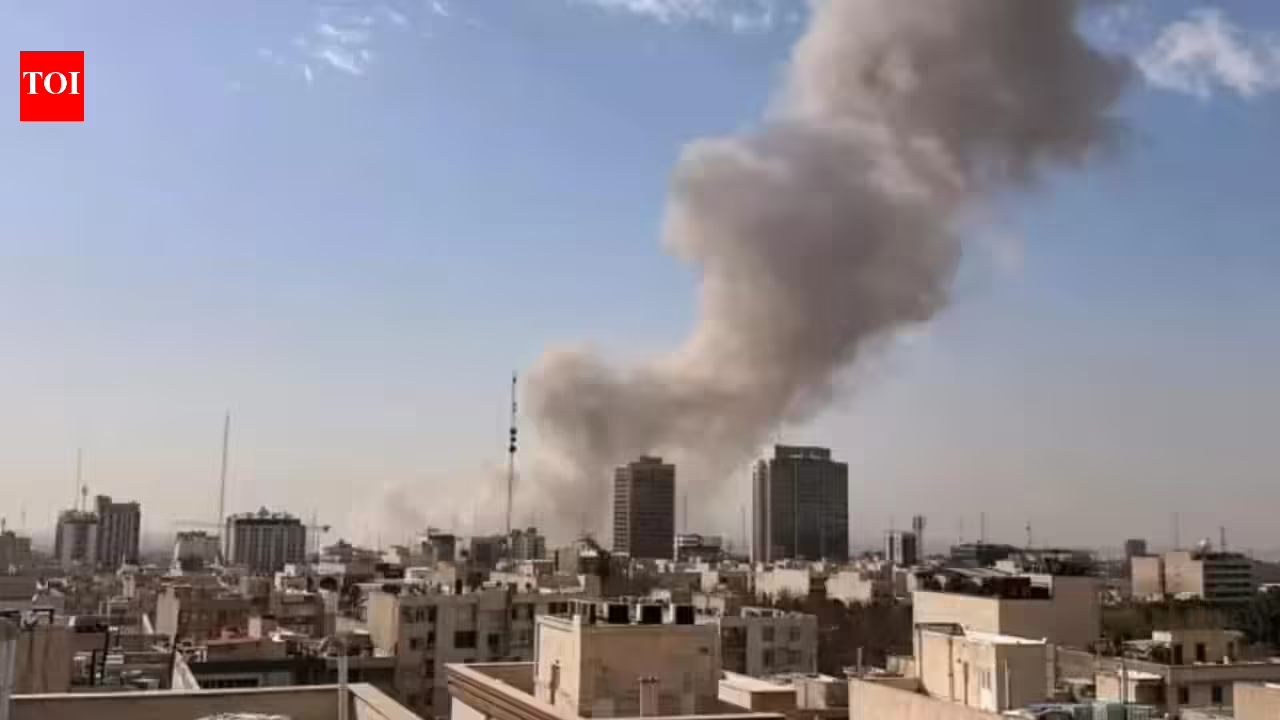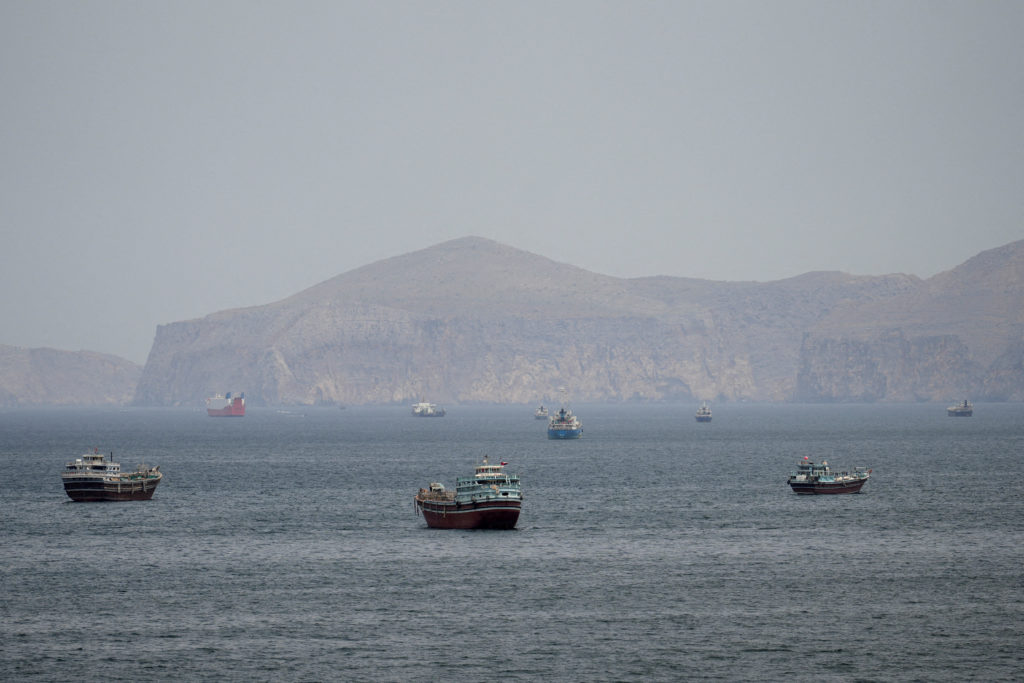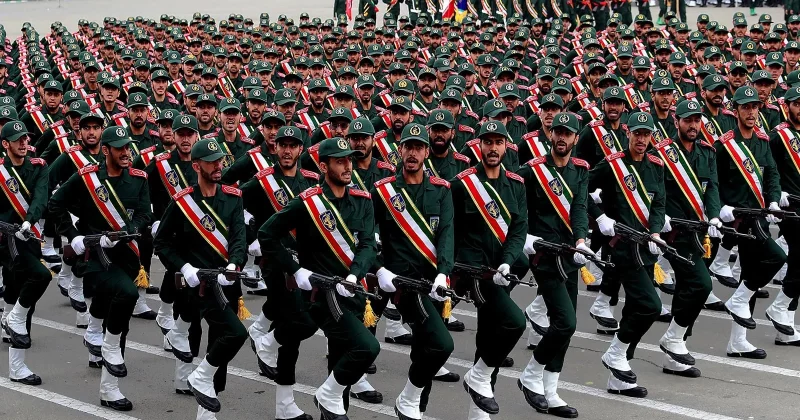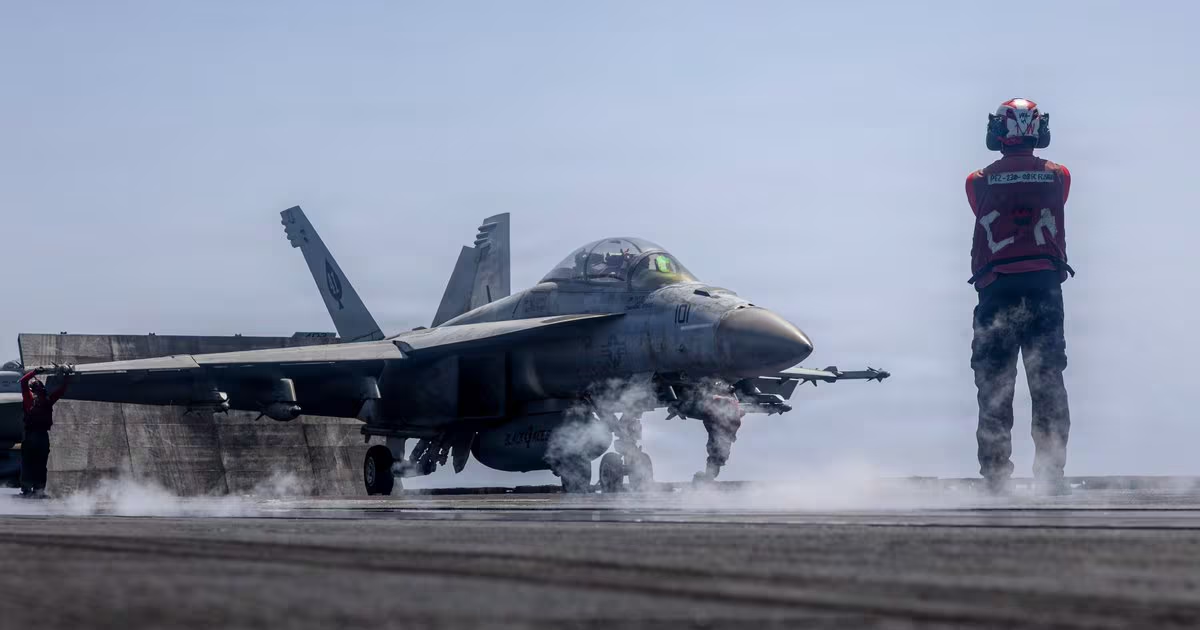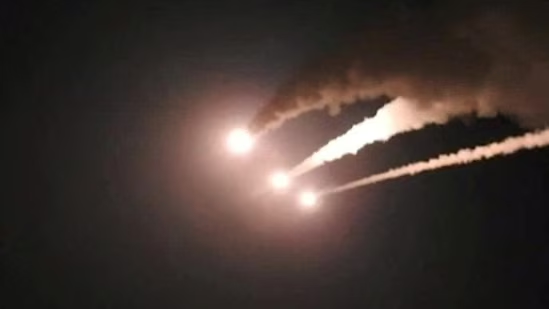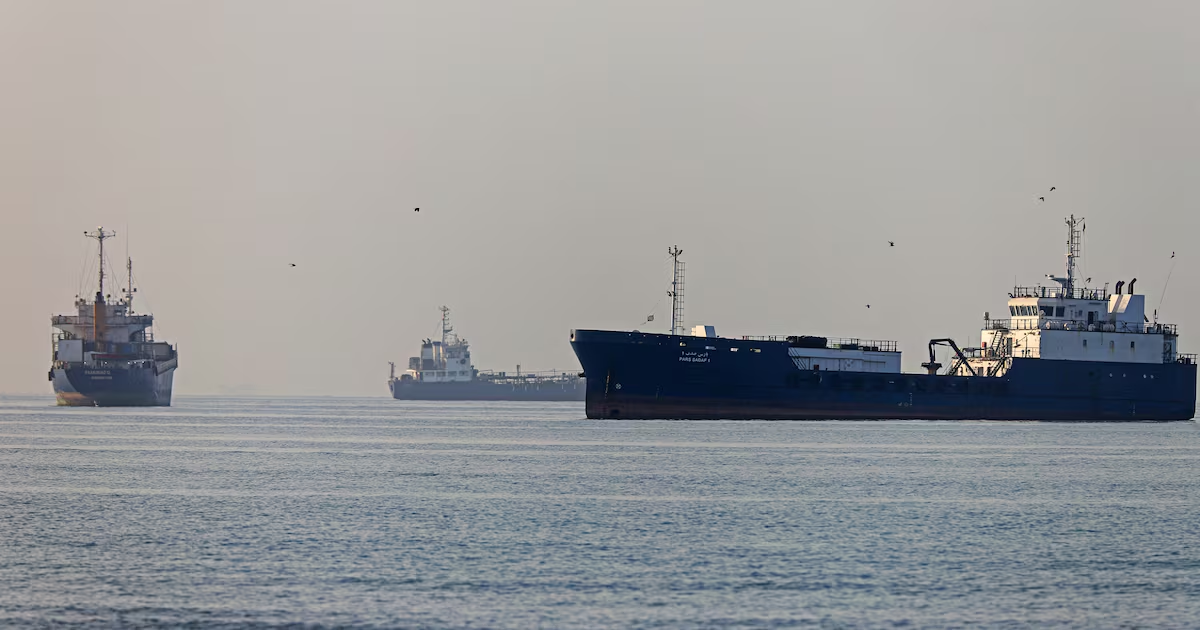
Bahrain has said Iran fired ballistic missiles and drones at it and Kuwait, hours after the US and Iran exchanged strikes over the Gulf, the latest in a series of flare-ups that threatened to break the fragile ceasefire.Air raid sirens rang out on Saturday in Bahrain and people were told to move to a safe location and await further instructions. Kuwait’s military said it was intercepting drones and missiles launched at the country.Iran’s Revolutionary Guards said it was targeting the Ali al-Salem airbase in Bahrain, where the US navy’s fifth fleet is located, according to Iranian media.The attacks came after the US military said it had shot down four Iranian drones launched toward the strait of Hormuz and struck Iranian coastal surveillance radar sites in response. Iran followed hours later, saying it had targeted US bases in the region, with Kuwait and Bahrain both issuing air raid alerts.It was the latest in a series of back-and-forth attacks that have strained the tenuous ceasefire in the war and harmed efforts to reach a deal to extend the truce. US-Iran efforts to find a permanent end to the war have dragged on, extending regional stability and throwing the global economy into disarray.The World Food Programme (WFP) said millions of people were being pushed into hunger due to the knock-on effects of the Iran war, primarily due to soaring energy and food prices.In analysis published on Thursday, the WFP found that 2.5 million people in Somalia, 2.3 million in Afghanistan and 1.3 million in Sri Lanka were struggling to meet basic food needs due to rising food prices.The WFP predicted that 45 million people could be pushed into food insecurity by June, saying the affects of the Iran war would intensify in the coming months, even if the conflict ended.[ Iran reaffirms support for Hizbullah with wider peace deal in doubtOpens in new window ]US central command (Centcom) said early on Saturday that Iranian attack drones “posed an immediate threat to regional maritime traffic”, while the strikes on radar installations were to “defend against further attacks”. The US military is enforcing a blockade on Iranian ports in response to Tehran’s chokehold on the strait – a crucial corridor for global oil and natural gas shipments – which has sent energy prices spiking.Hours later Iran’s Revolutionary Guards said they had targeted “enemy bases” in the Gulf after the US strikes on Sirik and Qeshm Island.Kuwait’s military said it was responding to “hostile” missile and drone attacks, days after a strike on its international airport killed one and wounded dozens.“Iran fired seven ballistic missiles toward Kuwait and Bahrain,” Centcom said, adding that six were intercepted and a seventh did not reach its target. “There are currently no reports of harm to US personnel, and Iranian claims of damaging US 5th fleet headquarters in Bahrain are false.”Earlier on Friday, Donald Trump told reporters that “the situation with Iran seems to be going quite well”.At an event with farmers in Wisconsin, Trump said: “We’re going to come out of Iran very quickly and it’s going to be very strong one way or the other, whether it’s a piece of paper or the very tough way. Your fertiliser prices are going to go way down, just like they were four months ago.”US president Donald Trump is under pressure to find a way out of the war, which has delivered a shock to markets. Photograph: Haiyun Jiang/The New York Times Trump is under pressure to find a way out of the war, which has shocked markets and proven unpopular at home as midterm elections loom. US and Iranian negotiators have for weeks been working to extend the ceasefire by 60 days and start a new round of talks on Iran’s nuclear programme. But both sides have continued to call for changes in the deal, with neither appearing ready to compromise.Asked on Friday why it was taking so long, Trump told NBC it was because it was “a very hard thing” for Iran, citing its “great independence”.[ Iran insists any US-Israel ceasefire must cover conflict in LebanonOpens in new window ]“There are things they never thought they’d be doing that they’re going to have to do. They’ve got no choice, and it takes a little while,” he said in the interview.In other comments on Friday, Trump said Iran still had more than 20 per cent of its missiles left, a figure for the stockpile that was higher than that of 18 per cent which Trump gave last month. He has often claimed to have completely destroyed Iran’s ability to wage war.Trump told NBC News: “They still have capacity. They have some missiles, they have some drones. I would say, percentage wise, maybe 21, 22 per cent of their missiles.”His administration has also touted the latest ceasefire agreed to this week by the Lebanese government and Israel after US-brokered talks in Washington. That’s despite Iranian-backed Hezbollah – who were not party to the talks – rejecting the agreement and new attacks being launched by both sides.An Israeli drone attack targeted the southern Lebanese city of Nabatieh on June 5th, 2026. Photograph: Abbas Fakih/AFP/Getty The Israeli military on Friday struck multiple parts of southern Lebanon and issued evacuation warnings to a number of villages, including one that has sheltered thousands of people displaced by the fighting.The fighting in Lebanon, where Israeli forces have seized large swaths of the south, also threatens efforts to end the Iran war and reopen the strait of Hormuz. Iran has demanded that any lasting truce extend to Lebanon. - The Guardian, with the Associated Press and AFP[ Inside southern Lebanon’s temporary graveyards: ‘People are dying day by day. No one is batting an eye’Opens in new window ]
Kuwait and Bahrain targeted by Iran after exchange of fire with US
Iran says it targeted ‘enemy bases’ in Gulf following US strikes on Sirik and Qeshm Island
951 words~4 min read