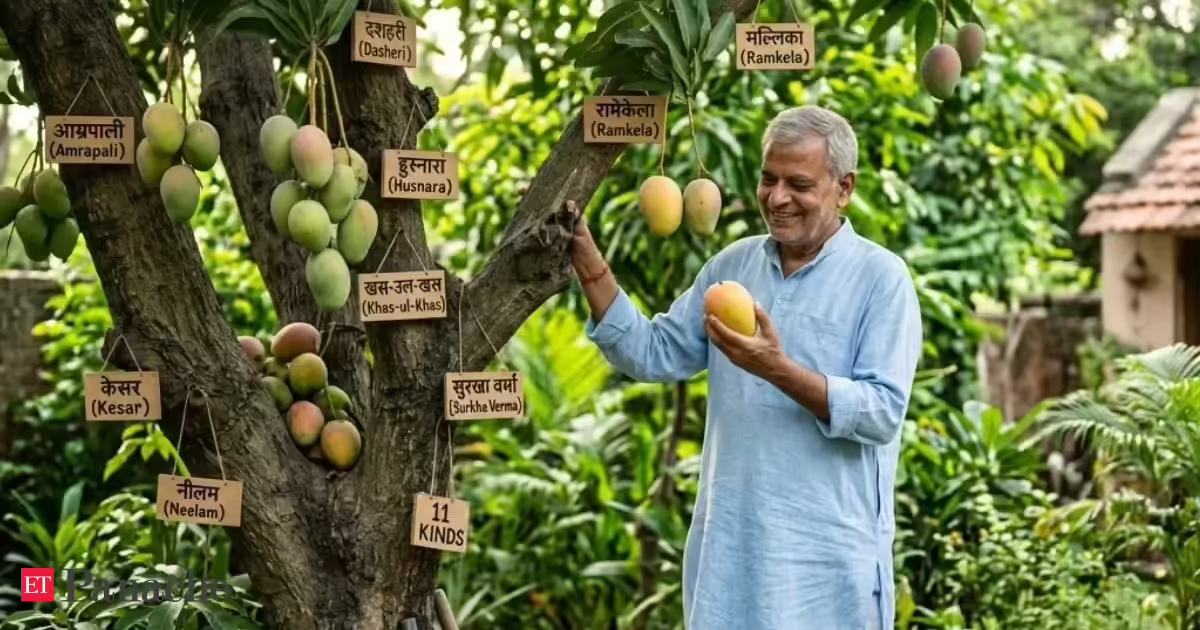
Summer brings with it the season of ripe fruits, warm afternoons and the timeless joy of harvesting fresh produce straight from one’s own garden. Growing fruits at home is not just a hobby but a meaningful way to reconnect with nature and embrace a healthier lifestyle. With a similar thought in mind, retired government official Anup Bajpai from Lucknow, Uttar Pradesh, has transformed his home garden into a unique space, growing multiple mango varieties on a single tree, simply to revisit his childhood days of plucking mangoes from trees in his village and savouring their raw, natural flavour. UP man reminisces childhood in village As per a report by The Better India, Anup Bajpai spent his younger days in Uttar Pradesh’s Tikariya village, where ripe mangoes were found in abundance, hanging from the trees. But after he moved to the city, the ex-government official missed the joy of eating raw mangoes despite the easy accessibility of the fruit in local markets or online stores. Despite the comfort that city life brought, Anup Bajpai wanted to enjoy the straight-from-the-tree mango-eating experience. That’s when he decided to grow his own mangoes in his backyard. So, he planted a mango sapling and soon the tree produced the Dussehri mango variety. As the mango tree grew, Anup put his horticulture skills to work.UP man grows mangoes in backyard to connect with his rootsThe retired government professional was fascinated by grafting, an agricultural process where branches from one plant are grafted onto another tree, allowing them to continue growing together and started to carefully add branches from different varieties. Each successful graft brought a new flavour, although it took years to grow. At present, every summer, Anup Bajpai’s garden boasts not one, not two, but 11 varieties of mangoes, including Dussehri, Amrapali, Ramkela, Husnara, Mallika, Khas-ul-Khas, Surkha Verma, Kesar and Neelam. For Anup, the tree serves as a reminder of his childhood days, more than an achievement. To him, the mango tree is a piece of his forgotten childhood in the village, a symbol of love and tradition, shared across generations.
1 tree, 11 mango varieties: UP man grows fresh mangoes at home to revisit childhood memories. His lush garden is a symbol of patience, love and tradition
A retired government official in Lucknow has cultivated a unique mango tree bearing 11 different varieties, a project inspired by his childhood memories of plucking fruit in his village. This endeavor allows him to relive the joy of savouring raw, natural mango flavors straight from the tree, reconnecting him with his roots and tradition.
346 words~2 min read