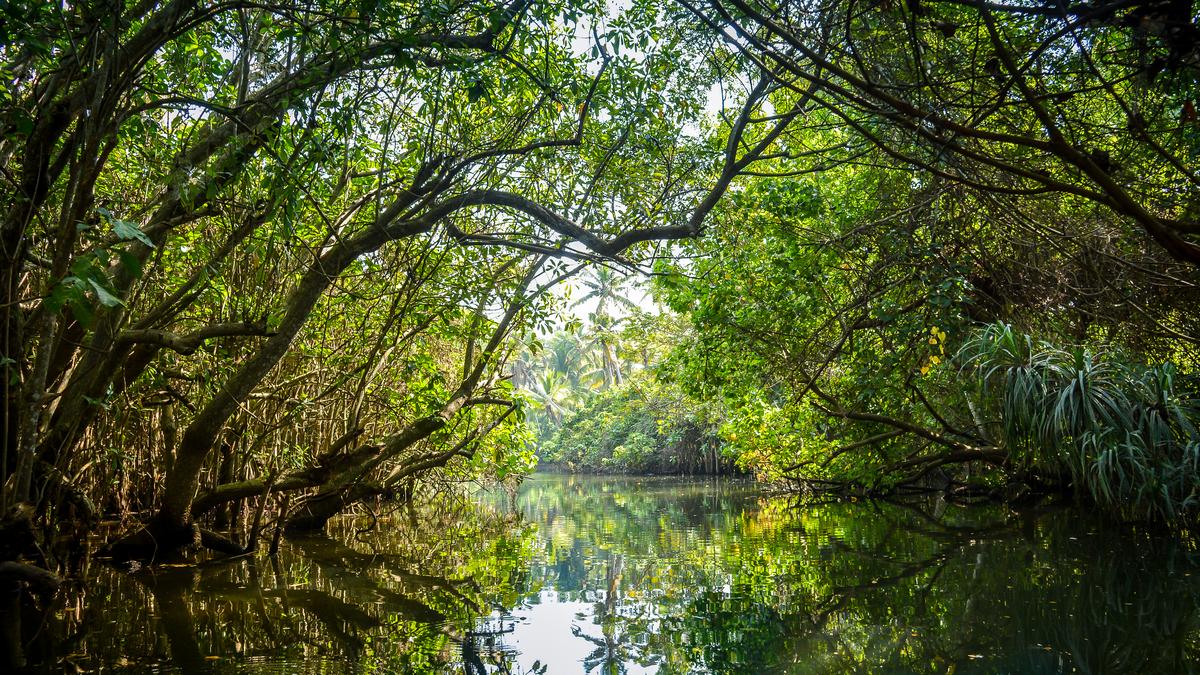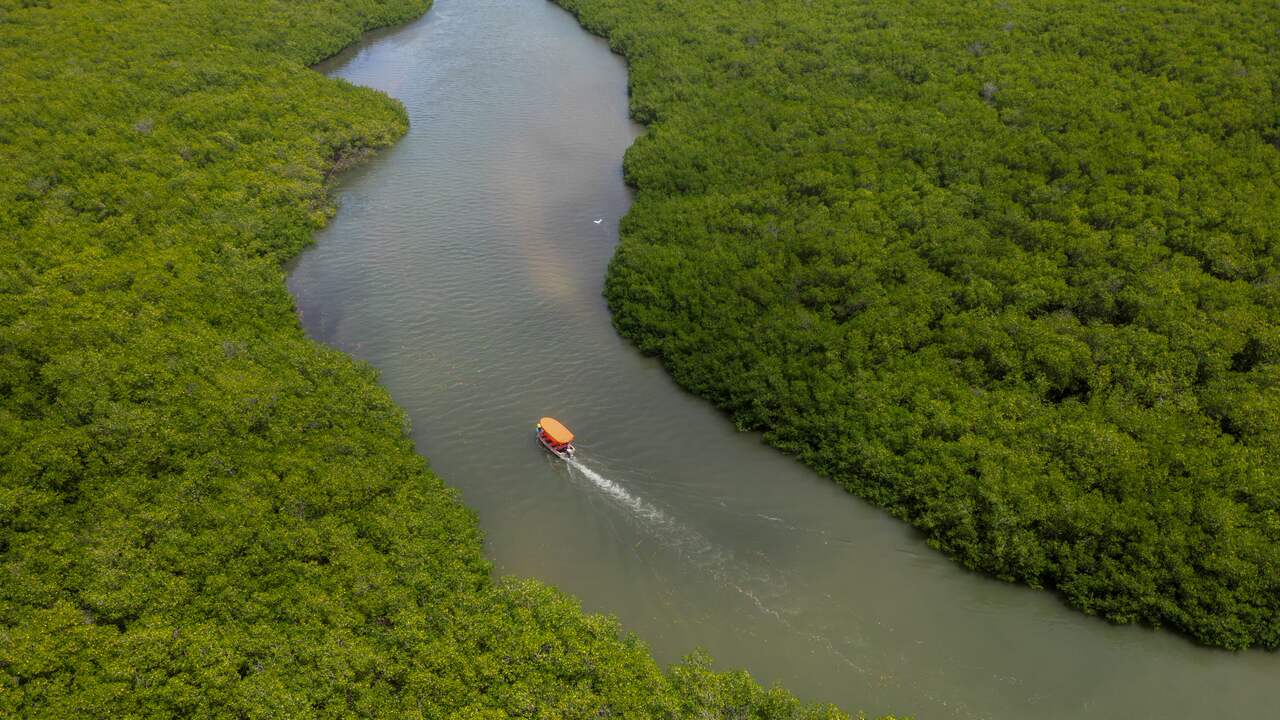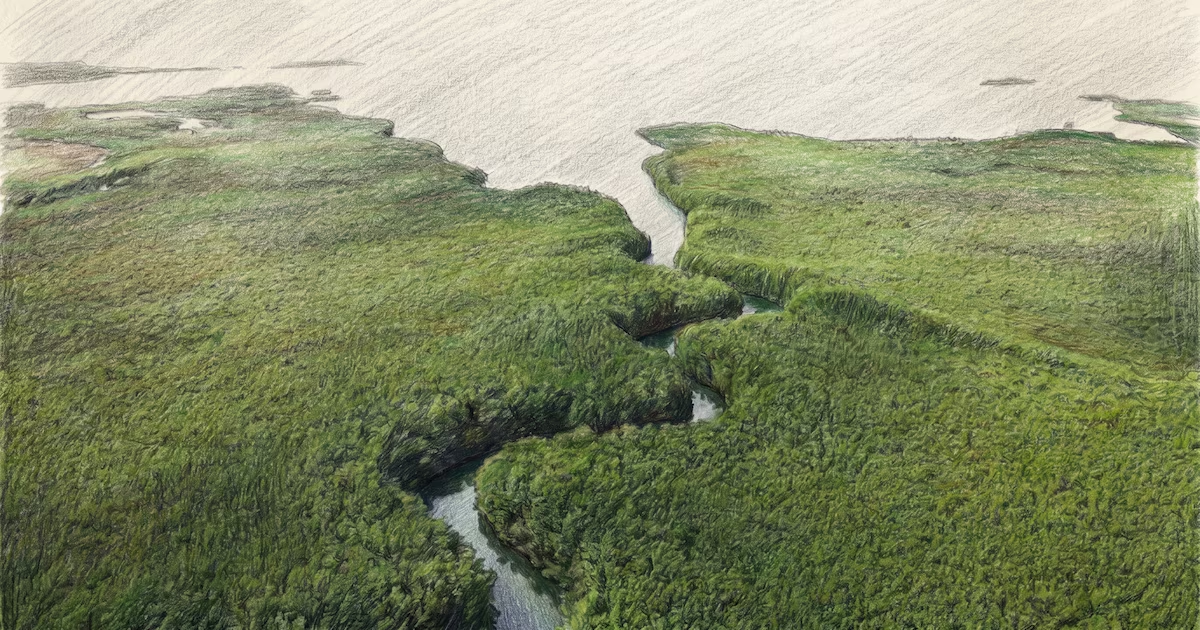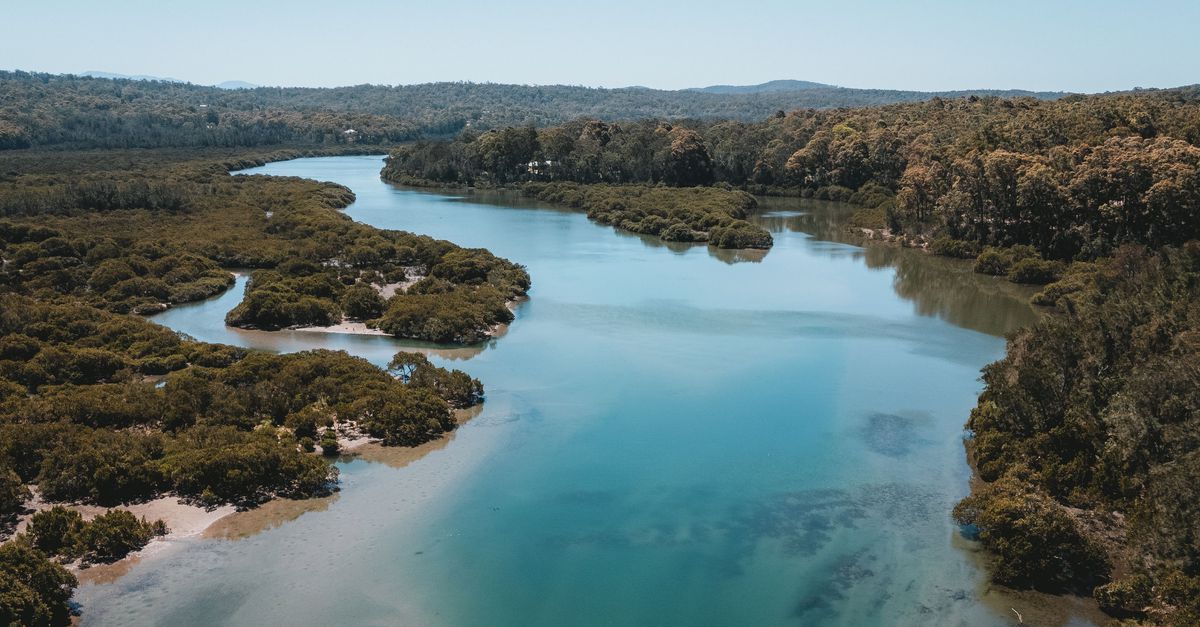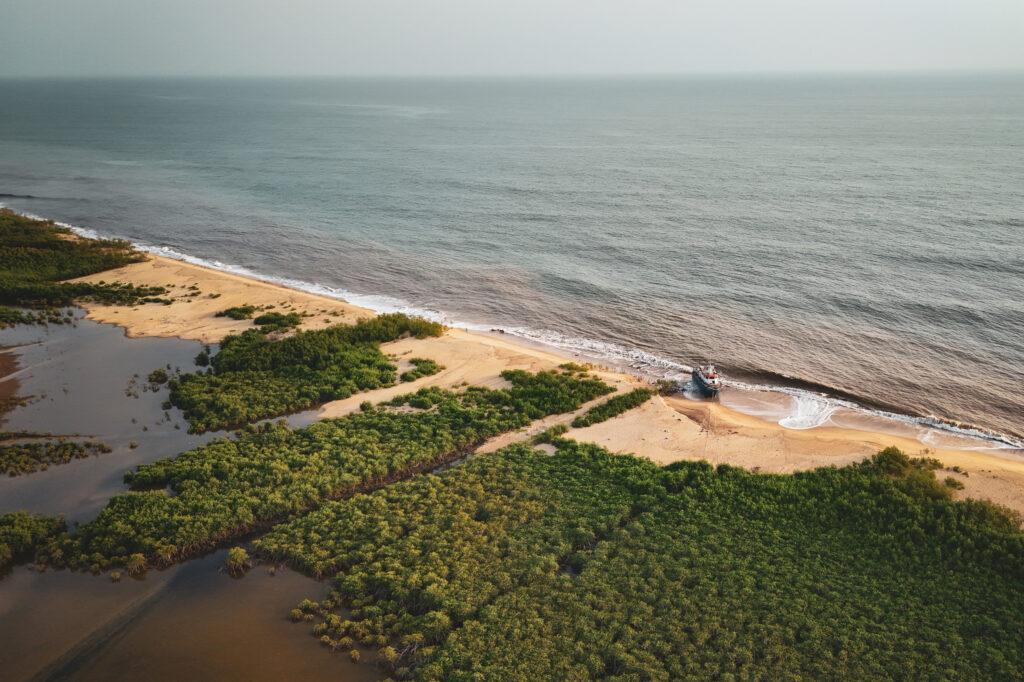
Mangrove forests have adapted over tens of millions of years to survive in harsh flooding from salty seas, while locking away vast stores of climate-warming carbon and protecting the world’s coastlines from storm surge.
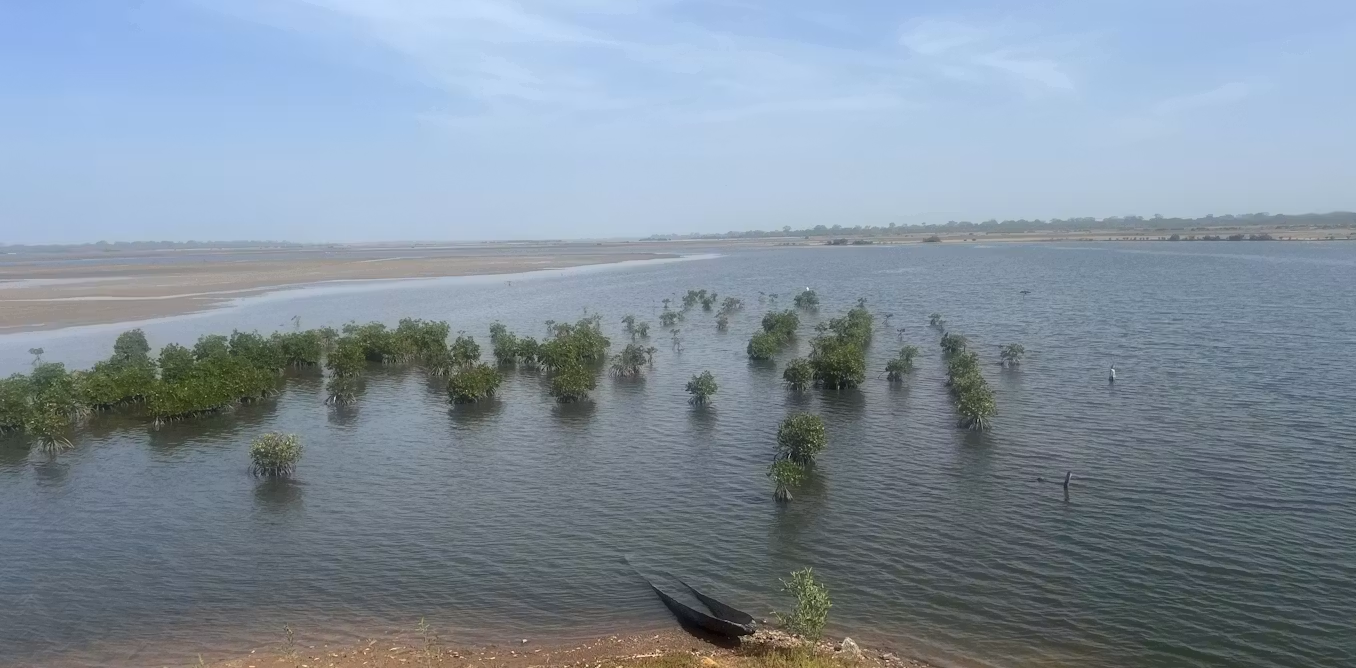
But a new modeling study suggests that even these hardy trees may reach their breaking point in the face of rapidly rising seas, with major consequences for the climate.
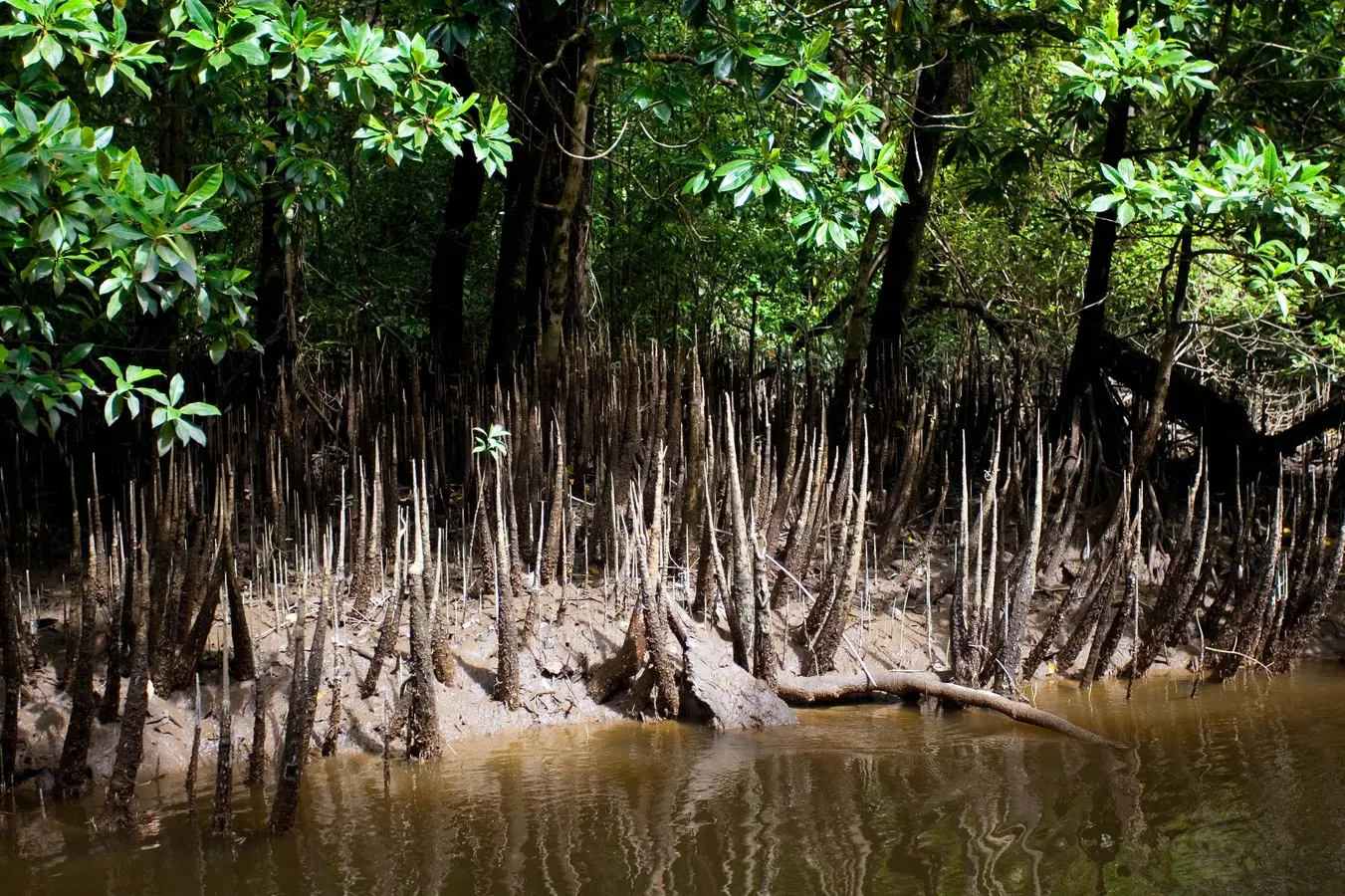
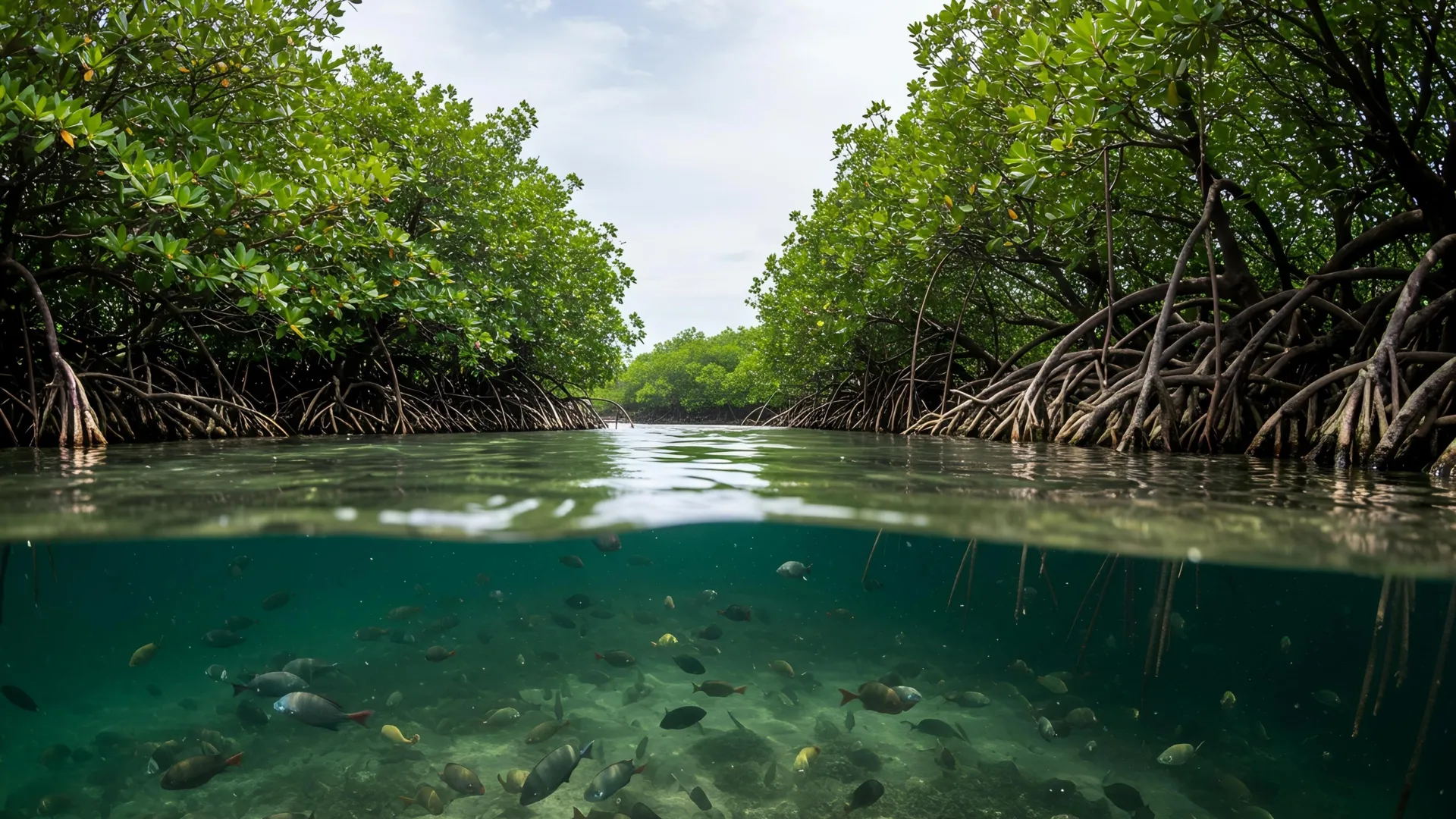
Mangroves punch well above their weight when it comes to carbon-storing ability. Though they cover less than 1 percent of the Earth’s surface, these coastal forests stash roughly 15 percent of all ocean carbon, mostly in the soil. Mangroves’ dense jumbles of roots trap sediment and help the trees handle inundation amid the daily rise and fall of the tides.
Past research has shown that some sea level rise may actually increase carbon storage and mangrove growth in some parts of the ecosystem. However, the new study, published this week in the journal Earth’s Future, found that carbon storage across an entire mangrove forest will likely decrease as suitable habitat shrinks and more mangroves die. Parts of these forests may even start emitting carbon instead of capturing it, said co-author Barend van Maanen.