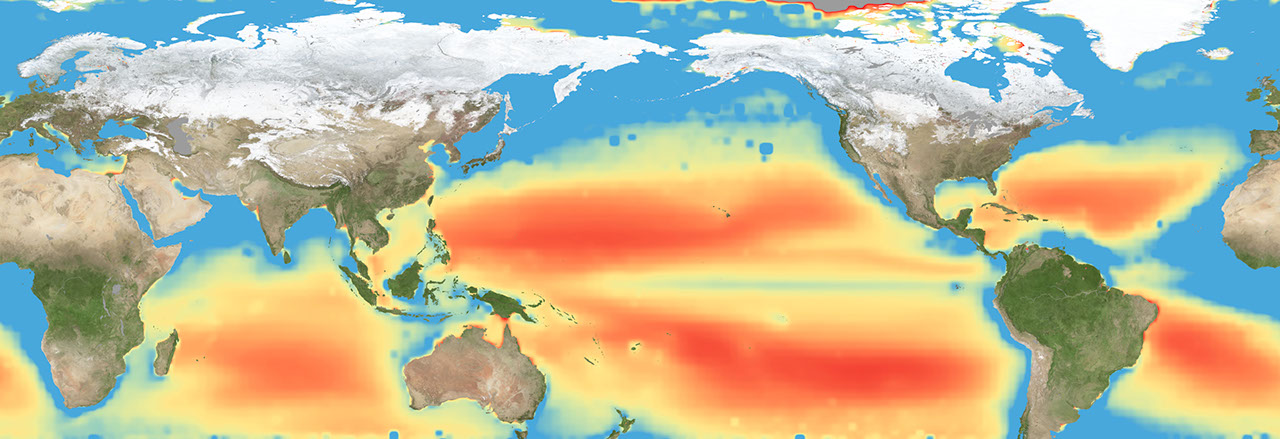
As Earth’s oceans warm, microscopic marine organisms are experiencing increasing stress due to a lack of vital nutrients. A new study combining NASA satellite observations, ocean surveys, and genetic testing on marine microorganisms suggests that warming ocean waters are limiting nutrient availability across much of the global ocean, with the potential to reshape marine ecosystems.
The research, published June 5 in Science Advances, tracked the condition of phytoplankton, which form the base of ocean food webs. Rather than measuring nutrients like nitrogen, iron, and phosphorus directly, the researchers inferred stress by tracking subtle shifts in the ratio of carbon to chlorophyll in phytoplankton observed from space. When the amount of chlorophyll decreases relative to carbon as seen in satellite data, it’s an indication that the plankton are stressed.
“As our ocean continues to change, the ability to observe and track its health through sustained, high quality remote sensing observations has never been more important,” said Laura Lorenzoni, Program Scientist for NASA’s Ocean Biology and Biogeochemistry Program at NASA Headquarters in Washington. “This is fundamental, as plankton communities are the base of the marine food web on which important economic activities rely.”