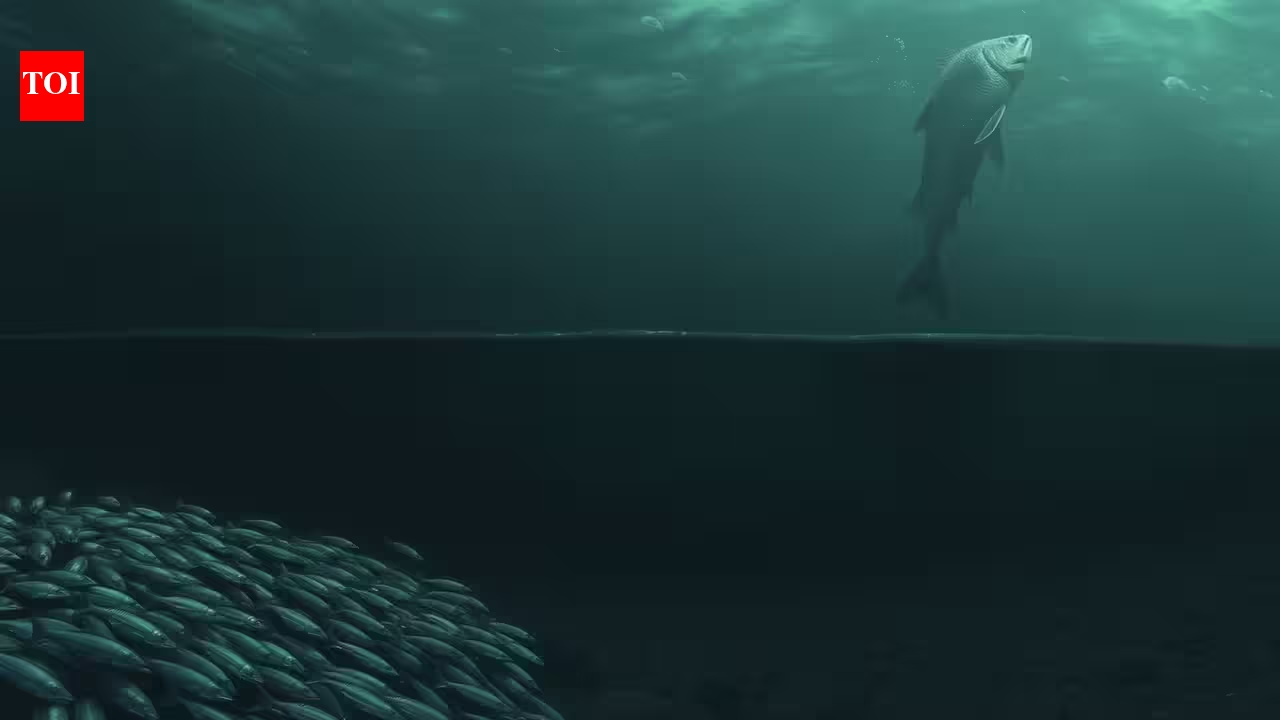
Scientists led by UC San Diego's Scripps Institution of Oceanography are warning that oxygen is disappearing rapidly from oceans and freshwater systems, potentially pushing the planet into an "unsafe space." Some of the resulting changes could persist for centuries and may not be reversible within human lifetimes.
The new review examines aquatic deoxygenation, which refers to declining levels of dissolved oxygen in the ocean (ocean deoxygenation), coastal waters, rivers, lakes and streams. The researchers assessed how this growing problem interacts with the nine major Earth system processes included in the Planetary Boundaries framework.
Introduced in 2009, the framework identifies environmental processes that are essential for maintaining a stable and resilient planet. It also tracks how human activity is pushing those systems beyond safe conditions.
The nine planetary boundaries are climate change, ocean acidification, biodiversity loss, atmospheric aerosol loading, stratospheric ozone depletion, freshwater change, land-use change, chemical pollution and biogeochemical flows (including the nitrogen cycle). The researchers argue that dissolved oxygen levels should also be formally included.