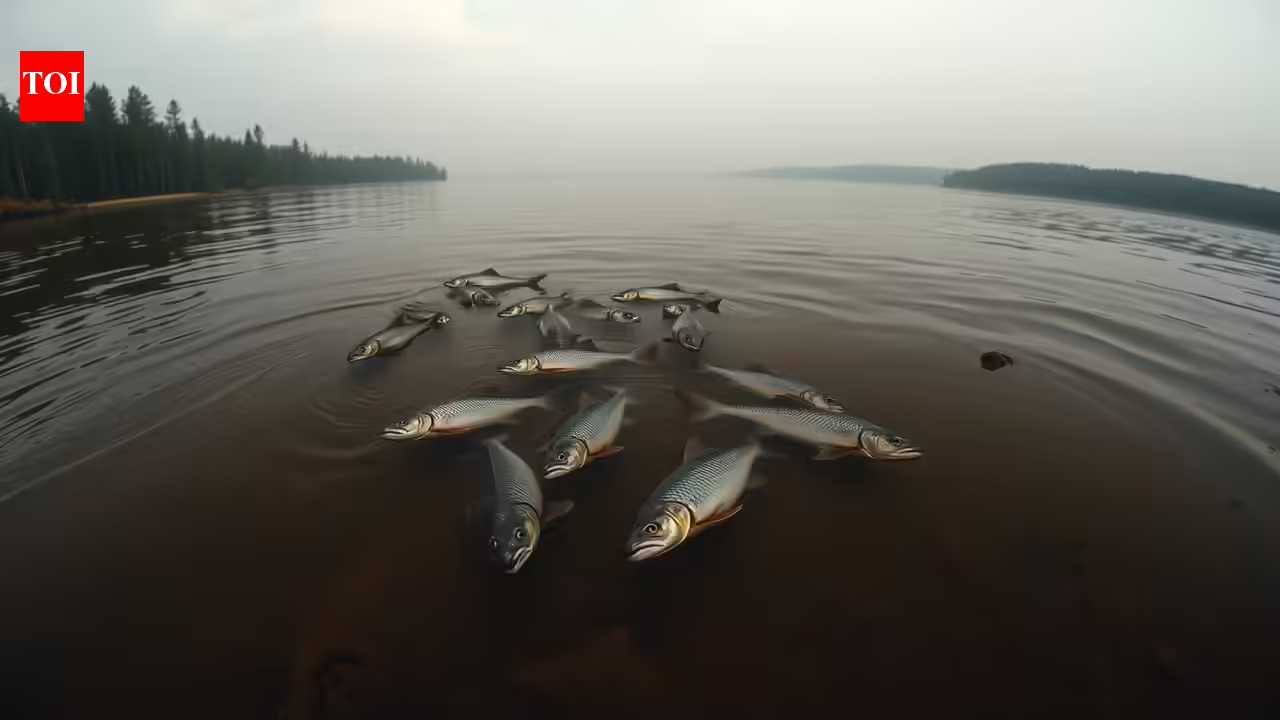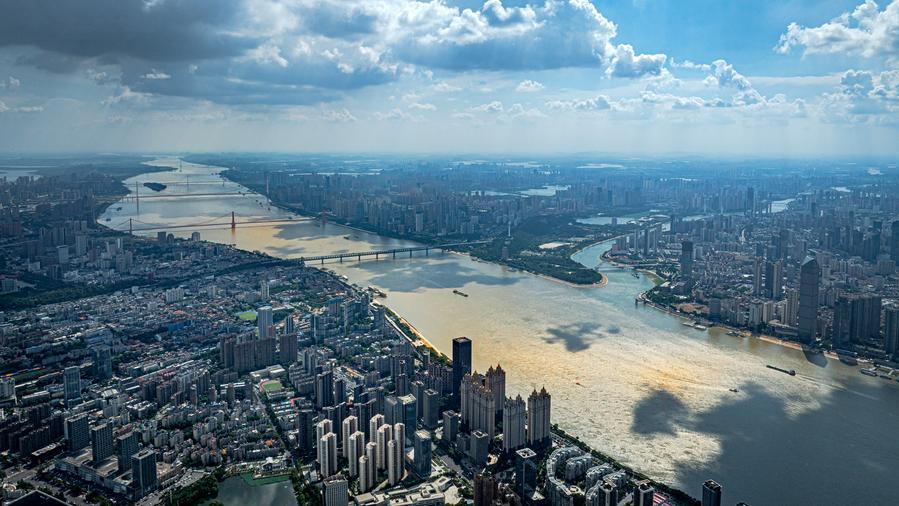
Think of dissolved oxygen as freshwater's invisible lifeline. It keeps fish alive, cycles nutrients, and holds the whole aquatic food chain together. When the oxygen levels in a body of water get too low, it becomes hypoxic. When oxygen is completely absent, it is called anoxic: fish suffocate, toxic metals leach from sediments, and greenhouse gases such as methane begin to bubble up into the atmosphere.Scientists who study rivers and lakes throughout the United States and Europe have documented and well established those declines for years. In the study ‘Widespread deoxygenation in warming rivers’ published in Nature Climate Change, Wei Zhi, Christoph Klingler, Jiangtao Liu, and Li Li reconstructed dissolved oxygen levels in 580 rivers across the United States and 216 rivers in Central Europe with deep learning models.Lakes have not fared better. A study of temperate lakes published in Nature in 2021 by Stephen F. Jane and colleagues, titled ‘Widespread deoxygenation of temperate lakes,’ reported widespread declines in dissolved oxygen concentrations in both surface and deep waters, caused by lower solubility at warmer surface temperatures and increased thermal stratification at depth.Against that backdrop, results from China are turning heads.What researchers found across nearly 1,300 sitesIn June 2026, Nature Geoscience published a study titled ‘Widespread deoxygenation of freshwater ecosystems regularly reversed by nutrient management’ by Yongqiang Zhou of the Chinese Academy of Sciences and colleagues that tracked dissolved oxygen levels at 972 river sites and 354 lake sites across China from January 2005 to December 2022. Surface water temperatures were increasing at 1.2°C per decade, a rate that would normally drive oxygen out of water, but the results were the opposite. According to Courthouse News Service's reporting on the study, dissolved oxygen concentrations increased by an average of 12% per decade in rivers and 4.5% per decade in lakes, and oxygen saturation levels also improved significantly.Massive investment in wastewater infrastructure helped drive the oxygen recovery seen across Chinese rivers and lakes. Image Credits: PexelsThe incidence of hypoxia and anoxia also fell markedly. The same report found that the number of hypoxia events in rivers dropped from 170 during 2005–2010 to just 25 during 2017–2022, while the number of anoxia events fell even more steeply.The policy behind the turnaroundNone of this happened by accident. The Courthouse News Service report on the study said China’s spending on wastewater treatment rose from about $140 billion a year in 2000 to about $1.4 trillion in recent years. The number of treatment plants increased, and the share of wastewater treated increased from 34% to more than 98%. Those investments reduced two key sources of deoxygenation: biochemical oxygen demand, which measures the amount of oxygen being consumed by organic pollution as it breaks down, and excess nutrients such as nitrogen and phosphorus.According to Professor Zhou, “While water temperature remains a strong predictor of oxygen solubility, our models show that reducing oxygen demand through pollution control has more than offset the oxygen loss expected from warming.”The data also showed a significant difference. The oxygen gains were associated more strongly with reduced organic pollution loads than with phytoplankton abundance. In plain language: the oxygen gains came from the reduction of organic pollution loads, not from controlling algae. This provides scientists and policymakers with a more precise and actionable goal.Healthier oxygen levels in freshwater systems directly support fish populations and aquatic biodiversity. Image Credits: PexelsWhy rivers recovered faster than lakesRivers, particularly smaller headwater streams, responded more quickly than lakes because they mix and flush more efficiently. A swiftly moving stream is flushed and aerated as it flows. A still lake resting on top of deep, stratified oxygen-starved water takes longer to turn around. The lake recovery was slower but measurable and significant throughout the study period.What this means for the USThe findings from China may offer a useful model for freshwater scientists in the United States. According to Zhi et al. in Nature Climate Change, the US has its own well-documented deoxygenation problem: agricultural rivers in particular experienced the fastest oxygen loss of any river type studied across 580 US waterways. The deoxygenation trend in American rivers is real, ongoing, and related both to warming temperatures and land use.China’s scale of investment is not something the US would replicate in a short period of time. But the lesson underneath is the same. Freshwater systems can recover oxygen with serious infrastructure and policy commitment to control organic and nutrient pollution, even as the climate continues to warm.Freshwater is essential for drinking water supplies, fisheries, biodiversity, and ecosystem health. The evidence from China suggests that oxygen loss in rivers and lakes is not inevitable, but reversing it requires sustained, large-scale action on the pollution side of the equation, not just hope that temperatures will stabilize.
China's rivers and lakes defied a global oxygen crisis across 17 years, and nearly 1,300 sites, and the surprise is that it had nothing to do with slowing down climate change
Over the past 17 years, China's rivers and lakes have experienced a surprising increase in dissolved oxygen levels despite warming temperatures, attributed to aggressive wastewater management and pollution control policies.
784 words~4 min read