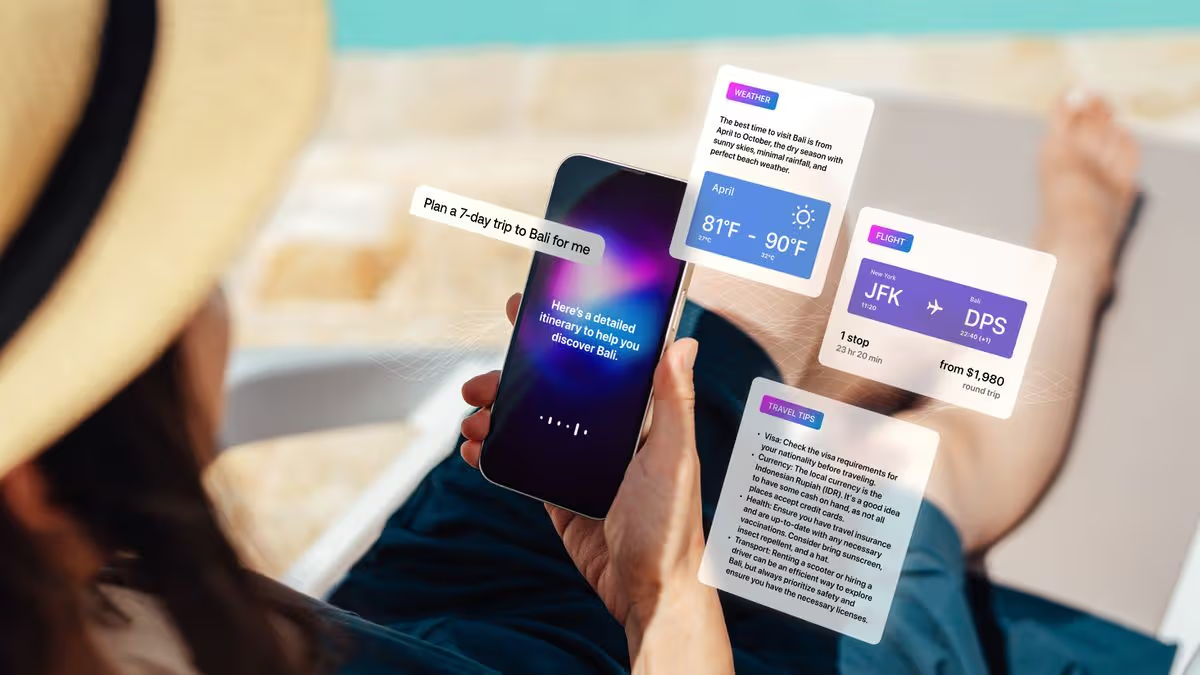
The appeal of getting a free, quick, well-structured travel plan is easy to see, and something that is causing travel agents another Covid-sized thing to worry aboutMilo Boyd Deputy Travel Editor & Commercial Writer14:52, 05 Jun 2026Places that don't exist. Events on the wrong day. Attractions miles apart.Holiday itineraries designed by AI appear helpful and comprehensive, but are actually riddled with mistakes and old information that could ruin your holiday, analysis of them has found.More and more people are turning to large language models (LLMs) to plan their trips away. One study puts the number of people who have turned to a bot for holiday inspiration at 40%.The appeal of getting a free, quick, well-structured travel plan is easy to see, and it's another Covid-sized thing travel agents have to worry about.But how good are the robots at the delicate art of holiday planning?I asked the four biggest LLMs to design weekend break itineries for four destinations, and then called on local experts in those places to assess their work. This is what we found.GrokJonnie Fielding, a London tour guide since 2011 with 227,000 followers on Instagram, says the itinerary is "pretty good" if not "generic", with some glaring issues.Grok's suggestions of a walk through Westminster is good, but better if you have a guide point out the smaller details, such as "gas lamps, torch snuffers, fire protection badges".The alternative river cruise and London Eye are solid bets for first-timers in the city, but other aspects of the itinerary are less well thought through.Jonnie argues that the itinerary is far too busy. "I’m a big fan of spending some time people watching. Soaking things in rather than rushing around, and because of the amount in this itinerary, visits to The Tower of London or Westminster Abbey are really rushed," he said.The biggest mistake is including the Changing the Guard, which starts at 10:43am at St James’s Palace and doesn't run on Saturdays.He concluded: "I know this is a generic itinerary for first-time visitors, but I think London has so much more to offer. Loads of small museums, house museums, places of interest for all interests. They would also leave, not really knowing London."ClaudeAlthough Claude breaks the itinerary down into activities and eating, offering the reader a little more freedom, its work left Jay Allen from Unseen Japan incredibly cold."Overall, this itinerary lacks any context, history, and rich cultural detail that our customers love hearing about on our tours," Jay says.The itinerary is full of old information. For example, Tsukiji is no longer the location of a wholesale fish market. It moved to Toyosu several years ago."Why did the original market arise in Tsukiji in the first place? None of this rich detail and historic background is included. Even if it were, this info would be drawn from general public sources, not from the rich background that our tour guides - most of whom have degrees in Japanese Studies or years working as journalists in Japan - can provide," Jay adds.The Saturday covers little ground and is too geographically spread out, missing "so much rich detail of the Tsukiji/Asakusa shitamachi area", according to Jay.Many suggested destinations are "trite", "well known" or just "commercial", such as the Starbucks in Shibuya Scramble. "You can get a much better view of the scramble, eg, from the bar at the top of the Magnet building - and you’d be fighting fewer crowds," Jay notes."If you look at the second day, the itinerary gives you no suggestions of cool art galleries and small, uniquely Japan clothing shops to stop (such as the Ura-Harajuku area off the Main Street, where independent fashion still reigns), nor does it tell you about the less-crowded Brahms’ Path that runs alongside the packed Takeshita Street."The restaurant recommendations "are the same five places everyone else is going" and are hard to get tables at, as opposed to the real gems that require "a basic working knowledge of Japanese".Jay concludes: "Claude is giving you the wisdom of the crowds. That can be helpful in some cases. In this case, it equates to a bland, ordinary vacation that will likely prove an exercise in frustration for most travelers."Google AIAmy Siegal, a luxury travel advisor based in NYC, praised Google AI for highlighting some "iconic spots", but argued that only "a human expert knows the ins and outs of these places – what time of day to go where, and in which order they’d work best."On day one, Amy suggests arriving at TKTS earlier in the day to have more choice of shows and seats, and to avoid the line.Saturday's itinerary has too much "darting around". She suggests it could be arranged more smoothly, with more interesting food options chosen.Sunday is packed full of landmarks and history, which is good, but the order is wrong. "I would incorporate some lesser-known landmarks and eateries," Amy added.ChatGPTVicky Reeves, who is the director of The Real Algarve villa company, applauded ChatGPT for picking out some "amazing places" in its "very good overview," but argued it failed to consider flow, how much is possible to fit in, and the weather."Understanding seasonality is important because this itinerary would feel very different in August compared to November and that is something an agent or guide would pick up on. I also think it’s a bit ambitious and that’s really down to a lack of practical knowledge and insight," Vicky explained."For example, the plan suggests exploring Lagos, visiting Ponta da Piedade and potentially heading to Sagres before flying home. That's fine if you've got a late return flight, but an agent or guide would check to make sure that everything was possible without adding stress or risking your flight home. Benagil is also another good example. It's one of the Algarve's most iconic attractions, but during peak season, travel times and parking can be difficult, and tours often need booking well in advance, which isn't really considered at all."The AI did pick out some amazing places, but I do think it's missing a personal feel. It doesn’t suggest any hidden beaches or lesser-known spots because that's much harder for AI to uncover. That insight can really make all the difference in making a trip feel unique."In conclusionWhat is most striking about the itineraries is how comprehensive and well thought out they seem - particularly Claude's - but how riddled with issues they are once a closer look has been taken.ChatGPT suggesting an event that doesn't take place on the requested day is a rookie mistake that could disrupt a trip, while Claude not realising a famous fish market has moved is similarly clumsy.All the AIs seem too ambitious when it comes to the number of activities and the distance between each.Article continues belowCertainly, the bots are great if you're looking for a broad overview of a place, but they lack the precision you'd want to fully rely on its suggestions, and the depth of knowledge a local guide can provide that can bring a place to life.
I got AI to plan my holiday - then local guides ripped apart its suggestions
The appeal of getting a free, quick, well-structured travel plan is easy to see, and something that is causing travel agents another Covid-sized thing to worry about
1,165 words~5 min read