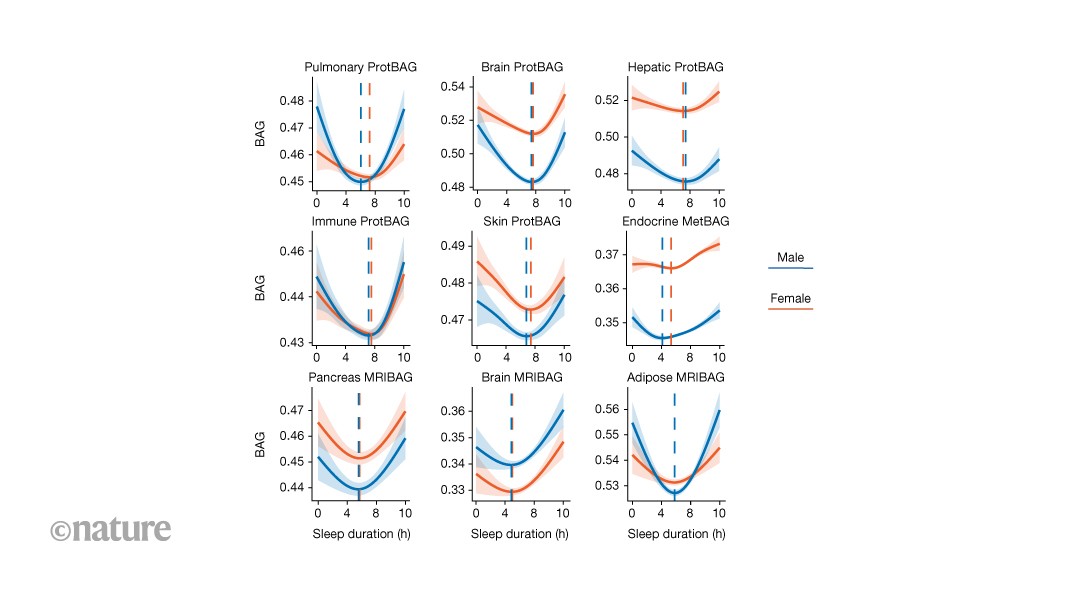
Most of us know that not getting enough sleep can take a toll on health. But what if sleeping too much isn't ideal either? A major new study published in Nature has found that both too little and too much sleep may be linked to faster biological aging across multiple organs, including the brain, heart, lungs, and immune system.Researchers analyzed data from nearly 500,000 participants and found that adults who slept between approximately 6.4 and 7.8 hours a night appeared to have the healthiest aging profiles. Those who regularly slept outside that range showed signs of accelerated aging at the molecular level.The findings add to growing evidence that when it comes to sleep, more isn't always better.ALSO READ: Tamannaah Bhatia’s trainer Siddhartha Singh says cutting white rice & bread won’t help you lose weightResearchers found a 'sweet spot' for sleepThe study, led by scientists at Columbia University, used machine-learning models and biological aging markers to examine how sleep duration was linked to aging throughout the body. According to lead author Junhao Wen, assistant professor of radiology at Columbia University Vagelos College of Physicians and Surgeons, both insufficient and excessive sleep were associated with faster aging in nearly every organ studied.The research also linked shorter sleep durations to conditions including anxiety, depression, obesity, type 2 diabetes, and heart disease.But does that mean everyone should aim for exactly seven hours of sleep each night? Not necessarily, Dr. Sudhir Kumar, Senior Consultant Neurologist at Apollo Hospitals, Hyderabad, told Economic Times in an interview.ALSO READ: Why are Indians suddenly buying more vitamins after starting Ozempic-like weight loss drugs?"There probably is a population-level 'sweet spot,' and this study reinforces what many previous studies have shown, a U-shaped relationship where both short and long sleep are associated with poorer health outcomes."At the same time, he stressed that sleep needs aren't identical for everyone. "Genetics, age, medical conditions, and lifestyle all influence individual requirements. The key message is not that everyone must sleep exactly 7 hours, but that most adults appear to do well within a fairly narrow range," he stated.Is sleeping too much actually bad for you?The study's findings may surprise people who view extra sleep as a sign of healthy recovery. However, neurologists say longer sleep duration often reflects an underlying issue rather than causing one."In clinical practice, excessive sleep is often more of a marker than a cause," Dr. Kumar explained."Conditions such as depression, sleep apnoea, neurodegenerative disease such as Alzheimer's or Parkinson's disease, chronic inflammation, or other medical illnesses can increase sleep duration."He added that the relationship is often difficult to untangle. "While prolonged sleep is associated with adverse outcomes, it is often difficult to determine whether long sleep is causing the problem or reflecting underlying disease."What the findings mean for brain agingOne reason the study attracted attention is its focus on biological aging clocks, tools designed to estimate how quickly organs are aging based on molecular markers."The study is scientifically impressive because it analysed data from nearly 500,000 individuals and used advanced biological aging clocks across multiple organs," said Dr. Kumar.However, he noted that these markers are not the same as actual disease outcomes. "They provide insight into biological aging processes but are not the same as demonstrating future dementia, stroke, or cognitive decline. The findings are important and biologically plausible, but they should be viewed as supportive rather than definitive evidence of brain aging."Sleep quality may matter more than sleep durationFor many people, the bigger question is whether they should focus on sleeping longer or sleeping better. Dr. Kumar believed both are important, but quality may ultimately have the greatest impact on brain health."Both matter, but if I had to choose one, I would emphasize sleep quality." He explained that simply spending more time in bed doesn't guarantee meaningful rest."Seven hours of fragmented, non-restorative sleep is not equivalent to seven hours of good-quality sleep. People should focus not only on how long they sleep but also on whether they wake refreshed and remain alert during the day."What fitness coaches see when clients don't sleep wellThe connection between sleep and health isn't limited to the brain. According to Bhagat Gaheer, an online transformation coach who works with clients on fitness, nutrition, and recovery, poor sleep can quickly show up in physical performance and body composition goals."Poor sleep can slow fat loss, hurt muscle recovery, reduce strength and performance, increase cravings, and leave you tired all day," he told ET.He said many people focus heavily on workouts and nutrition while overlooking the role of sleep. "Even good training and diet won't work as well with bad sleep."Is sleeping 9 to 10 hours a night good for recovery?Many athletes and fitness enthusiasts assume that more sleep automatically means better recovery. Gaheer said that isn't always the case. "For most people, 7–8 hours of quality sleep is enough for good recovery.""Sleeping 9–10 hours occasionally can help during intense training or fatigue, but needing that much sleep regularly can sometimes point toward poor sleep quality, high stress, overtraining, or recovery issues."How to tell if you're actually recovering wellRather than obsessing over sleep-tracking numbers, Gaheer encouraged people to pay attention to how they feel and perform.When evaluating recovery, he looks for several signs:Waking up feeling freshSteady energy throughout the dayStable moodImproving strength levelsGood workout performance and muscle pumpsLow soreness and fatigueControlled hunger and cravingsA consistent sleep schedule"Both matter, but sleep quality usually matters more than just hours," he said, echoing similar views as that of Dr Sudhir Kumar.Simple habits that support healthy sleepExperts agree that sleep is one of the most powerful lifestyle factors for long-term health. Dr. Kumar recommended keeping the basics consistent:Maintain regular sleep and wake times, even on weekendsAvoid screens and social media for at least one hour before bedGet morning sunlight exposureStay physically activeLimit caffeine later in the dayAvoid heavy meals close to bedtimeSeek evaluation if you snore loudly or feel excessively sleepy during the day"Good sleep is one of the most powerful and modifiable factors for maintaining long-term brain health," he said.According to experts, the goal isn't to chase a perfect number. Instead, focus on getting consistent, high-quality sleep and pay attention to how your body responds. If you're waking up refreshed, staying alert throughout the day, and recovering well physically and mentally, you're likely on the right track.
Sleeping more than 8 hours? Senior Neurologist at Apollo Hospitals explains why it may signal a health issue
New research reveals that both too little and too much sleep can accelerate biological aging across vital organs. A study of nearly 500,000 people found a 'sweet spot' of 6.4 to 7.8 hours nightly for healthiest aging. Dr Sudhir Kumar, Senior Consultant Neurologist at Apollo Hospitals in Hyderabad, explains to the Economic Times why too much sleep may hint at a health issue.
1,047 words~5 min read