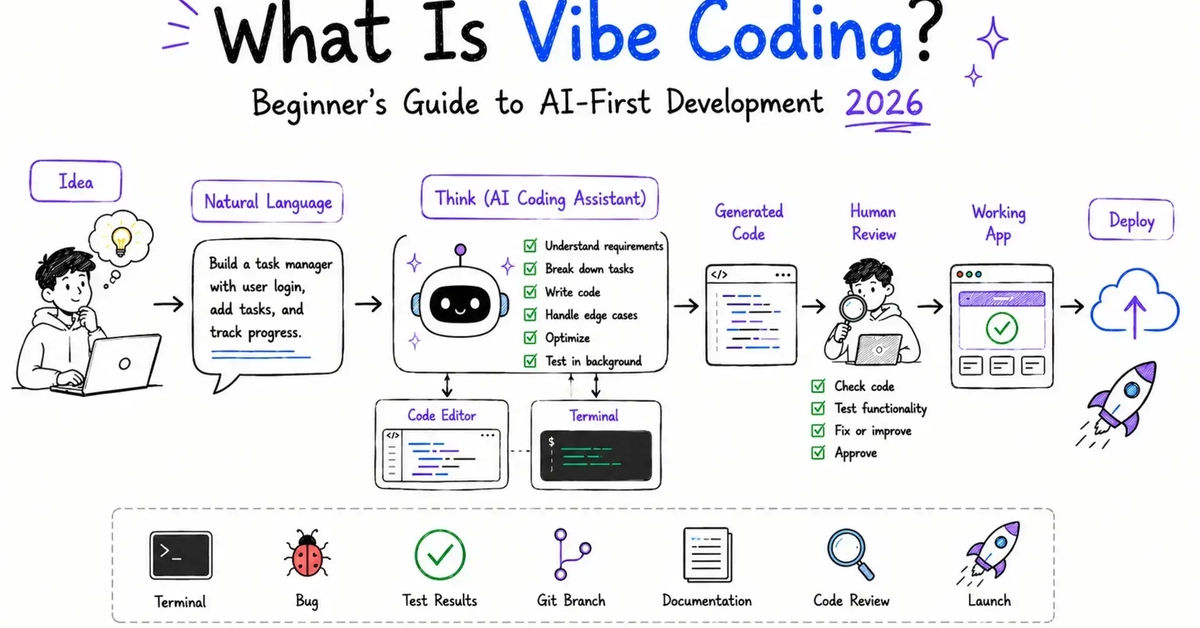
AI-first development is changing how software gets built. A new approach called “vibe coding” sits at the center of that shift. Developers describe what they want in plain language. An AI agent turns that description into working software.
The term was coined by Andrej Karpathy. It captures a move away from line-by-line coding toward natural-language software creation. The developer sets direction and reviews output. The agent handles most of the implementation.
It lowers the cost of going from idea to prototype. A founder can test a concept without a full engineering team. An experienced developer can skip boilerplate and focus on architecture. The result is faster iteration and shorter feedback loops.
The tools below all support vibe coding workflows. They differ mainly in one trade-off: how much control the developer keeps versus how much the agent automates. Some are full-stack agent platforms that ship live products. Others are AI-native editors that keep the human closer to the code.
A few factors help when choosing among them. Consider how well a tool understands large or existing codebases. Check whether it can run end-to-end or only assist in the editor. Look at how it handles review, since pull requests and human checkpoints reduce risk. Privacy and hosting also matter for enterprise teams with strict data rules. The right pick depends on your project stage and your appetite for automation. Here are 15 worth knowing: