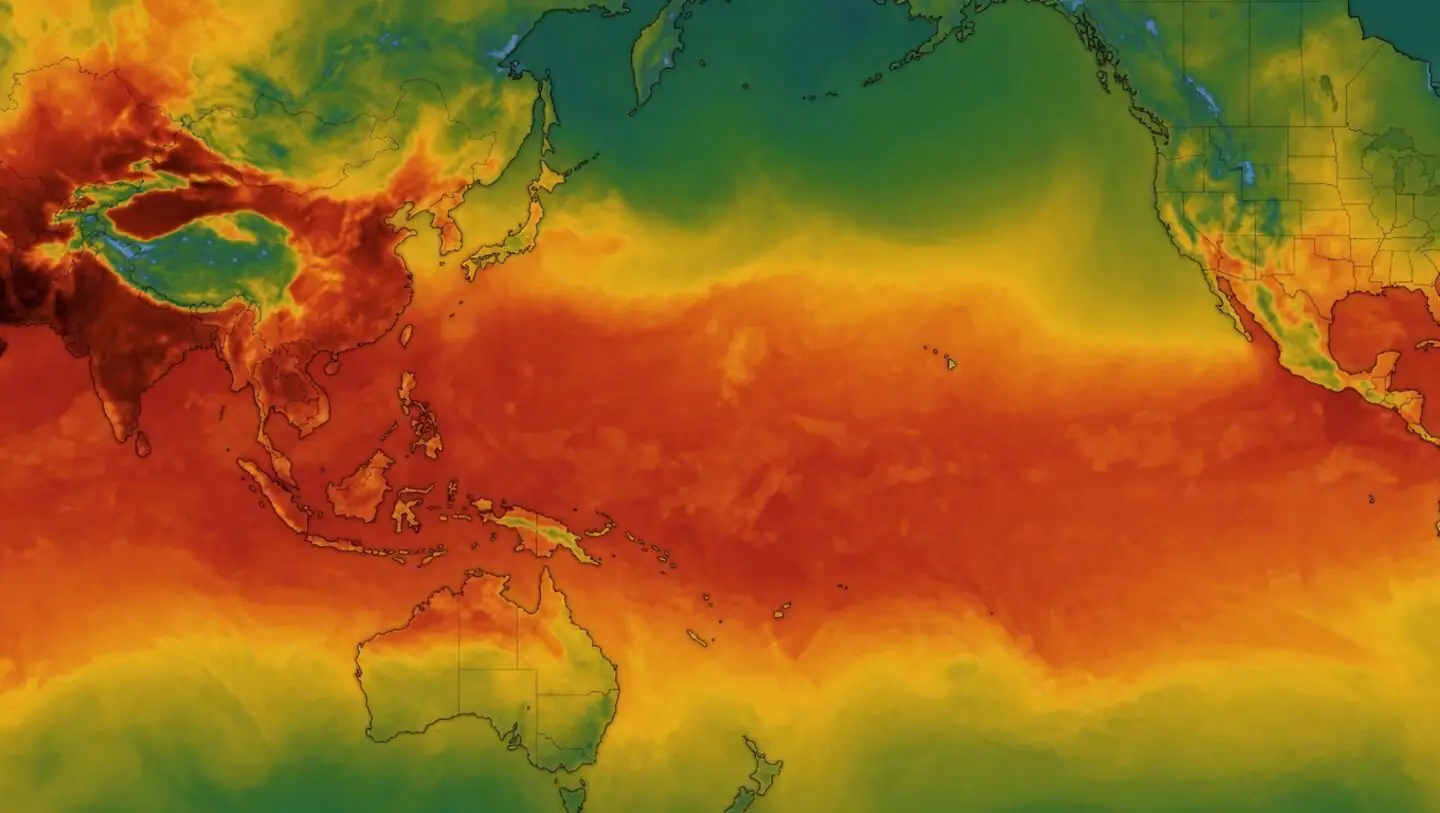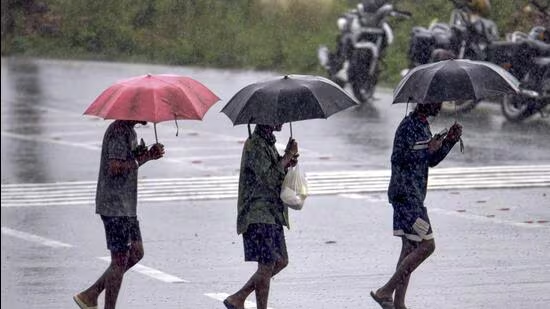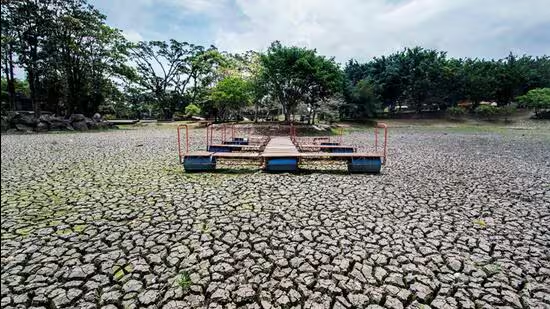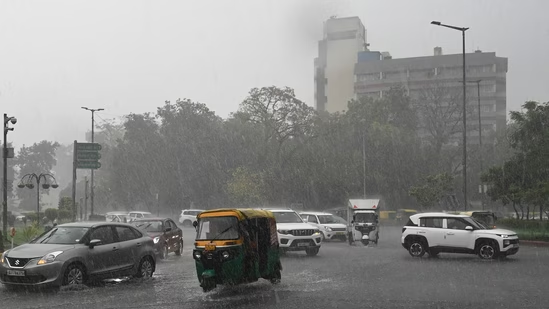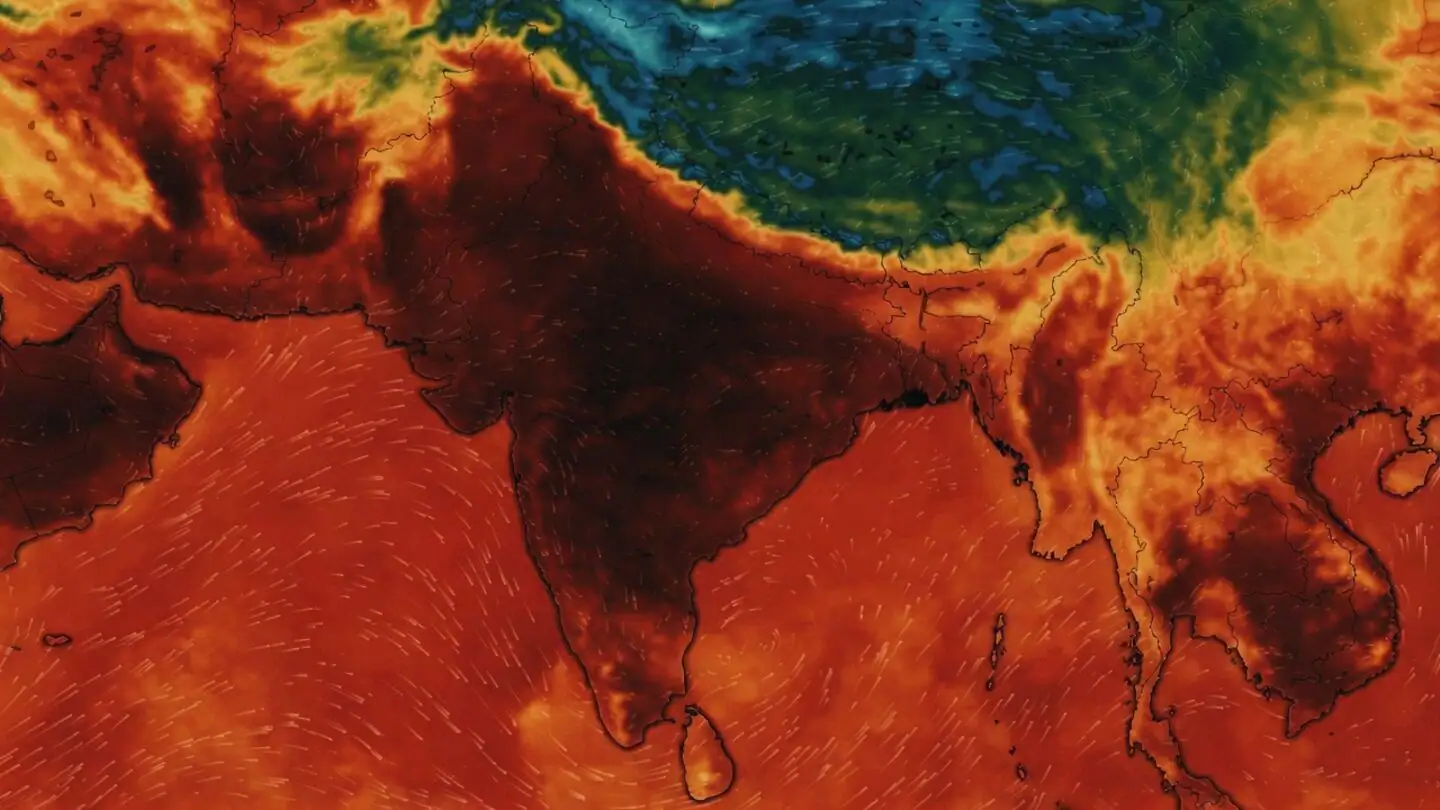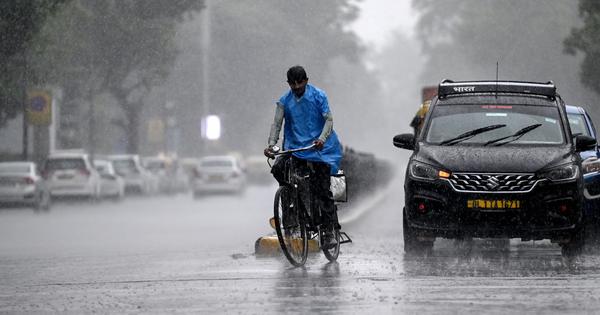
A major global weather signal has officially begun to emerge. The latest update from the European Centre for Medium-Range Weather Forecasts (ECMWF) shows that sea surface temperatures in the tropical Pacific Ocean crossed the critical 0.5°C threshold in May, indicating the onset of El Nino conditions.The development could have far-reaching consequences for weather patterns around the world, including India's southwest monsoon, which plays a crucial role in agriculture, water supply, and the broader economy.ALSO READ: Who is Jesse Ridgway and what is his net worth?Impact on India's MonsoonThe ECMWF update arrived on the same day that the southwest monsoon made its onset over Kerala, three days later than its normal arrival date of June 1.India Meteorological Department (IMD) Director General Mrutyunjay Mohapatra said the monsoon is expected to advance into additional parts of the western coast and Karnataka, while also spreading across Andhra Pradesh and Tamil Nadu over the next few days.He noted: "The intensity of rainfall in these areas is not likely to be high." Regarding the emerging El Nino conditions, Mohapatra said it would be prudent to wait for updates from other international weather agencies before drawing firm conclusions.ALSO READ: Tennessee woman raises $150,000 for 85-year-old theater worker she had never metWhat Does the Latest ECMWF Update Show?According to the ECMWF's latest assessment, temperatures in the Nino 3.4 region of the Pacific Ocean — the area most closely monitored for El Nino formation — rose above the 0.5°C mark during May.While meteorological agencies typically require these conditions to persist for at least three consecutive months before formally declaring an El Nino event, experts say the atmospheric changes linked to the phenomenon are already underway.Veteran meteorologist and former Earth Sciences Ministry secretary M Rajeevan told TOI: "The latest chart from ECMWF shows that the 0.5-degree threshold has been crossed. Officially, an El Nino event will be declared only when these changes persist for at least three months. But that's of academic interest. Changes in the atmosphere associated with an El Nino are already being seen and its impact being felt."The latest ECMWF seasonal forecast suggests temperatures in the Nino 3.4 region had climbed to more than 1°C above normal by the end of May.What Is El Nino and Why Does It Matter?El Nino is a climate pattern marked by unusually warm sea surface temperatures in the central and eastern tropical Pacific Ocean. The phenomenon influences atmospheric circulation across the globe and can alter rainfall patterns, temperatures, and the frequency of extreme weather events.For India, El Nino is closely watched because it has historically been associated with weaker monsoon rainfall, although the relationship is not always straightforward.IMD Forecasts Below-Normal RainfallThe IMD has already projected a below-normal monsoon for the season, estimating rainfall at 90% of the long-period average. This places the forecast on the threshold of the "deficient" category, which is defined as rainfall below 90% of the long-term average.Any strengthening of El Nino conditions in the coming months could add further uncertainty to rainfall distribution across the country.Other Global Agencies Also Seeing WarmingThe ECMWF findings are consistent with observations from other international weather agencies. Last month, US government climate institutions estimated an 82% probability of El Nino developing during the May-July period.Meanwhile, Australia's Bureau of Meteorology reported that temperatures in the Nino 3.4 region were 0.67°C above average by late May. While this exceeds the 0.5°C benchmark used by many forecasting agencies, Australia's official threshold for declaring El Nino is 0.8°C.What Happens Next?Scientists will now closely monitor whether the warming trend persists through June, July, and August. If elevated temperatures continue, El Nino could be officially declared by major weather agencies in the coming months.For India, the focus will remain on how these Pacific Ocean changes influence the progress and performance of the southwest monsoon, which supports millions of farmers and contributes significantly to the country's food security and economic activity.(With TOI inputs)
El Nino sets in as Pacific crosses critical 0.5°C threshold: What it could mean for India's monsoon this year
El Nino: A major global weather signal, El Niño, has officially begun and the sea surface temperatures in the tropical Pacific have crossed a critical threshold. This development could significantly impact India's southwest monsoon. The India Meteorological Department has already forecast below-normal rainfall for the season. Scientists are closely monitoring the situation for further developments.
644 words~3 min read