For decades, journalism stood as society’s watchdog, holding power to account and amplifying the voices of the voiceless. Today, however, many Nigerian journalists are fighting a different battle — one against unpaid salaries, poor welfare and economic hardship. DIRISU YAKUBU examines the growing welfare crisis in the media industry and its implications for journalism, accountability and democracy
The economy is bleeding, and so are the sectors that sustain it. From energy and agriculture to education and commerce, businesses are struggling to stay afloat as managers adopt aggressive cost-cutting measures to survive. For years, this has been the Nigerian story, driving many citizens to seek opportunities abroad in what has become popularly known as the “japa” phenomenon.
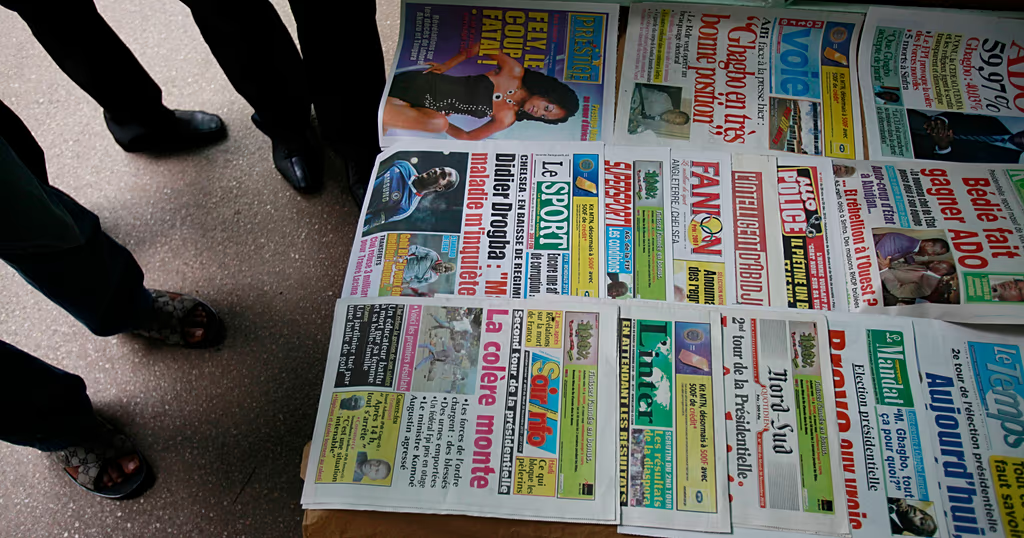
Few sectors, however, have been hit as hard as the media. Across print, broadcast and digital platforms, many organisations are struggling to meet even their most basic obligations to employees. With advertising revenues shrinking and copy sales declining, several media houses have found themselves gasping for breath, leaving journalists to navigate difficult ethical and professional dilemmas.
At the heart of journalism lies a code of ethics designed to safeguard professionalism and public trust. Principles such as editorial independence, fairness, accuracy, respect for privacy, public interest and resistance to undue gratification are intended to preserve the integrity of the profession and enable it to fulfil its constitutional role as society’s watchdog under Sections 22 and 39 of the 1999 Constitution (as amended).