Dapo Olorunyomi, a media chief executive has says that Nigeria’s democracy needs a new professional ethic for reporting religion, refering to it as Faith Journalism.
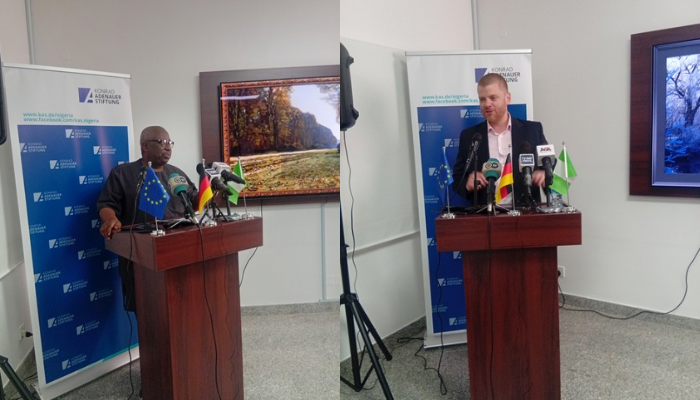
He stated this while delivering a keynotes address during a breakfast dialogue with media: religion and freedom media reports in Nigeria held at Konrad Adenauer Stiftung KAS office in Abuja.
He said Faith Journalism is not journalism that advocates for a religion, defends religious institutions from scrutiny, or turns reporters into evangelists. It is the disciplined, independent, constitutionally grounded practice of reporting religion with the rigour, literacy, and moral seriousness the subject demands, distinguishing faith from those who speak falsely in its name, holding religious power accountable exactly as we hold political and economic power accountable, and treating every citizen, of every conviction or none, as constitutionally equal.
“Nigeria is perhaps one of the few countries in the world where religion is not merely practised, it is performed, narrated, debated, contested, celebrated, commercialised, and increasingly mediated. Faith no longer resides only in churches, mosques, temples, or sacred groves. It circulates through dawn radio broadcasts, livestreamed sermons, WhatsApp devotionals, YouTube channels, and TikTok clips. It shapes our mornings and evenings, informs political calculation, inspires philanthropy, comforts the bereaved, and — regrettably — has often been manipulated to divide neighbours who lived peacefully together for generations. Every religious gathering, every doctrinal controversy, every allegation of blasphemy, every outbreak of communal violence, is potentially transformed into public narrative through the work of journalists. If journalism is the first draft of history, then media reporting is also, in large part, the first draft of the nation’s understanding of itself.