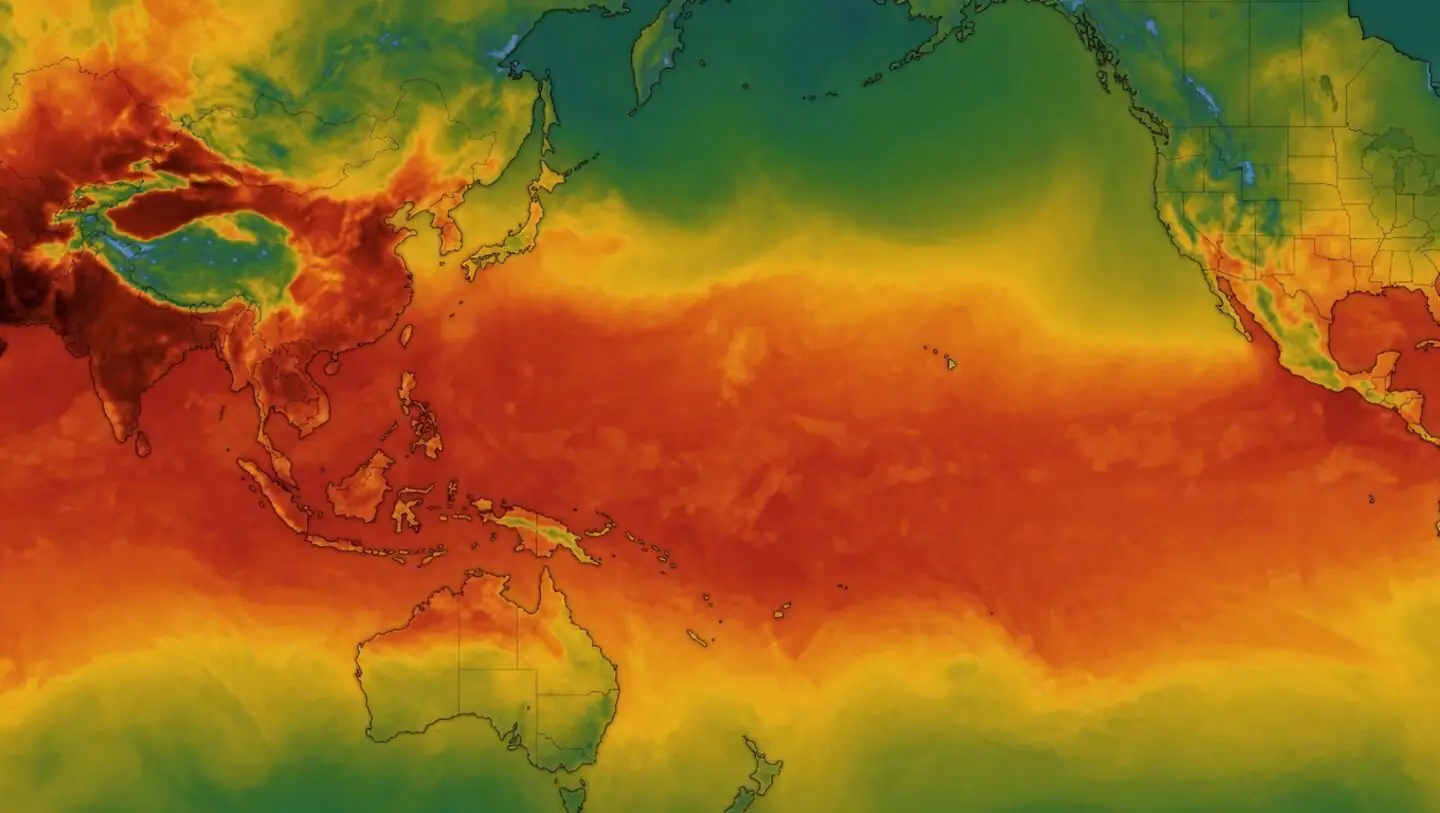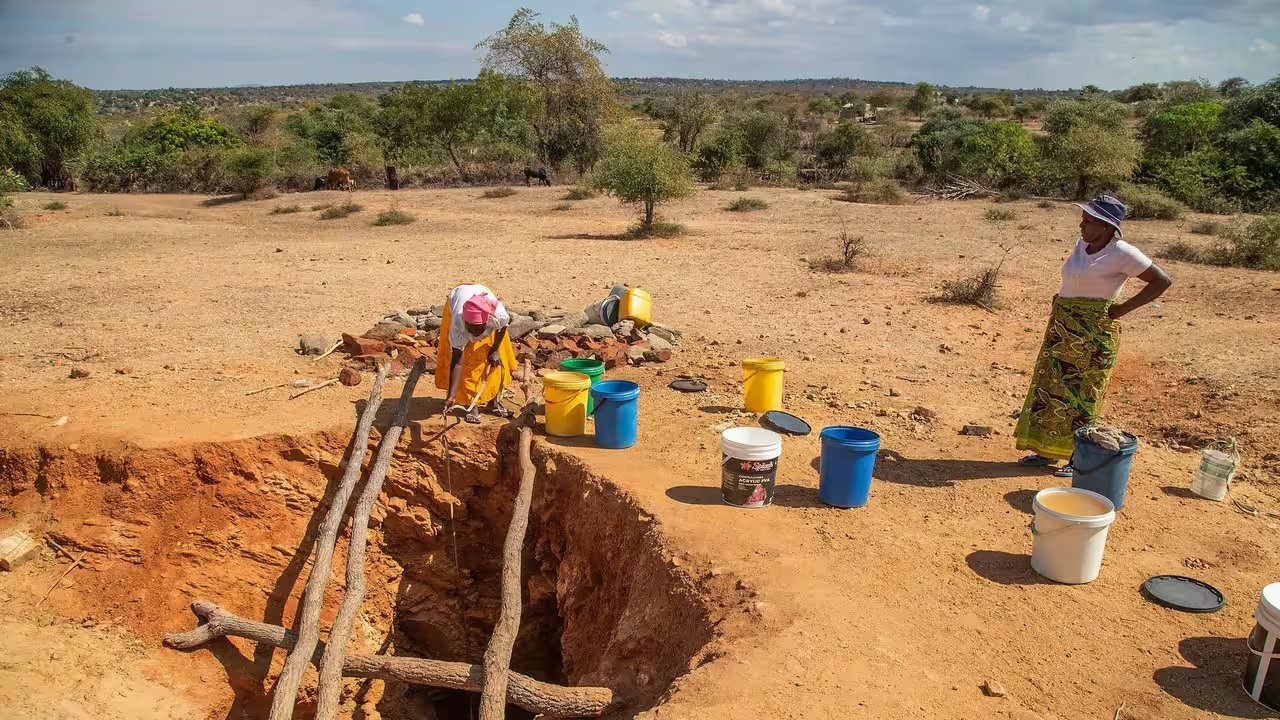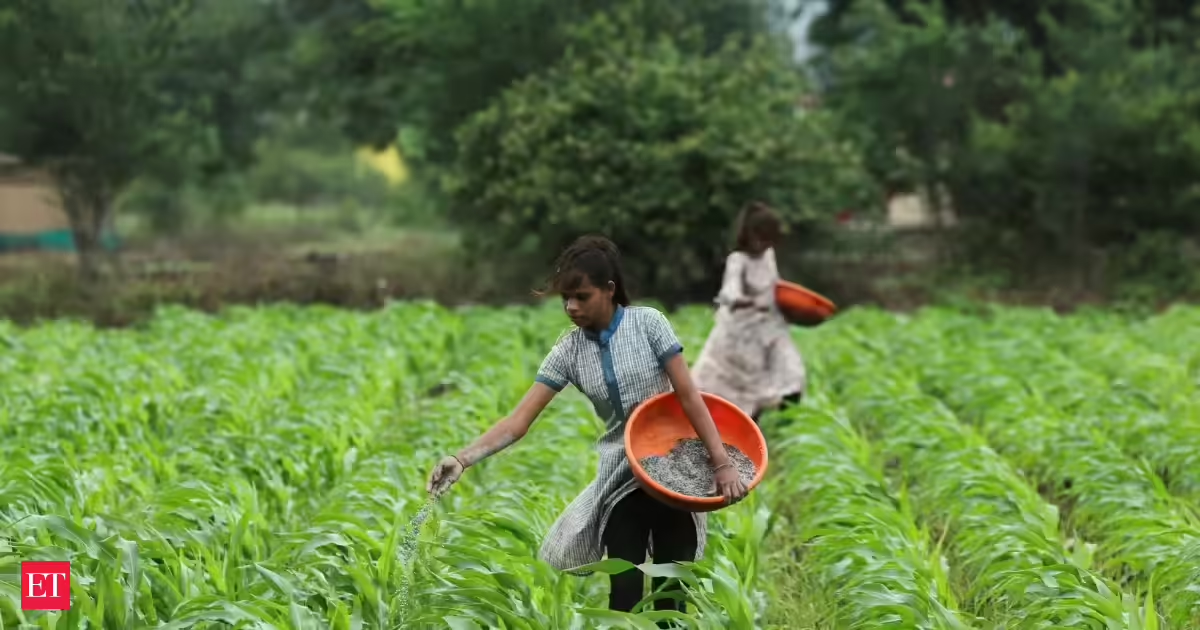
Justin S. Mankin is Associate Professor of Geography at Dartmouth College. Speaking with Srijana Mitra Das in ET Evoke on World Environment Day, he explains the working of an impending El Nino, its implications for global weather patterns — and the Indian economy:Q. How exactly does an El Nino event work?A. El Nino is a phenomenon that occurs in our complicated climate system. It is thought of typically as a pattern of sea surface temperatures that occur in the tropical Pacific — it’s a question of how much warmer or cooler than average those sea surface temperatures are. An El Nino occurs when those sea surface temperatures in the eastern tropical Pacific, near Peru, tend to be warmer than average. In a La Nina, those temperatures are cooler than average. That’s an amplification of the ‘neutral state’, when the eastern tropical Pacific has average temperatures which happen to be quite cool. This is linked to the feedback mechanisms that set up El Nino, or the El Nino Southern Oscillation (ENSO), as a phenomenon. This is driven by winds. The prevailing winds along the equator blow from east to west. Those easterlies have this tendency to push all the water near Peru towards the West Pacific. Now, the waters in the West Pacific are really warm because they’re surface waters that have been exposed to sunlight — they are dragged by the winds and piled up, making, quite literally, the sea surface higher in the West Pacific than in the East Pacific.When an El Nino happens, there’s a breakdown in the strength of those easterly winds and all that water piled high in the West Pacific sloshes and spreads out over the tropical Pacific and Eastern Pacific Ocean, allowing sea surface temperatures to rise — this is a massive reconfiguration of weather and climate. In an El Nino, all the heat typically concentrated in one small space gets spread out over the entire expanse of the Pacific Ocean. In doing so, there is a reconfiguration of the way energy is exchanged between the ocean and atmosphere. The ocean is a major heat engine for weather globally. And in that reconfiguration, it adds a lot more energy to the atmosphere. It is no coincidence that the hottest years on record tend to be El Nino years — that is because of this phenomena of taking concentrated heat and spreading it out spatially, such that more of the atmosphere is exposed to it.An El Nino has impacts in different regions around the world via ‘teleconnections’ which can manifest as warmer than average temperatures or changes in precipitation patterns. In India, the IMD, for instance, has put out an expectation that this year’s Indian monsoon will be below average, owing in part to these canonical teleconnections between El Nino and what happens in India in terms of precipitation, either suppressing the monsoon somewhat or delaying its onset in some places.Q. You’ve studied the economic impacts of earlier El Ninos — could you tell us about those?A. We’ve shown in our previous work that the climate system matters to the economy — and that impact is measurable at the global macroeconomic scale. Climate affects energy, transport, labour productivity and the efficiency with which you mobilise labour and capital to produce goods. Extremely hot weather, such as that which India has been experiencing this spring, slows down workers while floods or delays in the onset of the monsoon can cause agricultural damage. Storms or other weather deviations can impact commodities markets, the production of energy, the mining of metals, agricultural production, the transport of goods and services to market, etc., which then up-aggregate through all other sectors of the economy. Among such impacts, a very salient one for India is the agricultural effects of such a deviation and what this might imply for, say, groundwater pumping and energy costs as people rely more on irrigation to mitigate a delayed or depressed monsoon — that can then create energy cost spikes and diverse political realities.Q. You argue an El Nino’s impacts persist over years — could you elaborate?A. In our 2023 paper, Christopher Callahan and I showed the economic toll associated with El Nino events persist for multiple years — in fact, given the data, we can’t rule out the possibility that these impacts are permanent. We’ve found El Ninos, even without global warming, are very costly to society economically. For example, we just ran some analyses with the current El Nino forecast, predicted to be sizable with near certainty this year, manifesting in a peak between November 2026 and January 2027 — this El Nino could depress economic growth in India by such a considerable amount as to cost the economy a trillion dollars by, say, 2032. If we calculate the accumulated economic losses associated with this forthcoming El Nino event, we’re looking at over a trillion dollars foregone — alongside, the global economic toll could be above $10 trillion. These figures represent economic productivity that would otherwise have been realised if this El Nino did not occur — with it taking place, while India’s economy may continue to grow, it will grow at a slower rate than otherwise.Broadly speaking, the impacts at a national level are a function in part of teleconnection strength or whether the weather and climate are most intimately tied to what’s happening in the tropical Pacific. This means countries in South America will be affected and India will also be among the most heavily impacted because what El Nino does to Indian weather and climate is to amplify extreme heat and depress the monsoon. Of course, different spatial patterns of sea surface temperature warming in the tropical Pacific have different teleconnections to diverse regions. There isn’t one rule of thumb, and so, there’s some uncertainty — that physical climate uncertainty will manifest as economic uncertainty. My expectation, given just the magnitude of this El Nino, is that next spring in India will be extremely hot.Q. This year’s El Nino phenomenon could be among the biggest so far. How will it compound global economic worries, already facing two major wars and climate change?A. Our research shows we are poorly adapted to our climate system and El Nino’s latent form of climate variability impacts economies around the world. It is costly and that reflects how our society is poorly adapted to the climate we have now — this, worryingly, portends how we are really poorly adapted to the climate that’s unfolding because in some ways, an El Nino year today looks like the normal climate we will have, say, a decade from now. An El Nino year actually takes the training wheels off global warming and reveals it for all its potential impacts, from f loods to droughts, heatwaves, wildfires, etc.When you project that onto a complex sociopolitical, economic and geopolitical landscape, with societal vulnerabilities and grievances around energy usage and costs, manifesting in wars and political friction, this is just adding more fuel to a fire where we’re seeing concentrations of wealth into fewer and fewer hands. My expectation is that global warming will continue to amplify that — then, when you have El Nino events, some models suggesting global warming will increase the prevalence and magnitude of El Ninos, those will amplify the overall impacts and costs of global warming.Q. What measures should governments of vulnerable economies start adopting now?A. One of the clear takeaways from my research with Chris Callahan is as the impacts of global warming look a lot like those of El Nino, pursuing risk mitigation strategies to manage one is investment in managing the other. This is essentially feeding two birds with one biscuit, so to speak — investments in extreme heat mitigation will serve Indian society both for El Ninos and wider global warming. Extreme heat warning systems do reduce mortality and morbidity burdens. Better forecasting creates lead time to mobilise and place resources in effective communities to prevent those impacts. Investment in better El Nino predictions will also give societies time to allocate resources and mitigation, including for heat events through communication and early warning systems, cooling centres, regulations for outdoor labourers, changing schooling ways, ensuring people can be sufficiently cooled during high heat events.On the agricultural side, governments must consider irrigation practices and unsustainable groundwater pumping which does occur in many parts of India now. It’s essential to also consider drought possibilities and invest in heat-resistant cultivars to ensure yields continue to increase in the face of these extreme heat events and/or delays in the onset of the monsoon.There are also untold implications for energy aspects like hydropower generation and the reliability of that. In all this, I think if we are interested in building resilience to the status quo, that means migrating our energy system from a carbon-based 20th century model to a decarbonised 21st century model. That involves renewable energy and technology transfer from solar developers, geothermal and wind power developers. Governments must also ensure those technologies reach the hands of communities that can wield them to great effect to ensure energy resilience in the face of this climate variability and its interaction with global warming.Views expressed are personal
‘The upcoming El Nino event could cost India $1 trillion in losses’
An impending El Nino event threatens global economies, with India facing potential losses exceeding one trillion dollars. This climate phenomenon, amplified by global warming, exacerbates extreme heat and disrupts monsoons. Experts urge governments to invest in adaptation measures like improved forecasting, early warning systems, and drought-resistant agriculture.
1,527 words~7 min read