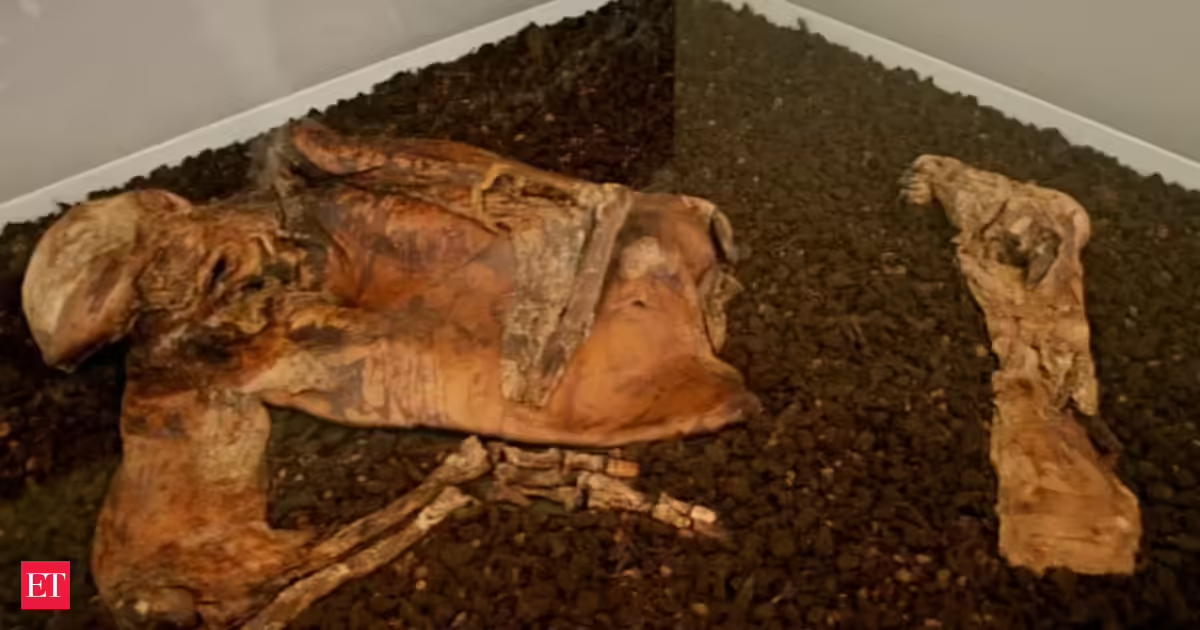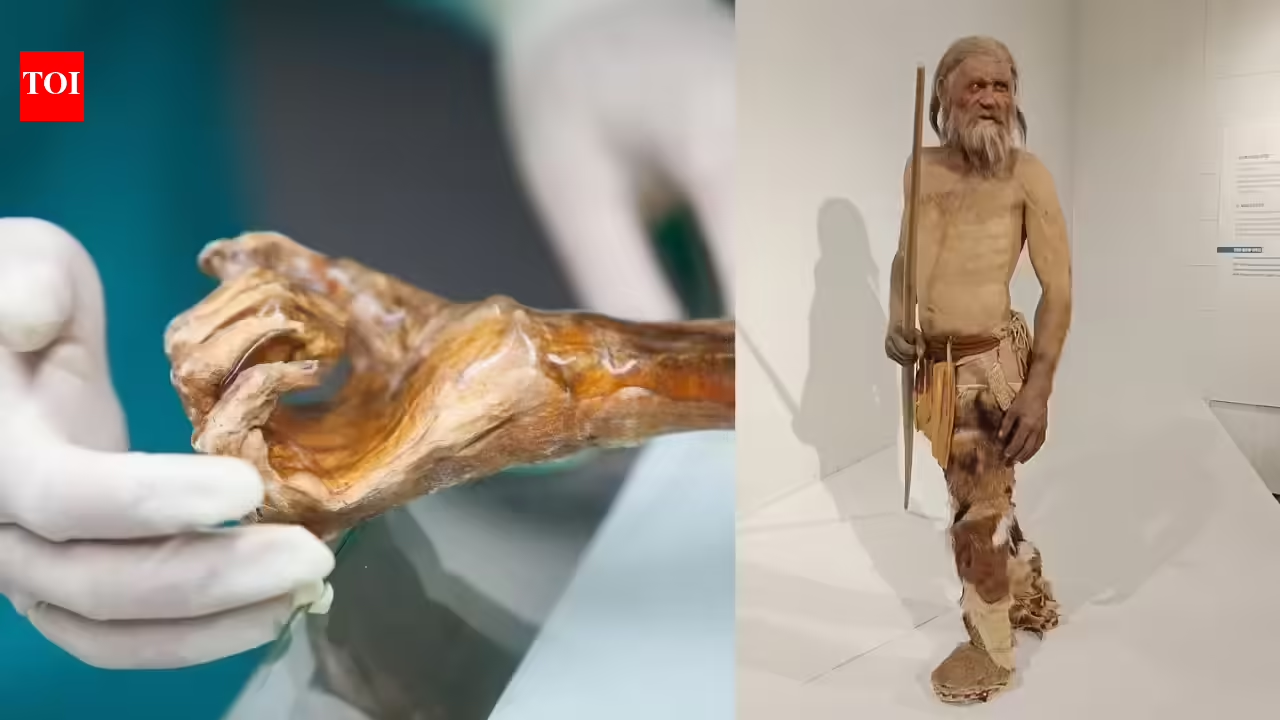
Archaeology is often envisioned as the careful process of excavation carried out by trained professionals; however, the tale of Lindow Man started very differently. In 1984, laborers extracting peat from the Lindow Moss area in Cheshire, England, discovered something peculiar coming out from the depths of the bog.It was a foot. What was first thought to be a piece of human anatomy eventually turned out to be one of the most extraordinary archaeological discoveries in British history. Unlike other archaeological discoveries, which are found in tombs or cemeteries, the Lindow Man had existed in an entirely different environment – a peat bog – without being entombed.Facial reconstruction of Lindow Man | Wikimedia CommonsA chance discovery that became a national storyThe Manchester Museum claims that the discovery occurred during a routine peat extraction from Lindow Moss. At the time of the discovery, no one was conducting an archaeological survey; thus, it was accidental, which became another factor that drew people’s attention. Identification of the deceased did not occur in a traditional way, as the discovery raised more questions than it answered. Archaeologists, forensic experts, and museum curators tried to solve different puzzles related to the discovery; they were all curious who the person was and how long he had stayed in the bog. Moreover, the circumstances of the person’s death remained unknown.At first sight, the unusual preservation of the deceased body seemed to create a lot of possibilities for answering the above-mentioned questions.Why bogs preserve what should disappearWhat made it possible for Lindow Man to remain in such remarkable condition is the very environment that preserved him. According to the author of an article in the Annual Review of Anthropology, peat bogs offer unique combinations of factors that include limited oxygen, high acidity, moisture, and cold temperatures. Under these circumstances, decomposition processes can be significantly slowed down; as a result, soft tissues can be preserved long after normal decay. Thus, bog mummies are unlike the majority of human remains found on archaeological sites, where the skeleton is almost all that remains of the body. The process takes place differently in peat bogs because of their ability to preserve softer tissues and damage the bones due to the high level of acidity in the environment.For scientists, such preservation poses serious problems, since it preserves information while also hiding it.Lindow Man on display at the British Museum in 2023 | Wikimedia CommonsA body that preserved evidence but not certaintyAs described by the Manchester Museum, one thing is clear regarding Lindow Man: the issues surrounding him are far from being satisfactorily answered. Archaeologists are fairly certain that Lindow Man lived during the Iron Age in Britain; however, the mystery of how he died is still debated. The corpse can give insight into the issue, yet it is not sufficient to yield any concrete conclusions. In this respect, Lindow Man exemplifies how some discoveries do not solve problems but create new ones for the scientific community. The body has been preserved due to unusual environmental conditions.Lindow Man illustrates how a landscape can unexpectedly become a unique archive for humanity. The peat bog served as a tomb and an effective means of preserving what could not be left behind, while also hindering investigators from clearly determining all the facts. It was precisely this combination of the two factors that made the discovery special. In the everyday work of the peat cutter, a man who lived in ancient Britain was uncovered under such conditions that scientists today can study certain features of his appearance and state of health. However, after so many years and thorough studies, there are still numerous issues that need clarification. In this way, Lindow Man turned out to be both an important discovery and an unsolved historical problem of Britain.
In 1984, peat cutters in England saw a foot in the dark bog, and an Iron Age mystery surfaced
In a serendipitous turn of events, a Cheshire peat bog unveiled Lindow Man, a remarkably preserved Iron Age figure. The bogs unique environment retained soft tissues, providing an extraordinary window into the lives of our ancient ancestors. Although considerable knowledge exists regarding his physical characteristics and health status, the circumstances surrounding his demise continue to baffle researchers.
627 words~3 min read