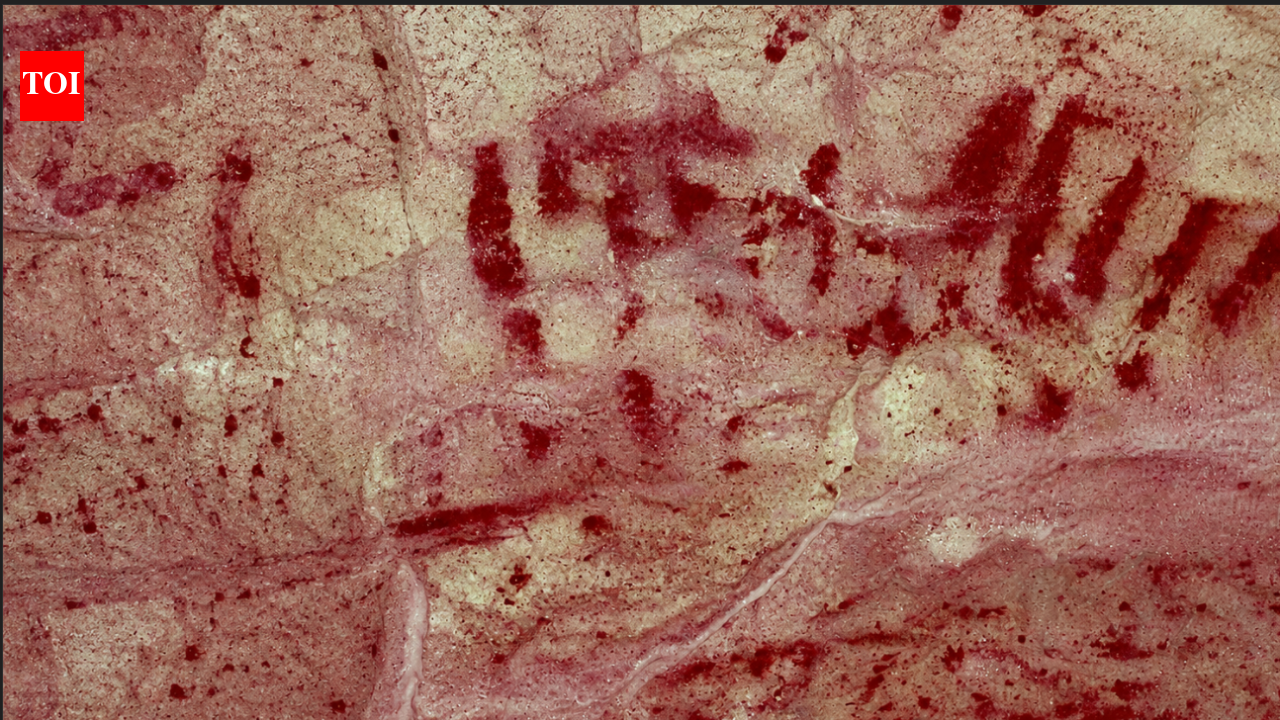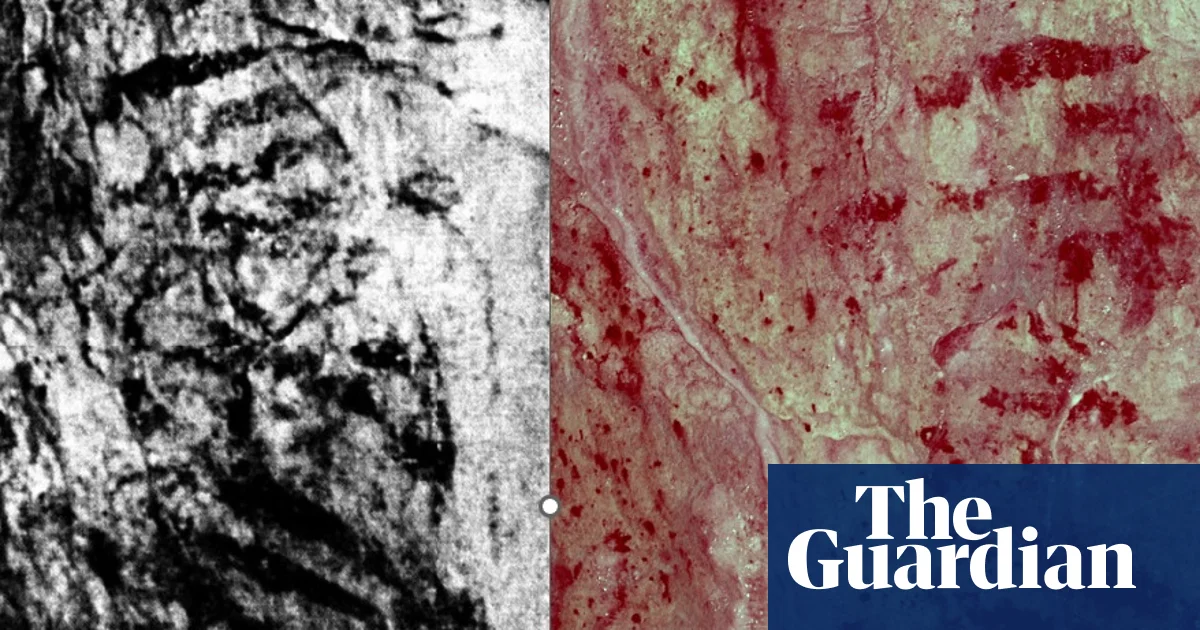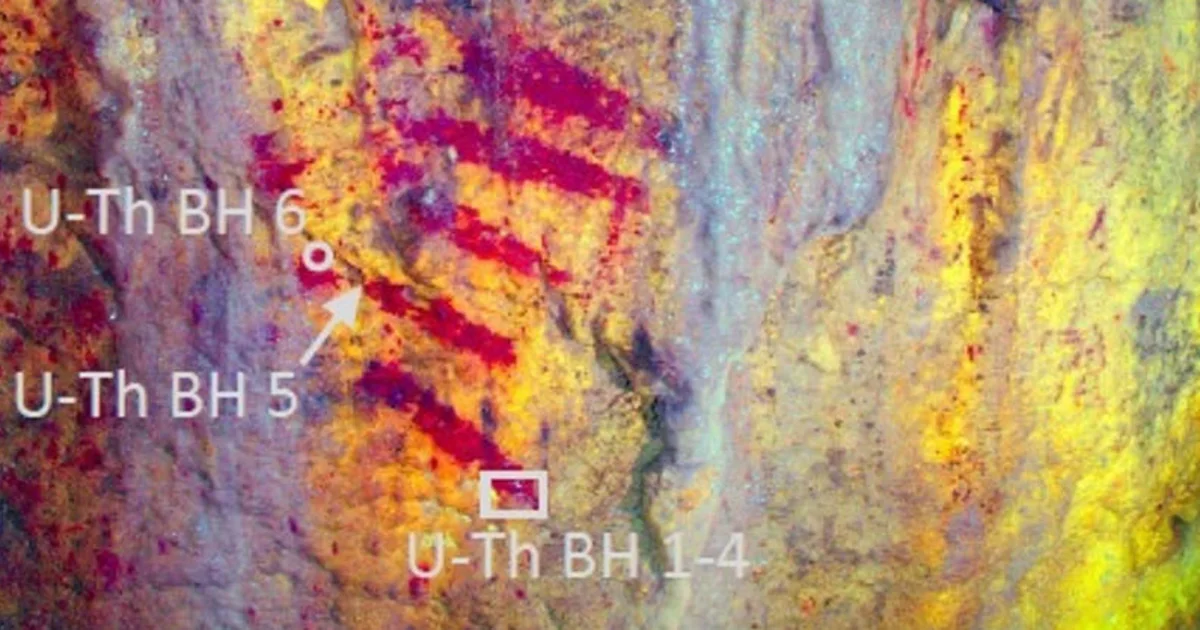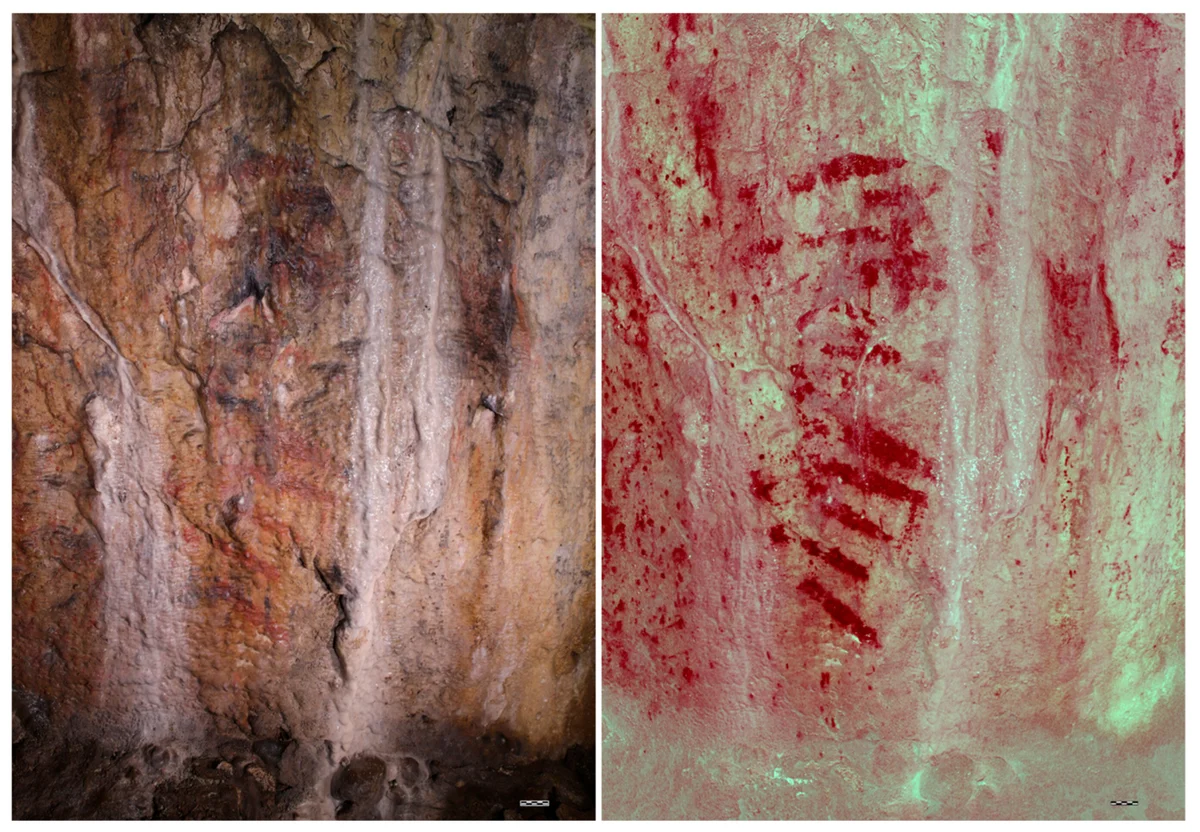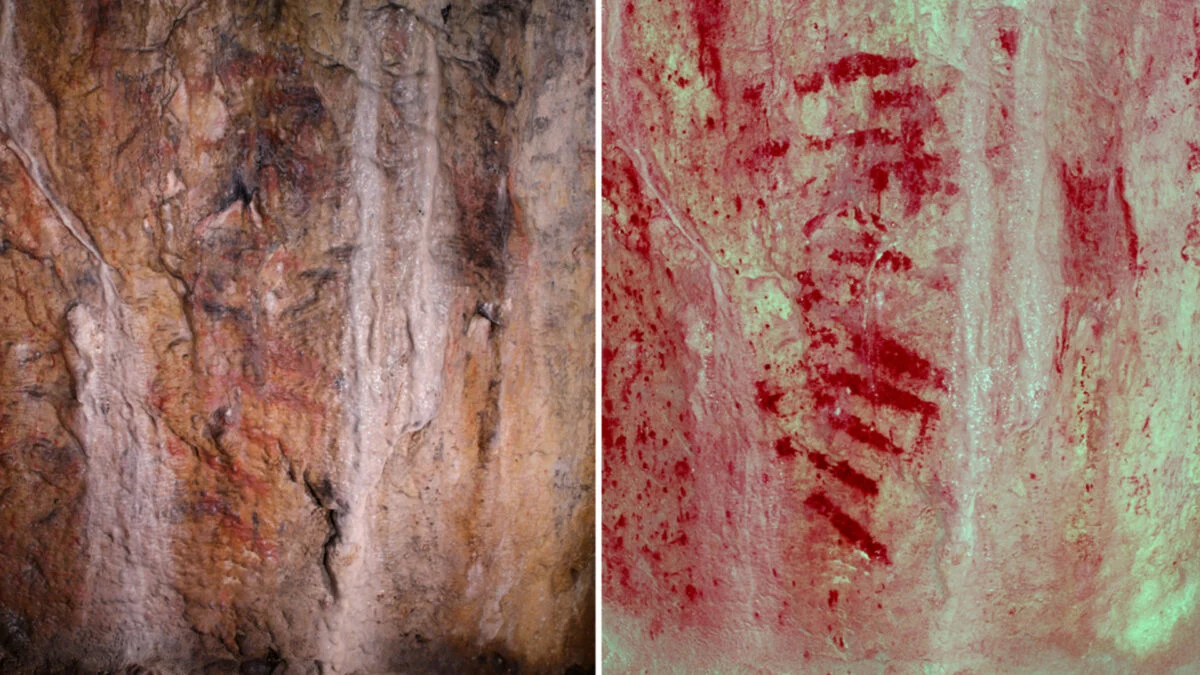
For nearly a century, skeptics dismissed a Paleolithic cave painting as merely rust-red iron oxides, the kind of natural staining one might see from mineral runoff on cave walls practically anywhere in the world. The painting’s almost modernist aesthetic didn’t help either: a column of parallel lines beside speckled splotches of red like a Jackson Pollock original. But new research, including radioactive isotope dating and advanced image processing, has now confirmed that these unusual markings found inside a south Wales cave in 1912 really are ancient abstract art. Study coauthor George Nash, an archaeologist who specializes in prehistoric paintings, said he surprised himself with his team’s ability to correct the record on this wrongfully discredited find, vindicating the turn-of-the-century British and French anthropologists who first made this discovery. “It was never considered to be rock art after 1928, and also it could never be dated, because in those days they didn’t have the scientific means that we have today,” Nash told The Guardian, in a story amounting to a correction to a correction amending the paper’s original 1912 coverage.
“I was taken aback that we were able to date it and analyse the pigments,” Nash said. “We’ve got data 17,100 years before present, which makes it the oldest rock art in the British Isles.” Upper Paleolithic ‘modern’ art Back in 1912, British geologist and anthropologist William Sollas and his French partner, the anthropologist and Catholic priest Henri Breuil, celebrated their discovery in south Wales’s Bacon Hole cave as “the first specimen of prehistoric cave painting ever discovered in England.”