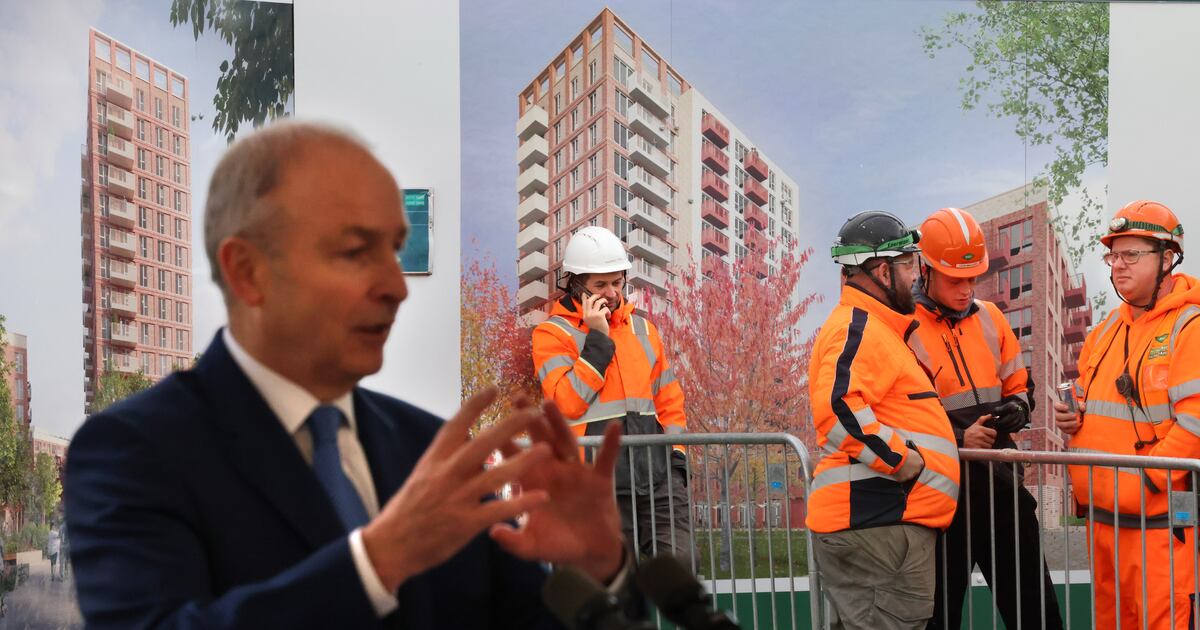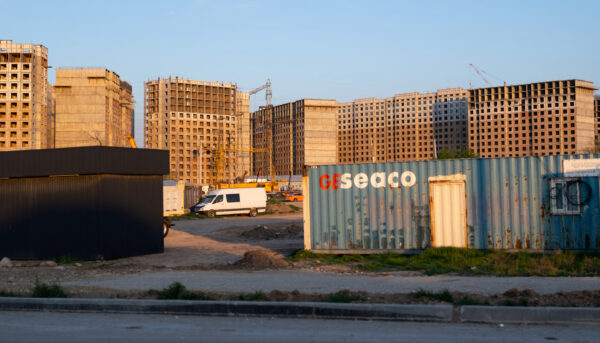
New construction in Bishkek, April 2026.
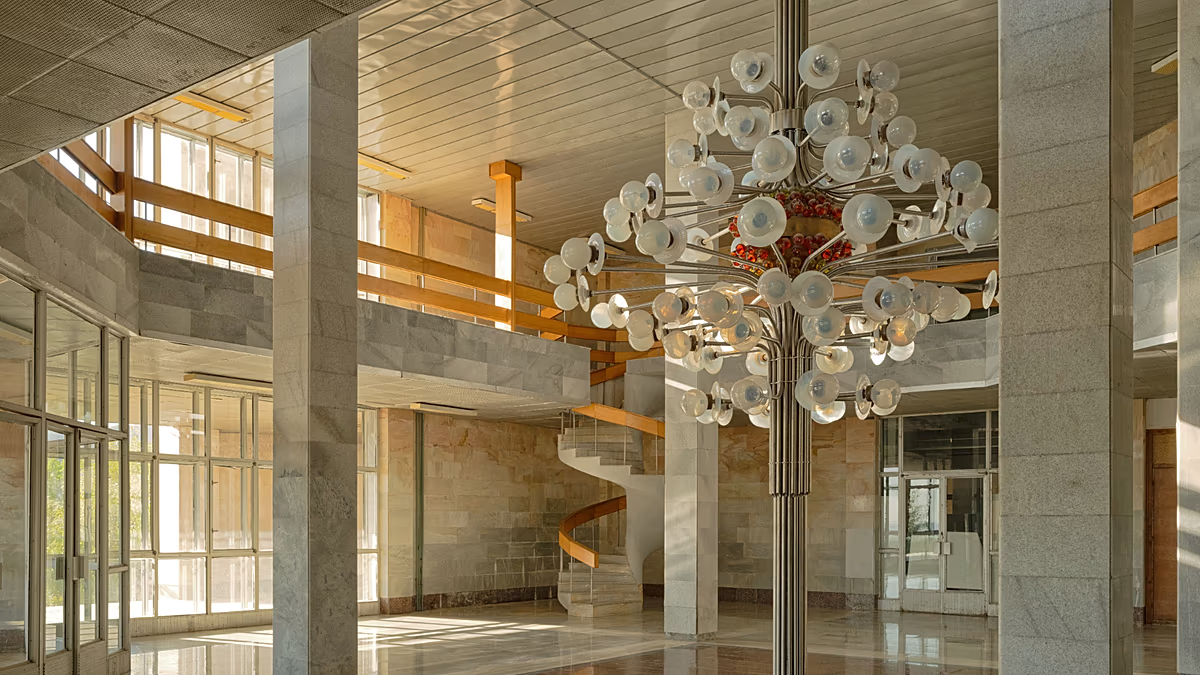
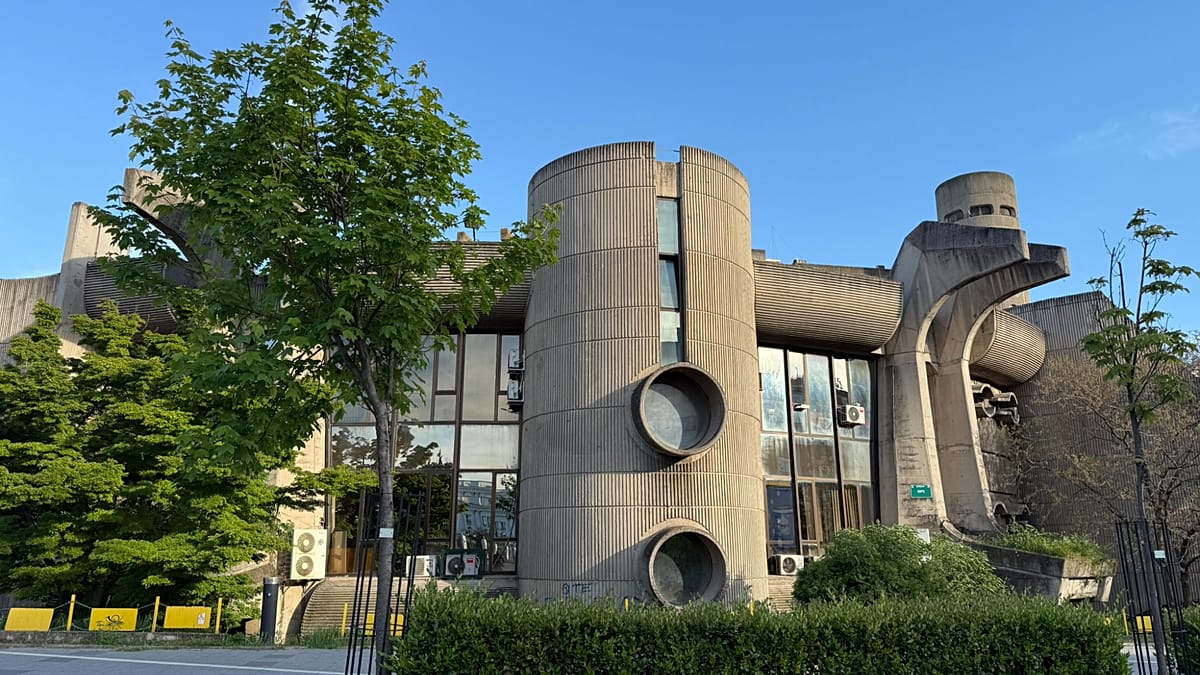
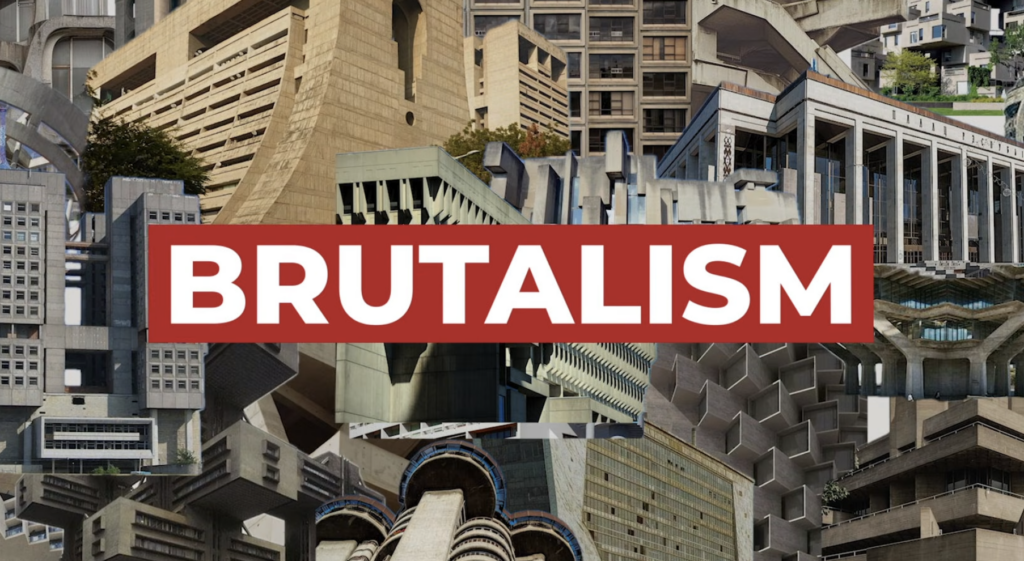
In Central Asia, Soviet brutalist architecture survives amidst the region’s rapidly developing cities, standing alongside newly constructed buildings, roads, and other projects. Meanwhile, the tremendous scale of Central Asia’s urban reconstruction exacerbates the impacts of climate change. The urbanization of Central Asia has unfolded alongside the a reckless cutting of urban trees, which has transformed vast areas into heat islands.
In 2025, for various reasons, more than 4,000 trees were cut down in Bishkek, the capital of Kyrgyzstan, alone – a 197.7 percent increase compared to the carnage of 2024.
In Bishkek, we noticed vines growing on buildings and cascading out of balconies and wondered what these plants, clinging onto bare concrete, might have to tell us about a broader impact the city could be having on the climate. We noticed dry canals and deforestation and recalled how Bishkek was once considered a green city, but is now, like so many other places, struggling to maintain that status within the context of rapid development.
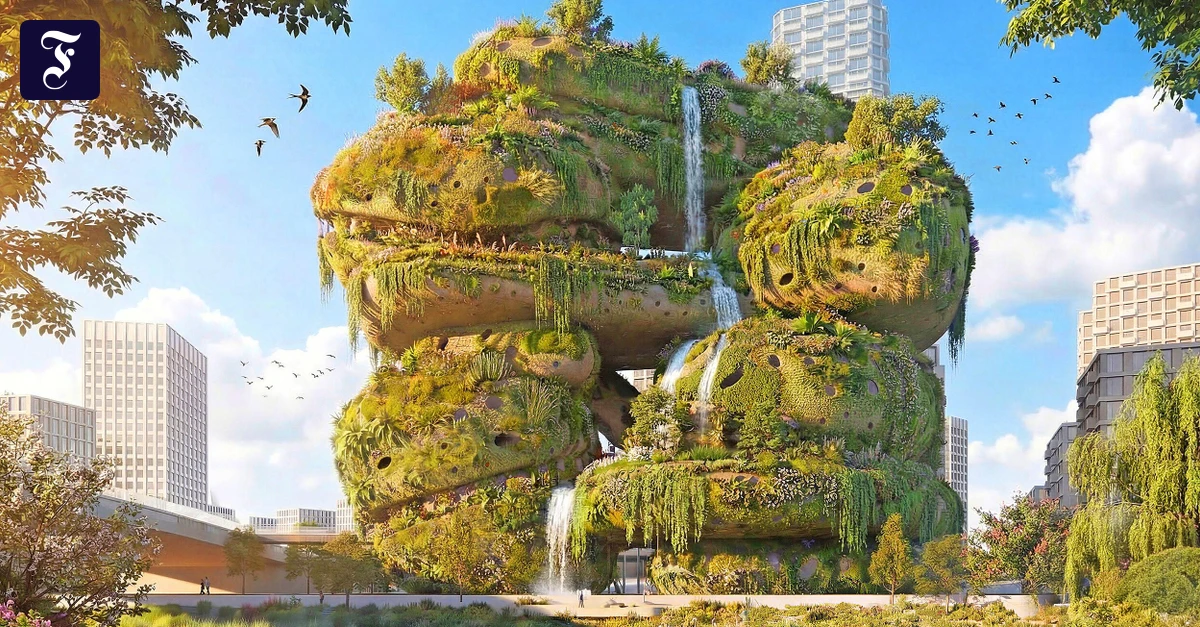
Eco-brutalism, an architectural and design movement blending the aesthetic of mid-20th-century Brutalism – a style characterized by bare concrete and geometric forms – with modern ecological principles and design, is on accidental display throughout Bishkek.