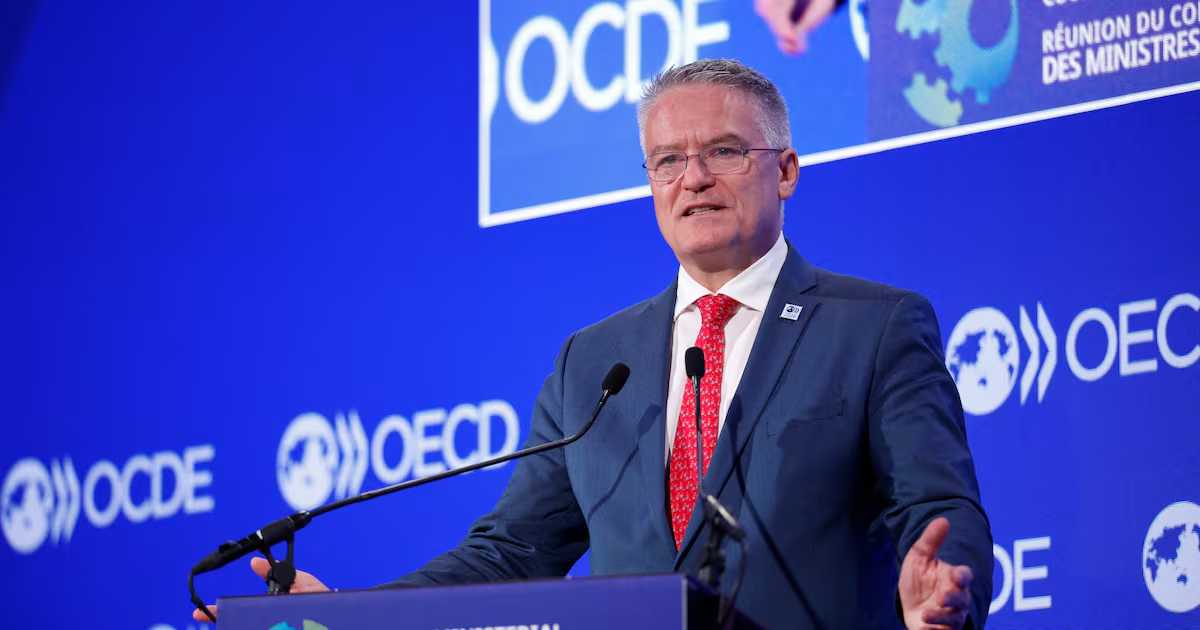
The global economic outlook hinges on how long the war in the Middle East lasts, with recession in some countries and sharply higher inflation a real possibility if it drags on into next year, the Organisation for Economic Co-operation and Development said on Wednesday.If the conflict proves short-lived, Gulf oil and gas production could gradually return to pre-crisis levels from the third quarter, with shortages confined to Asia and cushioned by strategic reserves and shipments from other producers.In that baseline scenario, global growth is projected to slow to 2.8 per cent in 2026, from 3.4 per cent in 2025, before picking up to 3.1 per cent in 2027, broadly in line with the OECD's March forecasts."The longer the disruption lasts, the greater the economic, but also the social cost of this crisis, and it certainly will make policy changes much more difficult," OECD chief economist Stefano Scarpetta told a press conference.If energy disruption persists well into next year, global growth could slow sharply to 2.1 per cent in 2026 and 1.8 per cent in 2027 – rates rarely seen outside major crises, such as the 2008 to 2009 financial crash or the Covid-19 pandemic.Outright recessionSome economies could fall into outright recession, with Asian countries reliant on Middle East energy supplies expected to be hit hardest.In the protracted disruption scenario, higher energy prices could add 0.4 percentage points to global inflation in 2026 and 1.3 percentage points in 2027, likely prompting central banks to hike interest rates by 0.5 to 0.75 percentage points in the short term.In the baseline scenario, the OECD forecast that inflation across G20 economies would peak at 4 per cent this year, before slowing to 3.1 per cent next year, with interest rates largely on hold this year and cuts expected next year."Around one-third of OECD economies are projected to experience negative real wage growth this year. Workers in these countries will see their living standards fall, which is the human reality behind the inflation numbers," OECD Secretary General Mathias Cormann said.Global trade growth is set to moderate following a strong 2025, although robust demand for AI-related goods and investment, especially in Asia, should provide some support.Uneven outlookIn the baseline scenario, stronger energy exports are expected to support US growth, partly offsetting the drag from higher prices on household purchasing power. Growth is projected to ease from 2.1 per cent in 2025 to 2 per cent in 2026 and 1.8 per cent in 2027.In Europe, eurozone growth was seen slowing from 1.4 per cent to 0.8 per cent this year, before rising to 1.2 per cent next year as resilient labour markets and higher defence spending help offset government belt-tightening.In the UK, growth is projected to slow to 0.9 per cent this year before recovering to 1.1 per cent in 2027, as global trade stabilises and financial conditions ease.In Asia, China was seen slowing from 5 per cent growth in 2025 to 4.5 per cent in 2026, and 4.3 per cent next year, with ample energy reserves limiting exposure to oil price spikes. Exports are set to benefit from lower US tariffs and a competitive tech sector, although a property slump remains a drag.Japan is expected to be among the hardest-hit by trade disruptions linked to the continuing Iran war, with growth slowing from0.6 per cent in 2026 from 1.1 per cent last year before edging up to 0.8 per cent in 2027, a downgrade from March.While subsidies will help cushion the energy shock, the OECD said Japan needs a "clear and credible" plan to rein in public finances over the medium term as interest rates rise.
Prolonged Gulf conflict risks recession and rise in inflation, OECD says | The National
Higher energy prices could add 1.3 percentage points to global inflation by 2027
TL;DRAI
Prolonged Middle East conflict could slow 2026 global growth to 2.1% and trigger recessions; inflation could rise 0.4-1.3 percentage points. Higher rates and inflation will pressurize enterprise tech budgets; AI infrastructure demand remains a resilient sector.
600 words~3 min read