SIMON WOHLFAHRT / Getty Images
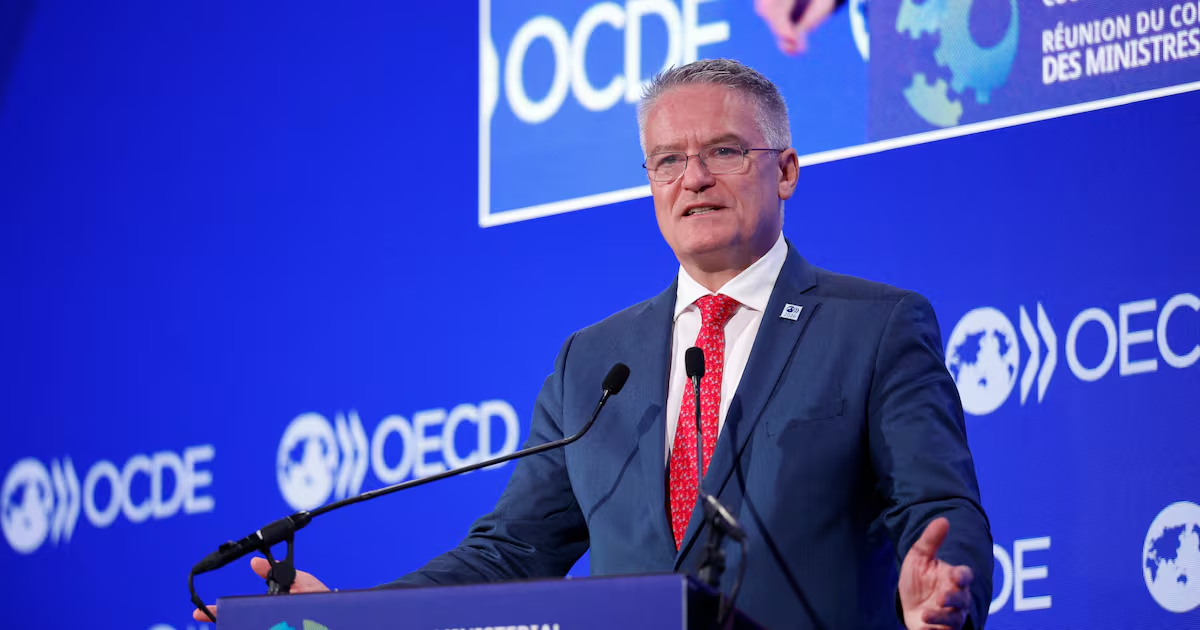
The OECD cut its global growth forecast and warned that a failure to reach a durable peace settlement in the Middle East could push several economies into recession, according to CNBC.
Figures released in the June Economic Outlook put global growth at 2.8% for 2026, down from 3.4% in 2025, with a partial rebound to 3.1% projected for 2027 — a recovery the OECD said hinges on energy prices beginning to retreat around mid-year and a negotiated end to Strait of Hormuz disruptions, according to CNBC.
Should hostilities and the resulting damage to energy and shipping networks persist well into next year, the OECD estimates growth would drop to 2.1% in 2026 and sink as low as 1.8% in 2027, with inflation running 0.4 percentage points higher in 2026 and 1.3 percentage points higher in 2027 compared to the baseline.
Speaking with CNBC, Scarpetta emphasized that no two countries are experiencing the crisis alike — energy stockpiles in Japan and South Korea are buying those governments time, whereas India has already been forced to impose gas rationing. Countries across the developing world are particularly exposed, he added, because tight government budgets, weaker exchange rates, and heavy reliance on imported energy and food leave them with little room to absorb the shock.