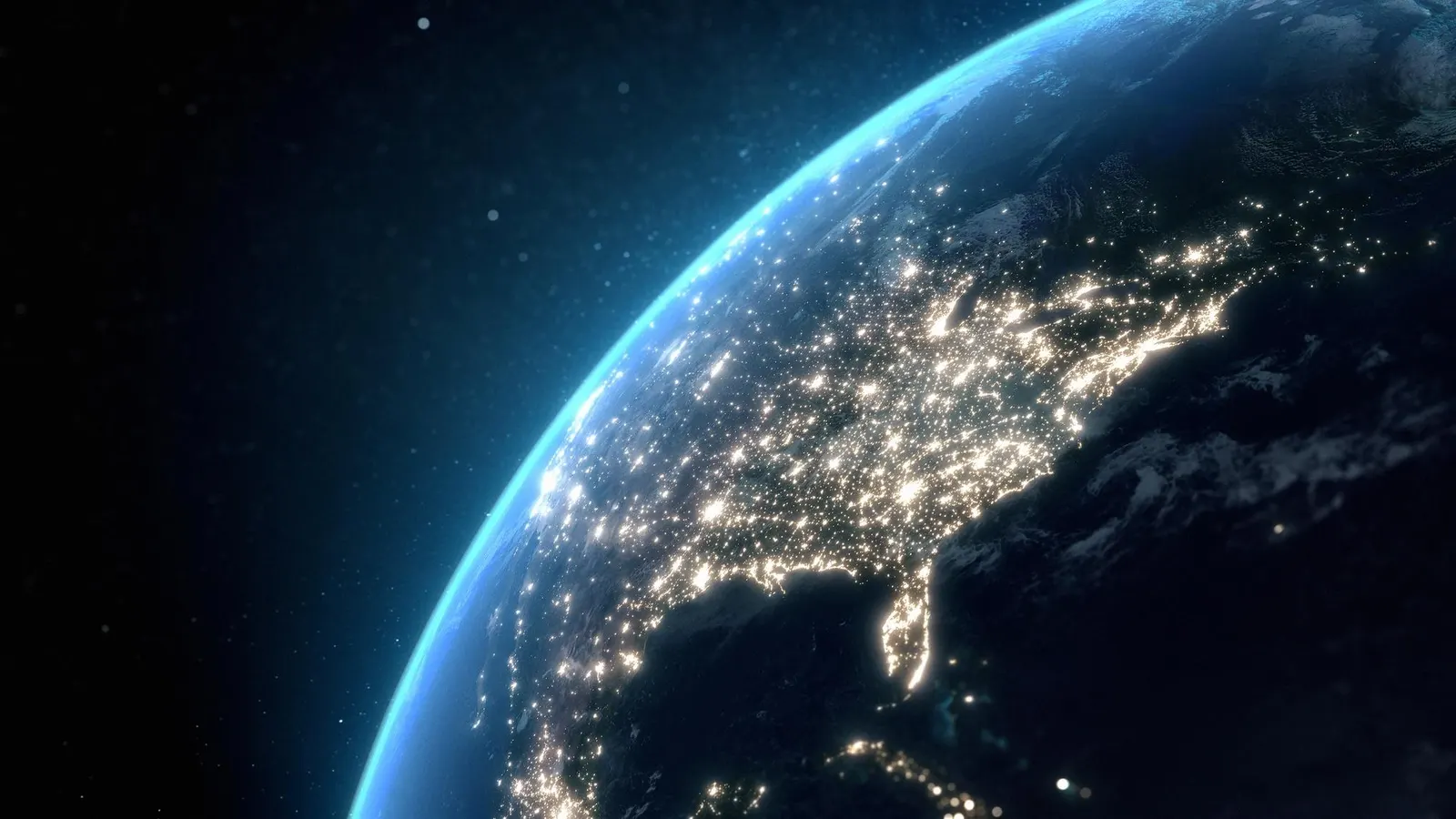
Elizabeth (Liz) Maxwell is Product Marketing Director at Hydrosat; trained AI analyst, evangelizing space tech for a more resilient future.gettyWe are entering a "panopticon era" across both enterprises and governments using all sorts of data and technology, including Earth observation (EO)—persistent, increasingly real-time global data. Oftentimes, organizations end up with a deluge of data, mostly of ordinary patterns of life and standard activity. So, for governments trying to find bad actors and keep societies safer, as well as enterprises trying to identify critical risks, they should be asking themselves if they’re leveraging the right data.Crime And Risk Happen In The DarkIllicit activity has long benefited from darkness, remoteness and weak governance, but that advantage is eroding as satellite monitoring becomes more persistent, multi-sensor and behavior-focused, rather than purely image-based.It is not that EO satellites “see everything,” but that they increasingly detect deviations from baseline patterns across time, even in low-light conditions or remote environments, and governments are increasingly aware of how commercial EO can help meet this need. There are two key data sources that enable remote nighttime monitoring: nightlight emissions and thermal imaging.Uses Of Nighttime Light Versus Thermal At Night Remote sensing of nightlight emissions is widely used to study urbanization, GDP, population, disaster impact, conflict and energy use. Nightlight is strongly linked to human activity, but it is not a complete proxy. The literature is clear that nightlights are useful precisely because they track activity patterns, yet they are biased toward places with existing lighting infrastructure, so hidden and remote illicit activity can remain undercounted if you rely on light alone.Thermal imagery meaningfully closes the blind spot. Commercial and government interests should shift toward thermal monitoring because it can detect heat signatures independent of visible light and is useful in low-light or intentionally dark environments. But the real power comes from combining nightlight with thermal and evaluating this data over time. With this, one could specifically identify thermal anomalies in areas that are intentionally dark, which would make it much harder for activity or changes to hide in darkness or remoteness.Issues Of Data AvailabilityWhile the world is practically drowning in high-resolution daytime optical imagery, the thermal spectrum—particularly at night—remains a data desert. This thermal gap is the missing link for true persistent trend analysis; without regular temperature signatures, our time series remain fragmented snapshots rather than a continuous narrative.The Analytical Silver LiningThe good news is that the analytical "brains" of the operation are already firing on all cylinders. Even as we wait for sensor constellations to catch up, the software ecosystem is robust:• Advanced Temporal Analysis: Tools like multidimensional imagery analysis and automated change detection wizards can ingest massive datasets to spot subtle shifts over time.• Specialized AI And Analytical Solutions: Both commercial enterprises and researchers have well-established AI and analytical solutions to turn raw pixels into actionable thermal insights.We have the horsepower to process the data; we just need to start capturing the thermal changes when the sun goes down. Beyond just illicit activity monitoring, this combination of thermal imaging and predictive AI could have broad impacts across industries, including: improving supply chain visibility, persistent infrastructure monitoring, risk assessment and claims adjustment for insurance, regulatory oversight and even humanitarian applications.Implications For Tech Leaders The strategic implication here is not to keep adding redundant data streams, but rather to prune noise and integrate new sensing layers that reveal previously hidden activity. Moreover, monitoring must be over broad areas and continuous, not episodic, as snapshot intelligence misses key temporal patterns and events.In practical terms, that means simplifying overlapping feeds while adding thermal and other novel nighttime sources so the organization gets a more holistic, 24-hour picture of activity, risk and disruption. Multimodal data and nighttime imaging are now essential for prediction, response and planning across both governments and enterprises. Thermal nighttime imagery, in particular, fills critical gaps.For some time now, because of the power of EO, remote regions no longer have to be seen as "data deserts." In the age of AI, detection is shifting from reactive to predictive as more data is collected, and there’s nothing better to power that than thermal data, which allows you to see patterns and shifts that are not visible to the naked eye or are hidden under the cover of darkness.Forbes Technology Council is an invitation-only community for world-class CIOs, CTOs and technology executives. Do I qualify?
Can Illicit Activity Lose Its Nighttime Advantage With Thermal Data?
Multimodal data and nighttime imaging are now essential for prediction, response and planning across both governments and enterprises.
725 words~3 min read