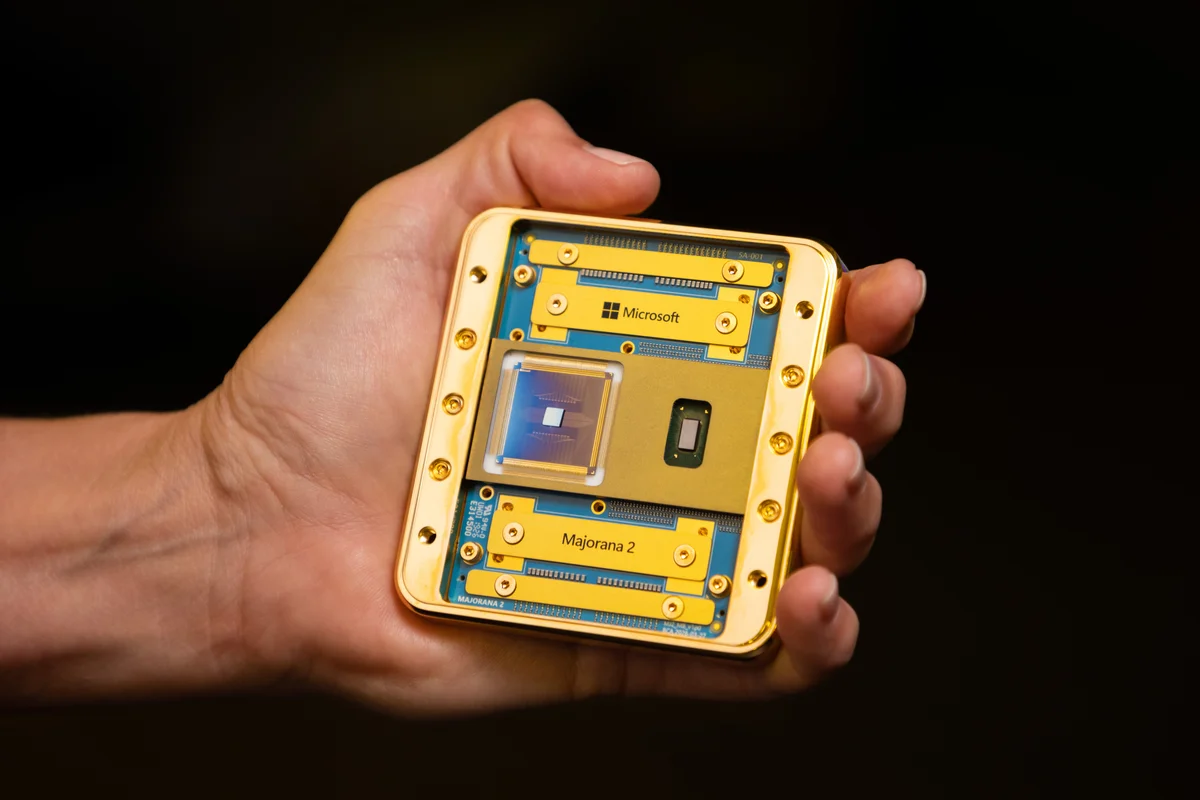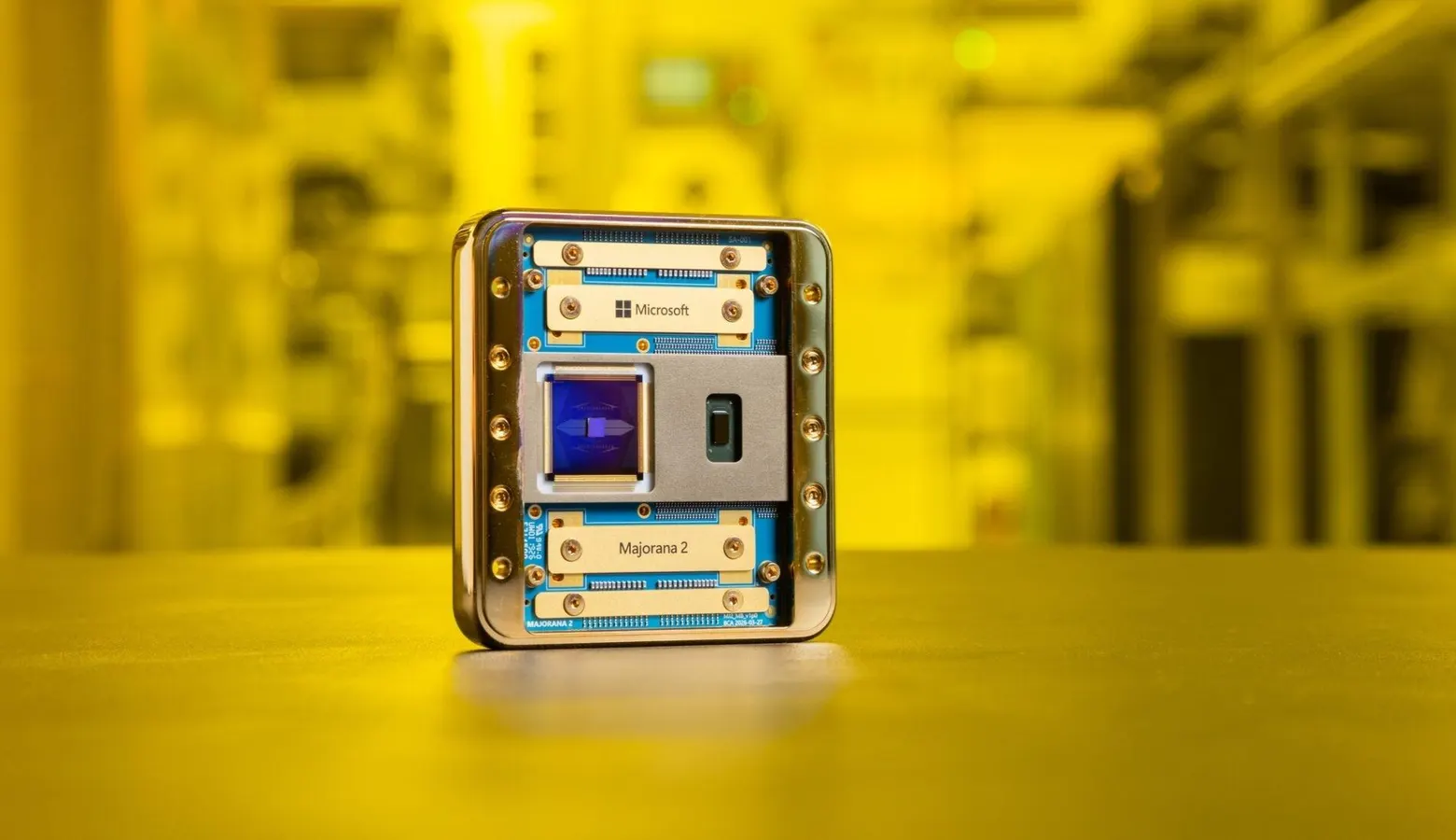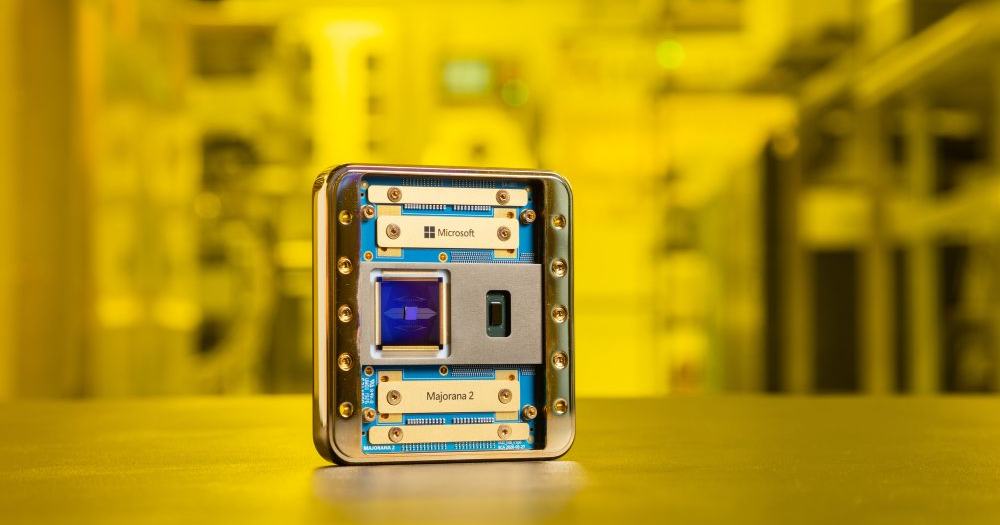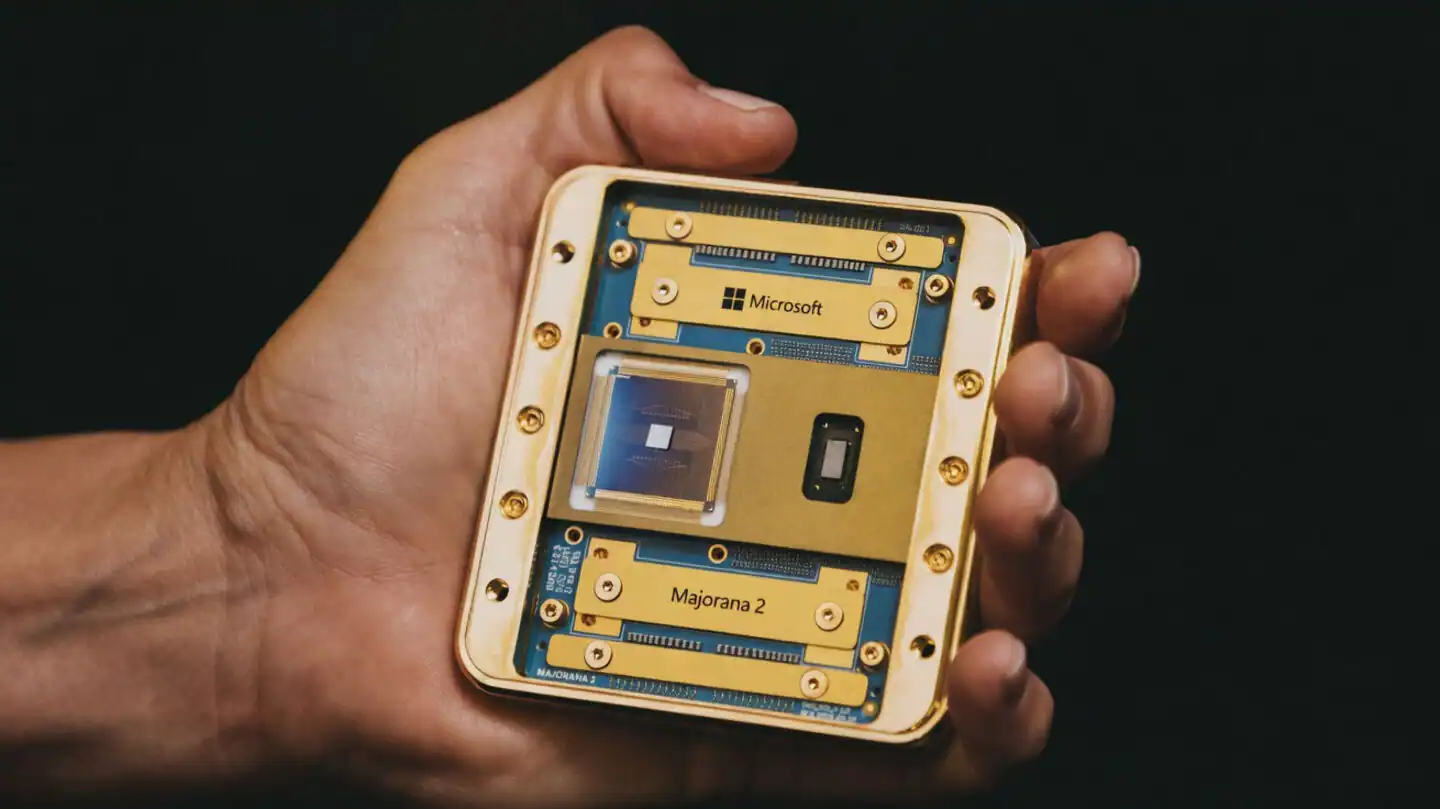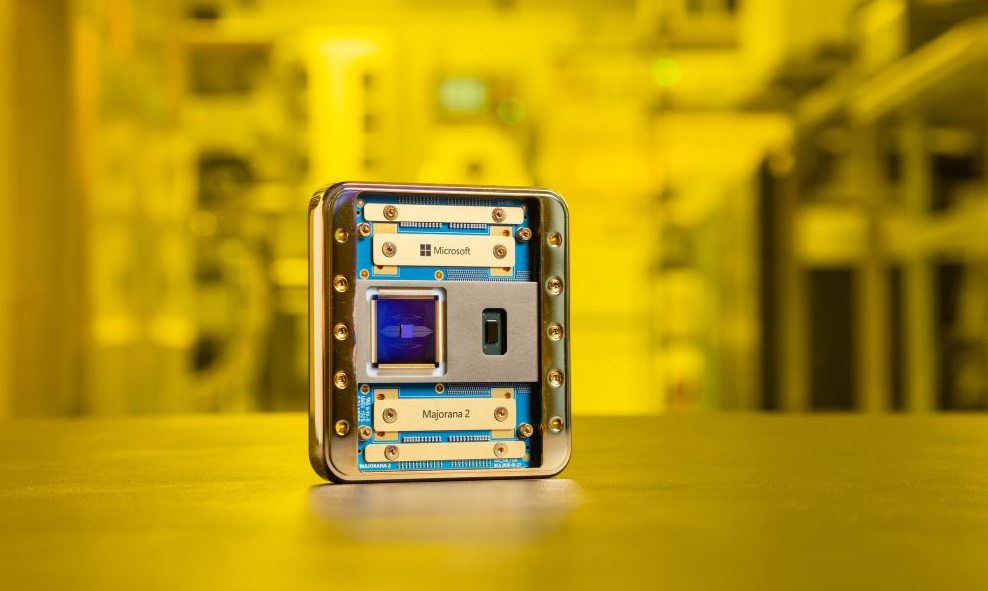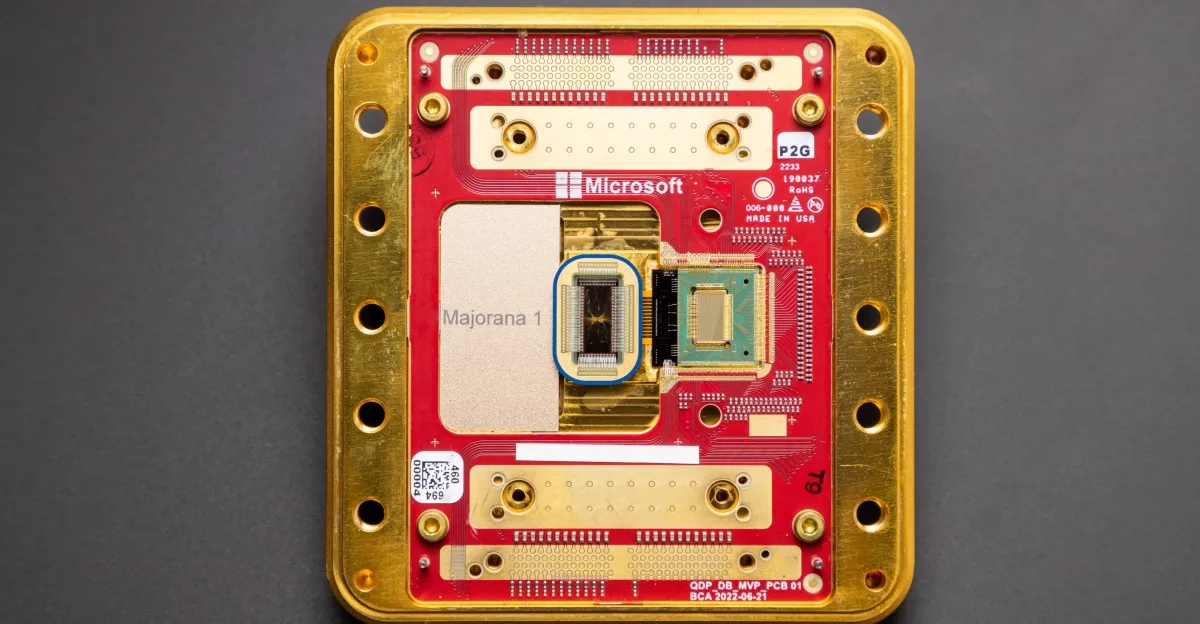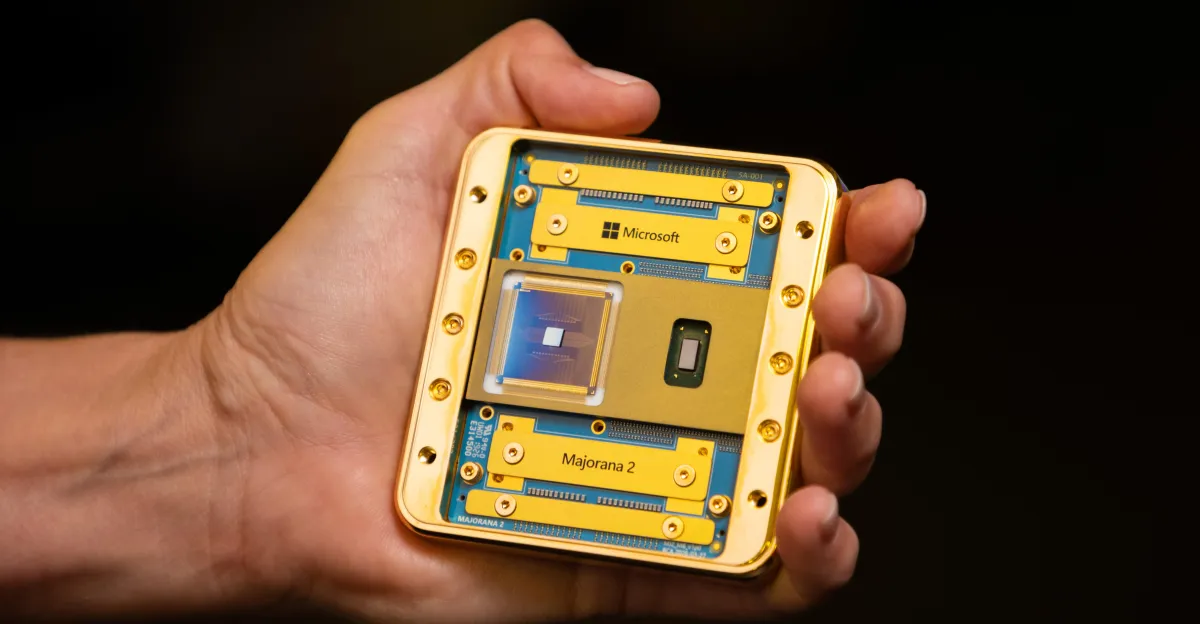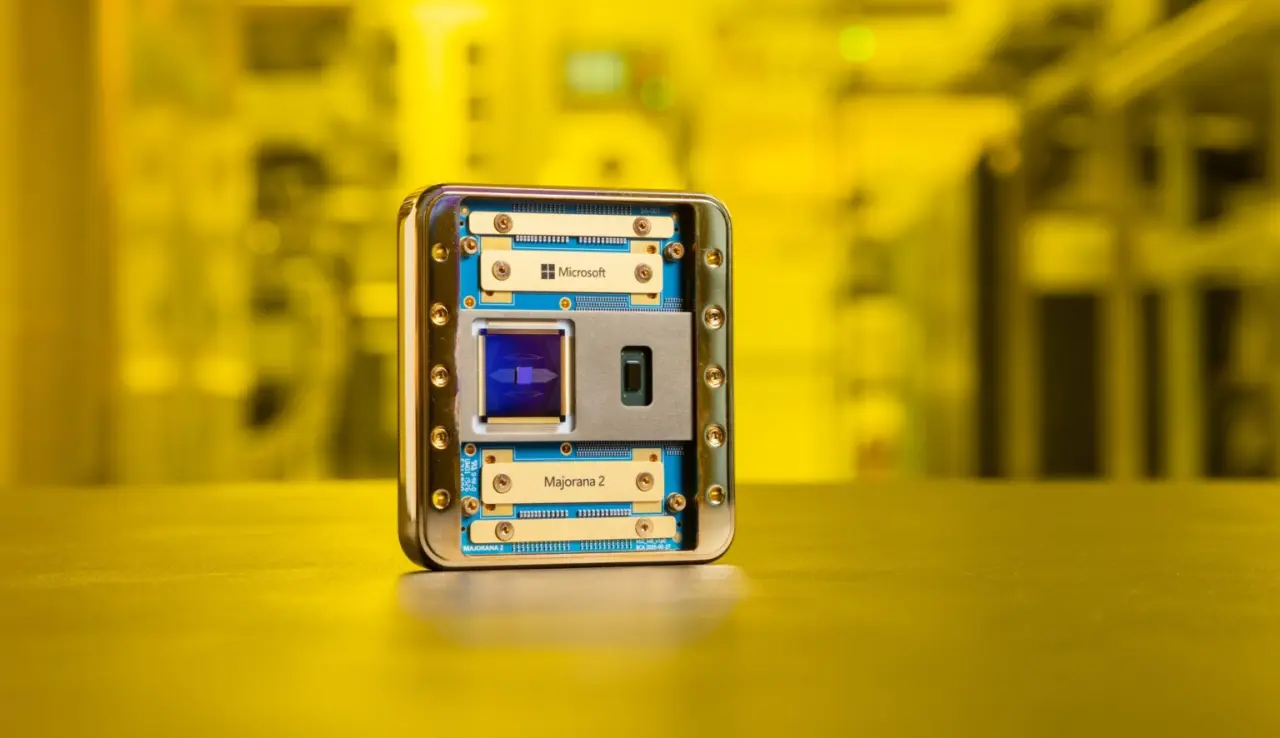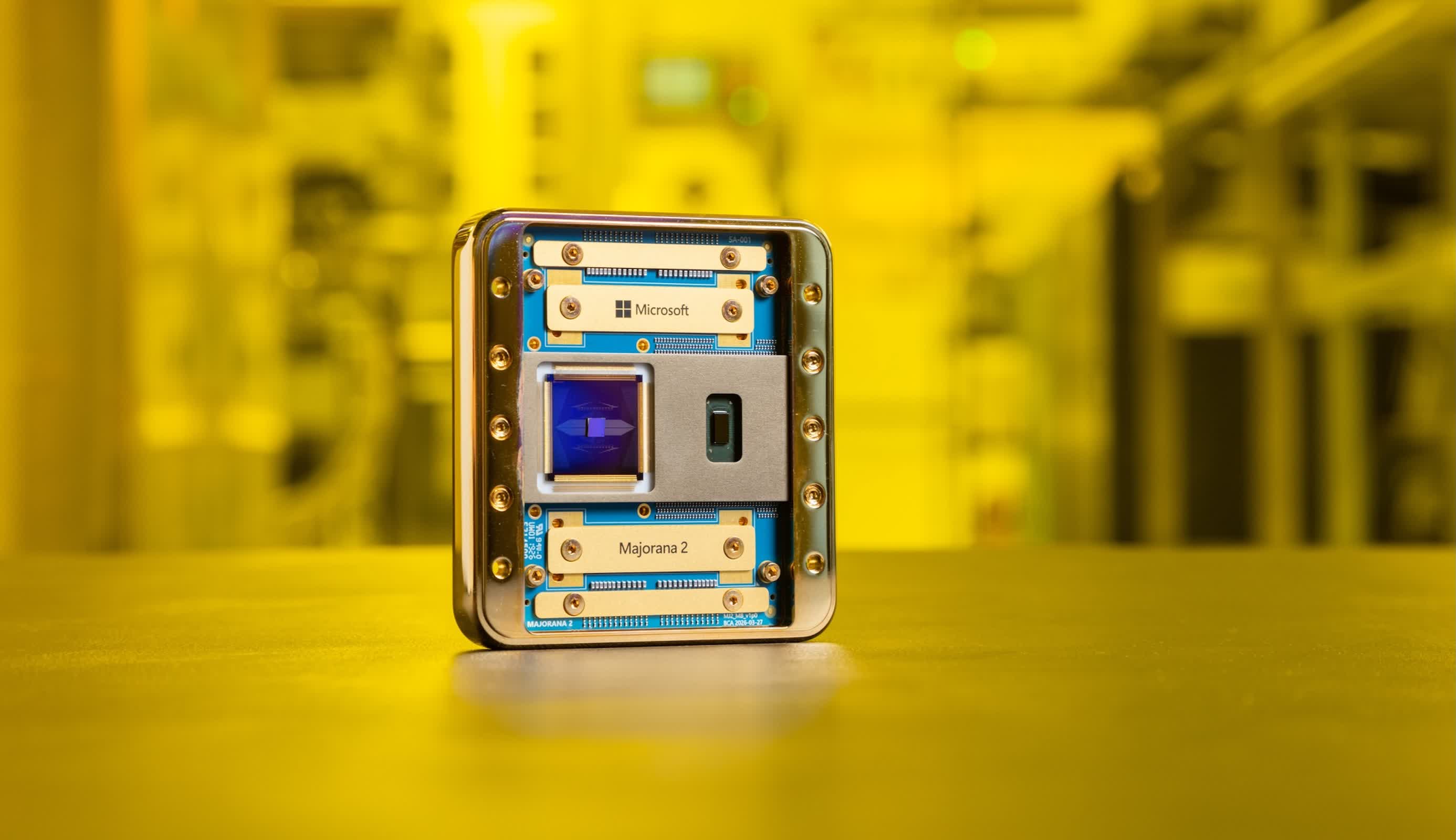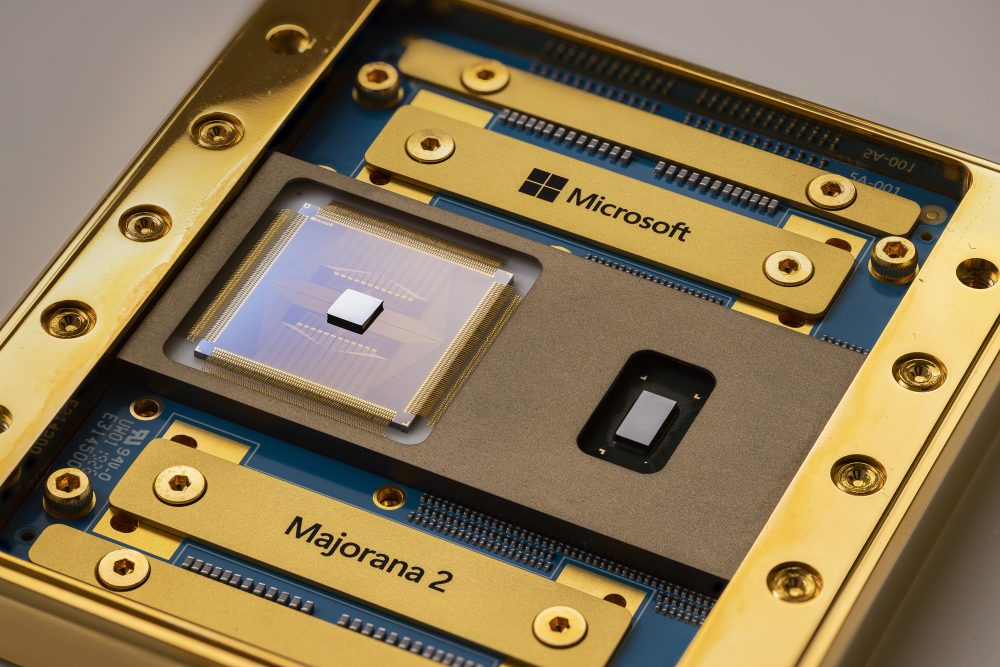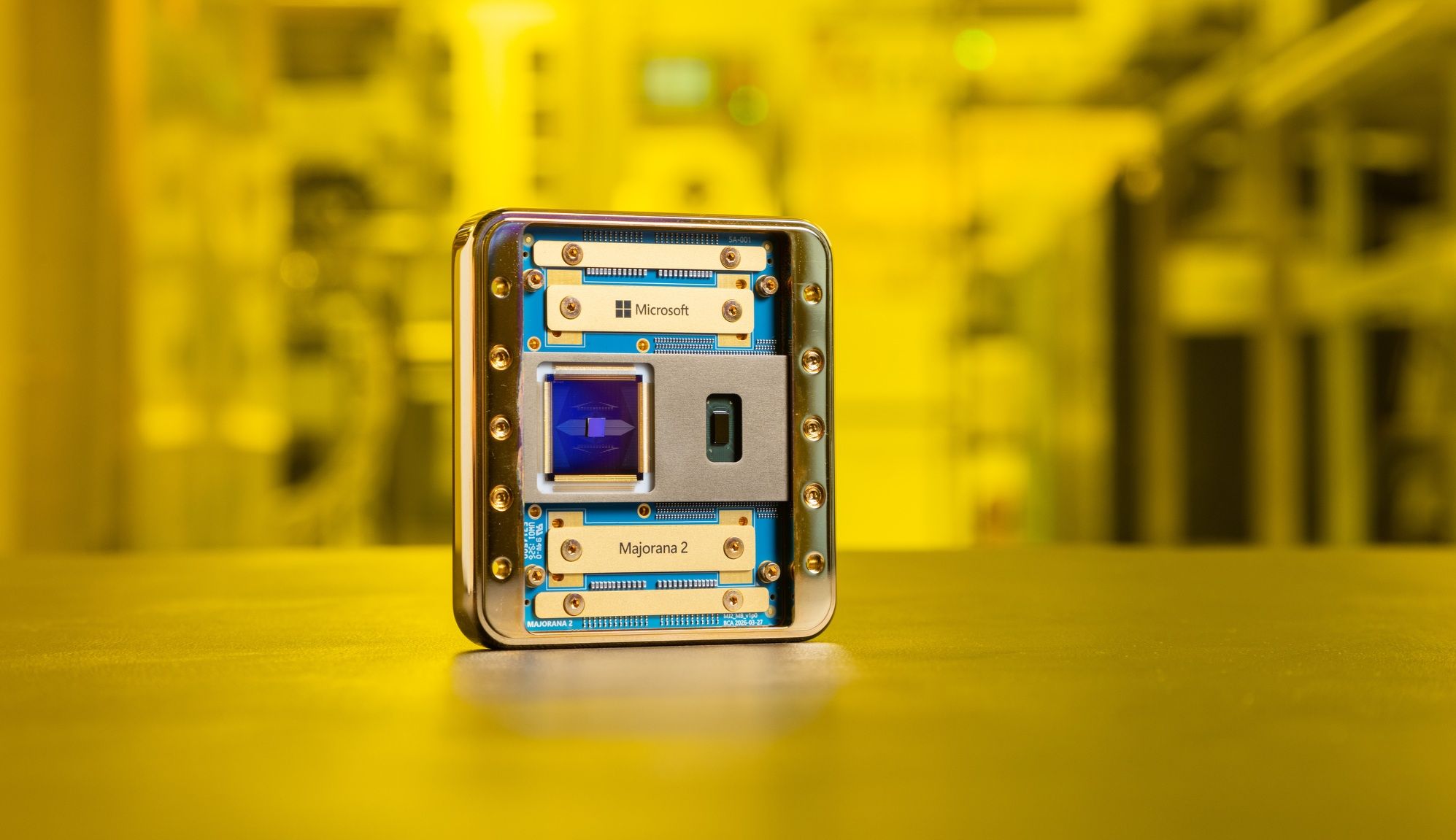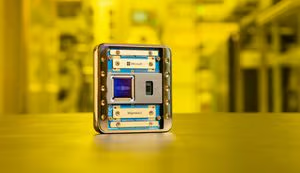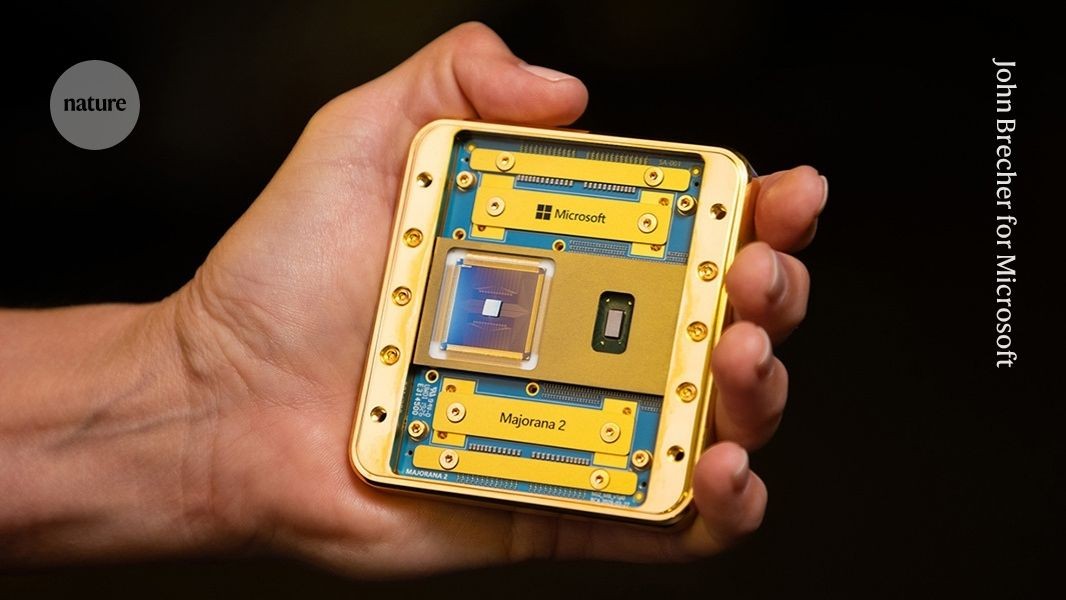
Majorana 2 is Microsoft’s latest topological quantum computer chip.Credit: John Brecher for MicrosoftMicrosoft has unveiled an upgraded quantum chip that it says keeps the company on track to develop practical quantum computers faster than its competitors. The chip, called Majorana 2, is an updated version of the highly controversial Majorana 1 chip that was unveiled last year. But some researchers continue to be sceptical of the company’s claims.Details of Majorana 2 were shared in a preprint posted on arXiv on 2 June1. The paper, which is yet to be peer reviewed, reports that the chip’s qubits — a quantum computer’s equivalent of a computer’s bits — are able to hold information for more than 20 seconds, which is 1,000 times longer than the qubits in its predecessor. But some researchers question whether the company has demonstrated that it has built a quantum computer at all.“In this paper, there’s nothing that shows that this is a qubit,” says Henry Legg, a theoretical physicist at the University of St Andrews, UK.“I believe this is just another step in Microsoft's almost a decade long track record of publishing unreliable results,” says Vincent Mourik, an experimental physicist at the Research Centre Jülich in Germany,Robust to noiseIn February 2025, Microsoft researchers published a research paper in Nature2, which described experiments on a chip that had been designed to store qubits in ‘topological’ states of matter.Microsoft has worked for years to obtain these topological ‘Majorana zero modes’ — quantum states that arise from the collective behaviour of the electrons in a micrometre-long, H-shaped device. The topological qubits are supposed to be more robust to noise and errors than are competing qubit technologies. Microsoft expects that improved noise protection in its chips will make topology‑based machines easier to build at scale.Quantum computers will finally be useful: what’s behind the revolutionThe 2025 Nature paper came with an editor’s note clarifying that “the results in this manuscript do not represent evidence for the presence of Majorana zero modes in the reported devices”, which meant that the paper had no evidence of working qubits. But Microsoft’s press release did say the team had obtained such evidence, and most caveats got lost in the media splash.At the time, Microsoft subsequently told reporters that the extra evidence had been obtained after its paper had been submitted to Nature, and that its team would present more details at a meeting of the American Physical Society the following March. But some researchers who attended that talk — given by theoretical physicist Chetan Nayak, who heads Microsoft’s quantum hardware division in Santa Barbara, California — still found the data unconvincing. Many researchers have been cautious because in 2021 and 2025, Microsoft had to retract or correct claims of having created Majorana zero modes.Topological chipMicrosoft says its latest preprint demonstrates Majorana 2’s new capabilities. Nayak says that the chip can perform two types of measurement that are the crucial steps in topological quantum computing, although the paper only reports evidence of one. The second one “will be discussed in another paper”, he says.Inside Microsoft’s quest for a topological quantum computerHe added that the preprint shows that its H-shaped device can stay in a given ‘parity’ state — meaning whether the number of electrons it contains is even or odd — for 20 seconds or longer. Legg says this is not the same as having proved that the device is a long-lived qubit. Nayak disagrees, saying: “Parity lifetimes directly translate into qubit lifetimes.”
Microsoft upgrades controversial quantum chip — researchers are still sceptical
The tech giant says it will make ‘topological’ quantum computers that can be scaled up faster than competing technologies.
576 words~3 min read