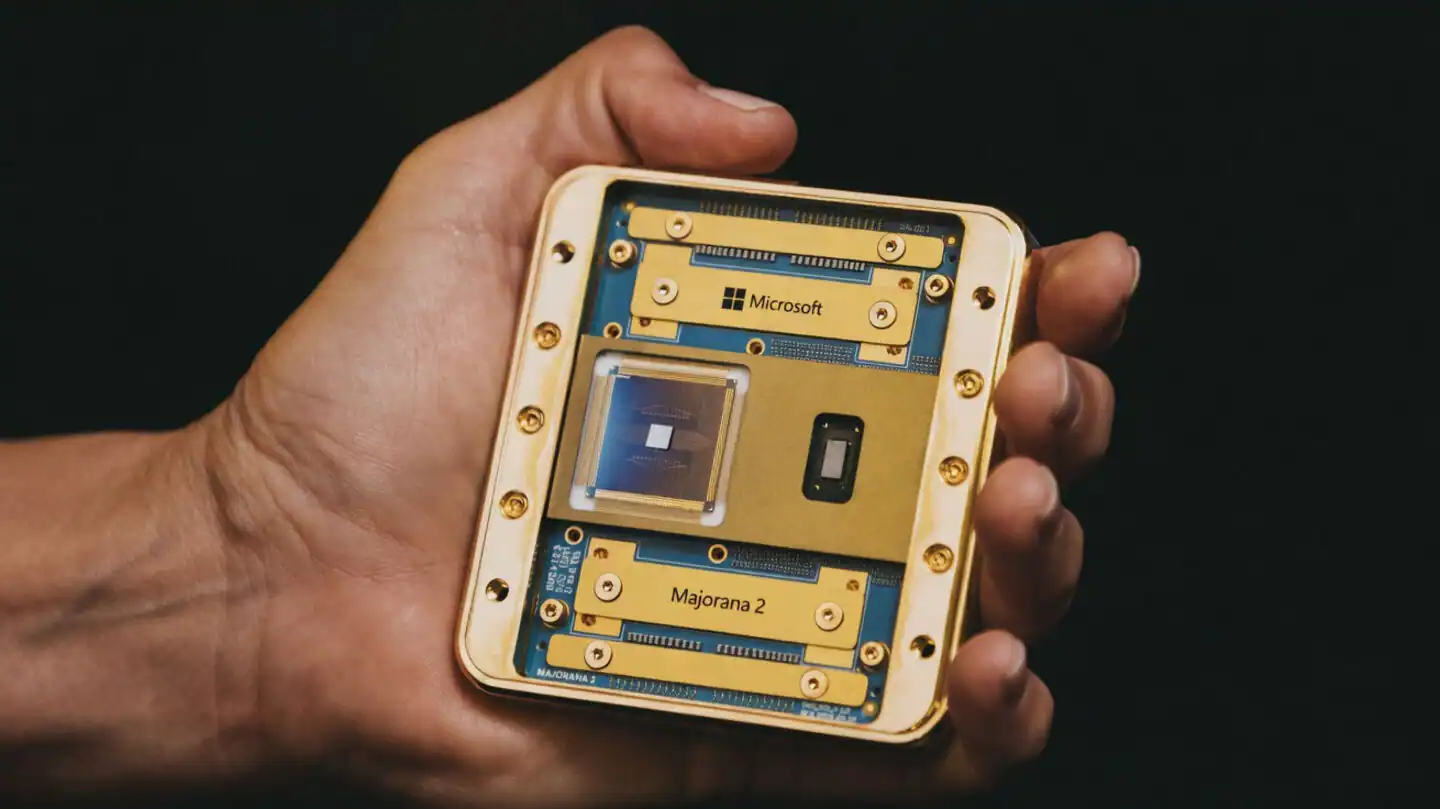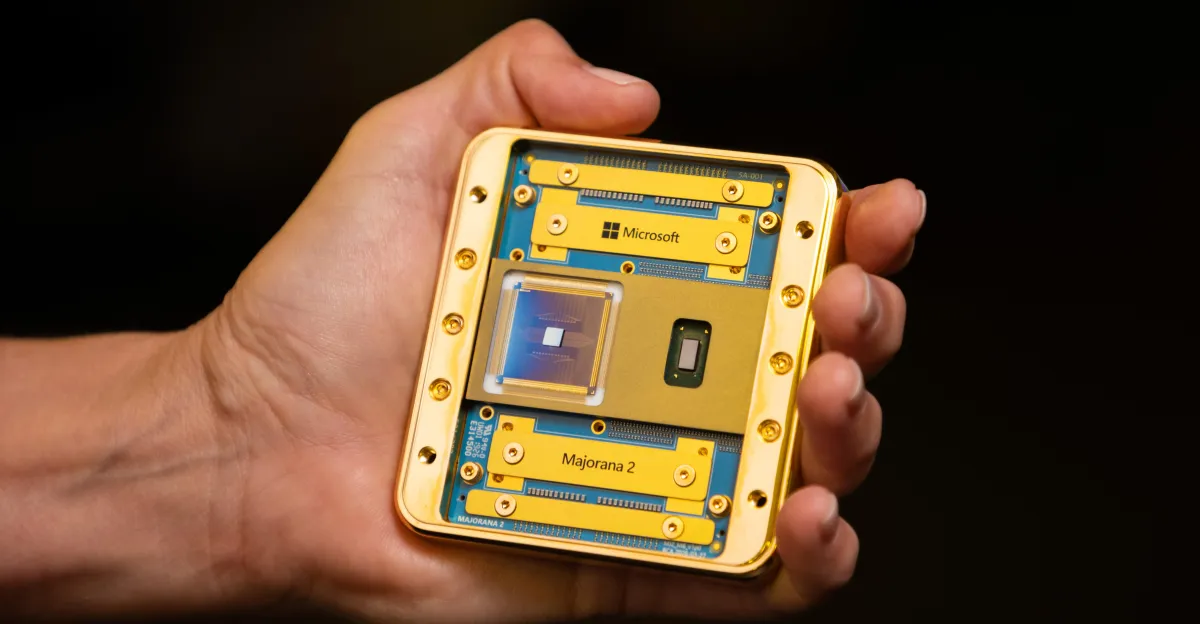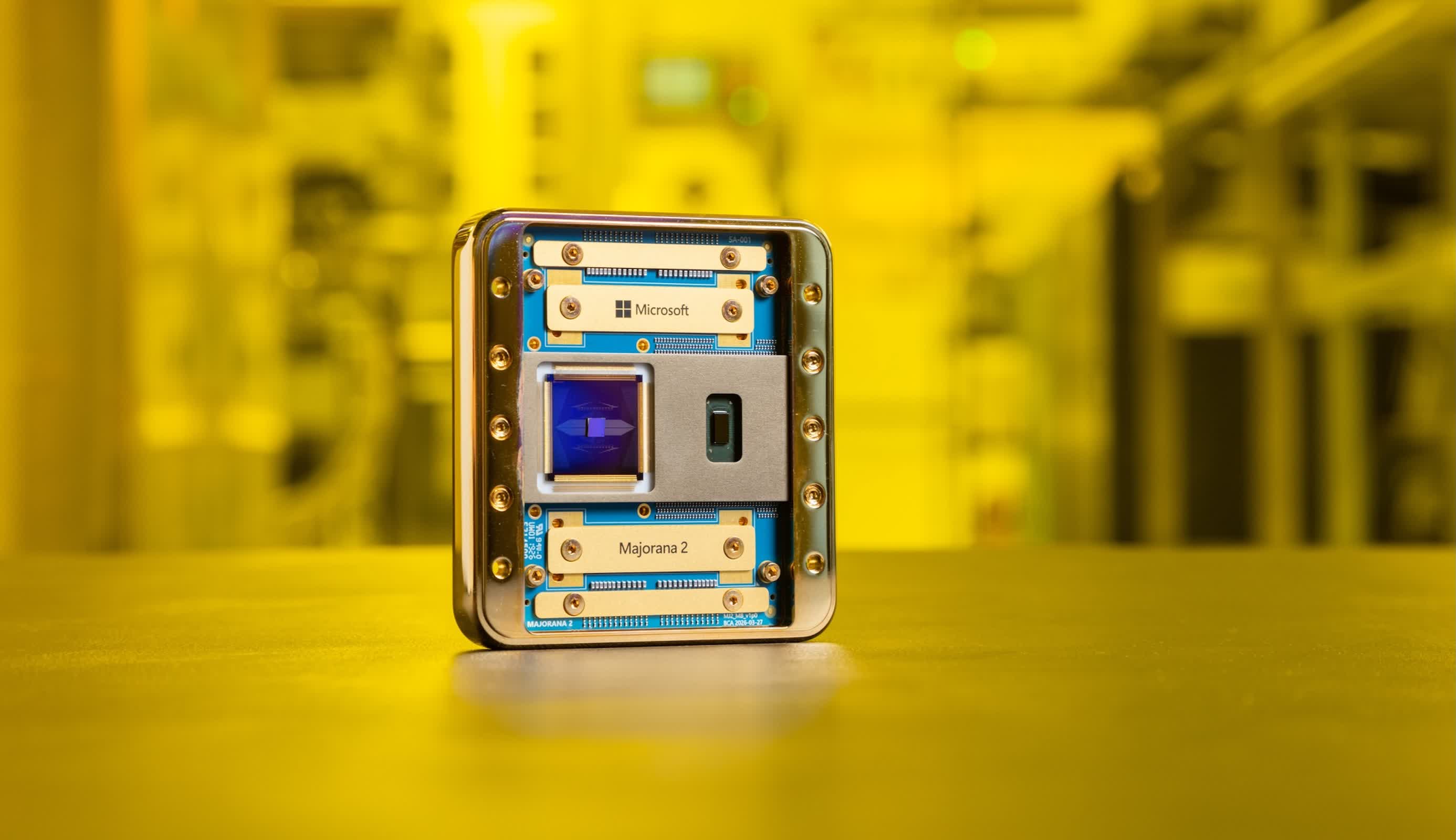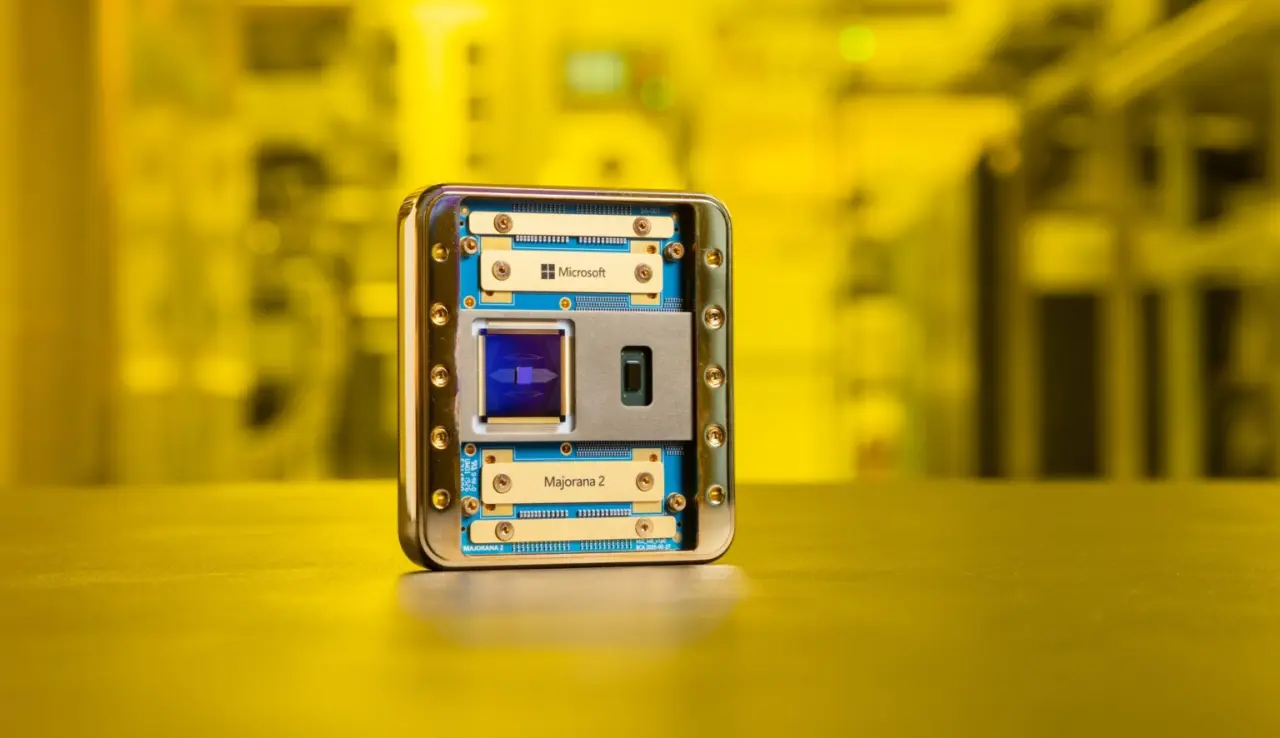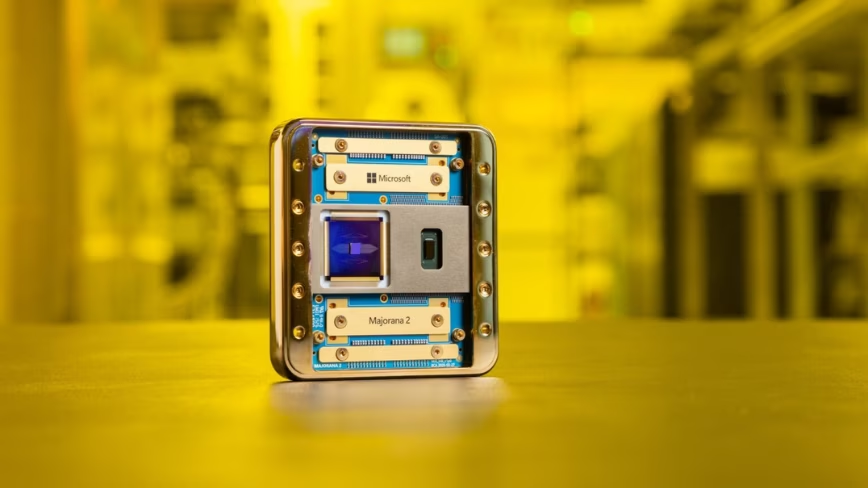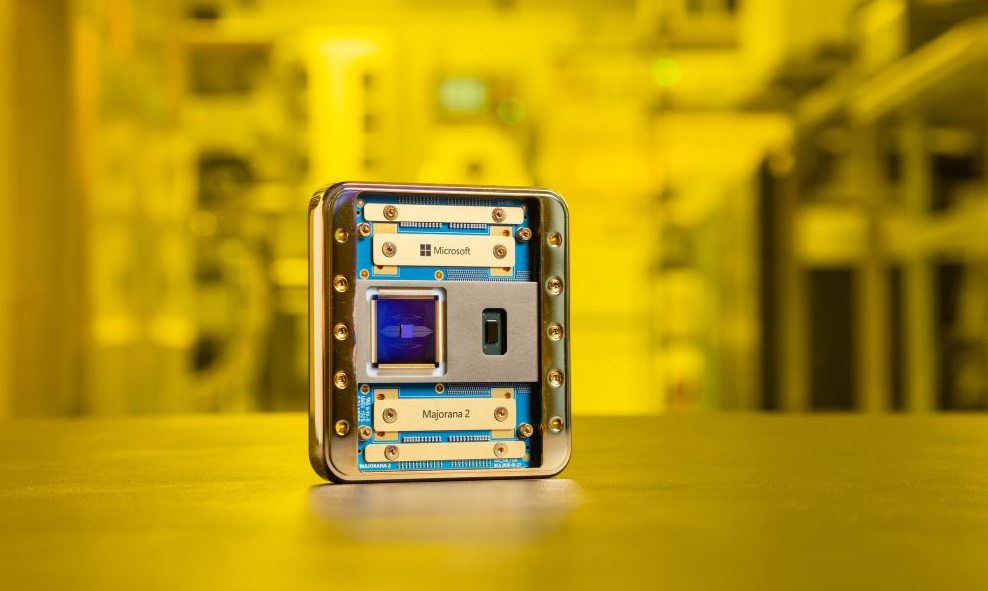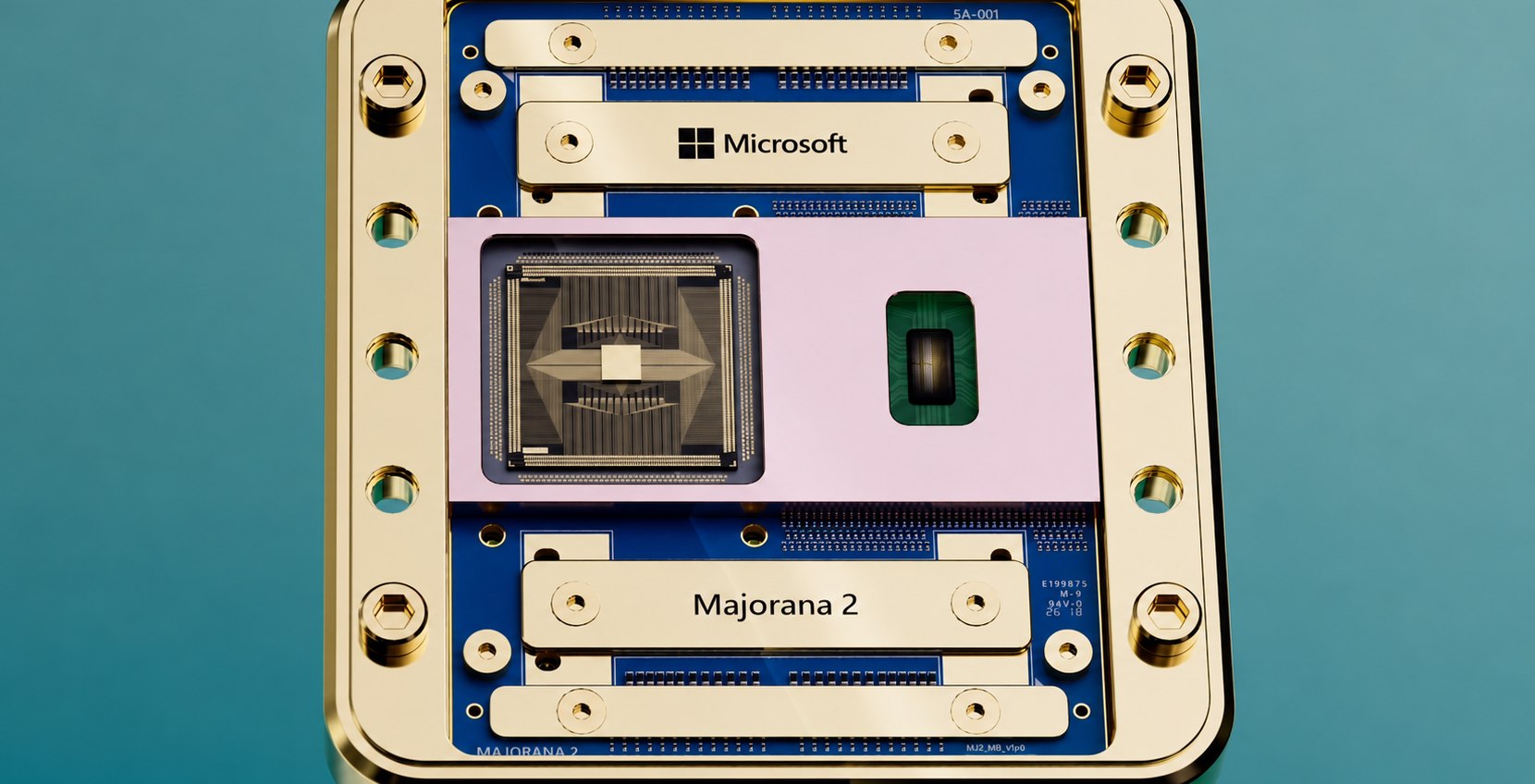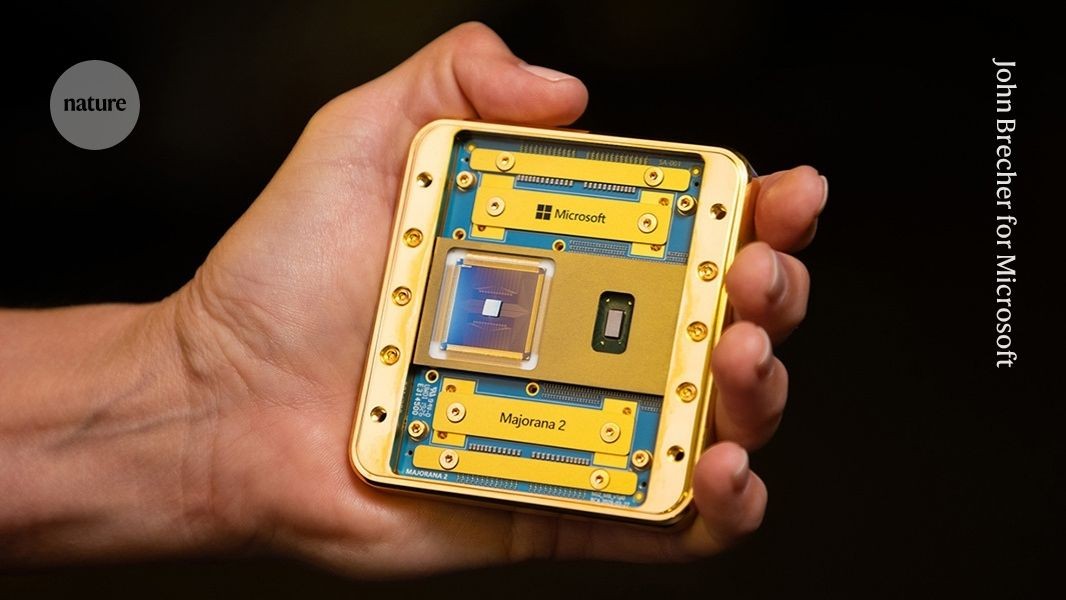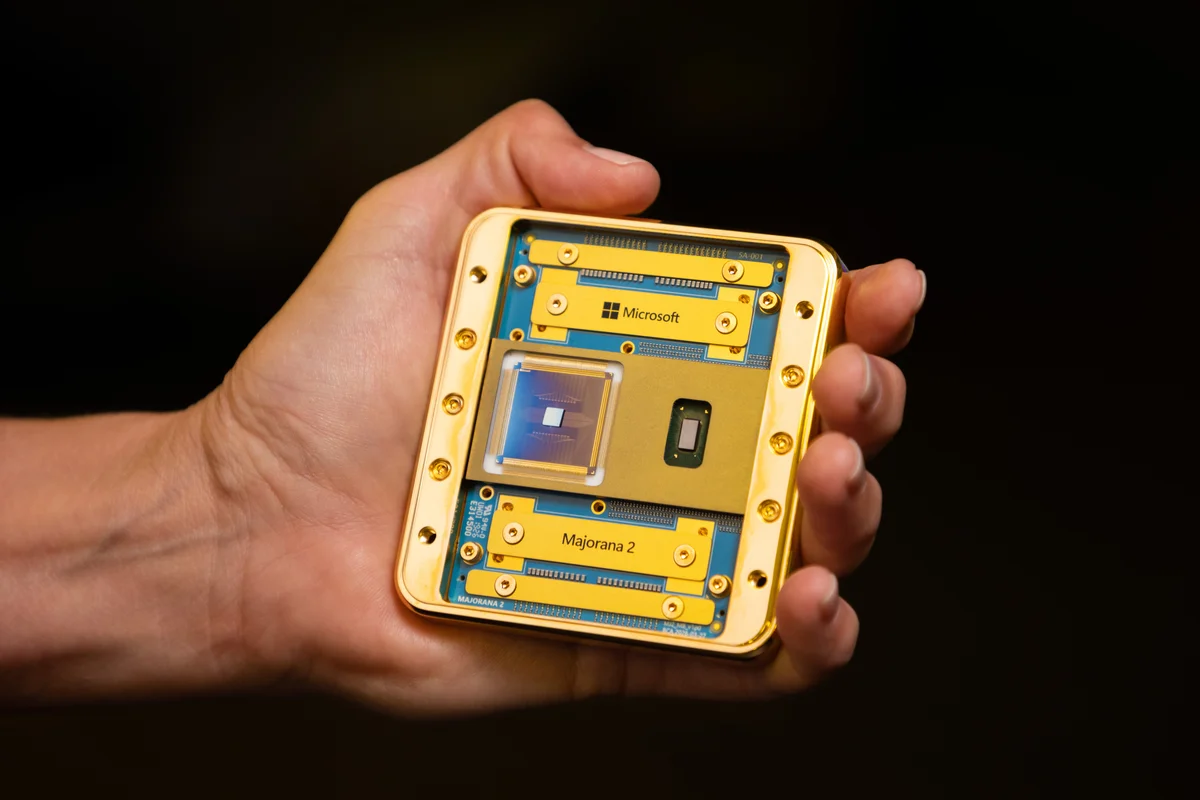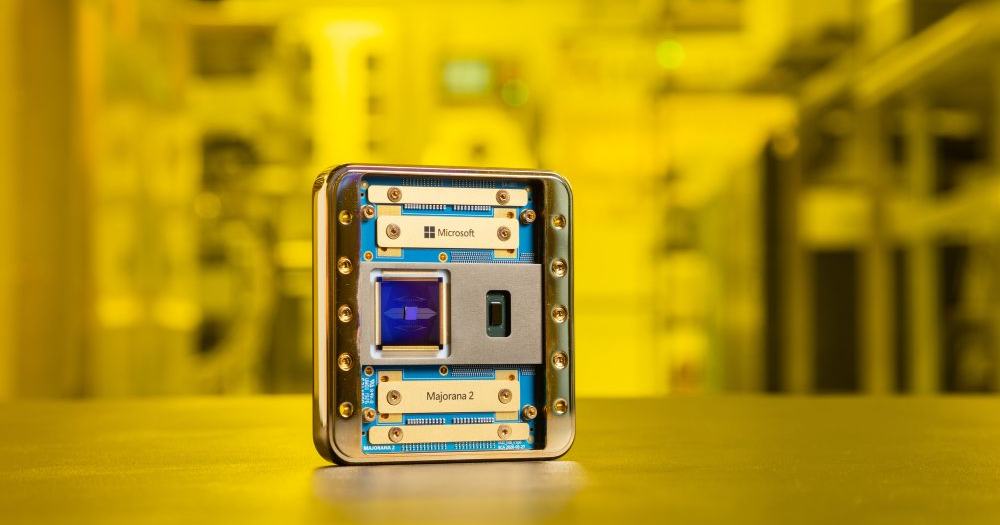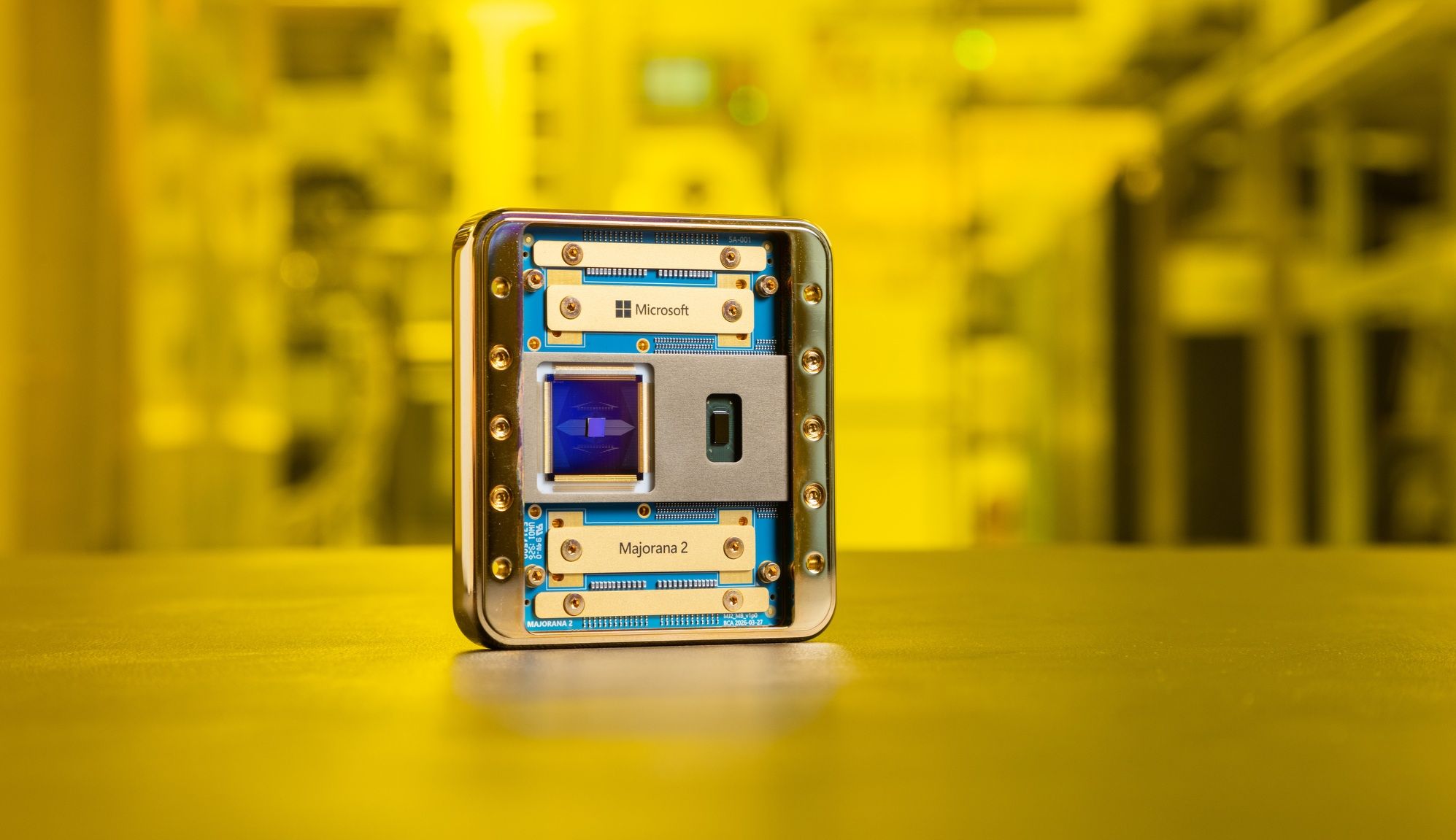
(Image credit: Microsoft)
Microsoft announced its next-generation quantum computing chip, Majorana 2, to an audience of developers at its Build conference in San Francisco. The new chip was designed with its Discovery agentic AI and with material changes to accelerate the company's timeline for a practical, working computer.In a blog post, Chetan Nayak, technical fellow and corporate vice president of quantum hardware, wrote that "To create Majorana 2, the Microsoft Quantum team improved Majorana 1’s material stack to create a more stable topological phase. Majorana 2 replaces Majorana 1’s superconductor, aluminum, with lead, and also updates the semiconductor active region to a combination of indium arsenide and indium arsenide antimonide. This change in materials results in significant increases in performance[.]"Microsoft explains that this can help "shield fragile qubits from cosmic disturbances that can make them unstable."The company claims that Majorana 2's qubits, units of information used in quantum computing, are 1,000 times more reliable than the previous generation and far more stable, with a mean lifetime of 20 seconds. Though some quibits have lasted as long as a minute, a result that has the company accelerating its roadmap towards relevant, practical quantum computing.Go deeper with TH Premium: CPU"Based on this rapid progress, we are accelerating our roadmap to a scalable, practical quantum computer—we have cut our timeline in half and now aim to reach this target by 2029. " Nayak wrote. "This achievement will mark a major milestone on the path to a transformative fault-tolerant quantum computer that has the potential to solve problems that affect all of humanity. "The previous chip, Majorana 1, relied on states of matter that existed only in theory and was questioned by scientists. But the company says this chip is a massive step forward. We'll see how the scientific community responds to the new chip in due time. The full technical paper can be found here (PDF).At Build, Microsoft announced that Discovery's agentic AI and the local app the team used to produce the new chips are getting a general release. Discovery is designed to assist with creating AI workflows for science and engineering.Get Tom's Hardware's best news and in-depth reviews, straight to your inbox.