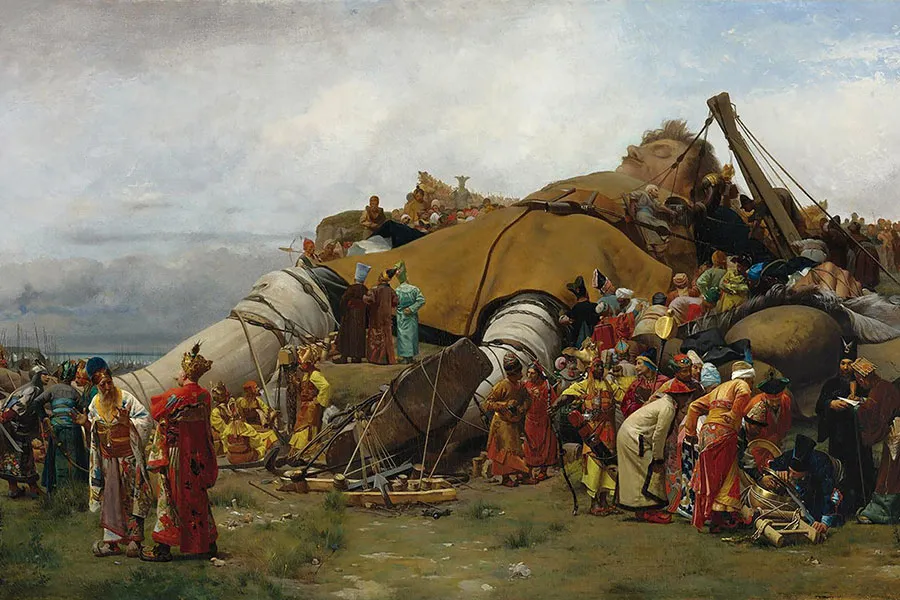
On November 8 it will be three hundred years since a travel book by a previously unknown author appeared in London. It was called Travels into Several Remote Nations of the World. Opposite the title page was a portrait of the writer, said to be “first a Surgeon, and then a CAPTAIN of several SHIPS.” Interspersed throughout the text were four maps accurately depicting known places like Sumatra, Japan, and North America, with newly discovered islands and peninsulas etched in. It looked like just another English voyager’s account from the still-unfolding age of European discovery, which was also the emerging age of European colonialism. This explorer is, indeed, a great believer in imperialism, explaining:
If a Prince send Forces into a Nation, where the People are poor and ignorant, he may lawfully put half of them to Death, and make Slaves of the rest, in order to civilize and reduce them from their barbarous Way of Living.
The book is, of course, the great literary hoax written by Jonathan Swift, and we now call it Gulliver’s Travels.* Unlike his ventriloquist’s dummy Lemuel Gulliver, Swift had a great hatred of colonialism, a rage that causes him late in the book to break character and assume a high style of savage indignation that is far beyond Gulliver’s own rhetorical powers: