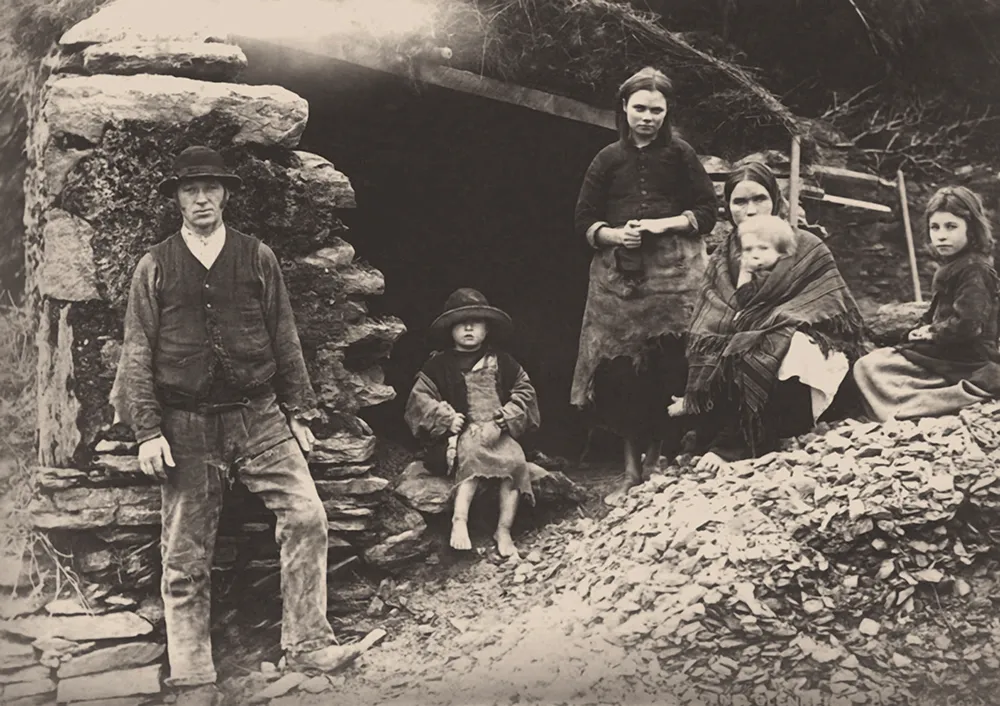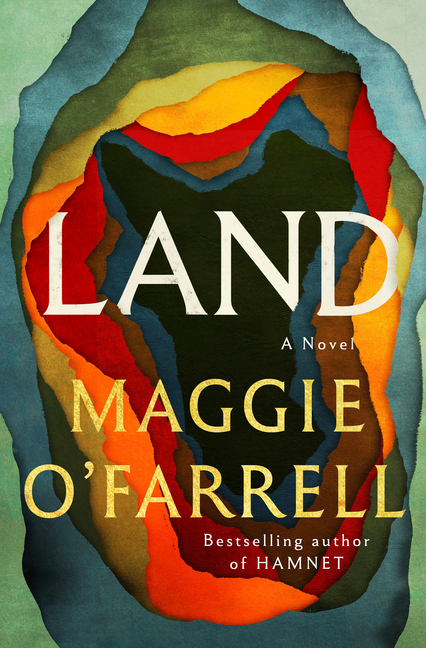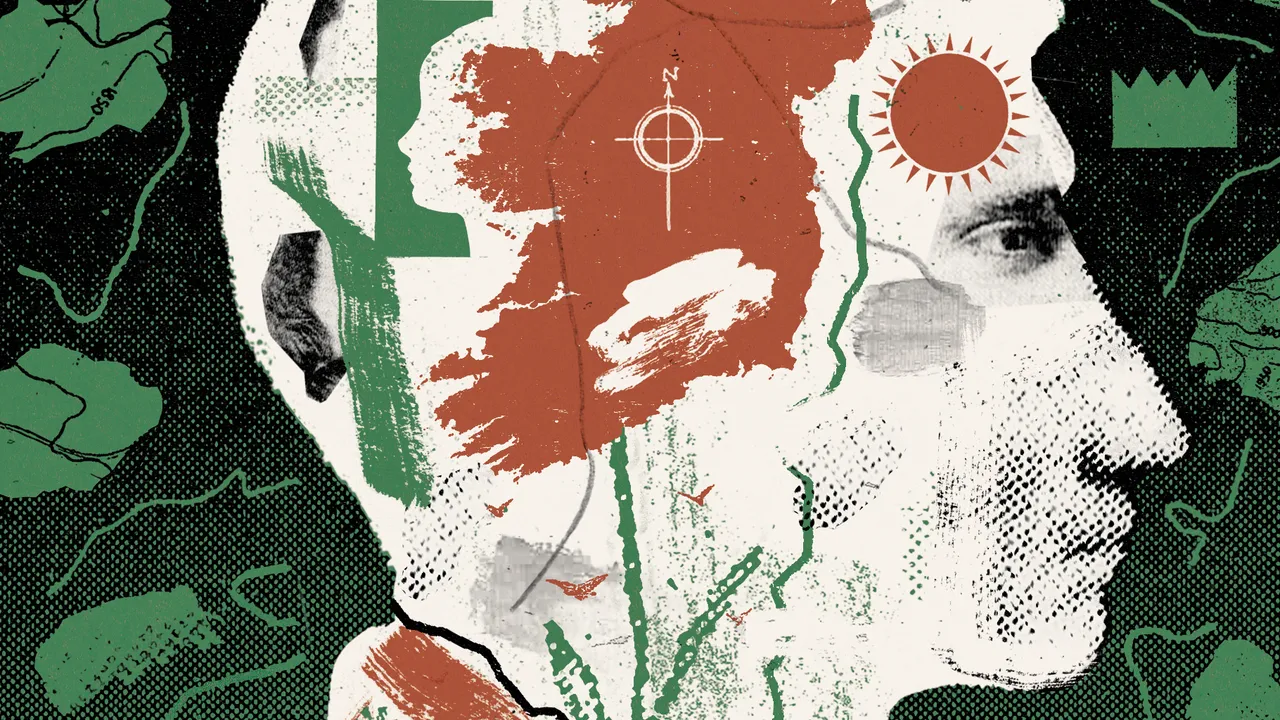
Land Author: Maggie O’FarrellISBN-13: 9781472289087 Publisher: Tinder Press Guideline Price: £25Eavan Boland’s poem That the Science of Cartography is Limited laments the inability of maps, though so masterful in “rendering the spherical as flat,” to capture on paper the rich history of a landscape scarred by history – there is no line on a map, for example, “which says woodland and cries hunger”. This cartographic failing is at the heart of Maggie O’Farrell’s haunting (and haunted) new novel, Land.The novel centres on Tomás, a civilian employee of the Ordnance Survey in Ireland in the 1860s, and his family. It opens on a cold, windy day, as Tomás and his son Liam painstakingly measure an unnamed peninsula “stretching out into the Atlantic”. Their job is to correct the original set of Ordnance Survey maps (surveyed and published between 1824 and 1846) – “to distil into inked symbols and ordered lines what has taken place here since the first maps were drawn”. He must erase from the map hundreds of households, redraw landholding boundaries, and render the tragedy of the Famine into neat, mute new maps that show that the landscape has changed but can never explain why. With luminous detail and carefully crafted prose, O’Farrell describes not just the slow, accretive work of making a map, but how the repetition of that work inhabits and takes over the mind of Tomás, whose every move on that windswept day in 1865 is observed, measured, and triangulated. Tomás’s duties include not just measuring and sketching, but also speaking to people “about where the boundaries lie, who owns which field, what this valley or that bluff is called and why, where might the ruins of this building be”. Situated between the inhabitants of an area and the sappers of the British army, Tomás is something of a native informant and disruptive force all at once – think of the character Owen in Brian Friel’s Translations, who struggles with the ethics of translating the layered landscape of Ballybeg into the language of power. In that position, Tomás joins some of the luminaries of 19th-century Ireland: the musicologist and antiquarian George Petrie; linguists and literary scholars John O’Donovan and Eugene O’Curry; poet James Clarence Mangan; artist George Victor du Noyer. He also joins O’Farrell’s own great-great-grandfather who worked for the survey just after the Famine.It is through the labours of such civilian employees that ruins were included in maps, that sheets of abstract measurements were filled with local placenames and historical markers, and that the first maps became invaluable archives of a layered landscape on the brink of what Tomás rightly calls the “rupture” of the Famine. While Petrie and his colleagues, and O’Farrell’s ancestor, recorded what today we would call the intangible heritage of the island at a point in time, O’Farrell’s novel maps something quite different. It is a breathtaking epic that covers centuries and continents, and an urgent and impassioned mapping of historical change driven by famine, emigration, language loss, secularisation, and much more. Nineteenth-century Ireland has found a daring new chronicler in O’Farrell.[ Maggie O’Farrell: ‘I turned down an OBE because I didn’t want British Empire as part of my name’Opens in new window ]When Tomás’s son gets his foot caught in boggy ground beside a spring in a copse of trees that is curiously missing from the original map, Tomás’s ordered and measured life changes. He is “a man of few words” as the novel opens, but after he goes into the copse to find his son he emerges speaking urgently, feverishly about the fact that the maps are “all wrong” and that he must rip them up and begin again. This new work will not produce maps as he has known them, but mythological countermaps (perhaps not unlike Helen Cann’s beautiful frontispiece map): “We can redraw the very land we walk upon, record it how it is, how it will be. We will not use their names, their estate lines, their plantation boundaries, their barracks: these shall be erased.” He never finishes his new maps, but he does succeed in teaching himself that “to map is to assume power” – a transformation of the quietist surveyor into a radical, even if only for a short time.The copse and the spring that transform the lives of Tomás and his family are thin places, where this world and the next, past and present, converge. They are the source of a thread of draíocht that propels the plot forward. If every historical novel must have at least a partly sketched out theory of historical change, this one leans on magic and mythology as much as on secular forces. The spring acts a sort of navel of the entire book, connecting the geographical cords of the family (which stretch from Calcutta to Québec) and the historical cords of the plot of land where they make their home (which stretch across “the colossal lifespan of a landscape”) back to the magical waters of the well.Tomás and Liam are the most finely drawn characters in the novel, as their stories occupy the largest part of the narrative. But there is an excellent ensemble cast too. Edna, Tomás’s eldest daughter, has a streak of independence and a gift for music (giving O’Farrell the opportunity to craft some exceptional descriptions of her fiddle playing); Rose and Eugene, the two youngest siblings, are more hazily rendered, as is their mother, Phina (like Tomás, a survivor and escapee of a workhouse during the Famine). We see the action of the novel by turns through the eyes of each of these characters, and also through their mythical dog, Bran, or through the house, and the effect is a multi-perspectival, multigenerational, multi-species look at the doleful history of just one place.While there is much to admire in the characters and plot of this novel, its finest moments come in astonishingly vivid set-piece descriptions. As Edna takes a journey in a boat, for example, we read that “she feels the keel and haul of the ship, hears the squealing of its boards and joists, and the slumberous sighs and snores of her bunkmates, the pukings and mewlings, the squabbles over space, and it comes back to her where she is, what she has done, that she cannot go back”. Again and again, O’Farrell pauses to colour in a striking picture of a place, an event, or a feeling, and result is crisp and eye-opening.Land is rich with literary allusion, calling out to a long list of kin, but principally to Virginia Woolf (to the extraordinary “Time Passes” interlude in To the Lighthouse) and James Joyce (epiphanies, humiliation in school and in a Jesuit seminary, simultaneous action in distant places, all point to Joyce), and inevitably to Translations. These are not laboured or distracting echoes, nor are they merely imitative. In O’Farrell’s hands – as we would expect from the author of Hamnet – literary history is transformed and rekindled, as much a part of the narrative as the social and political history that she traces.The most telling echo of Woolf is the most fleeting. When Tomás first sees Phina as she arrives in the workhouse, he thinks that she has “something of the bird about her, a linnet perhaps or a thrush”. In an early passage in Mrs Dalloway, a neighbour looks at Clarissa Dalloway from across the street and thinks, “a touch of the bird about her, of the jay, blue-green, light, vivacious, though she was over 50, and grown very white since her illness”. In pointing to Woolf in this way, O’Farrell stitches Land into a long history of pandemic writing, for Clarissa Dalloway’s “illness” had been influenza, and its traces are still felt in her irregular heart rhythm, five years after the 1918 Spanish flu pandemic.In these minor details we see O’Farrell’s finer skills – her ability to write a novel set during and after the Famine that is not consumed but is invisibly patterned by widespread death. Life, for some, continues, and Phina and Tomás navigate the difficulties of living in the aftermath, attuned to the question of how to reconcile themselves to the fact of their own miraculous survival. O’Farrell has written elsewhere about her own experience of complications from the coronavirus. She began listening to Woolf’s novel while recovering, and Clarissa Dalloway’s illness caught her attention. The results of that chance encounter are carefully threaded through Land, as it reflects on life in a time of death. Like all of the best historical fiction, Land is both a novel about past change and a meditation for our own time on the meaning of living through and beyond a pandemic.In a project as ambitious as this, there will always be some compromises, and at times the novel feels like it is labouring to do justice to everything, trying to map myth, history, landscape, family dynamics all at once. At other times, the complicated history of Ireland can be too starkly rendered along the lines of Irish and British, oppressed and oppressor, betraying the subtlety elsewhere of the narrative. But these are minor distractions in a novel that fills in with precision and passion a detailed map of the landscape of 19th-century Ireland.Cóilín Parsons is associate professor of English and director of Global Irish Studies at Georgetown University in Washington, DC. He is the author of The Ordnance Survey and Modern Irish Literature.Further readingThe Geometer Lobachevsky by Adrian Duncan (2022)If you enjoy books about people measuring boggy land in soggy weather, Duncan’s novel about a Russian cartographer making maps for turf extraction will appeal. Shifting landscapes, buried histories, and global forces pressing on 1950s Ireland will remind you of O’Farrell’s Land.The Irish Ordnance Survey: Culture, History, and Memory by Gillian Doherty (2006)A sympathetic account of the complex work of the civilian workers at the Ordnance Survey who, like Tomás, laboured to produce the best maps they could. It is a scholarly but approachable account, based on extensive research in the survey’s archives.To the Lighthouse by Virginia Woolf (1927)This tale of art, perspective, the west coast of Scotland, and family life before and after the rupture of the first World War is always worth reading. The middle section, Time Passes, sees the passage of 10 years, as the war rages, the family house ages and children die.
Land review: Breathtaking epic marks Maggie O’Farrell as a daring chronicler of 19th century Ireland
Hamnet author’s 10th novel urgently and passionately maps historical change driven by famine, emigration, language loss, secularisation and much more
1,717 words~8 min read