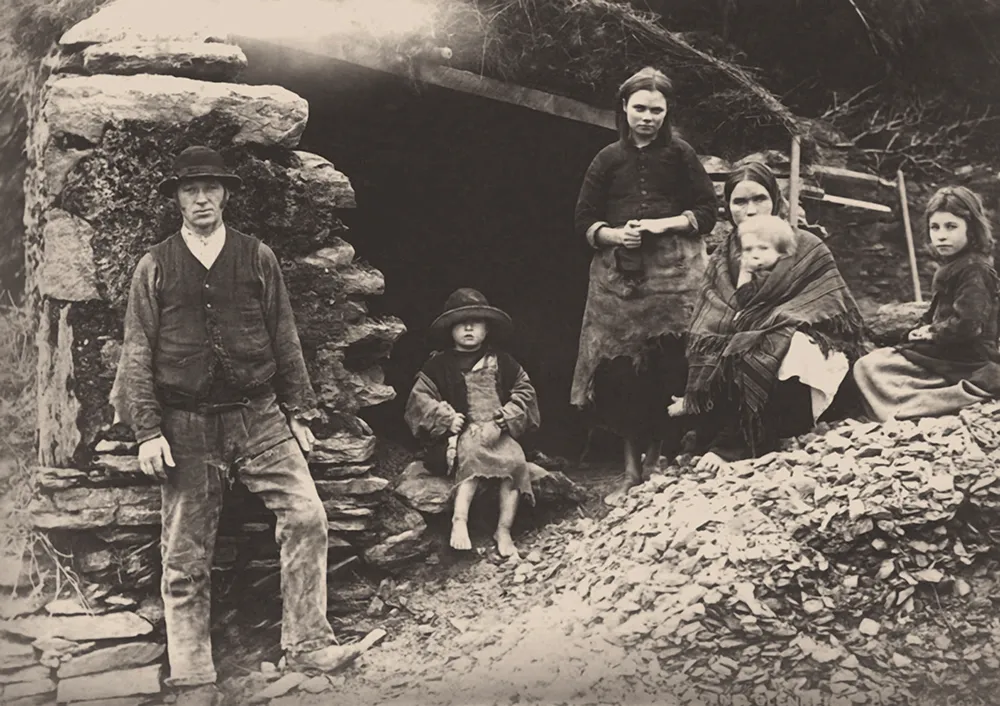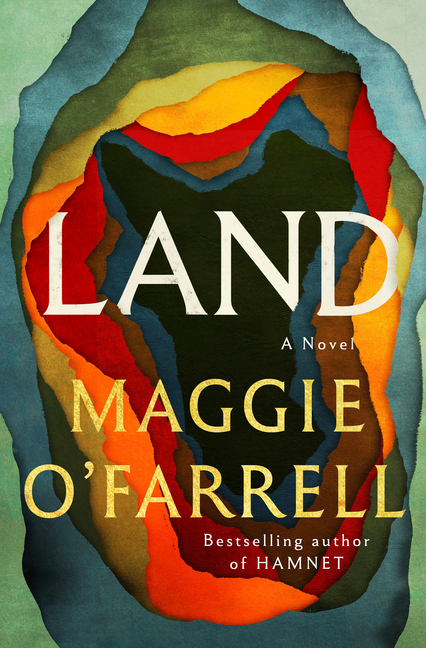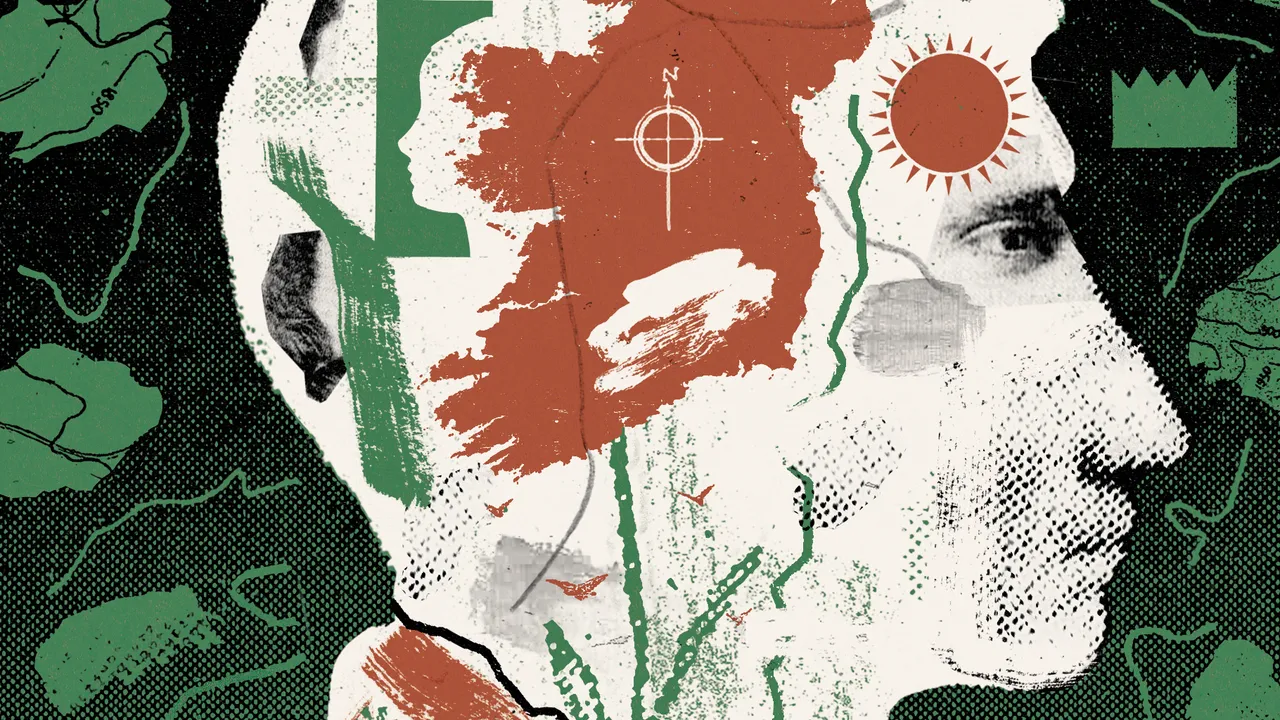
The itinerant American poet Elizabeth Bishop published “The Map” in 1935. “Land lies in water,” the poem begins, a pun on the lies of representation. “It is shadowed green.” In Bishop’s hands, cartography is a cousin to poetry, an enchanting of names and places which summons hidden meanings to the surface. The poem contrasts this process with dutiful, dry record-keeping, which is more faithful to what’s known but evokes less of what’s not. “More delicate than the historians’ are the map-makers’ colors,” it ends.Cartography serves as both narrative engine and theme in “Land,” by the Northern Irish novelist Maggie O’Farrell. A central figure, Tomás, is a skilled laborer in eighteen-sixties Ireland, tasked with making maps for the British, who are occupying the country. He wants to depict not only relevant topographical features and place names but also the ravages of the Great Hunger, which killed twelve per cent of the population and led two million more to emigrate when a blight caused the country’s potato crops to fail. The British government refused to subsidize food prices or restrict exports of Irish agricultural goods, further devastating the island. The redcoats “do not wish to make such marks upon their maps, which might lead to certain admittances,” O’Farrell writes. Tomás, however, “set it all down: the ghost towns, the weed-lush fields, the mass graves, the workhouses, the Famine roads that led nowhere.” As a mapmaker, he’s also a revisionist historian, supplementing the official and misleading chronicle of empire with the reality of those living under it.Tomás’s belief that maps should acknowledge the marginalized and less powerful—that there’s more to history than what the victors convey—is seemingly shared by O’Farrell. The author of thirteen books, she has recently become known for fiction about sidelined or forgotten historical figures, thanks to her novel “Hamnet,” from 2020, which the director Chloé Zhao adapted into an Oscar-winning film last year. That book feels its way into the silence around Agnes Shakespeare, the playwright’s wife, and his son, Hamnet, who died at age eleven. O’Farrell speculates, reasonably, that Hamnet may have been a victim of bubonic plague, and her book centers on the family’s grief in the aftermath of his death.Both the book and the movie have been accused of reductiveness, of proposing too simple a correspondence between life and art. The climax of O’Farrell’s story is a scene in which, after Hamnet has died, Agnes goes to London to see her husband’s production of “Hamlet.” She’s furious with the playwright for being absent during their son’s illness, but watching the lead actor, who has been coached in Hamnet’s mannerisms, softens her anger. Shakespeare, she realizes, has restored the boy “the only way he can.” It’s as if she loses a child and gets him back through the magic of theatre.Why substitute art for life? To put a finer point on it, why write historical fiction—or, at least, this brand of it, crowd-pleasing and immersive in the tradition of Patrick O’Brian or Hilary Mantel—when there is actual history? Maybe, O’Farrell seems to suggest, because it’s fun. If Tomás, in “Land,” is grimly burdened by responsibility, O’Farrell is expansive, full of vigor; her characters may die of plague or starve in famines, but she appears to be enjoying herself. The book, which spans Rome, Calcutta, and the “beleaguered dog-shaped country” of Ireland, features tart, nurturing mothers, feisty elder sisters, younger sisters of uncommon beauty, telepathic changelings, farseeing Druids, pompous and hypocritical priests, and steadfast hounds. The passions are big and unembarrassed. Characters rush out to sea, assume new identities, push their enemies off cliffs, kiss in alleyways, pull treasure out of the earth.Historical novelists are often charged with disrespect and unseriousness, of ransacking the archives for sensational scenery to hang behind their conventional family sagas and love stories. Some critics’ squeamishness seems aimed at the act of invention itself, the florid dreaming in the face of reality. The very details that make the genre come alive—the archaic syntax, the outfits, the feelings—are the ones that haven’t survived into the present day or that the writer made up. A historical novel’s most evocative aspects, in other words, tend to be the least real.O’Farrell excels at world-building, a term that can attract faint disdain owing to its associations with so-called genre fiction. It describes the craft of designing and furnishing a fictional universe with the particularities of climate, botany, zoology, politics, economics, fashion, and more. Often, she avails herself of technical or era-specific vocabulary. In “Land,” for example, a character harvesting seaweed climbs a dune “with his cargo of bladderwrack, great swags of it, the blistered slithery ribbons trying to escape the creel.” Later, O’Farrell lingers over a soldier’s surveying equipment, how he steadies the theodolite on its tripod and brings “the vertical axis to match a gravitational marker,” so that through the lens appears “a world untroubled and hermetic, where mountains and trees, buildings and roads hung upside down.”The appealing texture of the book isn’t just a function of information you could look up in an encyclopedia. It comes from the interplay of retrieved details (creel, theodolite) with writerly style (“blistered slithery ribbons,” inverted mountains). “Hamnet,” too, is an ingenious blend of historical fact and invention: O’Farrell painstakingly constructs a miniature cosmos out of both life and art, evidence and imagination, what’s known about Shakespeare and what she speculates about Agnes. Her Agnes possesses an intuitive, embodied, feminized sort of knowledge; she’s said to be descended from a forest witch and seems to have occult healing powers. Shakespeare is identified only as “the father,” “her husband,” “the Latin tutor.” For most of the novel, he’s in London, writing and acting in plays, while Agnes raises their children and spars with her imperious in-laws. O’Farrell is brisk with Shakespeare’s biography and career—and even more so with the reverently recorded controversies surrounding the great man—but interested in his relationships. We don’t learn much about his doings in the city; his creative output is chiefly relevant as a measure of grief. When we do inhabit his perspective, it’s from the vantage of a husband and a father, not a genius.There’s a hint of feminist subversion in “Land,” too. O’Farrell underlines the boldness of her female characters and the softness of her men. When we meet Tomás, many of his personal memories of the Great Hunger have gone missing. He recollects nothing of his life before arriving at a workhouse during the lean years. Trauma has left him dour and self-contained, as inaccessible to others as his childhood is to him. His project to correct the propaganda of the British is hampered by his own prejudices: he wants his son, Liam, to help him with his survey and shuts his eyes to the boy’s inclinations toward a more studious career. Meanwhile, his daughter, Enda, is adventurous and talented, perfect for the role of mapmaker’s assistant, but Tomás inevitably realizes her fitness too late.With her father’s trade closed to her, Enda steals her brother’s immigration papers, sews her savings into the lining of her jacket, and sets sail for Canada. O’Farrell’s research shines in the Quebec sections: Enda’s peregrinations, as she looks for work and lodging, reveal a cross-section of New World types and locales—a boarding house, a hired girl, a landlady with an “aged and malodorous cat.” Accomplished at the violin, she takes to fiddling on street corners for extra money. At one point, she is greeted by Irish construction workers who seem to recognize the melody she’s playing. Later, as she performs a different tune, “in her head blossoms a vision of the peninsula—field-boundary walls that undulate over every bluff and hollow, the water lilies that crowd into wet ditches in early summer, the surface of the lough that quilts itself in a breeze, the cows that turn their large eyes upon you, the darkness that rises up from the hills at dusk.”For Tomás, capturing recent history is a quantitative pursuit—subtract the post-famine population from the pre-famine population to unleash the death toll in all its horror. His project relies on specialized knowledge: he has a local’s eye for culturally significant landmarks and the expertise to measure inclines and elevations accurately. Enda doesn’t transmit facts and figures through her music, but she is a virtuoso in her way. Her fiddling is a looser, freer, more accessible type of memorialization—less a notation than an invocation, a summoning of her homeland’s spirit.In “Hamnet” as in “Land,” loss and irretrievability are of central concern—how should they be acknowledged, and to what extent? When “Hamnet” falters, it’s because the book overreaches in its claims about the power of art to resurrect the past. Its final scene suggests a kind of interchangeability between the dead Hamnet and the fictional Hamlet, between what used to be and what never was.“Land” is less interested in how fantasy may be exchanged for reality than in how the two are complementary. Through its characters, the book stages an argument about the virtues of various types of maps—those that are measured, those that are recollected, those that are dreamed. Some of these approaches require meticulous scholarship and technical proficiency; others, an attunement to the invisible realms of feeling and folklore. The characters’ distinct perspectives overlap to build the world that is the novel. All are useful, all are partial, and none reverse the country’s losses. Rather, the facts ground the fiction, the fiction enlivens the facts, and both work together to suggest that the pursuit of resurrecting the past and the pursuit of telling a good story can, in some cases, be one and the same. ♦
Maggie O’Farrell and the Art of Inventing the Past
Why read historical fiction? A new novel by the author of “Hamnet” offers one answer: because it’s fun.
1,595 words~7 min read