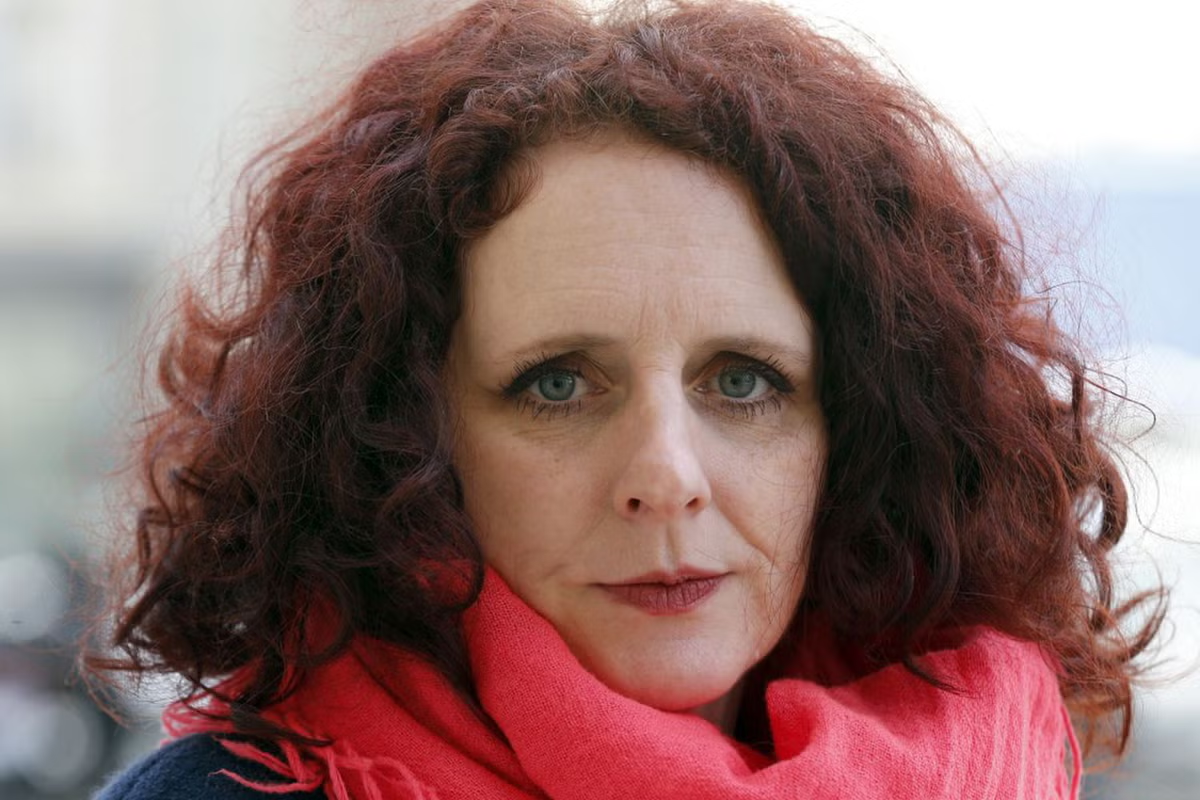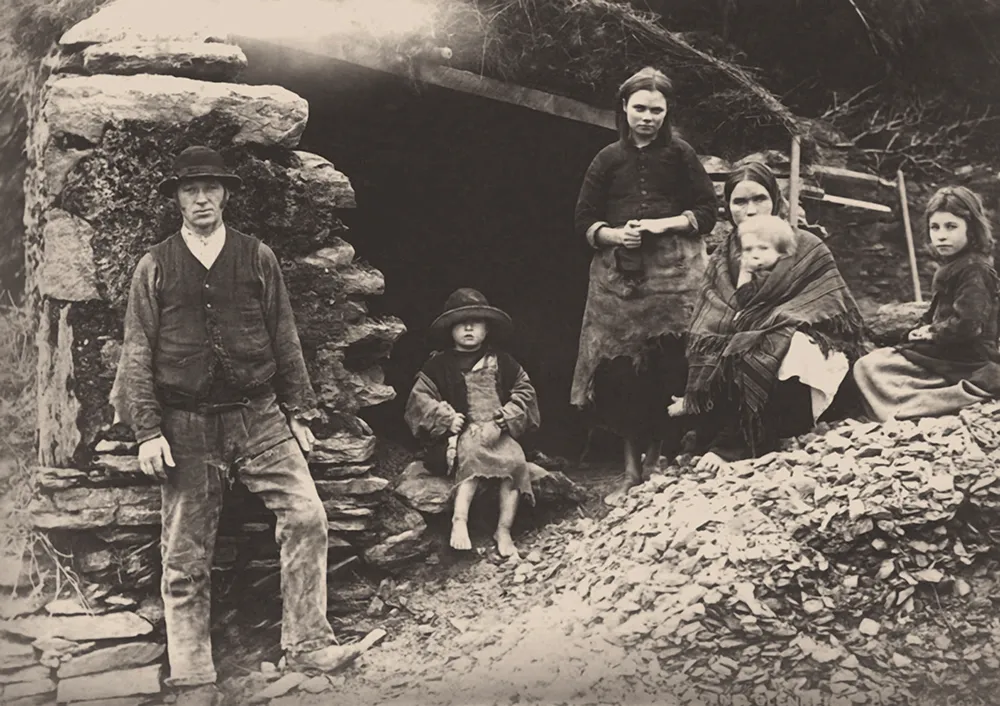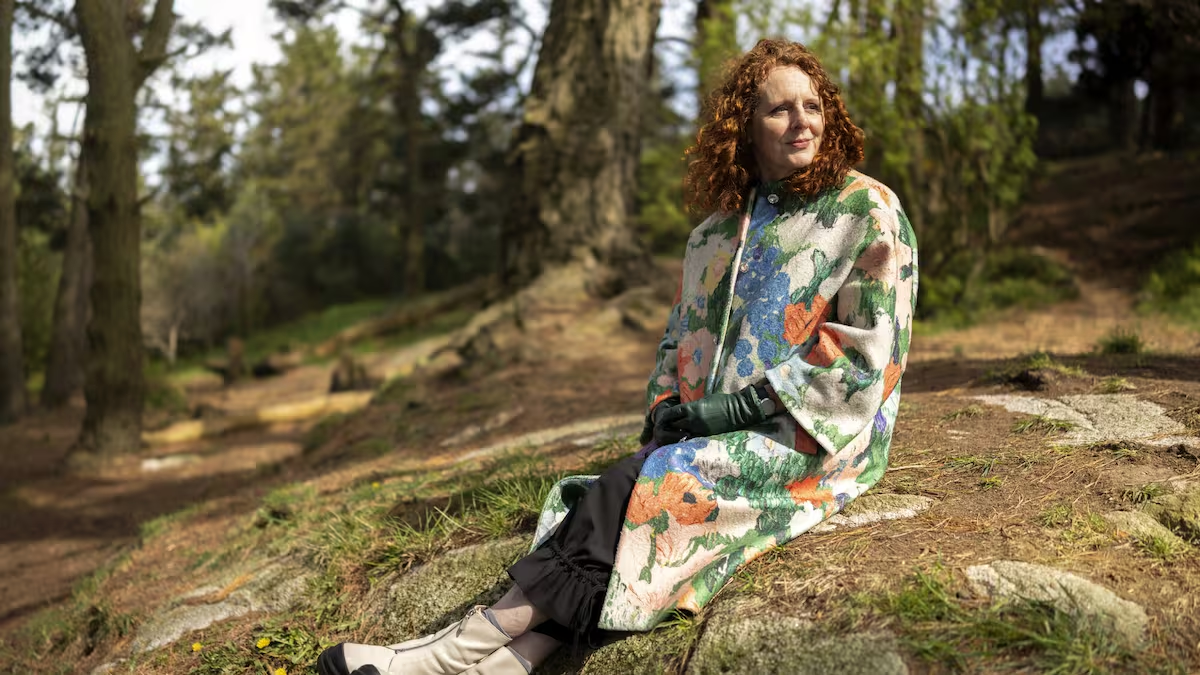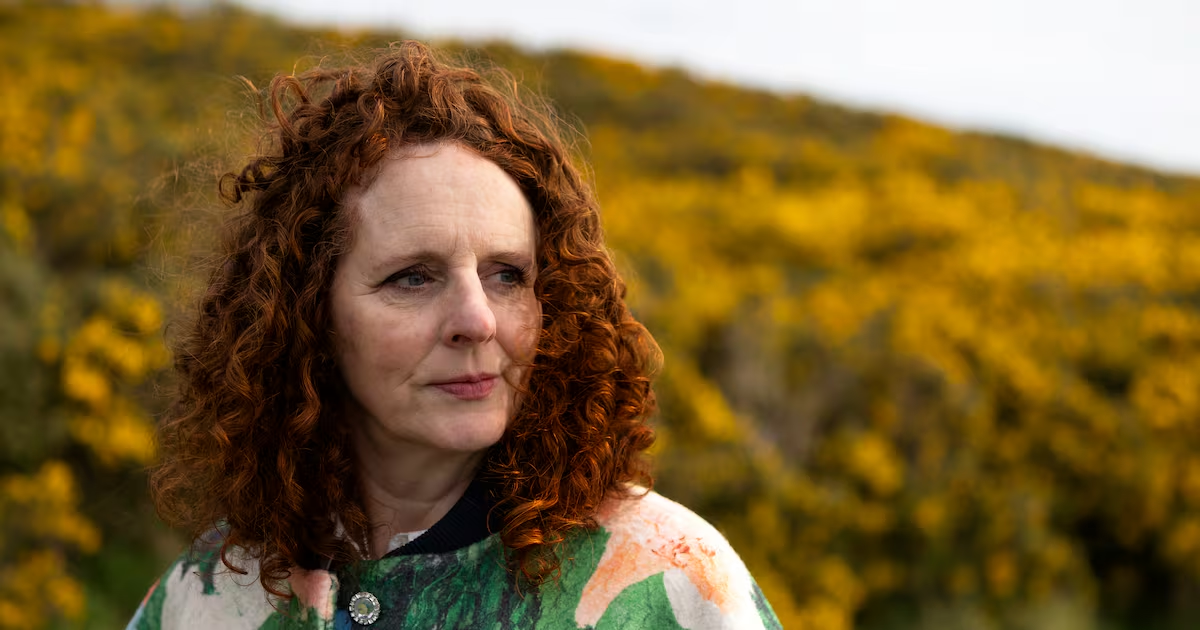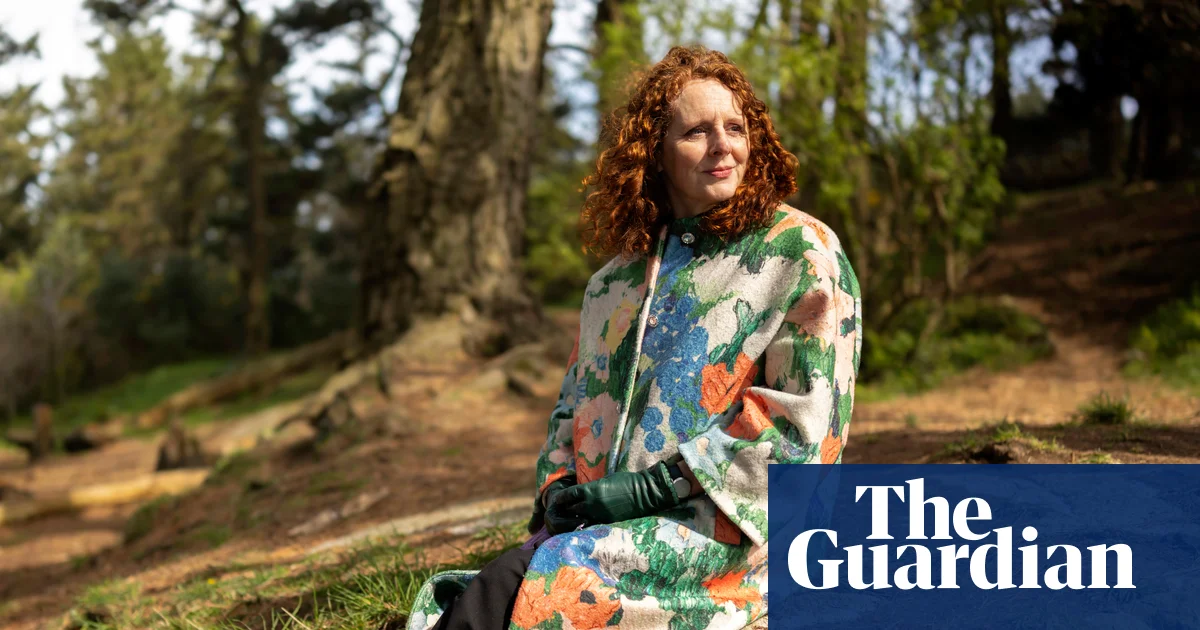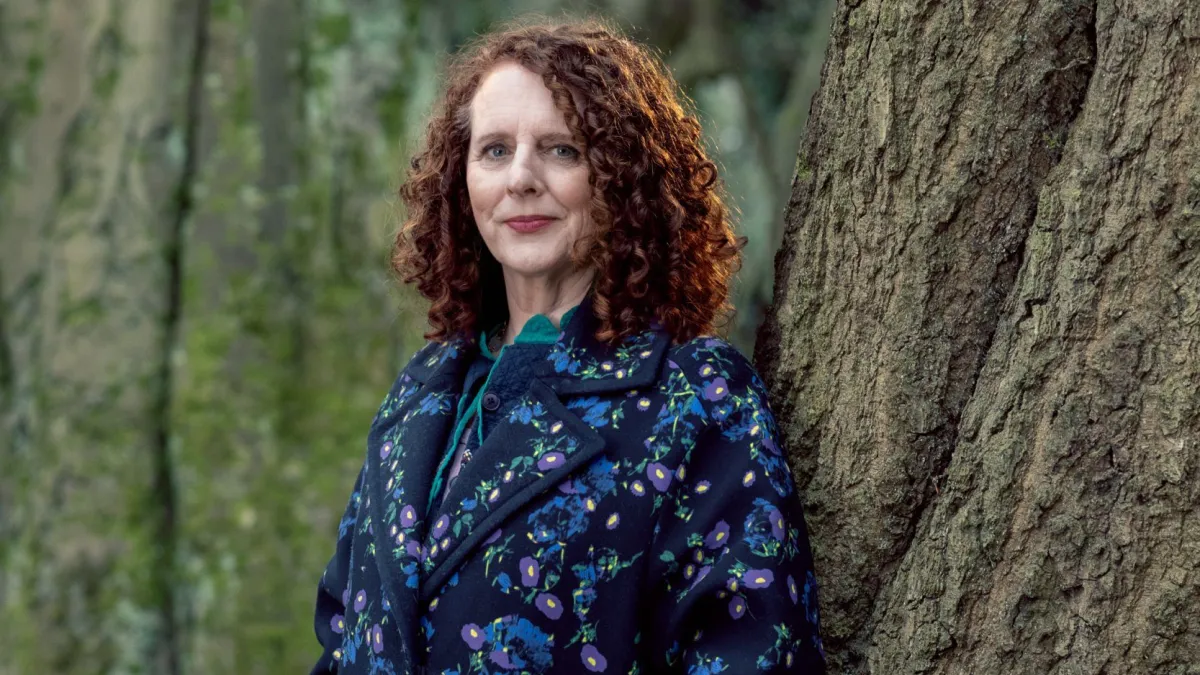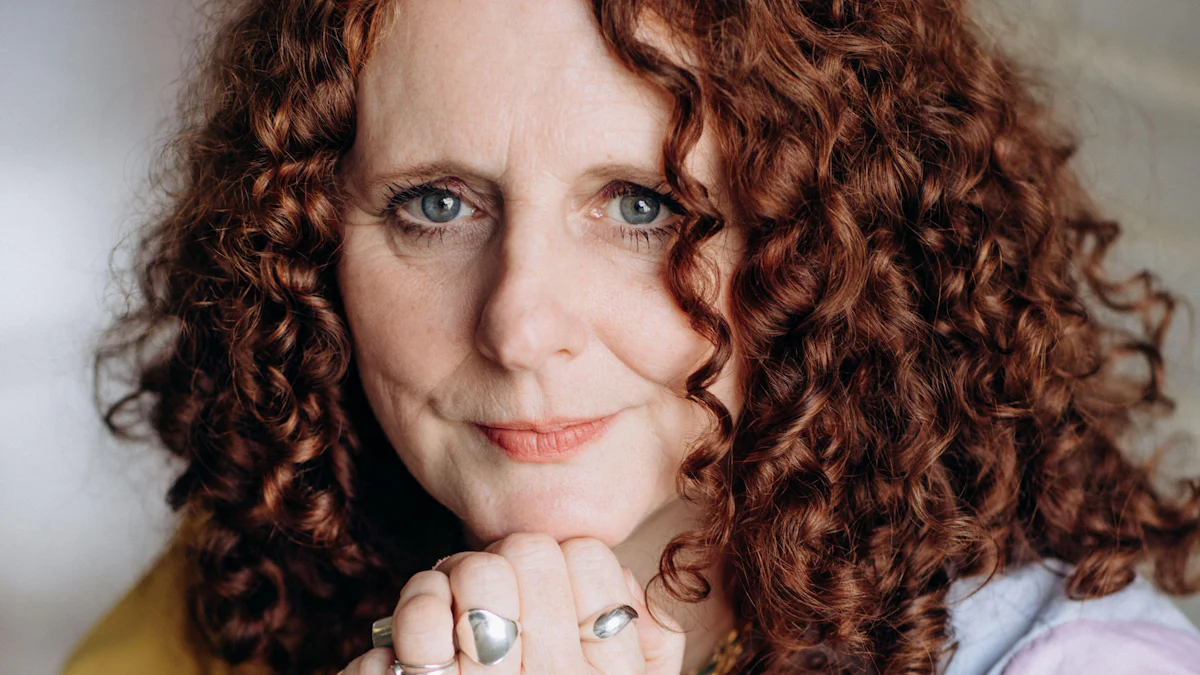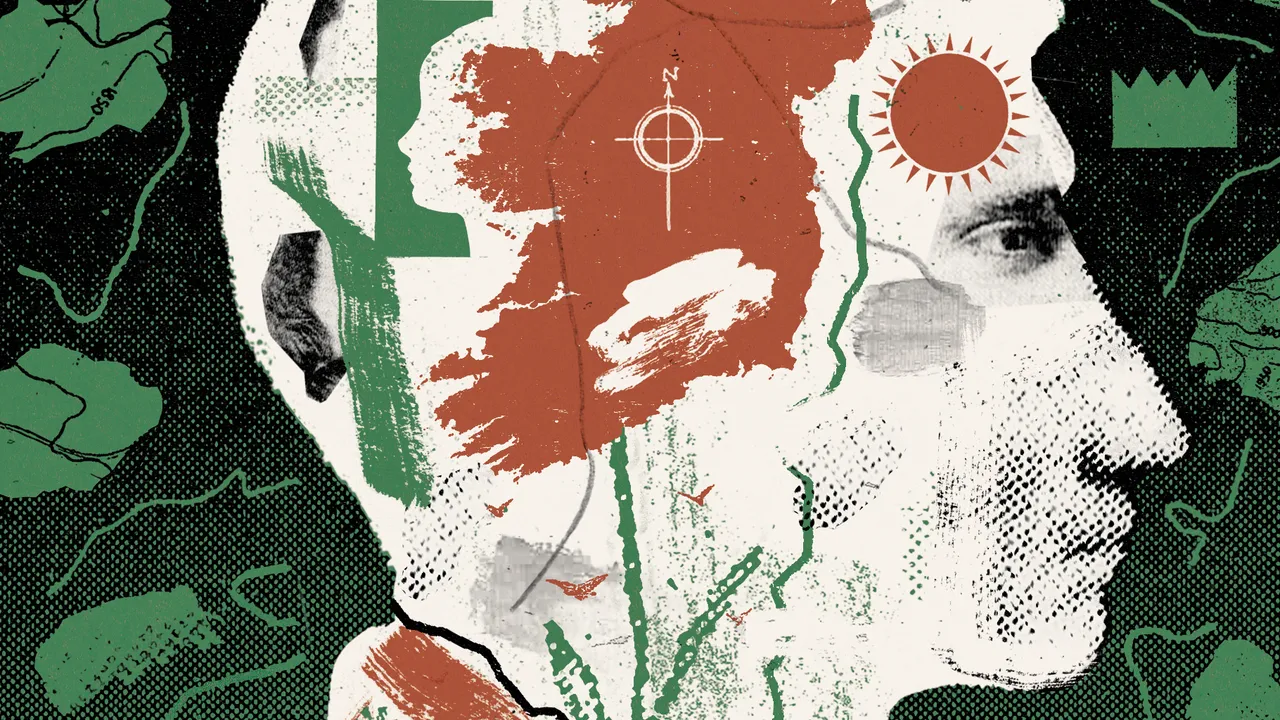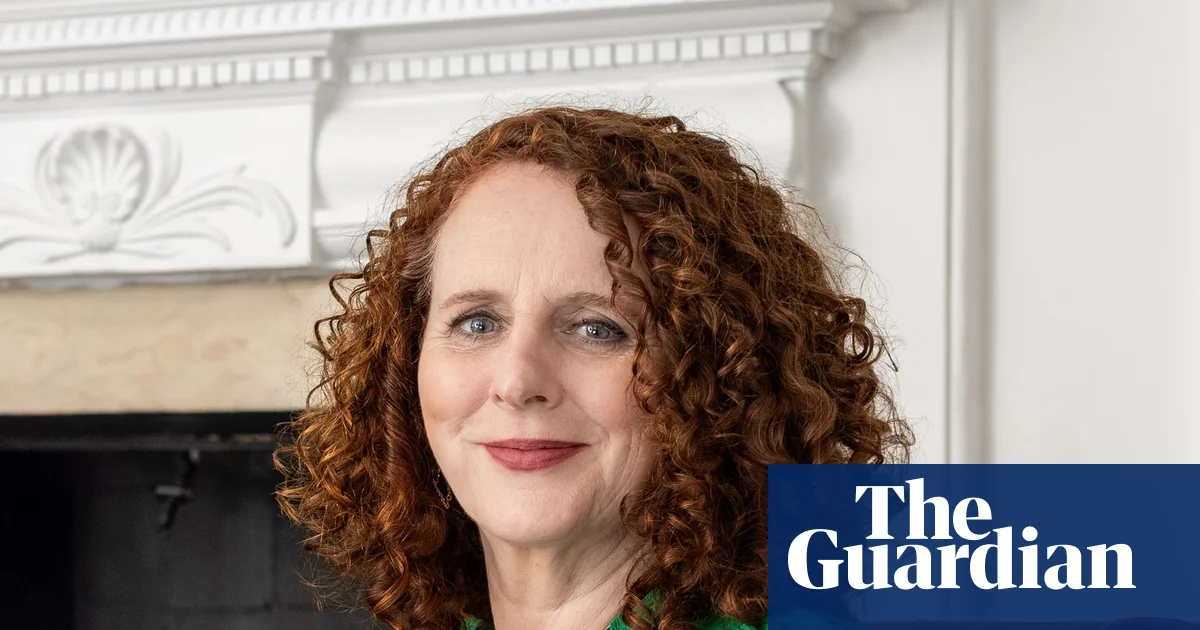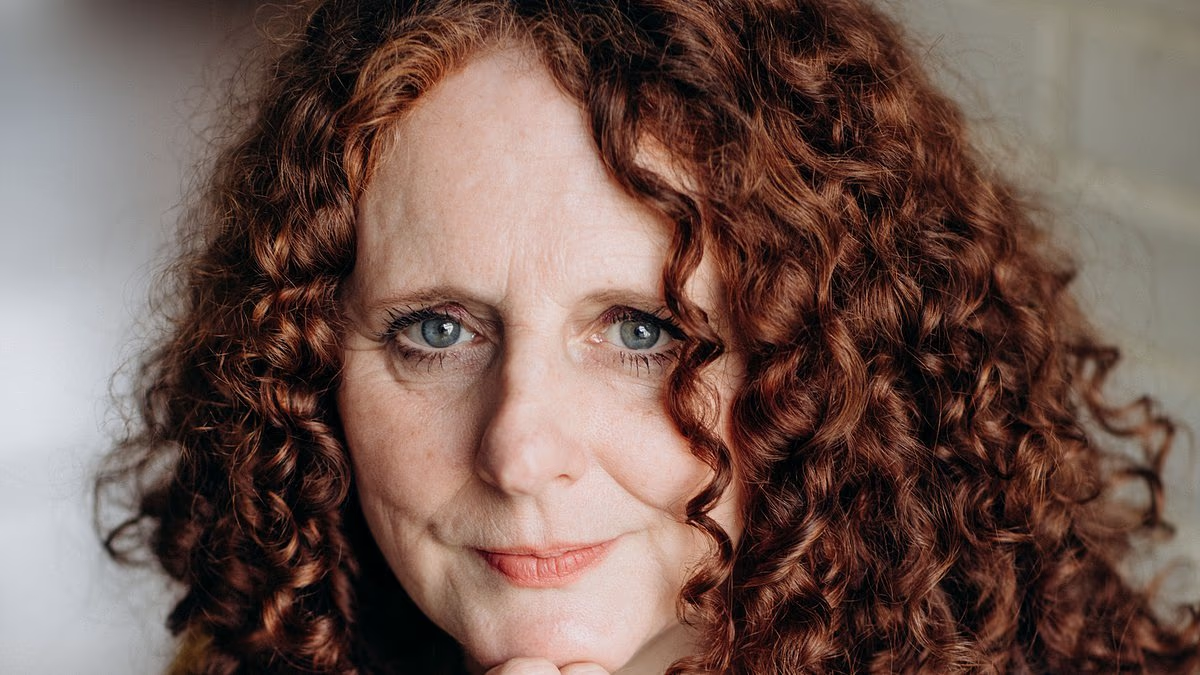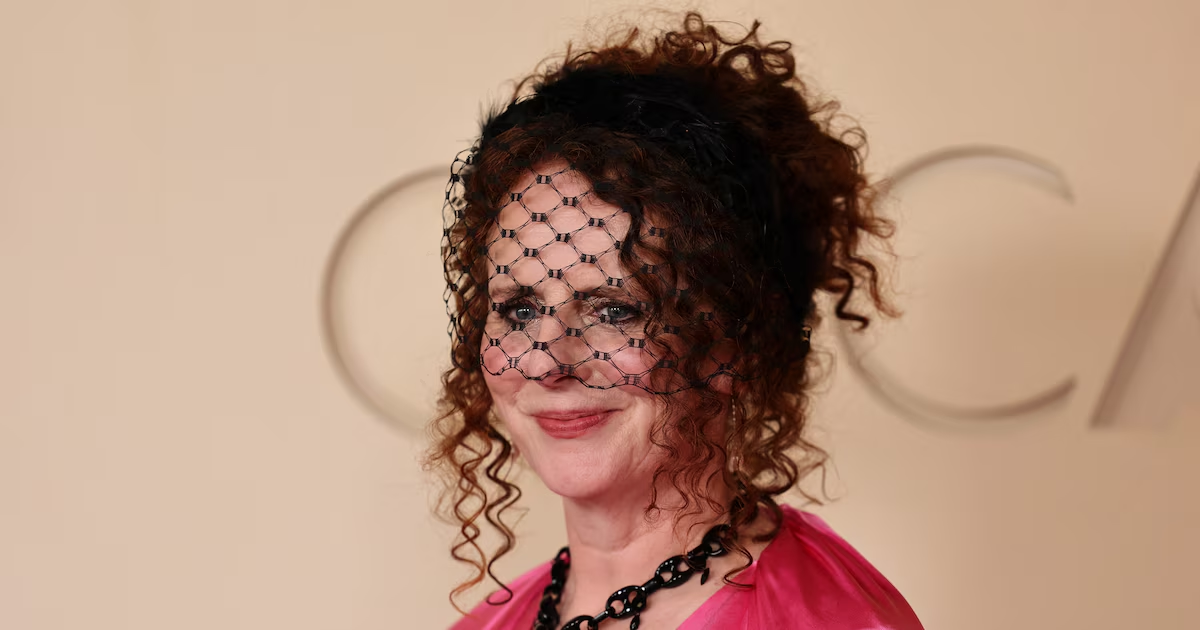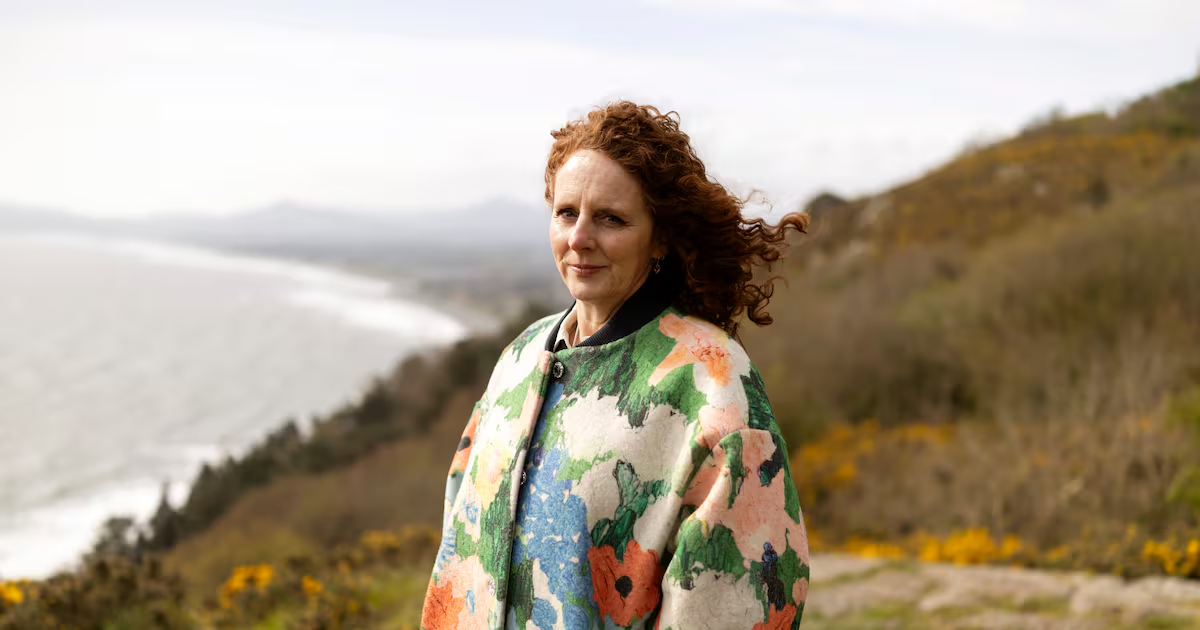
Maggie O’Farrell shows me a picture of her great-great grandfather, Tomás, standing behind a British redcoat and a measuring instrument called a theodolite. She discovered the thumbnail painting by accident one day when she took a picture of a map drawn by Tomás’s son, Liam, and “just randomly blew it up” on her phone. The map had been on the wall in her parents’ house, but they hadn’t spotted the tiny political vignette it carried. “I was so astonished. He’s been hiding in plain sight all these years.”Land, her vivid tenth novel, draws on the life and work of Tomás, who was employed on the Ordnance Survey project to map Ireland after the Famine, and Liam, her great-grandfather, who left the Jesuits to become a mapper, “a really weird trajectory”.Set largely in a post-Famine western peninsula, Land brings to life a scarred, colonised world of workhouses, mass emigration and other brutalities in which the earth itself seems to retain the memory of ancient violence. It is a book the Coleraine-born O’Farrell has long wanted to write.When we meet in the bar of Dublin’s Merrion Hotel, she is fresh off a flight and orders herbal tea – she doesn’t drink “tea tea” – and a scone that turns out to be three scones. (Later, after I decline, she brings the other two up to her 22-year-old son, who has accompanied her on the trip.)It’s the first interview she has sat down for as part of the publicity tour for Land, which means she’s “not on autopilot”, she says. She likes the promotional side of a writer’s life, in any case. “You get to talk to people about books. What could be better, really?”Over our tea and scones, we discuss her relationship to Ireland, why she turned down an OBE, the legacy of her childhood encephalitis, two upcoming film adaptations of her books and the “completely bonkers” experience of going to this year’s Oscars after she was nominated for best adapted screenplay for Hamnet, her eighth novel.But first we delve into Land, for which she “went down such a massive rabbit hole”, plunging into archives to find traces of Tomás and discern the truth in what had become a “vague family myth”.“When I looked at the records, I realised my great-great grandfather had started working with the Ordnance Survey in 1848. You see that date and it just kind of pulls you up short. What on earth must that have been like?”Ireland had “undergone this cataclysm” and the maps from the original survey, first established in 1824, had to be revised.Maggie O'Farrell: 'There’s this huge vacancy and silence as to what happened to a lot of people.' Photograph: Chris Maddaloni “I imagine it was quite a fraught job to take. You know, it was a project run by the British army, so it was not straightforward.”Tomás, like other Irish surveyors, was listed as a “labourer”, though he was clearly skilled, and it was only after he transferred to Scotland that he could put his name to his work. O’Farrell eventually found his signature, and his elegant descriptions of castles, loughs and churches, in the archives in Edinburgh, a mile down the road from where she lives.“He described a ruin as having been ‘much injured by time and the hand of man’. And I just thought that was a beautiful sentence.”Themes of separation and reunion, restraint and freedom – recurring O’Farrell subjects – are also present in her absorbing account of the emigration of Enda and Rose, Liam’s sisters in the book. She has resolved to avoid explaining “where the facts stop and where the fiction starts”, but says that as much as the real father and son were her starting points, Land is, ultimately, a novel.Tackling this loss-defined stretch of Irish history was not without its complications. She cites a line from Colm Tóibín’s 1998 essay Erasures in which he asked, “How do you write about the Famine?” She asked herself the same question.A picture of Maggie O'Farrell's great-great grandfather, Tomás, standing behind a British redcoat and a measuring instrument called a theodolite. Photograph: Maggie O'Farrell “You read the historical records and the workhouse records and, I mean, it’s so horrifying, it does kind of render you to inarticulacy. And, actually, we can see things like the coffin ship lists, the emigration lists, the workhouse lists but in between there’s this huge vacancy and silence as to what happened to a lot of people.”O’Farrell was born in 1972, four months after Bloody Sunday, and left Ireland when she was two, “because of the Troubles”, when her father, a Dubliner who was lecturing in economics in Derry, was offered a job at the University of Wales in Cardiff.“I don’t think my parents ever thought we would be leaving for good,” she says, adding that her dad, now 85, still hasn’t ruled out going back. The family – she is the middle of three sisters – eventually settled in North Berwick, a coastal town a short train ride from Edinburgh.I tell her I’ve been there, observing that it’s not a big place.“No, not at all,” she says, laughing. “Though it’s a lot bigger than it used to be. I really did walk to school through fields, you know, with cows in.”She loved history, though she encountered “shocking” gaps in the British curriculum. “We were taught two things about the Famine in my Scottish comprehensive. One was that it was caused by potato blight and the other one was that Queen Victoria gave her own personal money,” she says, her laughter acquiring an incredulous tone. “Which is true, but it was a very tiny amount. I mean, the Sultan of Turkey gave more, put it that way.”Maggie O'Farrell at the Oscars in Los Angeles in March. Photograph: Julian Hamilton/Getty It wasn’t until her sixth novel, Instructions for a Heatwave, set in London in the summer of 1976, that she zeroed in on Irish characters. The plot of This Must Be the Place, meanwhile, unfolds in Donegal, but only in part, making Land her most Irish book by some distance.“I am nervous about it. I don’t want to feel as though I am standing on anyone’s turf. It certainly worried me throughout the book, whether I would get it right, in a sense.”I suggest there is still plenty of room on this particular turf. The Famine is, if anything, underwritten about.She praises Paul Lynch’s novel Grace, which “slightly reconfigured” her brain – “It’s devastating, but it should be devastating, shouldn’t it?” – and says she really admires Joseph O’Connor’s Star of the Sea, while she also references Translations, Brian Friel’s “brilliant” play about the 19th century anglicisation of Irish placenames. She was surprised when her husband, the British novelist William Sutcliffe, told her he studied it for A-level.Land has a folkloric dimension, inspired by the Irish myths her father read to them as children.“We used to find it annoying. But they’re amazing stories aren’t they? In those myths, the land is kind of sentient in a way. Trees are alive, stones talk. There’s this whole sense that the first inhabitants dissolved themselves into the land, and that’s why the land has personality and opinions, and often quite difficult opinions.”Those bedtime stories, which she now understands were part of her father’s way of staying connected to home, have “definitely fused” in her imagination with her summers in Ireland. Those holidays, spent with aunts in Donegal and Galway and her grandparents in Dublin, felt “like coming back to where we belong”, she says.I don’t want to be one of those people who claims Irish heritage— Maggie O'Farrell“It wasn’t easy to be an Irish family in Britain in the 1970s and 80s. At school, when relations were bad, people said horrible things to us all the time, and this was not just coming from the kids, it was from the teachers as well,” she says. One teacher, she has said before, asked her if her family were in the IRA.She has also previously spoken about how “Irish-British”, as a means of denoting Irish people in Britain, isn’t a common expression the way Irish-American is across the Atlantic. “It’s problematic,” she says. Edinburgh has been her home for 15 years and it’s where her son and two daughters have grown up. But they’re “a bit confused as well”, she thinks. She had to renew her daughters’ Irish passports recently and they were delighted to get them back.“I don’t really know, that’s the answer,” she concludes on the question of how she identifies herself. “I don’t want to be one of those people who claims Irish heritage, even though I have it and I was born here. It’s difficult, I think.”And yet Ireland is “a very important part” of who she is. “When we were landing this morning, my son said I seemed really excited.”She has won many awards over the course of her writing career, including the Costa Novel Award in 2010 for The Hand That First Held Mine and the Women’s Prize for Fiction in 2020 for Hamnet. There was one accolade, however, that she could not accept.“One of the seeds for Land was that I was offered an OBE and I turned it down,” she reveals.The full title of the honour is Officer of the Most Excellent Order of the British Empire.“I was thinking about why it was I didn’t want it, and the first thing was that I didn’t want ‘British Empire’ as part of my name. And the second was I said to myself, ‘Well, if [notoriously laissez-faire British overseer] Charles Trevelyan has it, I don’t want it.’ He was given a knighthood after he called the Famine an act of God, and he still has it. They haven’t revoked it, and they should. I thought I can’t be part of an honours system that honours him.”What the “E” stands for has proven an obstacle for several well-known British people, I note.“And I think it’s time, high time, actually, for them to rethink that,” she says of the honour names. “Obviously people accept it and I don’t feel hostile towards them, but I just couldn’t do it for those two reasons.”Author Maggie O'Farrell: 'Hamnet made me realise that who your collaborators are is absolutely crucial.' Photograph: Chris Maddaloni Her work has been celebrated this year in another sphere: Hollywood. O’Farrell, who wrote the screenplay for Hamnet alongside the film’s director, Chloé Zhao, now has nominations for an Academy Award, a Golden Globe and a Bafta on her CV.Being swept up by the international film awards season was “so mental, honestly”, she says. “It was just such a mad experience. It’s so, so different from the books world. If you’re just dipping your toe in it, as I was, it’s kind of fascinating in an anthropological way to see it all up close, to see the mechanisms of it and the armies of people who walk around the outside of the frame, so to speak, and also the pressure on people, particularly women, to look a certain way and be a certain way.”[ Some films leave me with memories lasting for years. Hamnet will be one of thoseOpens in new window ]At the Oscars, she was one of the early arrivals on the red carpet. “We were given a slot,” she says. Her husband accompanied her to the Baftas, but she brought her agent and friend, Victoria Hobbs, to Los Angeles.“We had quite a laugh. It’s just so bonkers, it really is. Completely bonkers.”She doesn’t drink, as it might affect her “shaky motor control”, as she refers to it in her memoir, but as the ceremony is held in daylight hours and “everybody is wearing dresses that cost Christ knows what”, there’s not a lot of alcohol around the Oscars anyway. “It’s not very wild,” she says.Still, she was enthralled by the “excellent people-watching” opportunities at the Vanity Fair after-party. “And the frocks, as well. I love clothes. Seeing people in their frocks close up was all really interesting.”I think if you get Paul Mescal, you might as well use him. I always wanted it to be Paul— Maggie O'FarrellShe’s far from done with film. A screen adaptation of The Marriage Portrait, her exquisite ninth novel, set in 16th century Italy, will be produced by Dublin’s Element Pictures and directed by French film-maker Audrey Diwan. “We’ve had Zoom chats. She’s great,” says O’Farrell.She hasn’t written this script, but she would like to adapt Land, which is poised to be made by Hamnet producer Liza Marshall and her London-based company Hera Pictures. “We haven’t decided yet – it’s very early days – but I think I would find it really hard to let this one go into someone else’s hands.”Not every author emerges from the screenplay process unscathed, but she enjoyed working with Zhao.“Hamnet made me realise that who your collaborators are is absolutely crucial. A lot of my friends who are authors have had these experiences where it just gets pulled away from them. Someone else’s vision is stamped on it, and it ends up not being theirs.”O’Farrell with actors Jessie Buckley and Paul Mescal and director Chloé Zhao at the Irish premiere of Hamnet in the Lighthouse cinema, Dublin, in December. Photograph: Barry Cronin She initially told Zhao that she didn’t want to co-write the screenplay. “But she’s very persuasive, Chloé. She was just very determined. She held the book up to the camera and said, ‘I just want to make this. This. I want to make this!” I thought, ‘Ooh.’ We were doing a Zoom call, and because I knew she was an Oscar-winning director, I thought I was going to be seeing a Bel Air mansion or maybe an infinity pool, but actually she came on and her hair was all sort of wet. She’d been surfing and I think she was in a kind of mobile home, and behind her there were lots of dogs wandering about. I instantly thought, ‘Okay, I can work with you’.”Zhao’s film is told in a more linear fashion than O’Farrell’s novel, and William Shakespeare features in it more.“I think if you get Paul Mescal, you might as well use him,” she says cheerfully. “I always wanted it to be Paul. I said that from the start, partly because I’d seen him playing Stephen Dedalus [in a stage production of A Portrait of the Artist as a Young Man] just after he’d been a student. Paul and Jessie [Buckley], God, what a dream cast. I think I was incredibly lucky.”When Buckley won her Oscar for best actress, it was “an amazing moment”.Hamnet belongs to the select group of 2020-published books that hinged on the suddenly timely matter of grief wrought by contagious disease. O’Farrell had intended to write it years before she did but found herself in the unanticipated grip of a memoir.She was more nervous about 2017’s I Am, I Am, I Am: Seventeen Brushes with Death than she was about any other book, she says.“Partly because it was a different thing, a different genre, but also I’m quite a private person, really. It never occurred to me that I would write a memoir. But I’ve always kind of felt that you don’t necessarily choose a book, they choose you. Not in a mystical way. It’s just that you have to learn to pay attention to the one that’s tugging at your sleeve most insistently.”She thinks that “in a weird way” she needed to write about her brushes with death before she could write Hamnet. “Looking back, that’s how I feel about it.”One chapter recounts how she contracted encephalitis – a viral inflammation of the brain – aged eight and the terrifying pain, strange medical procedures and lengthy rehabilitation that followed.She has got used to the lingering consequences, which range from a weak left arm and occasional stammer to poor balance and spatial disorientation. She can be vulnerable to sensory overload, and she sleeps with a light on, so she doesn’t fall if she has to get out of bed at night.“It means I can’t wear high heels, but there are definitely worse things. And I have to be careful on stairs. I was trying to put my passport back in my pocket as I was coming downstairs there, and I thought, ‘Okay, no. One thing at a time.’”Author Maggie O'Farrell: 'I love clothes. Seeing people in their frocks close up was all really interesting.' Photograph: Chris Maddaloni The after-effects she describes will be relatable to people with motor and vestibular issues that are largely invisible to others yet extremely material to their lives. She has “a feeling it’ll probably get worse” as she gets older, she says, but she will manage it, as she has for decades. “It means nothing, it means everything,” she writes in I Am, I Am, I Am.[ If you loved Hamnet, here are five other great Maggie O’Farrell readsOpens in new window ]The time arrives for the most delicate question in any author interview. What is she working on now?She has abandoned an earlier plan to write about ballet impresario Sergei Diaghilev and dancer-choreographer Vaslav Nijinsky, who she spent time researching in Paris before embarking on Land.“I was really into it, but then I started writing it and it didn’t have a pulse,” she says. The problem, she thinks, is that the story already exists, and she is not a biographer.About the other ideas she is “trying out”, she will say no more. “I never talk about it until I’ve finished it. Not even to my husband.”In the meantime, O’Farrell’s loyal readers have Land to explore. It intrigues her how humans were mapping before they could write and how, over the centuries, maps became expressions of power and ownership. “I suppose I wanted to think about that. And also I wanted to tell a story about the whole country.”Land by Maggie O’Farrell is published on June 2nd by Tinder Press
Hamnet’s Maggie O’Farrell: ‘I turned down an OBE because I didn’t want British Empire as part of my name’
After the ‘bonkers’ Oscars, the Co Derry-born author of Hamnet is poised to publish Land, a novel inspired by her own family history in post-Famine Ireland
2,989 words~14 min read