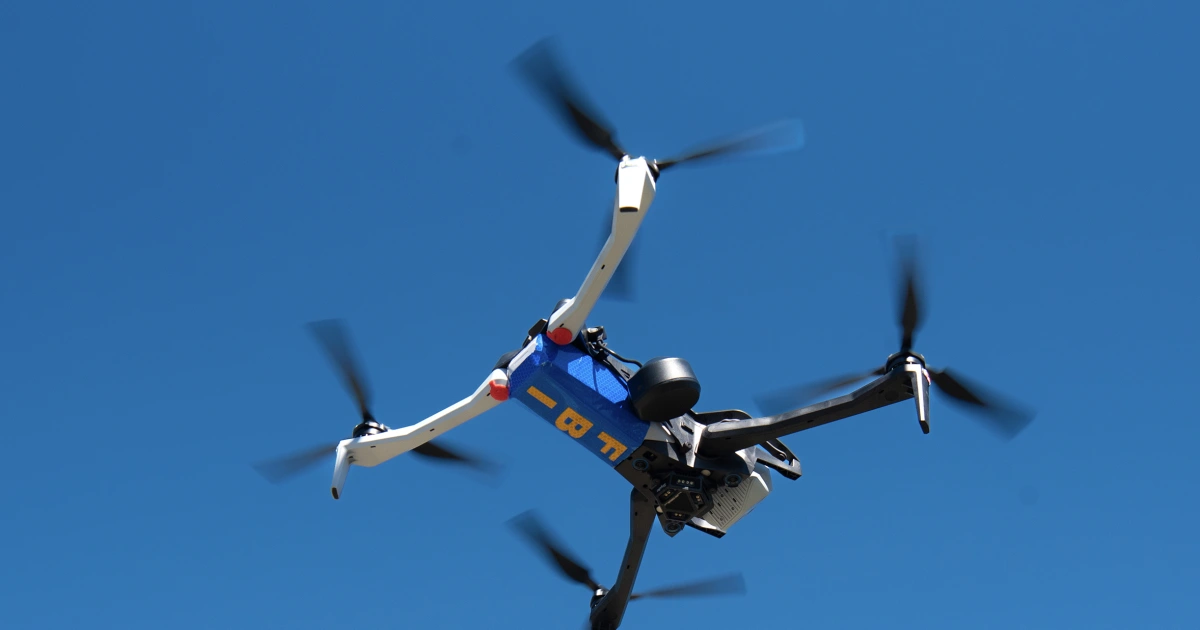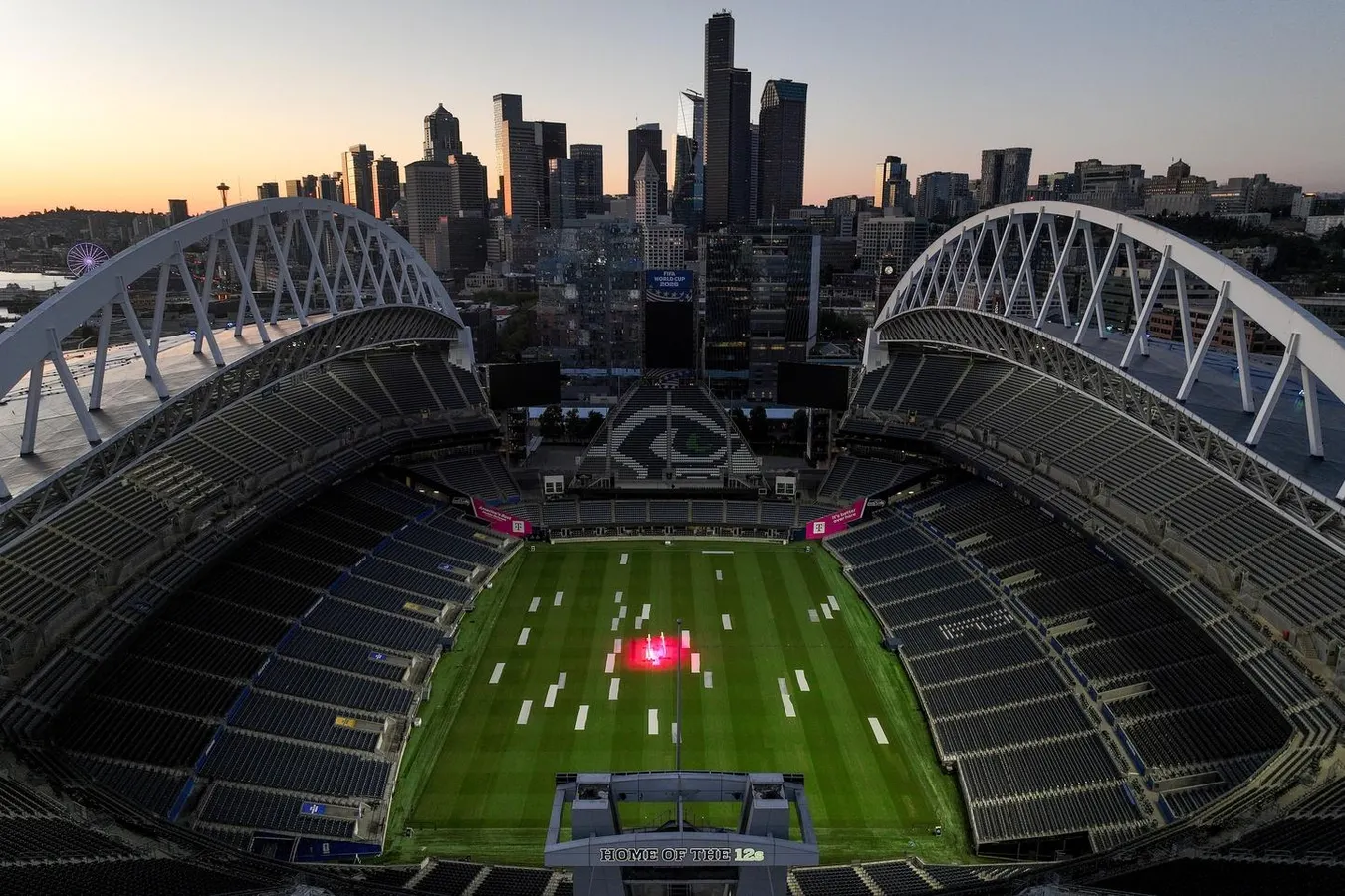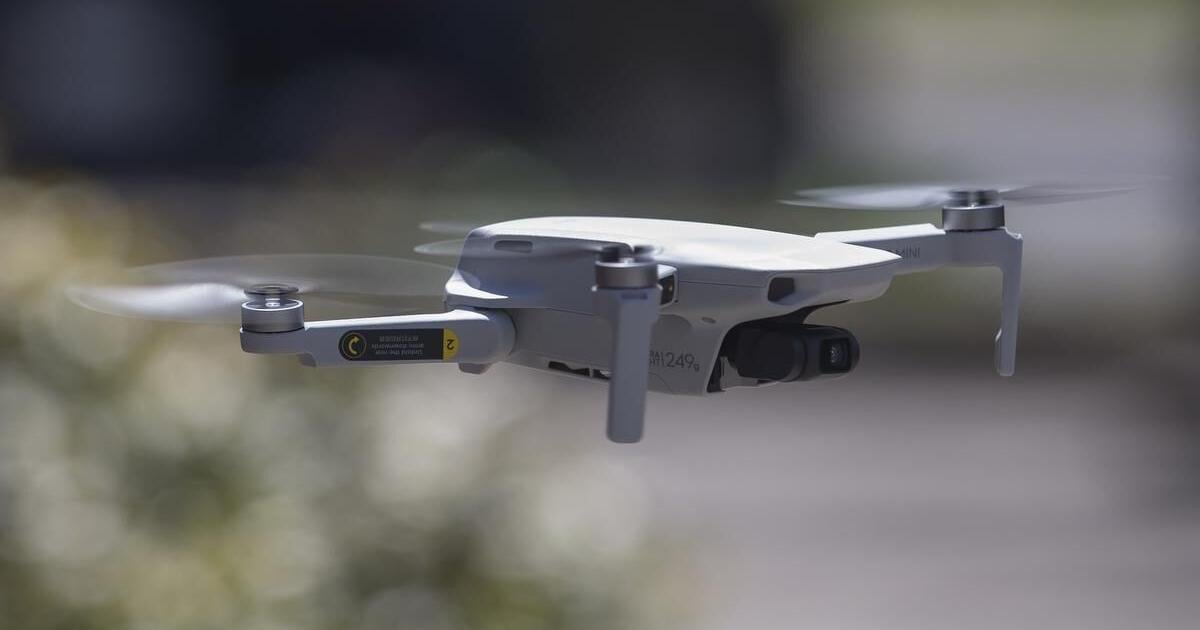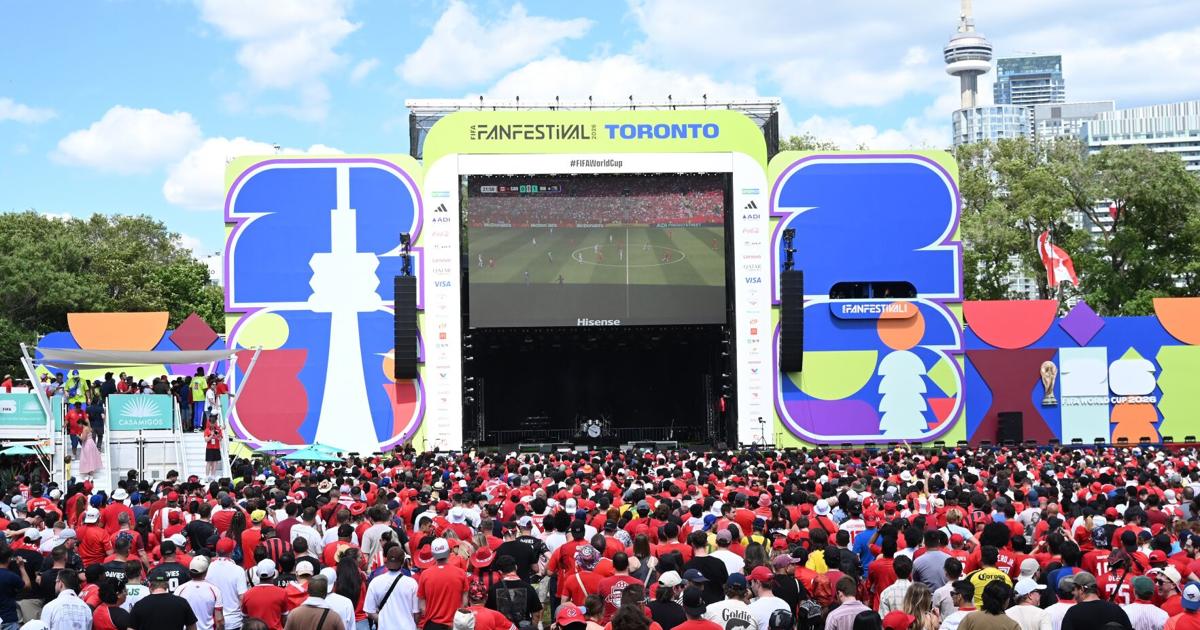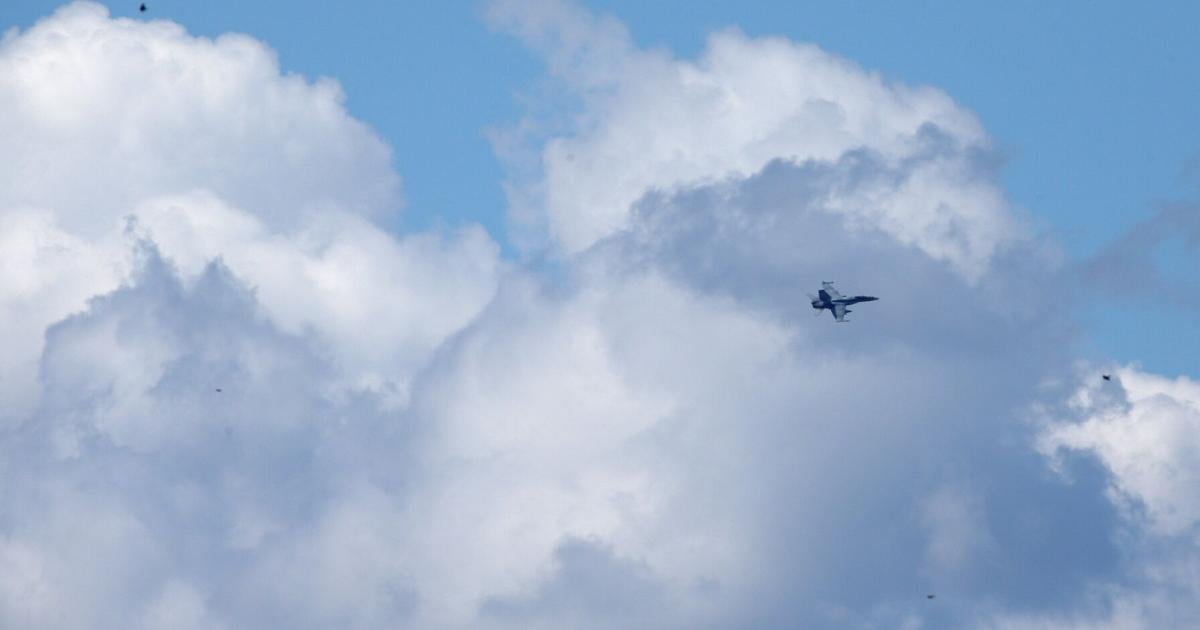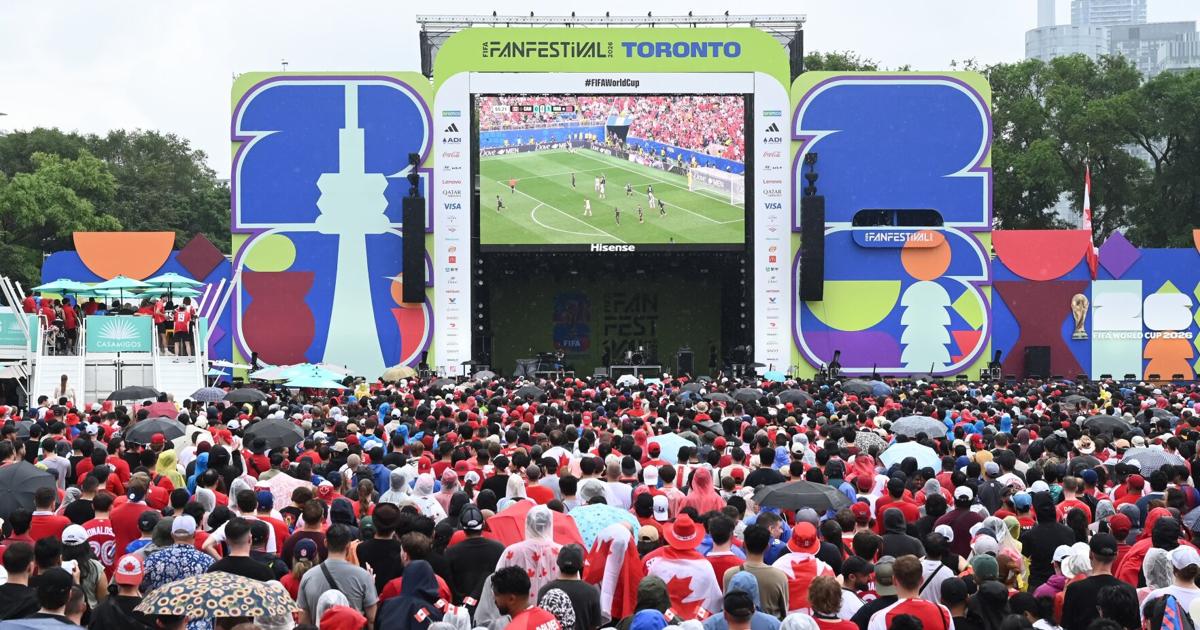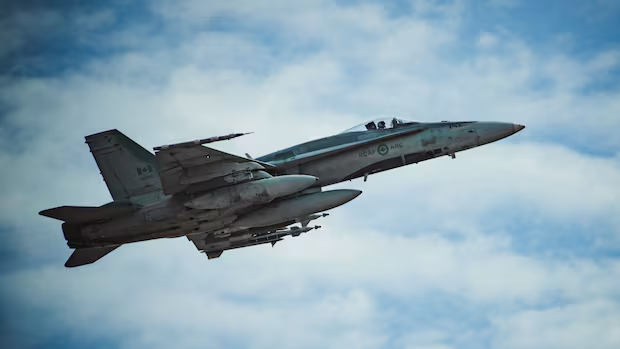
CanadaFighter jets will be on patrol over Vancouver and Toronto over the next several weeks, protecting World Cup match venues and fan festivals.No fly zone in effect over FIFA sites, planes and drones bannedDavid Common · CBC News · Posted: Jun 03, 2026 4:00 AM EDT | Last Updated: 1 hour agoListen to this articleEstimated 5 minutesThe audio version of this article is generated by AI-based technology. Mispronunciations can occur. We are working with our partners to continually review and improve the results.Fly over the World Cup and you might get a fighter jet ‘headbutt’10 hours ago|Duration 4:41The North American Aerospace Defence Command (NORAD) will be watching closely for threats as crowds gather for the 2026 FIFA World Cup. CBC’s David Common gets rare access to the secure Cheyenne Mountain Complex to find out more about how military personnel from Canada and the U.S. will be working to secure the tournament.Fighter jets — likely armed with missiles and machine guns — will be on patrol over Vancouver and Toronto over the next several weeks, protecting World Cup match venues and fan festivals."It'll be very big," U.S. Air Force Gen. Gregory Guillot told CBC News in an exclusive interview. He described the deployment as an "air patrol overhead to make sure that no aircraft with nefarious intent could get in there and interfere with the games."While such combat air cover is standard in war zones, the armed missions are less frequently used in North American airspace — and happen at higher altitudes, so most people wouldn’t notice. Major events, such as the Super Bowl or any attended by the U.S. president, are common instances where military aircraft are on patrol. But the scale of the biggest sporting event on the planet, with 16 host cities across three countries over two months, presents a major challenge.During the World Cup period, dedicated military personnel from Canada and the U.S. will monitor the continental airspace from two of the most secure bunkers on earth.Members of North American Aerospace Defence Command (NORAD) and U.S. Northern Command maintain around-the-clock staffing at the commands' headquarters on Peterson Space Force Base in Colorado. (North American Aerospace Defence)The first is carved inside a mountain in Colorado — a relic of Cold War fears of nuclear Armageddon. The more modern facility, similarly protected, is buried below ground on the nearby Peterson Space Force Base, home to the North American Aerospace Defence Command (NORAD).From 1958 until today, NORAD is perhaps the single biggest example of Canadian and American military personnel working in unison. The agreement means that the closest available military jet responds when an unknown aircraft approaches, be it a foreign adversary or a hijacked airliner.That has often meant that U.S. combat aircraft have entered Canadian airspace, because they are able to get to a threat faster.CF-18 Fighter jets from the Royal Canadian Air Force are expected to patrol the skies above World Cup sites in Toronto and Vancouver, on alert to respond immediately to any airborne threats. (Zach Barr/Department of National Defence)But the top Canadian at NORAD says the World Cup will be different."In a reactionary situation, we would cross each other's borders based on geometry," said Lt.-Gen. Ian Huddleston, referring to the shortest distance between an airbase and a threat in the air. "But in a planned event, we try to defend ourselves."Practice interception over Toronto in JuneWhile defending airspace is routine, the World Cup demanded additional training.In a planned exercise, two Canadian fighter jets will intercept a contracted small jet plane on June 8, forcing it to land at Toronto’s Billy Bishop airport — not far from Toronto Stadium where six matches will be played.“Canadians should not be alarmed if they see Canadian Armed Forces aircraft over Vancouver or Toronto,” said Andrea Charron, director of the Centre for Defence and Security Studies at the University of Manitoba. “And NORAD will, of course, continue its ongoing missions to defend Canada and the United States.” The Canadian Armed Forces has also installed a temporary air surveillance radar in Grimsby, Ont., which will give military and civilian air traffic controllers a more detailed picture of what is flying near or in the Greater Toronto Area — including drones.WATCH | Vancouver's security and transit plans for the World Cup:Drones, CCTV cameras and extra transit part of Vancouver's World Cup planMay 6|Duration 2:10Officials announced new details of what Vancouver can expect when the FIFA World Cup comes to town. Security and transit plans for the events were unveiled Wednesday, but as Jon Hernandez reports, B.C. residents still don't have a clear answer on the cost to taxpayers."Flying drones near stadiums and event sites is prohibited and subject to enforcement," the RCMP said in a statement. The federal force is responsible for detecting, and if necessary downing, drones over the venues. NORAD officials say the most easily used technology would force a drone electronically to return to where it took off from — but that additional technology is available should it be necessary to immediately remove a drone from the sky. Officials wouldn't elaborate on methods being considered for the World Cup, but would most likely include electronic jamming or hacking. Other methods such as using shotguns or interceptor drones would be challenging in busy urban environments.Federal government to spend up to $145M for security at World Cup events in Toronto, VancouverHow downtown Vancouver is bracing for the FIFA World Cup and its closuresProtecting airspaceSmall and large aircraft that approach or enter restricted airspace would first be contacted over radio with instructions. If that fails, NORAD would scramble the nearest fighter jets, likely already in the air, to pull alongside the errant aircraft.Steve Armstrong, NORAD's operations chief, told CBC it is surprising how many pilots try to ignore the presence of a missile-laden combat aircraft just off their wing.At that point, the military pilots may rock their wings, fire flares nearby or conduct what’s known as a headbutt manoeuvre. "We basically fly that same profile, but we fly hard in front of them and turn very quickly in front of them to try and influence the direction that they're going to go."WATCH | The massive co-ordinated World Cup security effort:Feds spending $145M for security at Toronto, Vancouver FIFA World Cup eventsApril 29|Duration 1:52With the 2026 FIFA World Cup fast approaching, the federal government is spending $145 million to help with security across Toronto and Vancouver. CBC's Lane Harrison breaks down the details from BMO Field.Shooting down an aircraft is within NORAD's powers, but is the highest order on the ladder of escalation and requires permission from either the U.S. president or Canadian prime minister, depending on which country’s airspace is impacted."We'd bring senior leaders all the way down to tactical controllers … to determine our response," said Col. Matt Snider, the chief of air operations.In the most extreme, rapidly unfolding emergencies, takedown powers are vested in the most senior generals who would assemble on what’s known as the battle deck in the NORAD bunker.ABOUT THE AUTHORDavid Common covers a wide range of stories for CBC News, from war to disrupting scams. He is a host with the investigative consumer affairs program Marketplace, and a correspondent with The National. David has travelled to more than 85 countries for his work, has lived in cities across Canada, and been based as a foreign correspondent in the U.S. and Europe. He has won a number of awards, but a big career highlight remains an interview with Elmo. You can reach David at david.common@cbc.ca, Twitter: @davidcommon.
Watching the World Cup? So are fighter jets | CBC News
Fighter jets will be on patrol over Vancouver and Toronto over the next several weeks, protecting World Cup match venues and fan festivals.
TL;DRAI
NORAD deploys armed CF-18 fighter jets over Vancouver and Toronto during 2026 World Cup with no-fly zones and 24/7 airspace surveillance from military bunkers. Signals critical infrastructure protection scale and Canada-U.S. cross-border coordination relevant for CTOs managing high-security networks.
1,249 words~6 min read