It would be difficult to pretend that the world of wine is in a happy state. Worldwide consumption has fallen to pre-1960s levels, tariffs have contaminated long-established trading relationships and disrupted sales, the mother-grundies are getting ample airtime for their half-truths about the dangers of alcohol and consumers are under pressure. The term “perfect storm” has too positive a connotation for the situation.The Office Internationale du Vin (OIV) has just published its annual report and it doesn’t make for cheerful reading (a bit, I imagine, like the minutes of the ANC’s Integrity Commission). The global vineyard surface area declined by 0.8% in 2025, the sixth consecutive year of contraction. Last year “marks the third consecutive year of low global output, reflecting the combined effect of climatic volatility and production adjustments linked to softer demand conditions”, is the anodyne description of the fall-off in volumes. World wine consumption is down 2.7% compared with 2024. With nine of the world’s top-10 wine markets recording lower sales, “demand-side adjustment remains one of the main challenges for the sector”.The situation in South Africa is no happier: for the 12 months to end-March South Africa’s wine exports declined 7%. If we hadn’t profited from sales to Russia (up 59%) and the United Arab Emirates (up 40%), it would have been considerably worse. Volumes to the US and Germany are both down about 20%. Even the figures for the UK and the Netherlands, the biggest buyers internationally of Cape wines, are in the red. Domestically things are no better: despite a slight uptick in fizz, the overall 12-month figures (to end-February) are 8% lower than the previous year.So when, after years of largely tentative engagement, the government and the wine industry connected with China, and achieved a full tax-free exemption for Cape wine, you could pretty much hear the corks popping above the noise of the thunder and rain that swamped the winelands a few weeks ago. This won’t suddenly reverse the attrition of the past few years, but at least it brings the promise of a market that, with the investment of skill and effort, might make a meaningful dent in our surplus.In 2017 China imported more than 18-million litres of our wine. By 2025 this had dropped to a mere 2-million. Unfortunately, in the past 10 years the imported wine market in China has contracted — pretty much for everyone. At its peak, just under 800-million litres of international wine entered the country annually. This has now dropped to a little more than 200-million litres — an indication of important changes in China itself. Demand for wine has declined as other beverages erode its share of the alcohol spend. But consumption is also down. For many socioeconomic (and probably political) reasons wine is no longer the fashion beverage it used to be, while alcohol itself is tracking the worldwide downward trajectory.So the industry should be glad that it has immediate duty-free access to China, a privileged position that the Australians exploited successfully until they lost favour at the time of Covid (but have since clawed back). It won’t be the lifeboat it might have been a decade ago, but it could at least be a lifebuoy to help producers keep their heads above water while they navigate the storm.What is clear is that no organisation, whether quasigovernmental or trade association, will be able to save the situation single-handedly. Producers will have to restructure their ranges to meet the exigencies of the time. Only a few players can consistently persuade their followers that R400 plus a bottle represents drinking value. Those who succeed achieve their ultrapremium results more because they are good marketers than because of the quality of what’s in the glass. Meantime, fabulous wines are retailing for under R150 a bottle. Between these two price points lies the vinous Strait of Hormuz: dangerous and difficult to traverse but to survive you have to find a way through.
MICHAEL FRIDJHON | China imports help SA producers navigate vinous Strait of Hormuz
With SA’s wine exports falling 7%, a tax-free trade pact offers access to large market
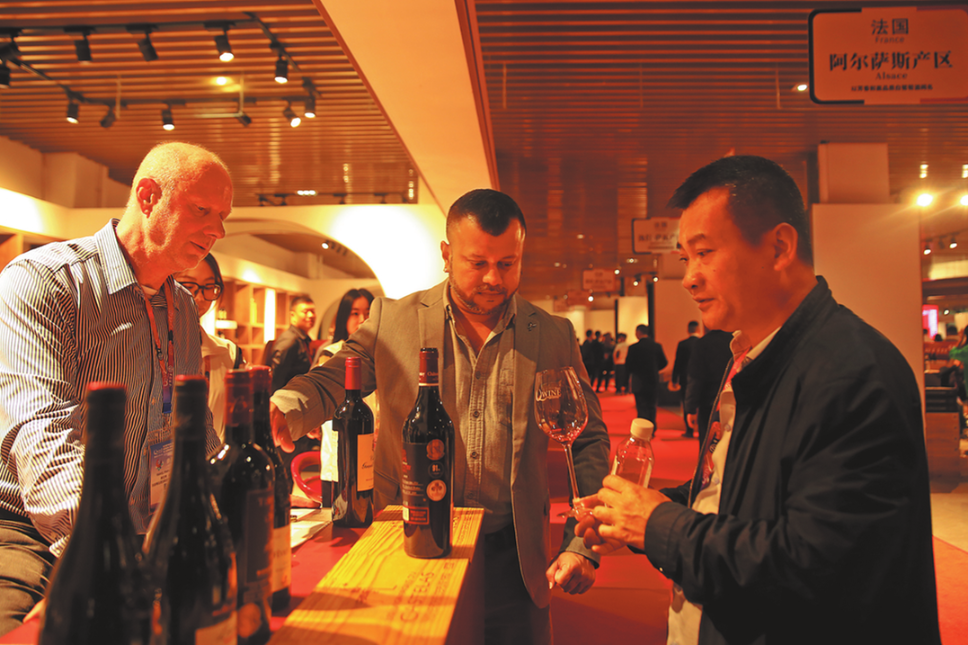
654 words~3 min read