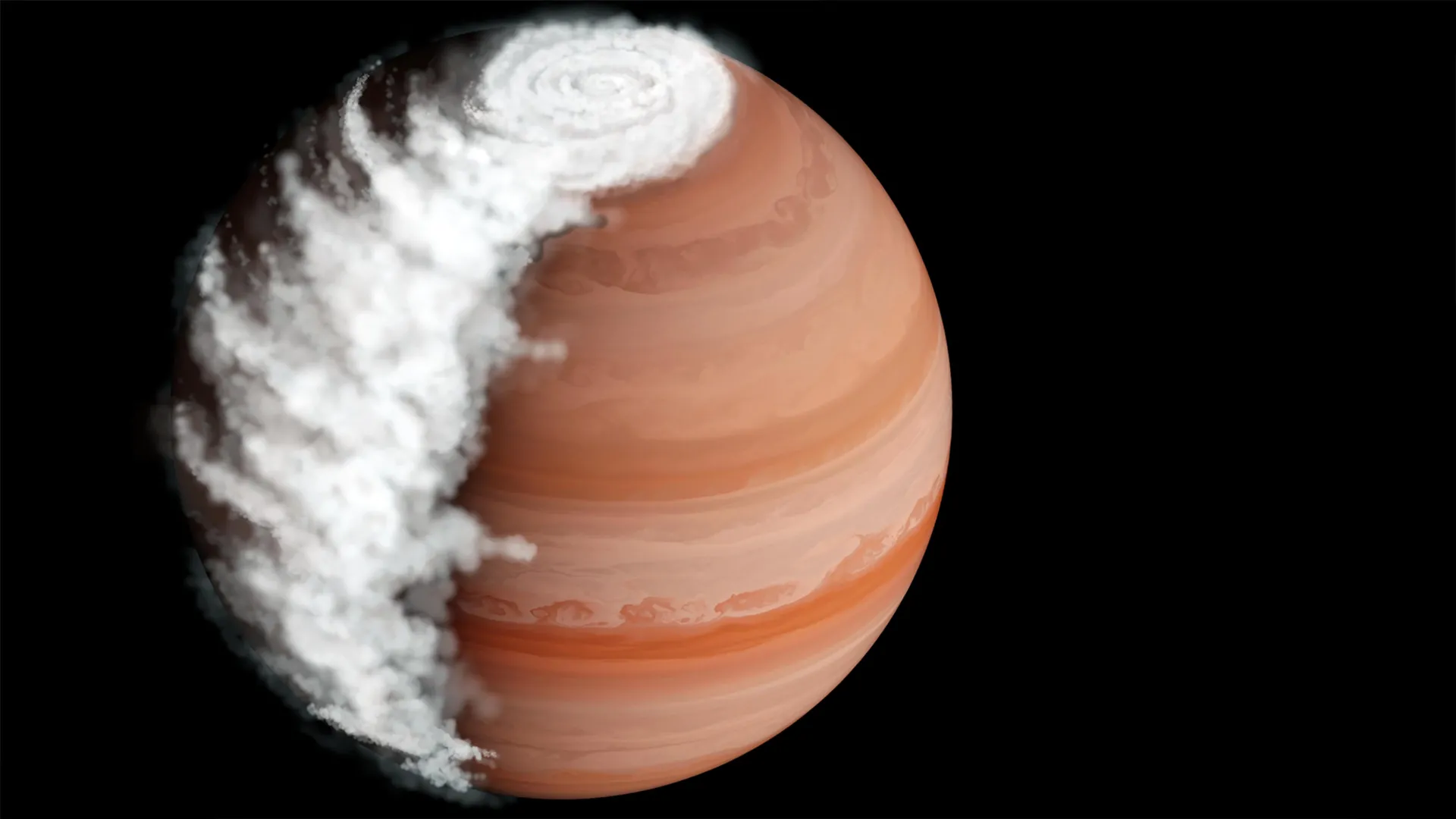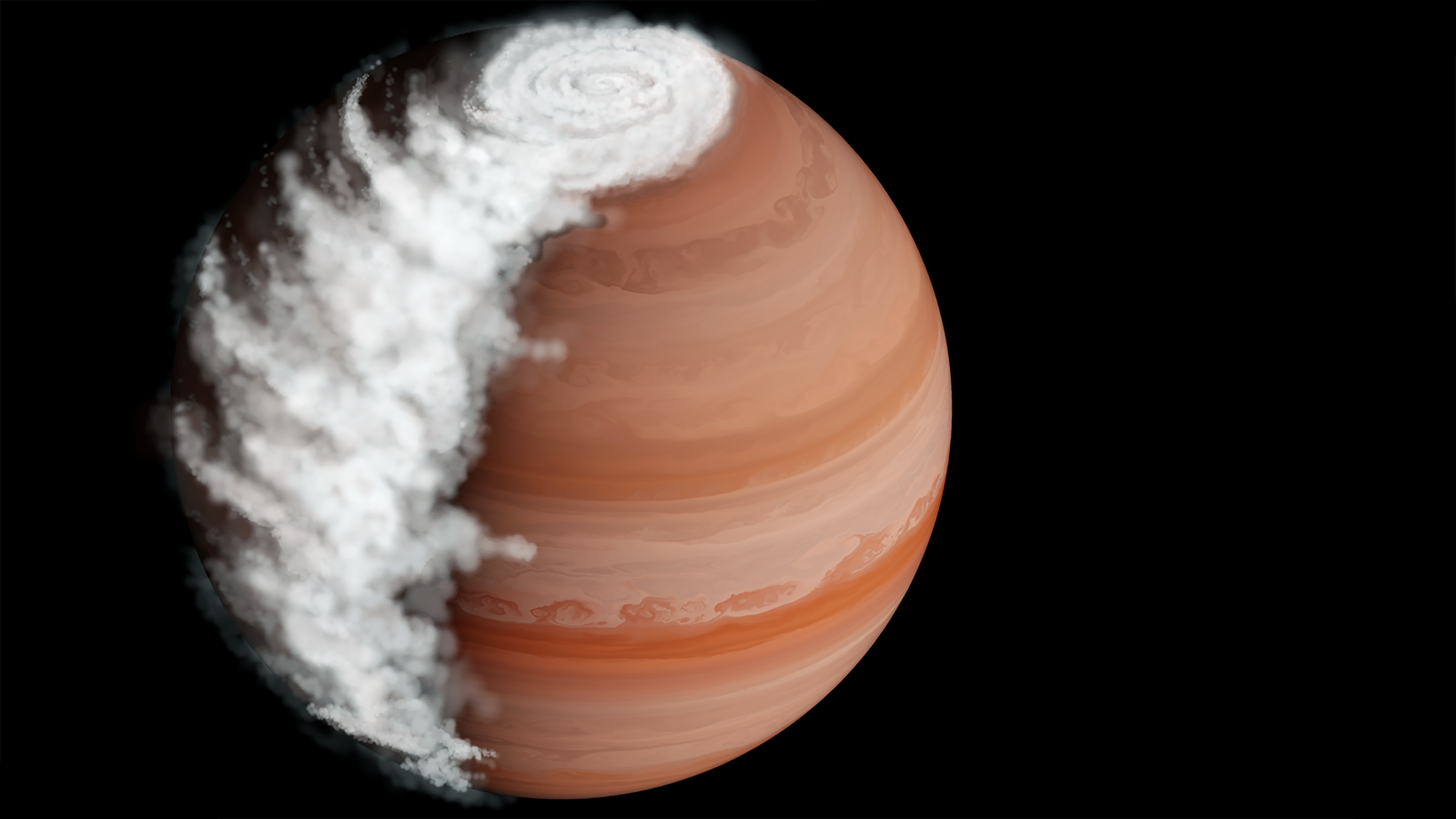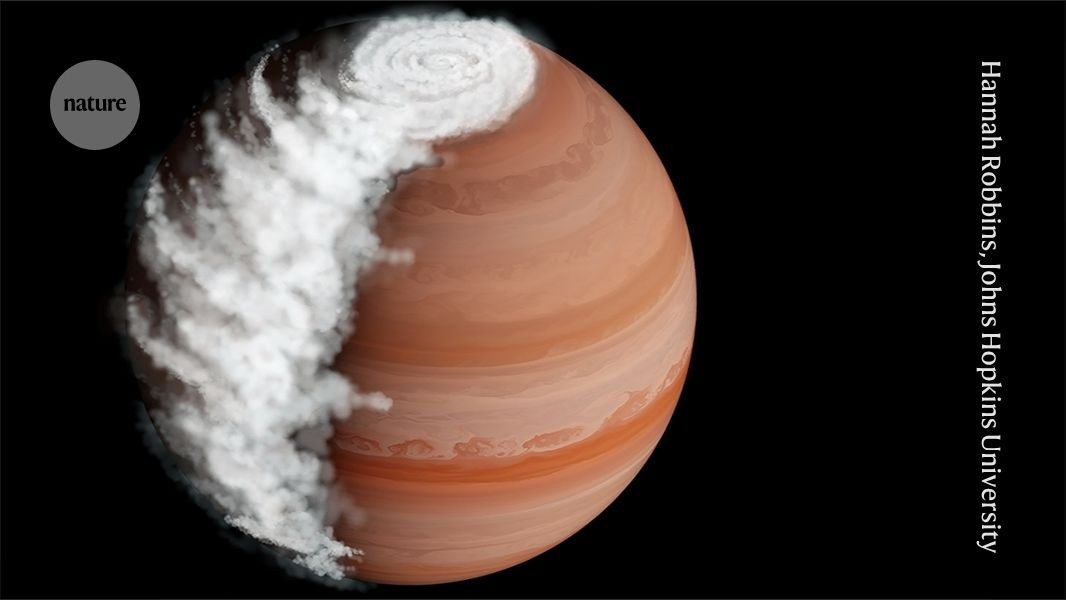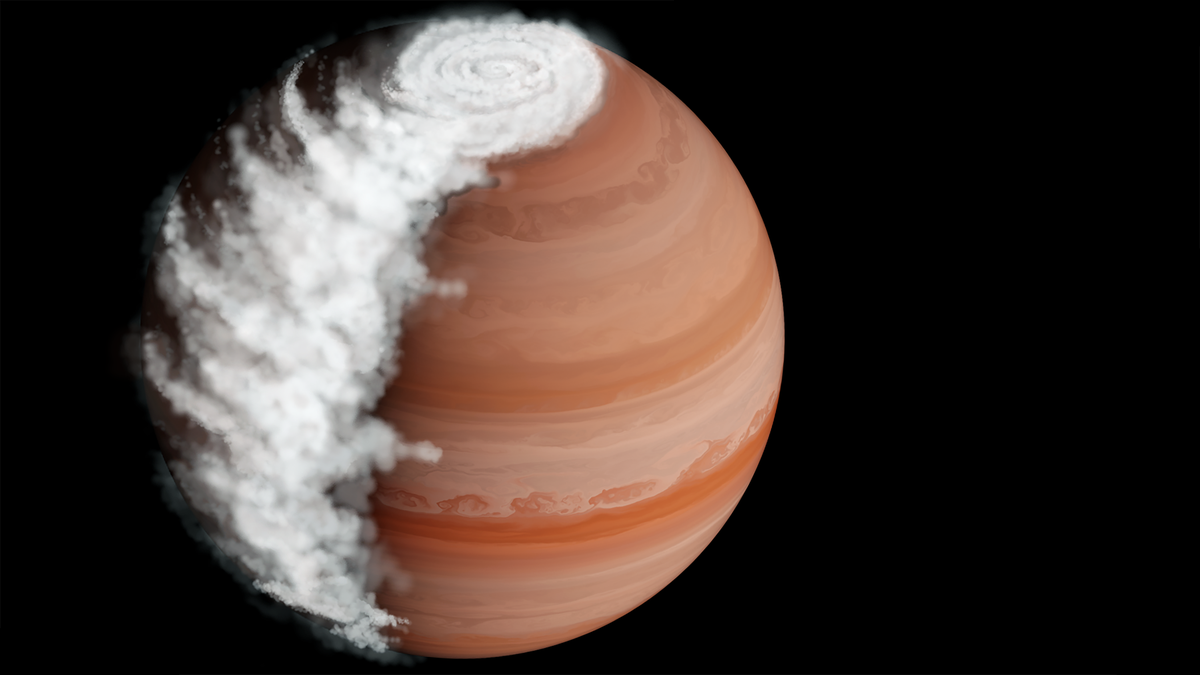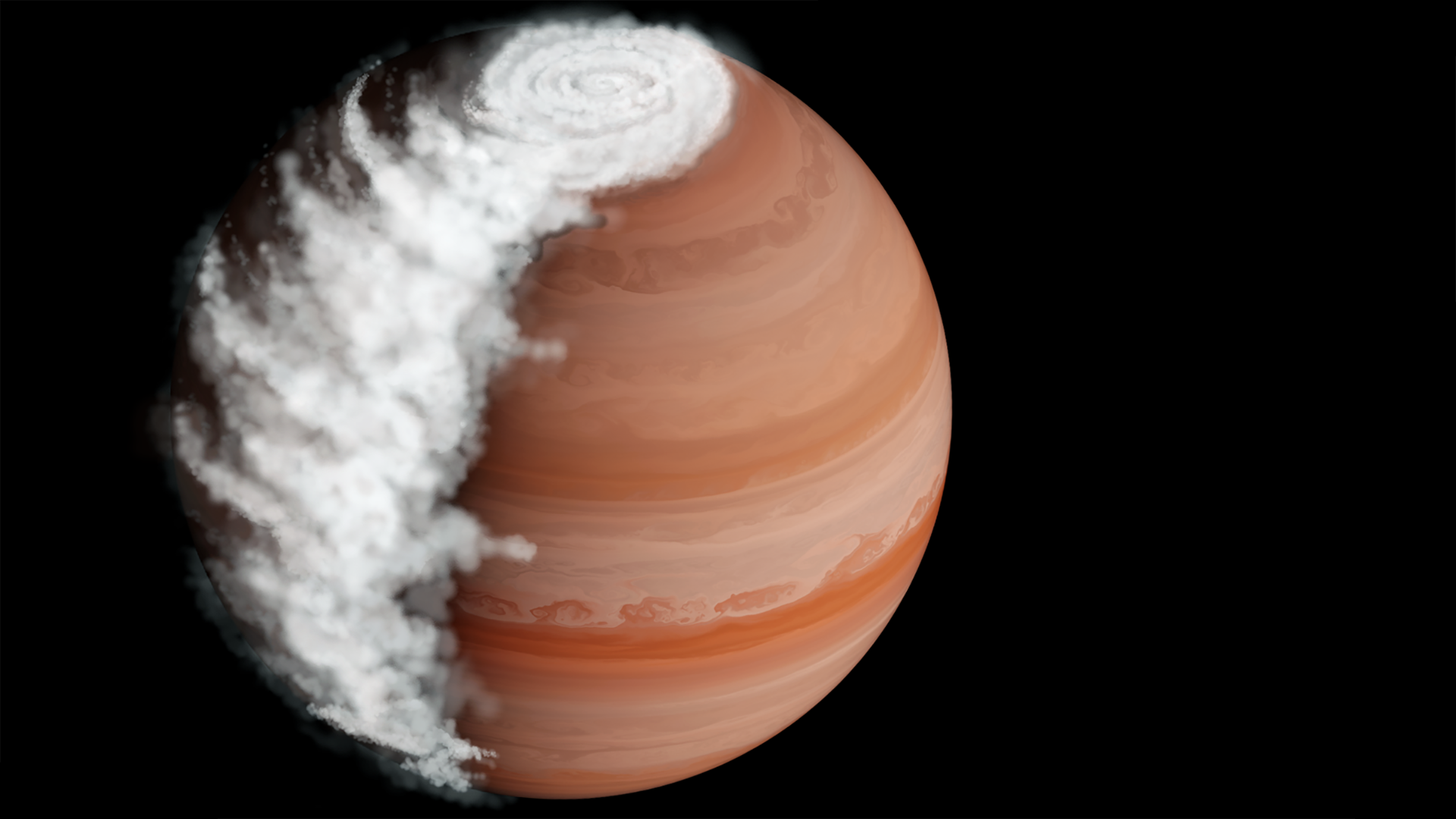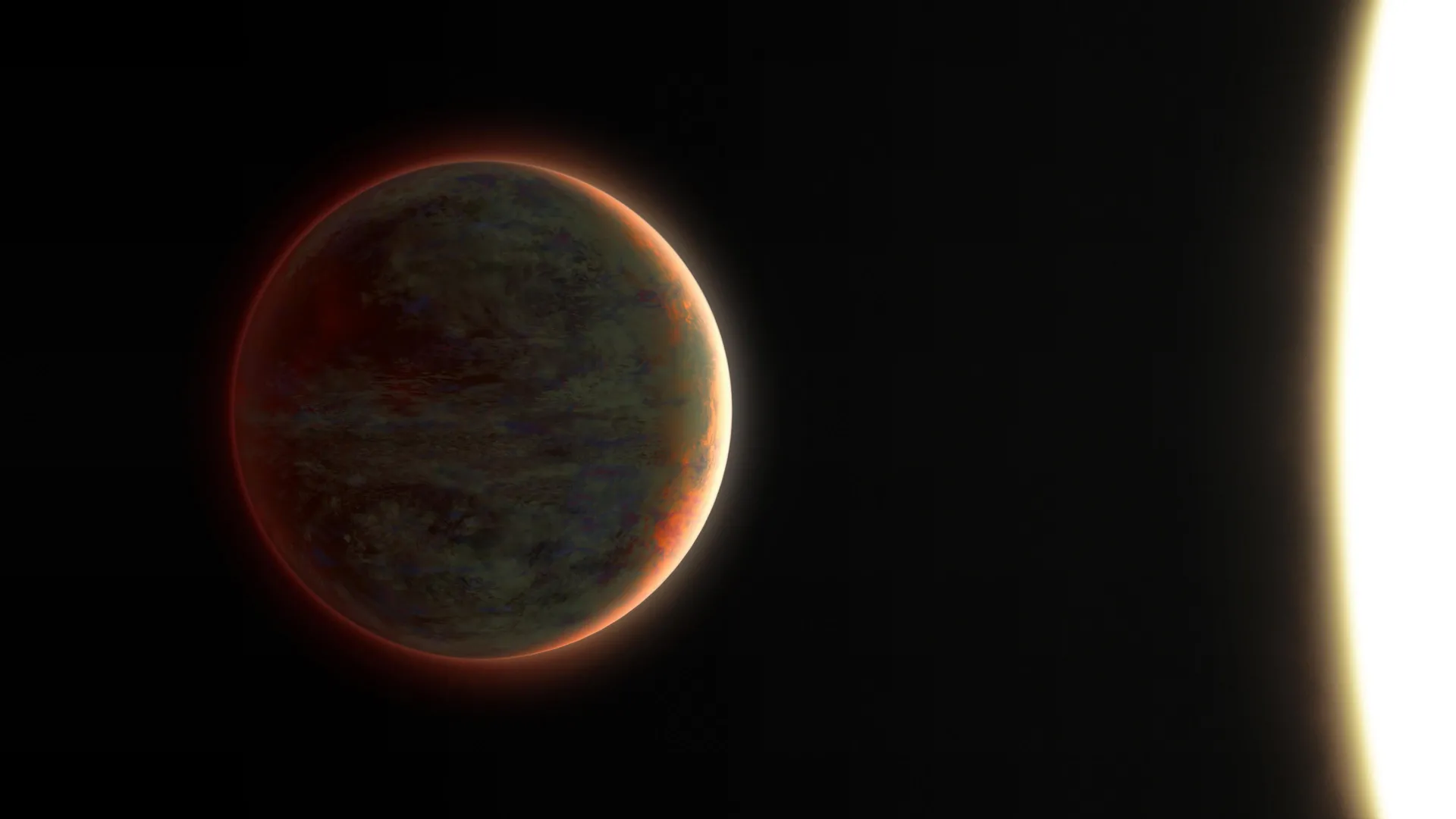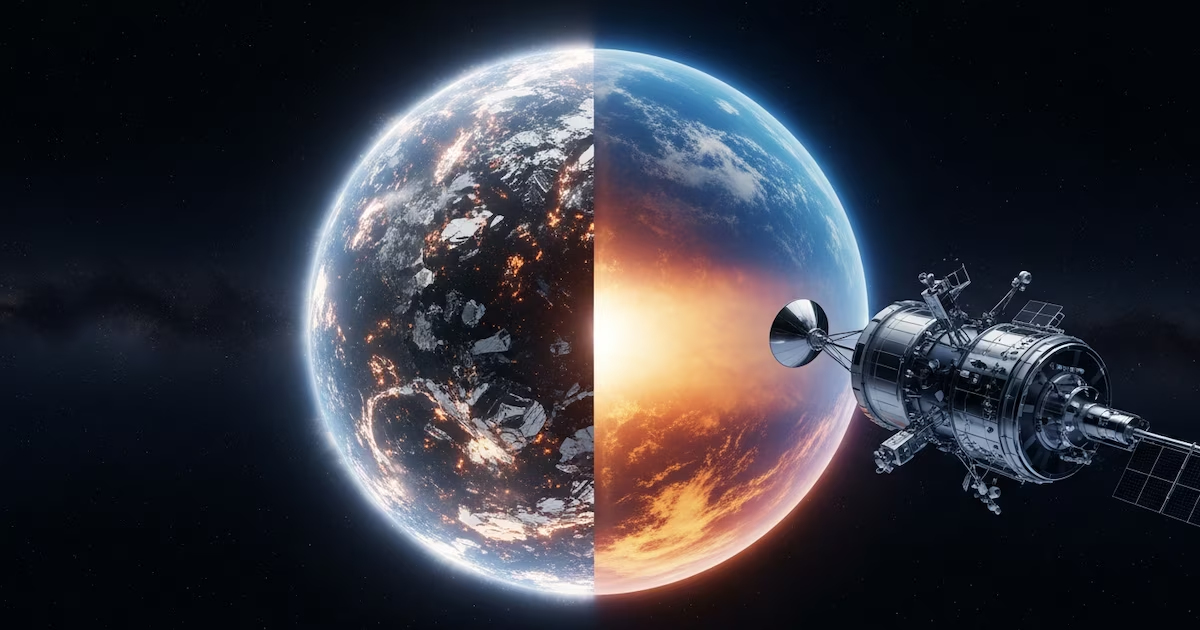
On this planet, clouds emerge every morning and disappear by night, creating a weather cycle unlike anything seen in our solar system. Scientists discovered this pattern on WASP-94A b, a giant gas planet located nearly 700 light-years away from Earth in the constellation Microscopium. Using data from the James Webb Space Telescope (JWST), researchers observed clouds made of rocky minerals forming during the planet’s morning hours and disappearing by evening. The findings provide new insights into how exoplanet atmospheres work and help scientists better understand the processes shaping distant worlds. The research was published in the journal Science.Scientists observe a daily cloud cycle on a distant worldAstronomers studying WASP-94A b found that the planet experiences a repeating weather cycle every day. Clouds form on one side of the planet and disappear on the other side as atmospheric conditions change. WASP-94A b is classified as a Hot Jupiter. These planets are gas giants that orbit very close to their stars. Because of their proximity, temperatures on the day side become extremely high.Researchers found that clouds made of magnesium silicate gather across the sky during the morning. Magnesium silicate is a mineral commonly found in rocks on Earth. As the day progresses, those clouds disappear, leaving the evening side of the planet largely clear. The discovery marks one of the first direct observations of cloud cycling on a Hot Jupiter exoplanet.How the James Webb Space Telescope studied the planet?Scientists observed the planet while it passed in front of its host star. This process is known as a transit. During the transit, the James Webb Space Telescope examined different regions of the planet separately. Researchers were able to study both the leading edge and trailing edge of the planet.The leading edge represents the morning side. On this side, atmospheric winds carry air from the cooler night side toward the hotter day side. The trailing edge represents the evening side. Here, air begins moving back toward cooler and darker conditions. These observations allowed scientists to compare atmospheric conditions between the two regions.On this planet, clouds emerge every morning and disappear by night due to extreme conditionsThe study revealed major differences between morning and evening conditions. The morning side contained large amounts of cloud cover made from magnesium silicate particles. The evening side showed very little cloud cover. Scientists believe two explanations may account for the disappearing clouds.One possibility is that strong atmospheric winds push the clouds deeper into the atmosphere as they move across the hot day side. This would hide the clouds from observation. Another possibility is that the clouds evaporate when exposed to temperatures exceeding 1,000 degrees. Researchers compared the process to fog disappearing after sunrise on Earth, although conditions on WASP-94A b are much more intense.David Sing, co-author of the study and program principal investigator, said clouds have long limited scientists’ ability to study Hot Jupiter atmospheres. The new observations allowed researchers to identify what the clouds are made of and how they form and disappear while moving around the planet. Sing also said the sharp contrast between the morning and evening sides was unexpected and has changed scientists’ understanding of the planet.Clear skies reveal the atmosphere beneathThe cloud-free evening side gave researchers a chance to study the planet’s atmosphere in greater detail. Previous observations using the Hubble Space Telescope provided only an average picture of the entire planet. Cloudy and clear regions were combined together, making it difficult to separate atmospheric features.The James Webb Space Telescope provided a different approach. By examining specific regions separately, scientists could isolate the clear side and directly observe atmospheric conditions. Study lead author Sagnick Mukherjee explained that this method helped researchers identify the cloud cycle and obtain more detailed atmospheric information than before.New findings solve a chemistry puzzleThe clearer observations also helped resolve questions about the planet’s chemical composition. Earlier studies suggested WASP-94A b contained hundreds of times more oxygen and carbon than Jupiter. Those findings did not match existing models of planet formation.The new data tells a different story. Researchers now estimate that WASP-94A b contains only about five times more oxygen and carbon than Jupiter. This result places the planet much closer to expectations based on current theories. The findings suggest that the planet may be more similar to Jupiter than scientists previously believed.Why Hot Jupiters help scientists understand atmospheres?Hot Jupiters provide opportunities to study atmospheric chemistry under conditions not found in our solar system. These planets orbit close to their stars and experience high temperatures and intense radiation. Such environments allow researchers to examine how gases, clouds, and atmospheric circulation behave under extreme conditions. The cloud cycle observed on WASP-94A b offers new evidence about how weather systems operate on giant planets beyond our solar system. Scientists hope these observations will improve atmospheric models and help explain weather patterns on many different exoplanets.Researchers find similar patterns on other exoplanetsAfter analyzing WASP-94A b, researchers expanded their work to additional planets. The team examined eight other Hot Jupiters and found evidence of similar cloud cycling on two more worlds: WASP-39 b and WASP-17 b. These findings suggest that cloud formation and disappearance may be common among some Hot Jupiter planets.Researchers now plan to continue using the James Webb Space Telescope to investigate cloud cycles across a larger group of exoplanets. Future observations will include a gas giant that travels through the habitable zone on an eccentric orbit. Scientists hope this broader survey will reveal how weather systems differ among various planetary environments.A new chapter in exoplanet researchThe discovery of a daily cloud cycle on WASP-94A b provides one of the clearest views yet of an exoplanet atmosphere. By observing clouds made of rocky minerals forming in the morning and disappearing by evening, researchers gained valuable insights into atmospheric circulation, cloud chemistry, and planetary composition.The James Webb Space Telescope continues to transform the study of distant worlds by allowing scientists to examine regions of planets separately rather than viewing them as a single object. As more observations are completed, researchers expect to uncover additional details about weather, climate, and atmospheric processes across the galaxy.FAQsQ1. Why do clouds disappear every evening on WASP-94A b?Scientists believe strong winds push clouds deeper into the atmosphere or extreme temperatures cause them to evaporate. Both processes may contribute to the disappearance of mineral clouds each evening.Q2. What are the clouds on WASP-94A b made of?The clouds are made primarily of magnesium silicate, a mineral found in rocks on Earth. These mineral clouds form on the planet’s morning side and disappear later.
On this planet, clouds emerge every morning and disappear by night: James Webb Space Telescope reveals daily cloud cycle on WASP-94A b
On this planet, clouds emerge every morning and disappear by night as astronomers study the giant exoplanet WASP-94A b using the James Webb Space Telescope. Researchers found that mineral clouds form during the morning and disappear by evening. The discovery helped scientists understand the planets atmosphere, cloud behavior, and chemical composition while opening a new path for studying weather systems on distant worlds.
TL;DRAI
JWST observes daily cloud cycle on WASP-94A b: magnesium silicate clouds form at dawn, evaporate by dusk above 1,000°. Observations resolve discrepancies: WASP-94A b has 5x Jupiter's carbon-oxygen, not 100x, fixing planetary formation models.
1,082 words~5 min read