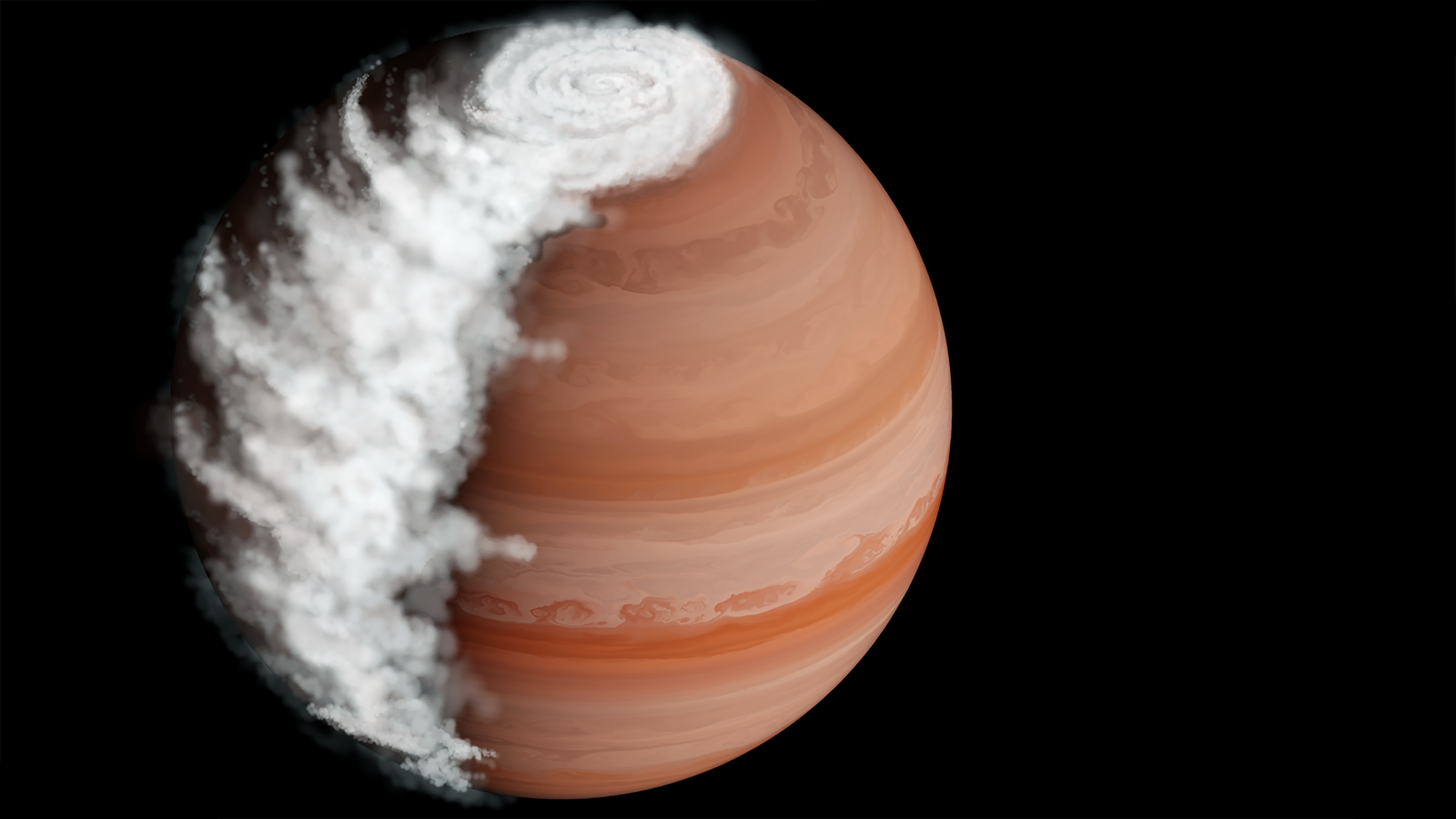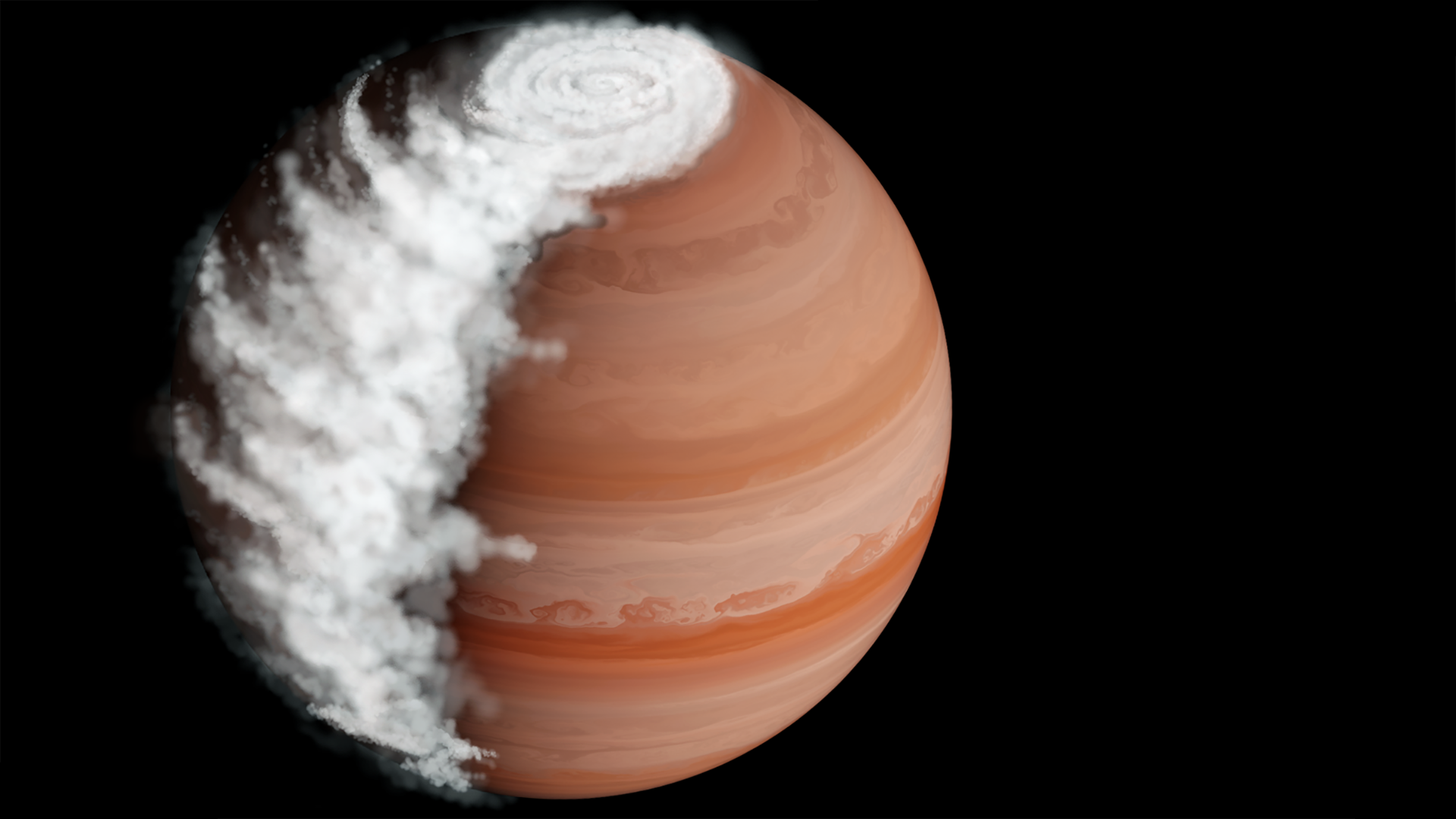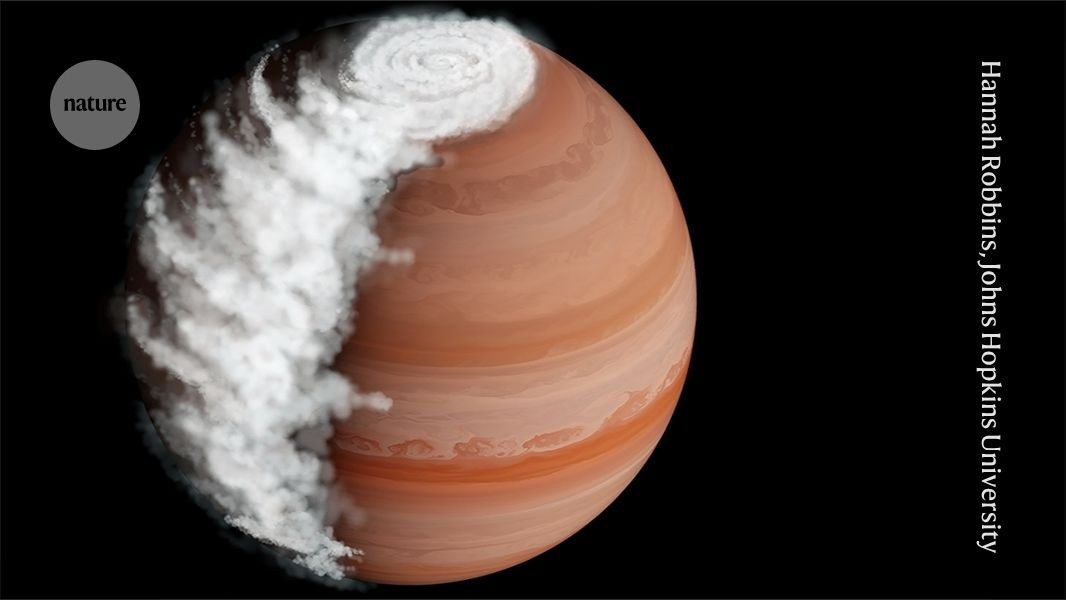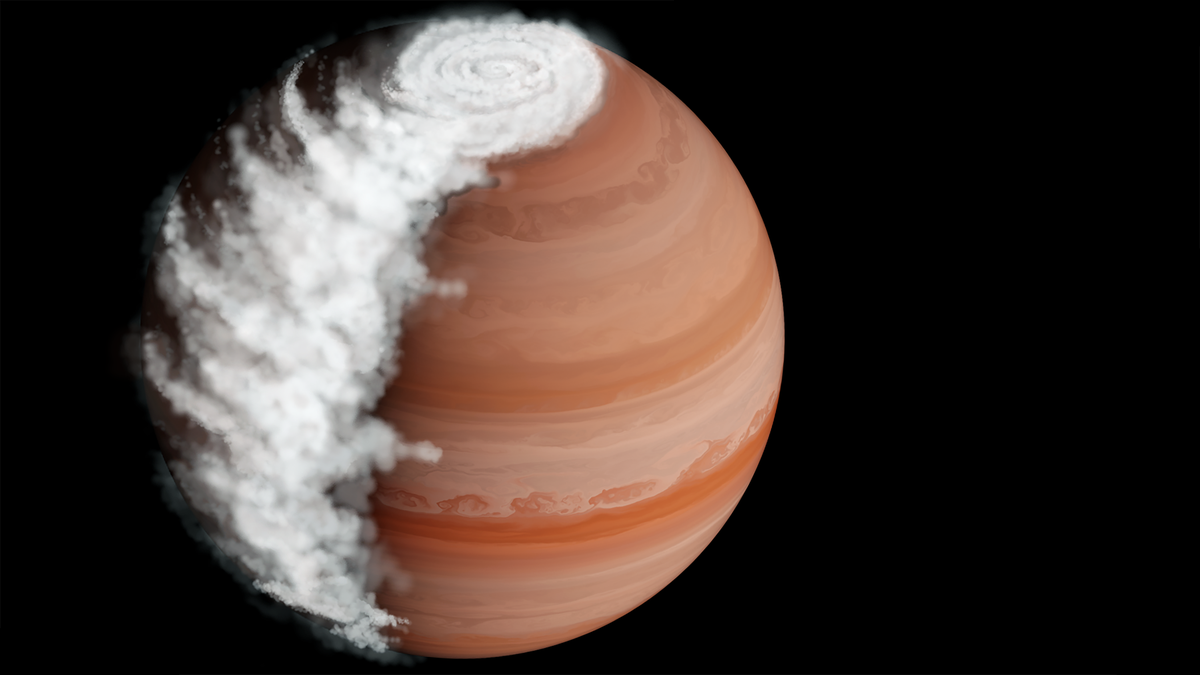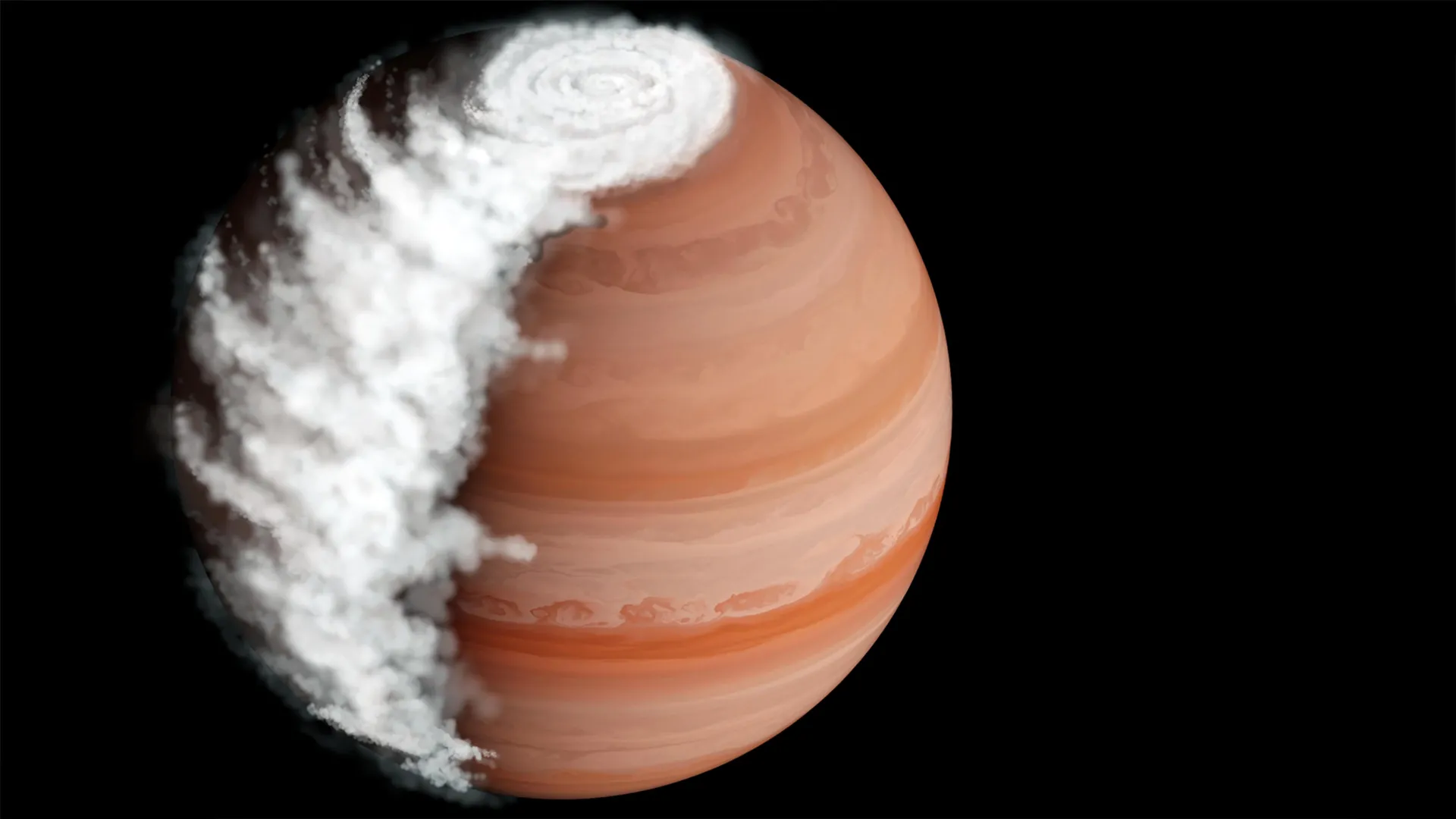
Every morning on the giant exoplanet WASP-94A b, clouds made from rocky minerals gather across the sky. By evening, those clouds are gone.
Using observations from the James Webb Space Telescope (JWST), astronomers discovered this dramatic daily weather cycle on the distant world, located nearly 700 light years from Earth in the constellation Microscopium. The findings mark one of the first times scientists have directly observed cloud cycling on a Hot Jupiter exoplanet.
The discovery also gave researchers a much clearer view of the planet's atmosphere, helping them better understand what the world is made of and how its weather behaves. The study was published in the journal Science.
"I've been looking at exoplanets for 20 years, and general cloudiness has been a thorn in our side. We've known for quite a while that clouds are pervasive on Hot Jupiter planets, which is annoying because it's like trying to look at the planet through a foggy window," said co-author and program PI, David Sing, a Bloomberg Distinguished Professor of Earth and Planetary Sciences at Johns Hopkins. "Not only have we been able to clear the view, but we can finally pin down what the clouds are made out of and how they're condensing and evaporating as they move around the planet."