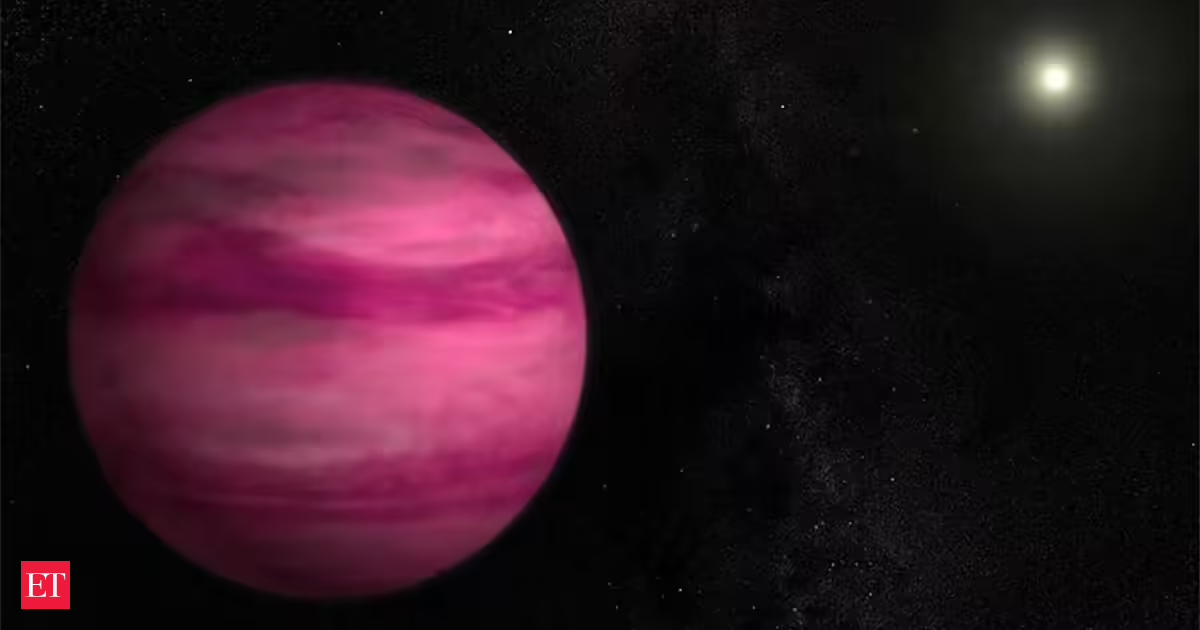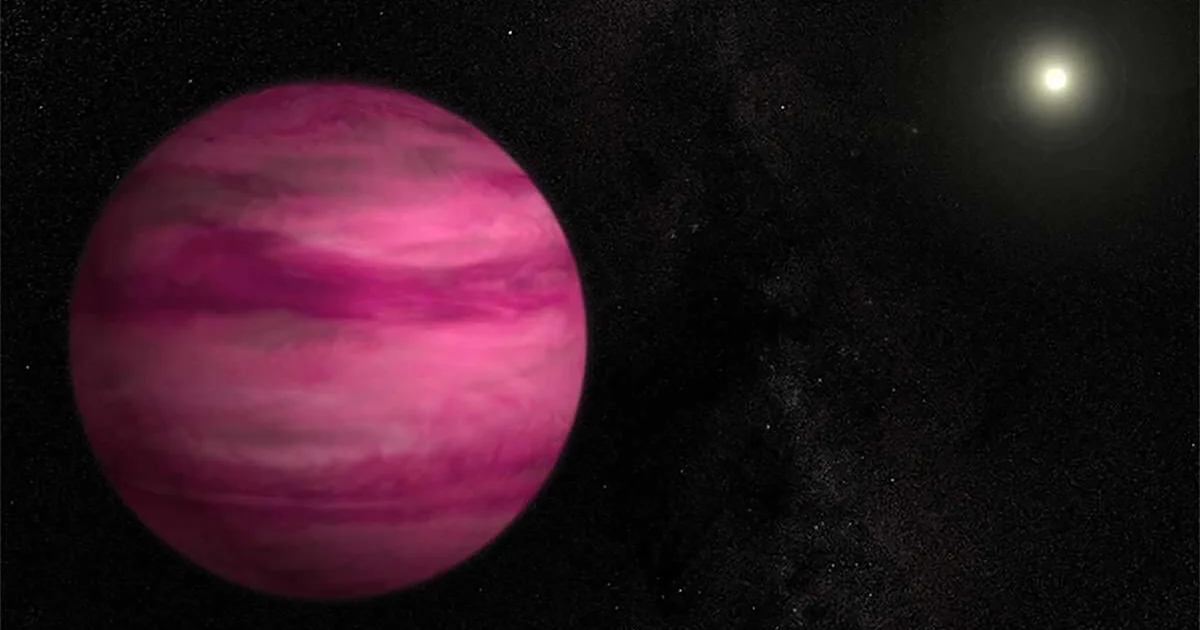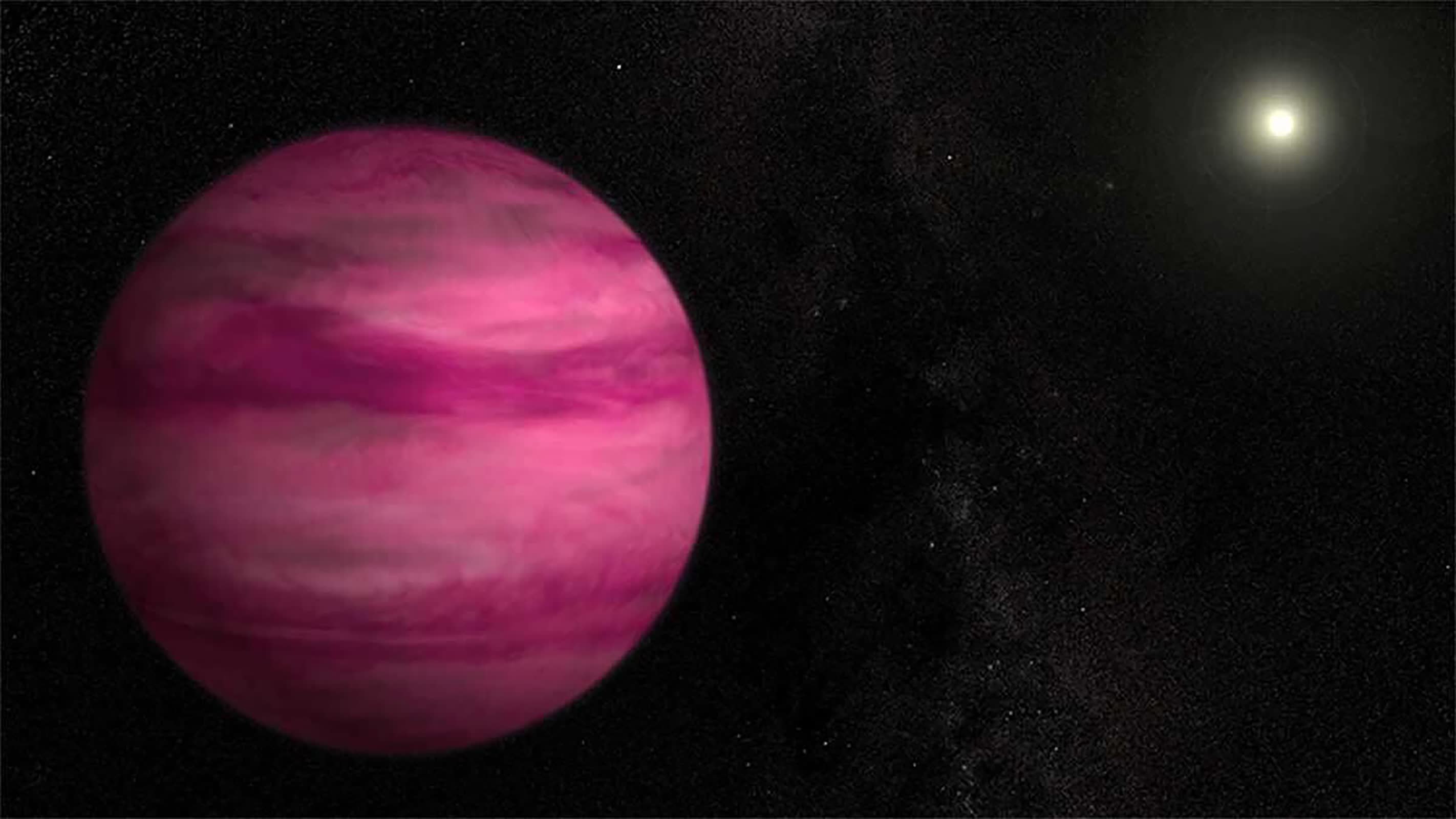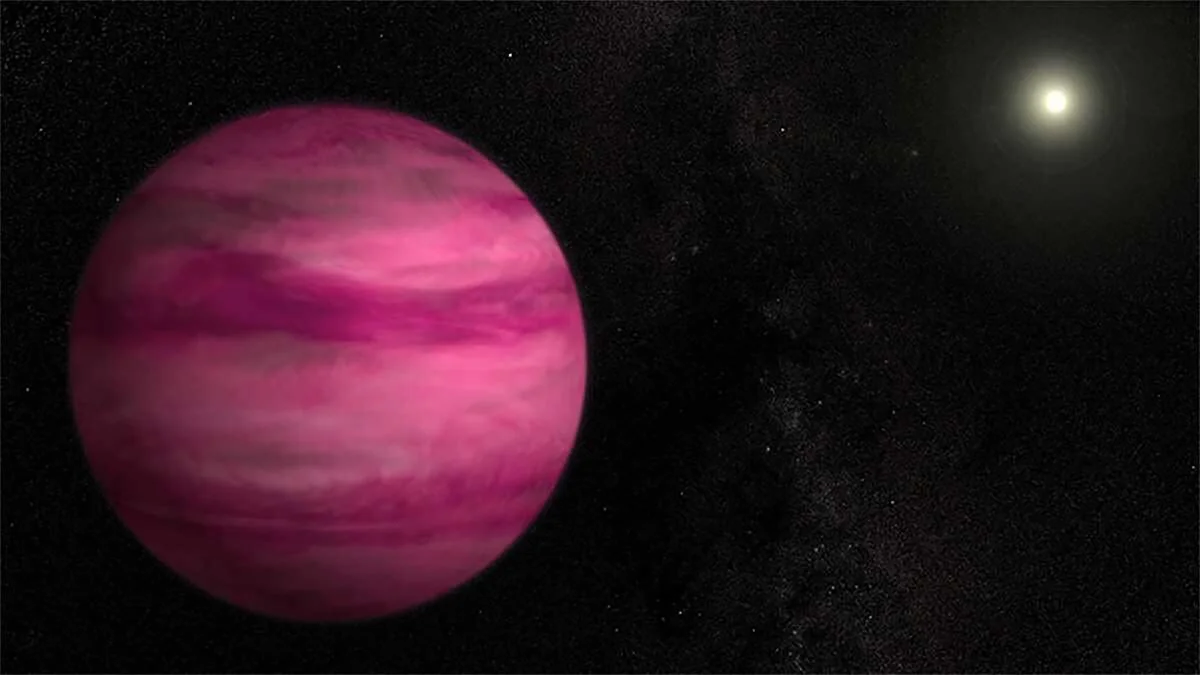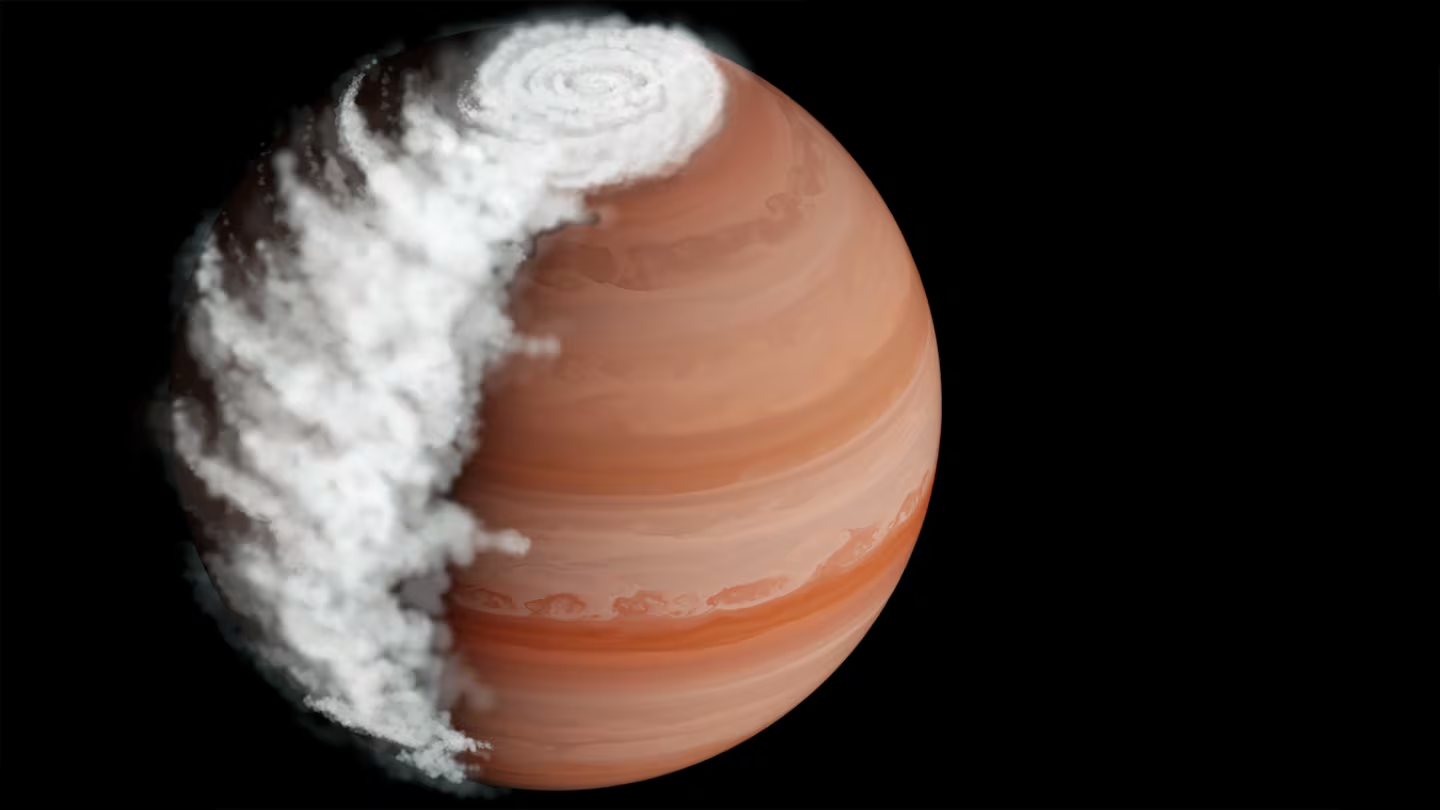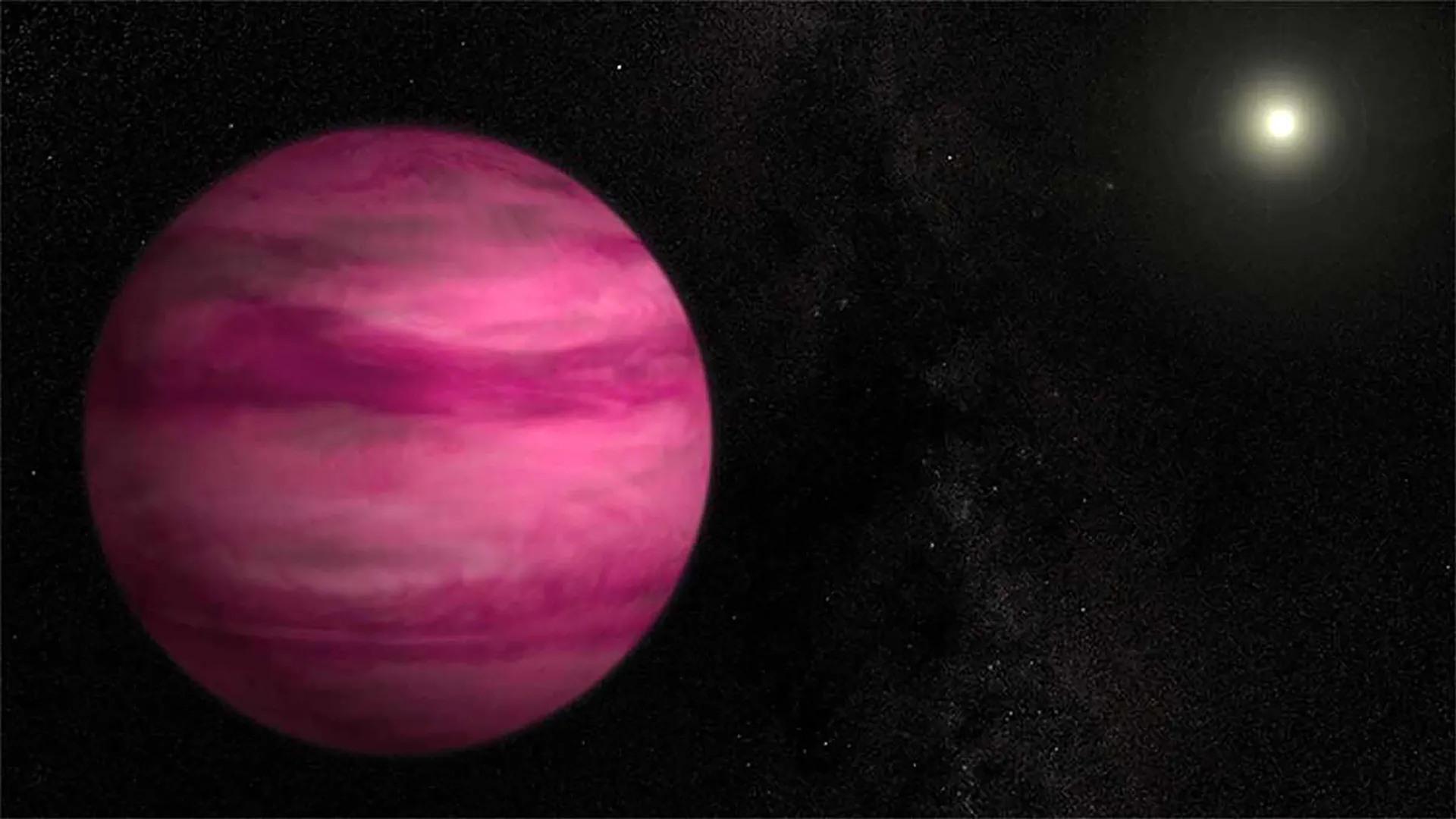
Astronomers led by Northwestern University have uncovered an unusual feature surrounding the famous "Pink Planet": skies filled with salty clouds.
For more than a decade, the ancient world, known for its pinkish haze, has remained one of astronomy's enduring mysteries. As one of the coldest planetary-mass companions ever directly imaged, it is so faint that scientists have struggled to analyze its light from Earth. Now, observations from the James Webb Space Telescope (JWST) have revealed an atmosphere packed with exotic chemistry and clouds unlike any previously observed.
The findings provide some of the first direct evidence that salt clouds can exist in the atmosphere of a cold planetary object, confirming a prediction scientists first made more than 15 years ago. The results also highlight JWST's ability to study extremely cold and faint worlds that are beyond the reach of ground-based observatories.
The study was published on June 18 in the Astronomical Journal.
"The Pink Planet is the coldest companion ever discovered using ground-based instruments," said Northwestern's Aneesh Baburaj, who led the study. "Many teams all around the world performed follow-up observations to study its light, but it was too faint for ground-based instruments. That made it a perfect target for JWST. When we finally obtained its spectrum, it immediately looked interesting. But once we started digging deeper into the data, we realized it was not like anything we have analyzed before."