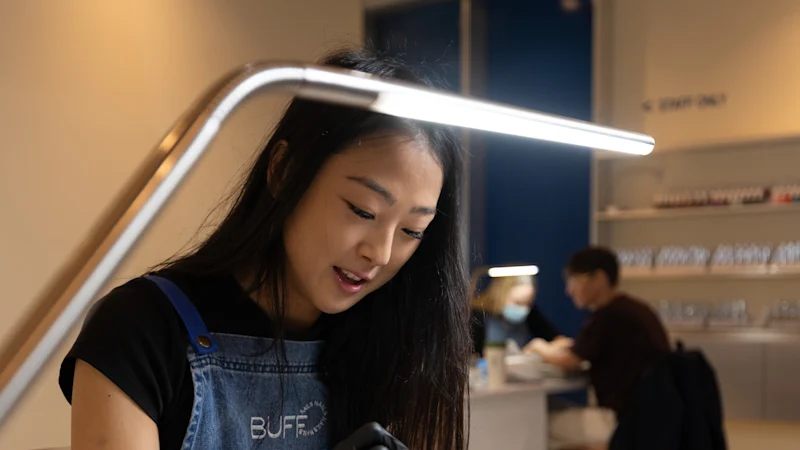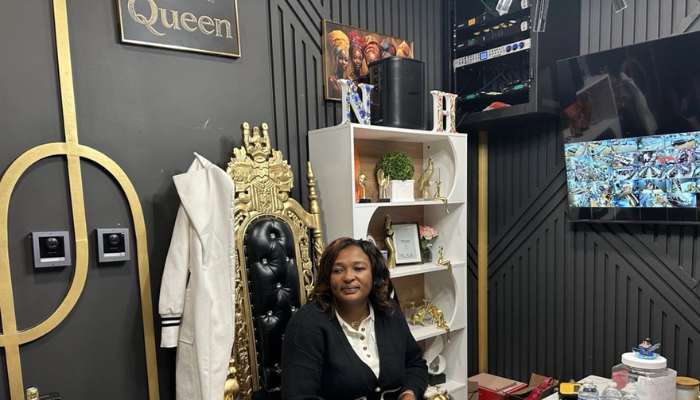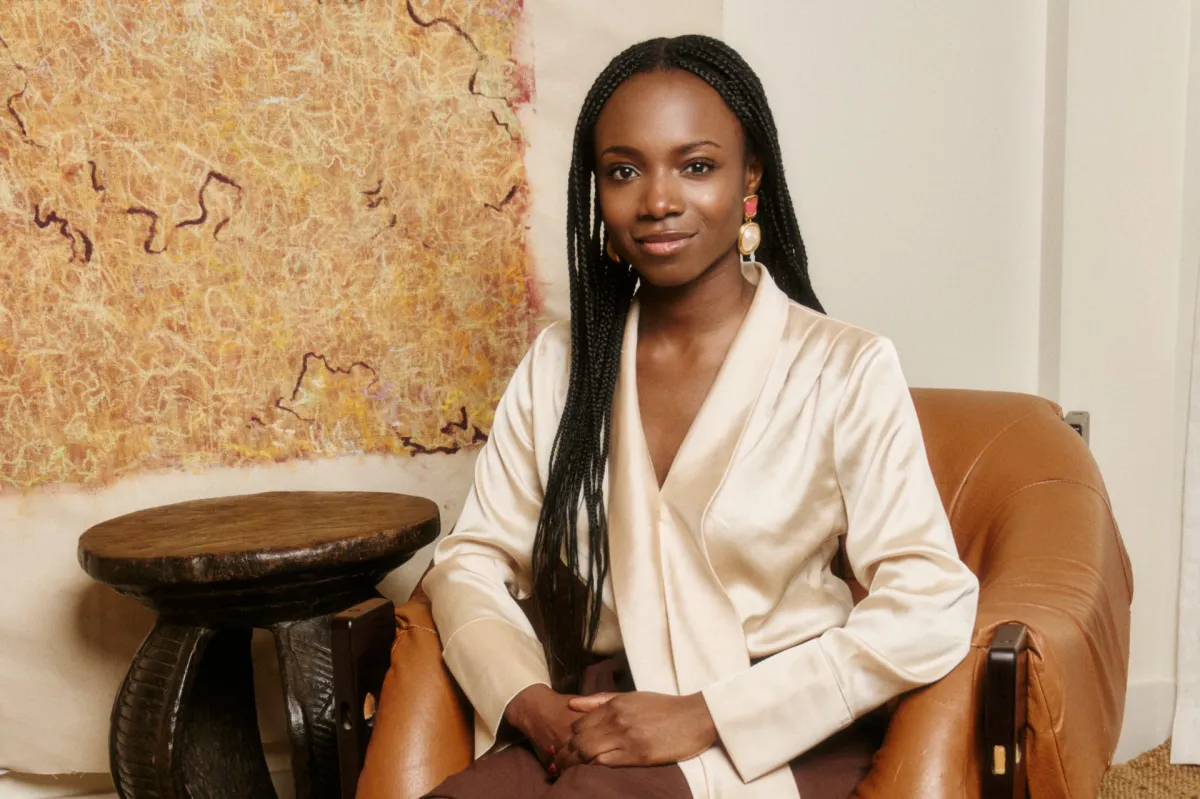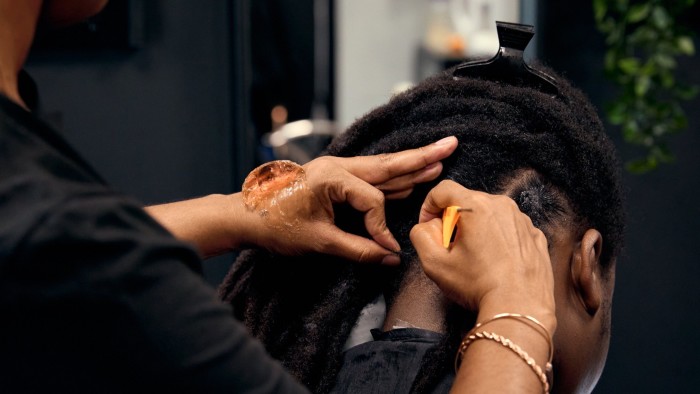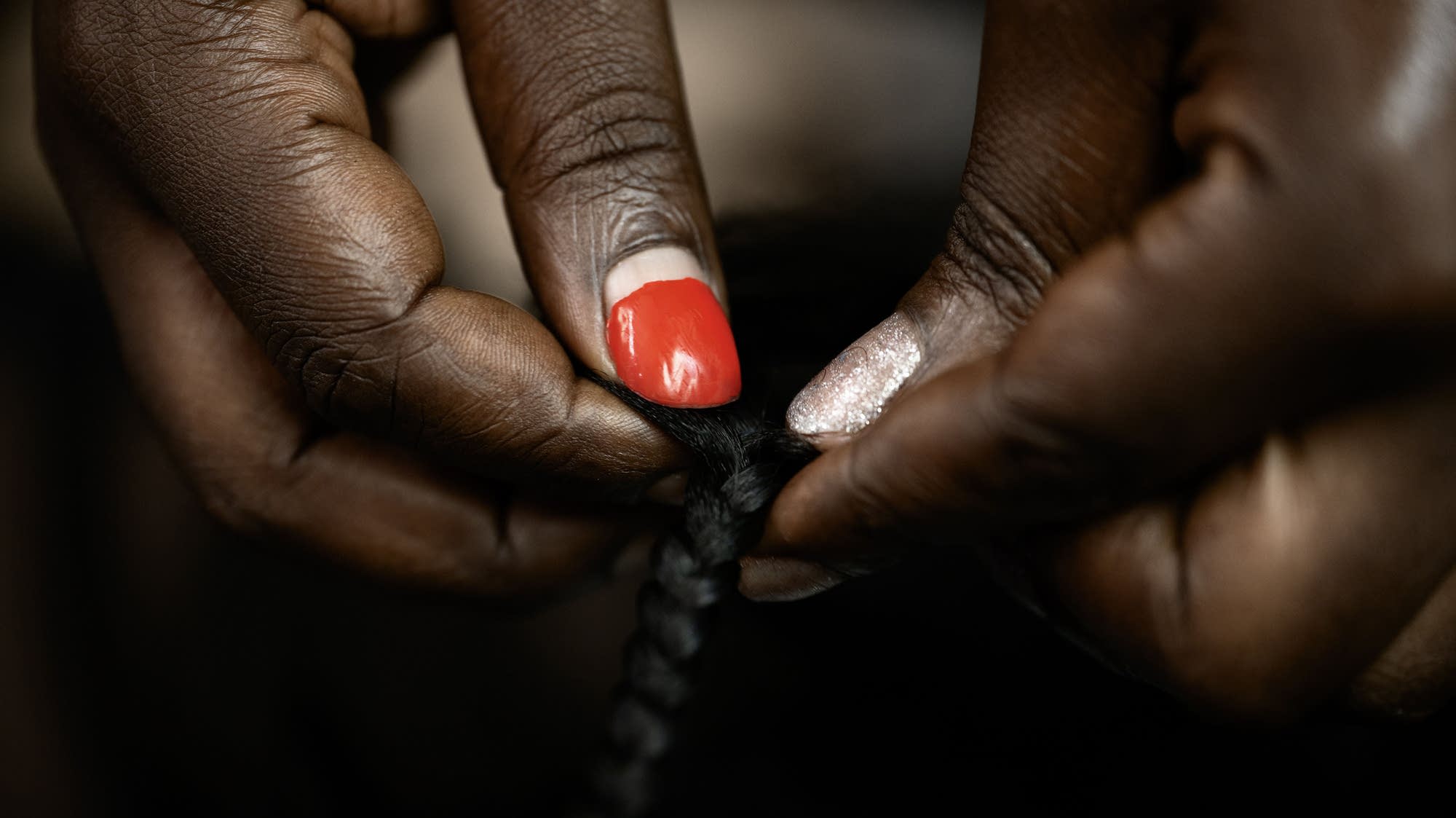
A version of this story first appeared on WYPR.Around-the-clock businesses often include casinos, diners and pharmacies. In suburban Maryland, a hair braiding salon is part of that list.At Nadine’s Hair Braiding, customers can walk in at 2 p.m. or 2 a.m. and find a stylist. The 10,000-square-foot salon has about 120 seats and operates with roughly 400 braiders working as independent contractors.“I have a particular time that I come,” said Lucylvia Akombi, a braider at the salon. “I come during the day. Some people come during the night. When I’m tired, I’m free to go home. Nobody is forcing you, so it’s very flexible,”That flexibility also appeals to customers seeking swift service. “If I need to get in a chair immediately, I can get in a chair immediately,” said customer Folade Smith.Lovelyn Assaba, a hairstylist, braids a customer visiting the salon for the first time. Stylists wear scrubs — purple on weekdays and gray on weekends — while managers are dressed in business casual.Wambui Kamau/WYPRSpeed is another draw. Two braiders often work on one head, reducing the time it takes to complete a style. At its peak, the salon serves 600 customers a day, even attracting high-profile clients like Maryland’s junior U.S senator Angela Alsobrooks.“The clients were telling me, ‘Please don’t close before 8 p.m., please open at 2 a.m., please open at 3 a.m.,’” said Nadine Djuiko, the founder and CEO. She stumbled into the 24-hour model when her stylists started competing to meet the demand. But a massive financial hit also drove the Cameroonian entrepreneur to keep the doors open day and night. Djuiko and her husband had invested more than $200,000 into a commercial venture that turned out to be a Ponzi scheme. “I just felt like, if I'm sleeping and my business is still making at least $500 profit every day, that will cover the money I lost,” she said.With 245,000 followers on Instagram, social media has fueled the salon’s growth. Out-of-state travelers now make up a major chunk of the salon's customer base, Djuiko said. Styles start at $220, meaning a busy day can generate more than $130,000 in revenue. Customers pay the shop, and the salon splits the sales with the braiders. Stylists don't pay a flat fee to rent a chair. By comparison, a typical braiding shop takes an entire month to bring in a fraction of that daily total. Outside Nadine's Hair Braiding, a large emblem on the ground reads “Wassup Nieces!” and features photos of customers, stylists and staff.Wambui KamauBut there are challenges to running such a massive operation. The salon imports large volumes of hair, a cost that has spiked over the past year due to steeper tariffs and global price swings.A recent Consumer Reports investigation found many hair extensions contain chemicals linked to serious health risks, including organ damage, raising concerns about product safety. Djuiko said her salon buys from suppliers that provide documentation certifying the bundles are safe.As the salon’s visibility grows, so does scrutiny.“People go on my page, they make some negative reviews, not because they are true, but because they don't love the visibility that we have,” Djuiko said, with a loud sigh. Despite criticism, Djuiko is focused on franchising her 24-hour model. To achieve that goal, she’s advocating for more formal training, including braiding courses in schools, to build a skilled workforce.“Having a school will make people value this job,” she said. “I want to see the government taking this serious. Just like there’s a school for nail tech and stuff, there should be one for braiding also.”
The economics of a 24-hour hair braiding salon
The unconventional, 10,000-square-foot salon operates with roughly 400 independent contractors and serves hundreds of customers a day with round-the-clock service.
593 words~3 min read