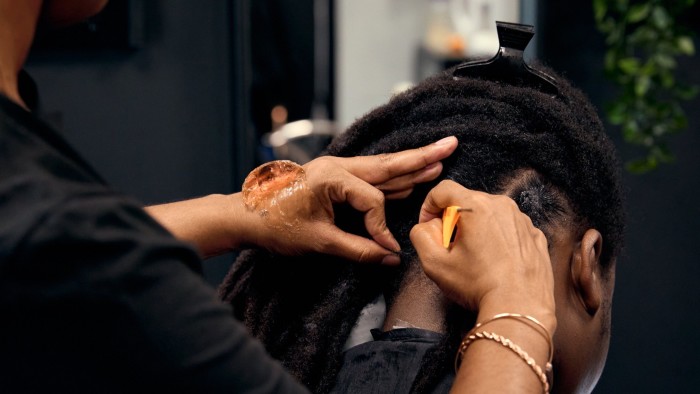
The business of Black hair is often conducted in the shadows.
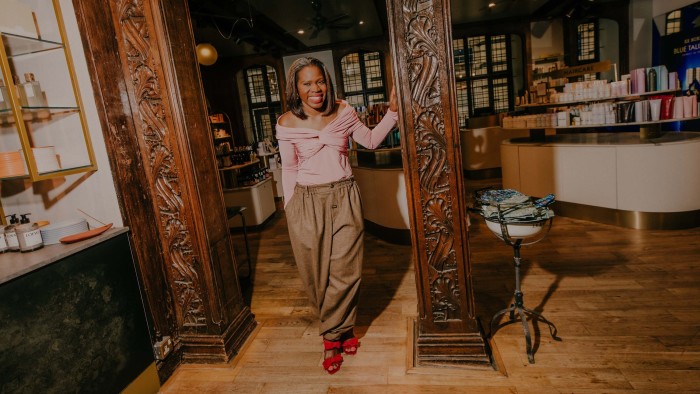
If you look, you will find it tucked behind unassuming storefronts in east London, hidden next to money transfer shops on busy high streets, or nestled in Brooklyn brownstones where the only footprint of its existence is the low hum of music and the lingering scent of sulphur and Pink hair lotion.
Beyond the threshold is a bustling world, filled with women whose hands weave intricate patterns at impossible speeds, and patrons whose curls have become an inalienable part of their identity and their livelihoods. It is often loud and a little too warm, but you are always offered a chair, and you will leave with a story.
For the women who frequent these spaces, they are not just salons. They are a sanctuary. And the quiet comfort they provide is part of a global network that has grown from a backdoor business into an industry estimated to be worth more than $10bn in 2023 and forecast to grow to more than $15bn by 2033.
The true size of the business could be much larger. Separate research covering only the UK found Black women account for 10 per cent of total haircare spending, despite making up just 4.2 per cent of the country’s female population, according to its 2021 census.