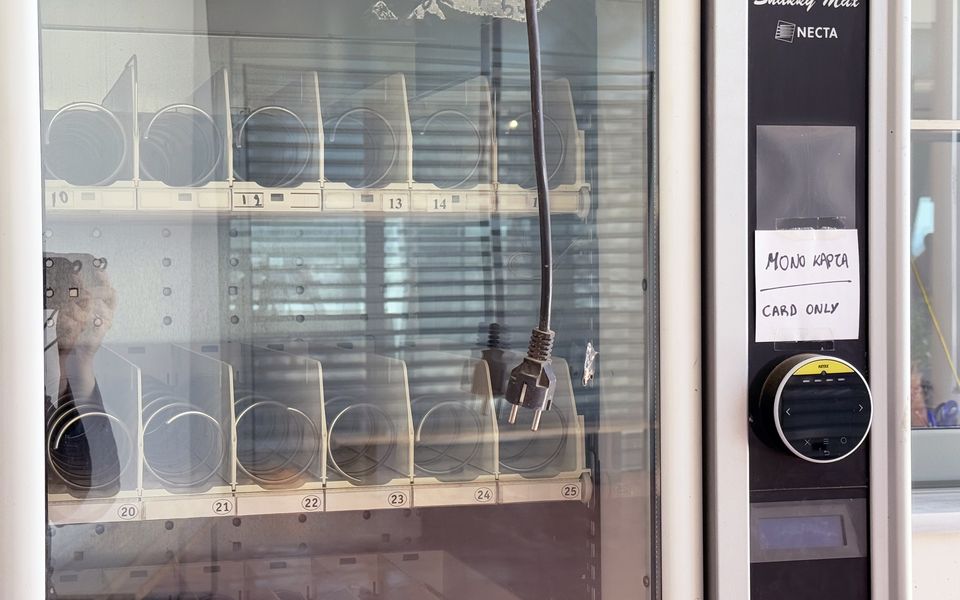
Thirsty visitors were in for a nasty surprise when they saw that the only water vending machine on the site was out of order.
Barbara from New York was genuinely looking forward to the tour. The guide’s narrative on the trip from Rethymno to the archaeological site and museum of ancient Eleutherna had excited her interest in this once glorious city-state, which was among the most powerful in Crete during ancient times and was recently brought back to light thanks to the dedication of archaeologist Nikolaos Stampolidis, the current director of the Acropolis Museum in Athens.
She was looking forward to the Necropolis of Orthi Petra – the most important burial site to have been discovered to date from the ancient Greek Dark Ages – the centuries spanning the collapse of the Mycenaean civilization (around 1200 BC) to the Archaic period (starting in 800 BC). Highlights include the funeral pyre of an 8th-century BC warrior cremated around the age of 30, the site where four women from a prominent Eleutherna family were buried together and the spot where the skeleton of a dog was found next to a large jar containing the bones of a boy, who was likely its owner.
She got off the tour bus and started making the climb with the rest of the group of Greek and foreign scientists and businesspeople (most from the United States) up the dirt path that leads to this exceptional monument from the geometric and archaic period. Despite her mobility issues, she managed to make it all the way to the top, leaning on the walker she has used for years. “Fantastic! There’s a wheelchair lift,” she said when she saw the device at the bottom of the staircase leading to the necropolis. “There is, but it’s not working, unfortunately,” the guard informed her. “The power’s been cut across the entire archaeological site.” Barbara was surprised. “How’s that possible?”