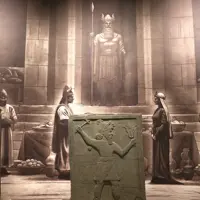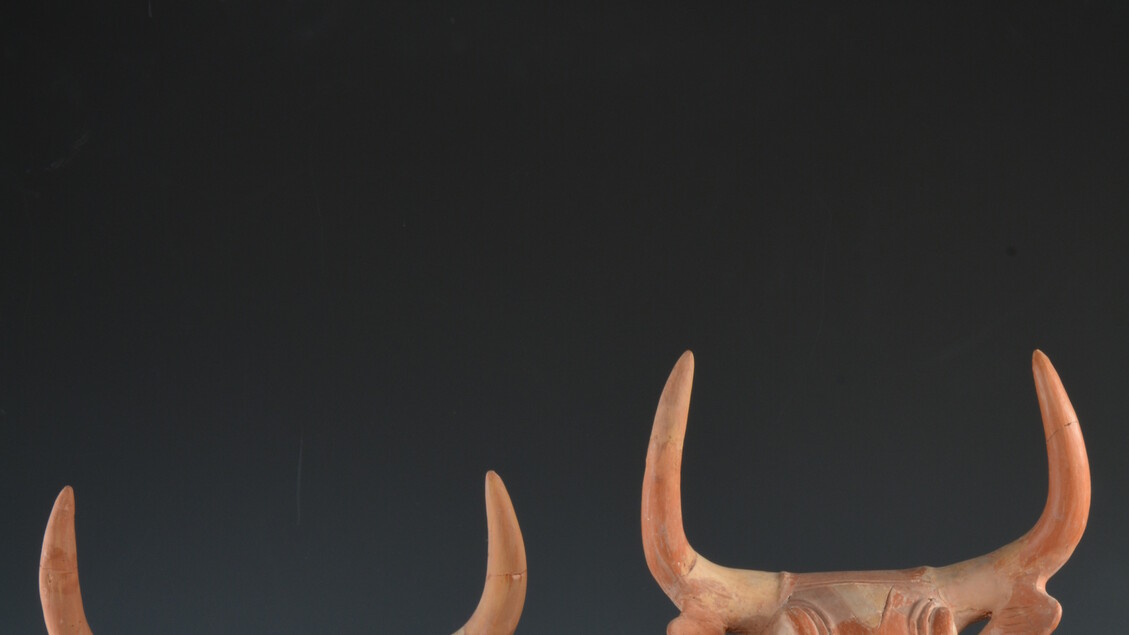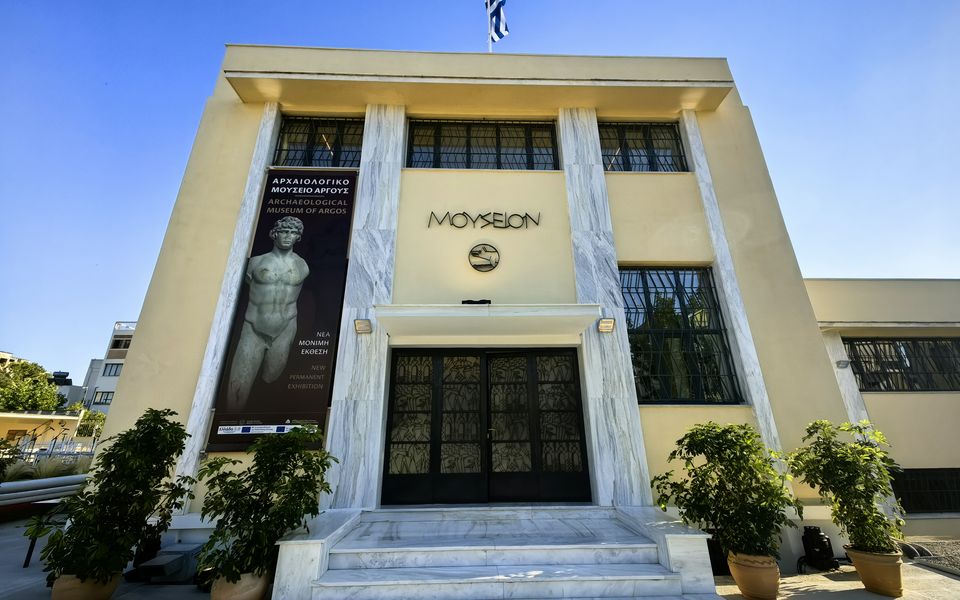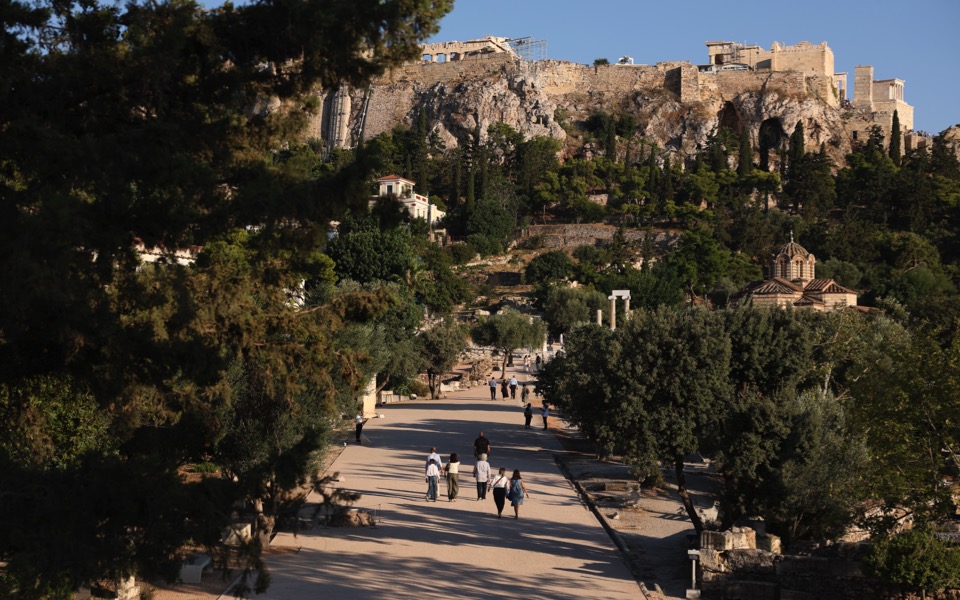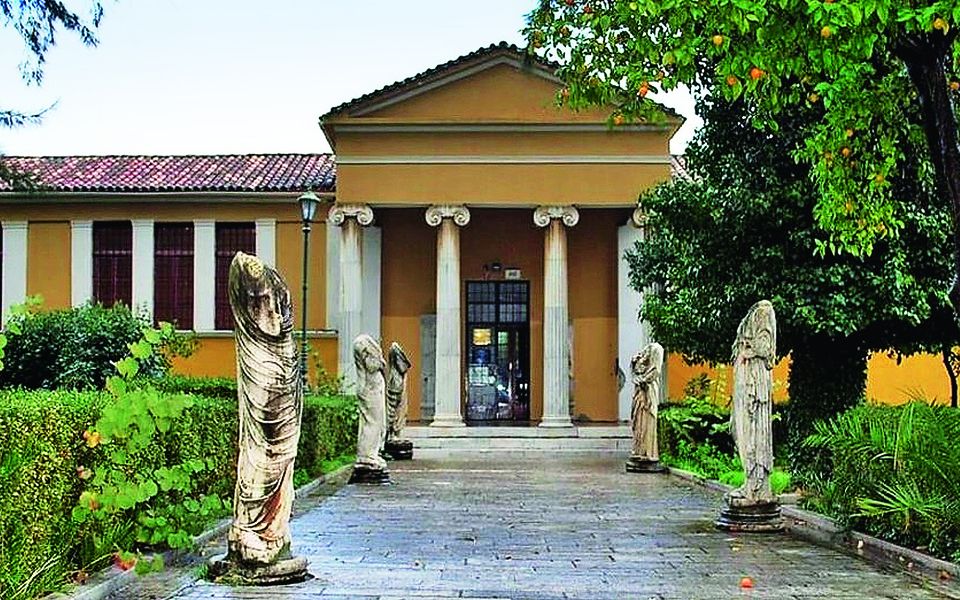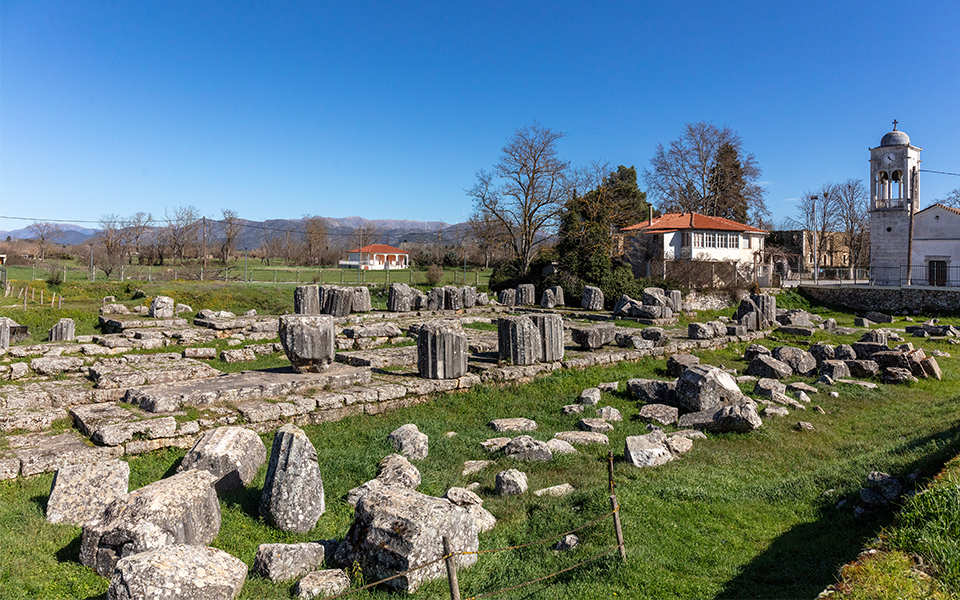
On the plain of Tripoli, in the village of Alea, stands one of the first regional public museums established by the modern Greek state. Founded in 1907 and housed in an elegant stone building, the Archaeological Museum of Tegea was transformed a decade ago into a contemporary museum space. Though modest in size, it leaves a strong impression thanks to the thematic layout of its collections and, above all, its innovative curatorial approach, which uses technology and interactive applications to bring local history to life. This approach earned the museum a special commendation in 2016 from the European Museum Forum, which operates under the auspices of the Council of Europe.
The marble Gorgoneion from the 6th century BC is among the museum’s most distinctive exhibits. [Perikles Merakos]
Tegea and the Temple of Athena Alea
“Tegea was one of the oldest city-states in the Peloponnese to adopt a democratic form of government,” says archaeologist Eleni Psathi, deputy head of the Department of Prehistoric and Classical Antiquities and Museums at the Ephorate of Antiquities of Arcadia. “Arcadia did not have cities as powerful as Sparta or Argos. On the Tripoli plateau, Tegea dominated the south while Mantinea controlled the north, and the two competed for centuries over water resources, as well as military and political influence during the Classical period.”