Only an hour’s ferry ride from Athens, Aegina has long been the capital’s favorite quick escape – close enough for a spontaneous hop across the water, yet rich enough in history to fill a relaxed weekend. Tradition links its name to the nymph Aegina, mother of the hero Aiakos – grandfather of Achilles, but the island’s story is anchored in its remarkable past: in the 7th and 6th centuries BC, Aegina was a maritime powerhouse and a formidable rival of Athens, minting some of the earliest Greek coinage (with its famous sea turtles), and controlling key trade routes in the Aegean and eastern Mediterranean.
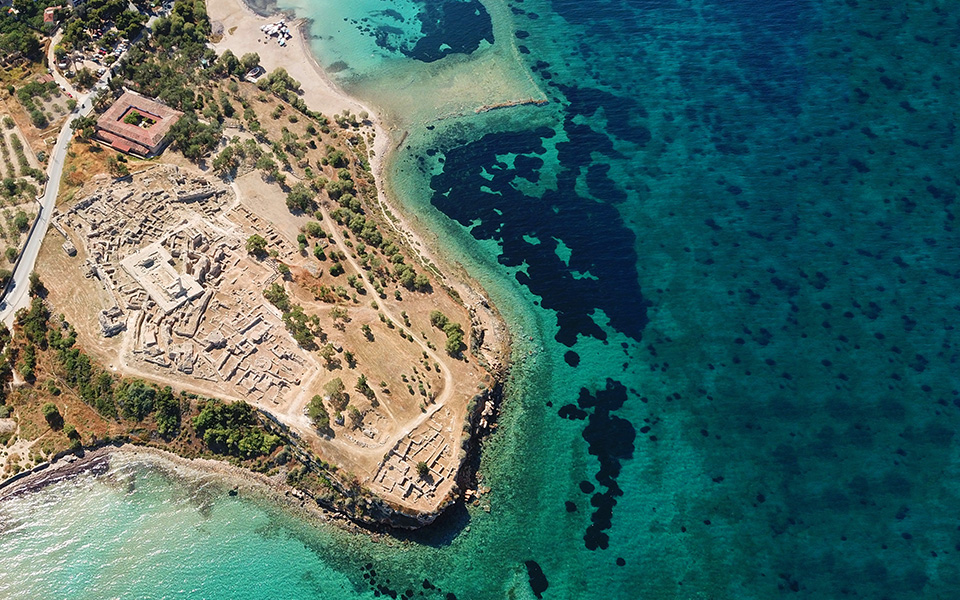
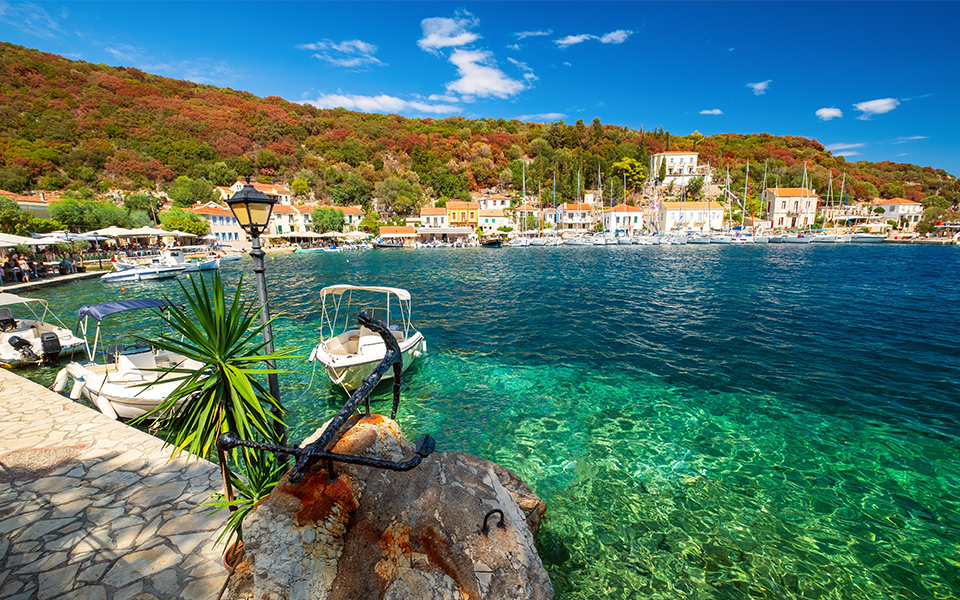
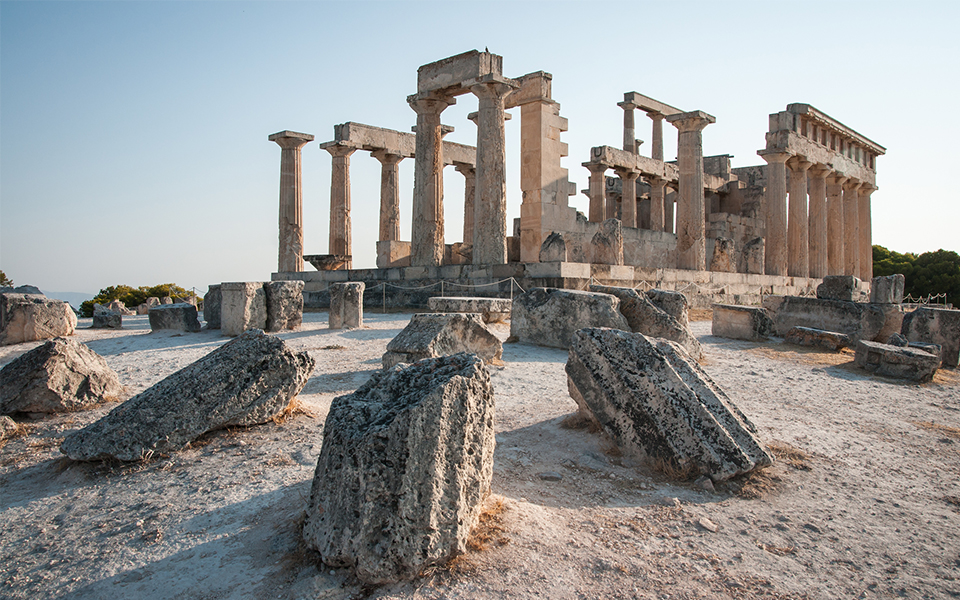
Today, visitors know it for delicious pistachios, horse-drawn carts along the harborfront, pine-scented hills, and relaxed Saronic sunsets. But woven between the tavernas and holiday homes is an island dense with archaeology – from the ancient acropolis at Kolona to the striking Temple of Aphaia, Byzantine ruins at Palaiochora, and Venetian fortifications.
Compact, friendly, and easy to explore, Aegina is a perfect all-rounder for first-time travelers and archaeology lovers alike.
Kolona Archaeological Site
The lone column of the Temple of Apollo on Kolona Hill. [Shutterstock]