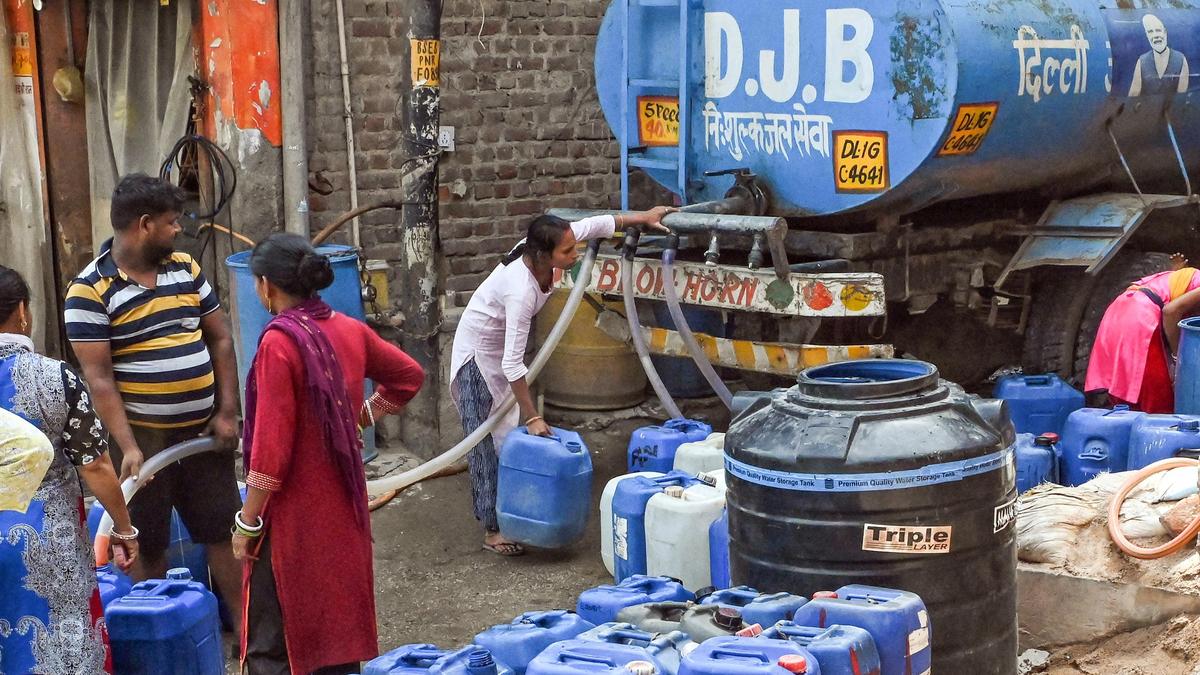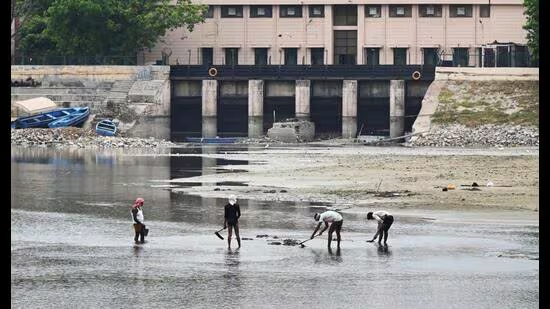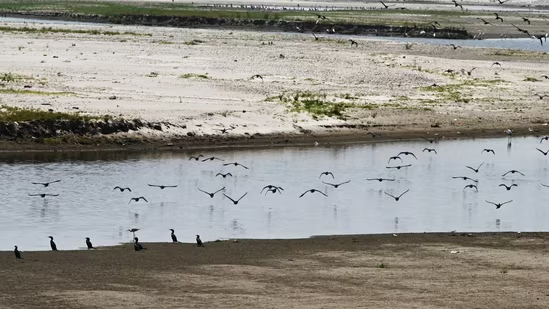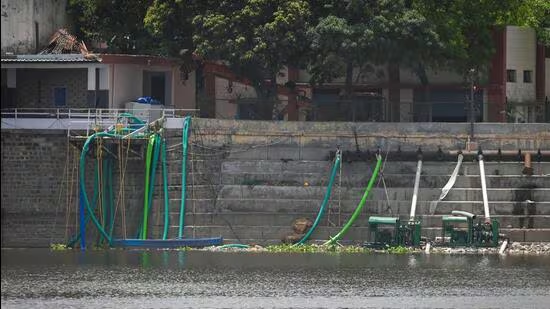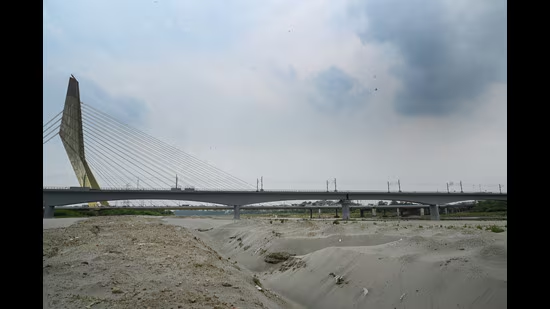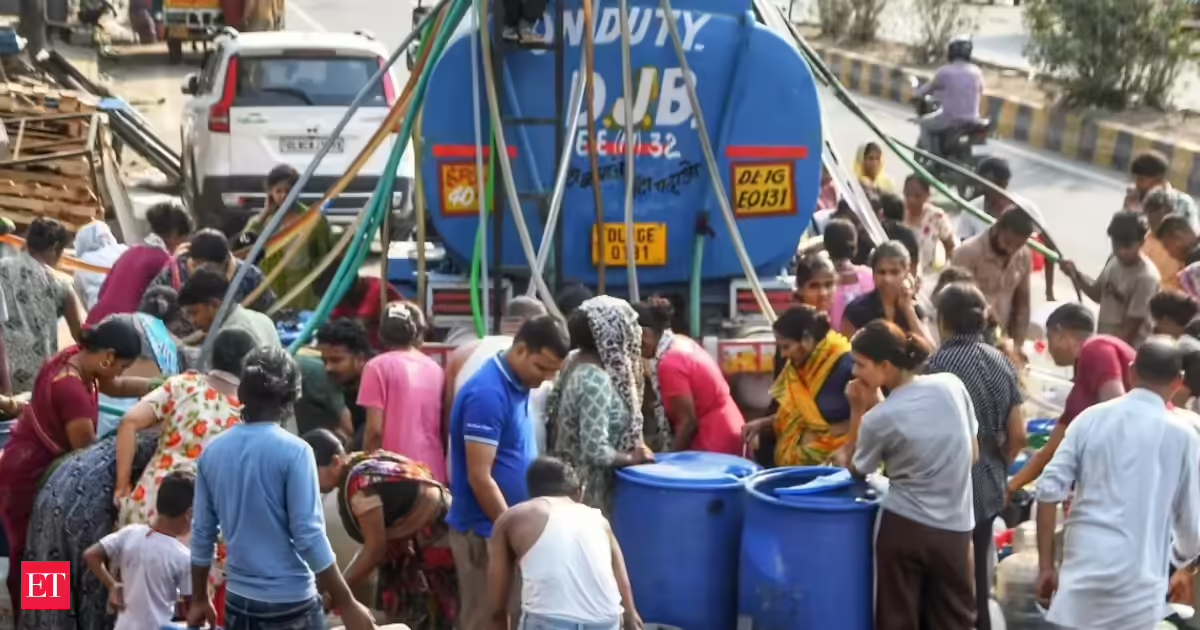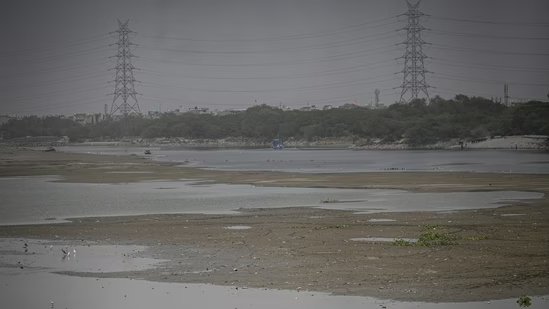
Fresh complaints over water shortages have started coming in from residents in parts of northeast, south and east Delhi that receive water from the Sonia Vihar water treatment plant (WTP) amid power outages at the plant, officials said on Monday, compounding the ongoing water crisis in the Capital after Yamuna levels declined with the onset of summer.Officials compounded the ongoing water crisis in the national capital after Yamuna levels declined with the onset of summer. (Sanchit Khanna/Hindustan Times)“At the Sonia Vihar WTP, water production came to a complete halt for several hours last night due to a power outage,” a Delhi Jal Board (DJB) official told HT.The raw water supply at the plant comes from the Upper Ganga Canal and, unlike the Yamuna, it largely remains consistent, even during summer months. However, water production at the plant is being adversely affected by frequent power outages, the official added.ALSO READ | Yamuna hits historic low in Delhi; water supply disrupted amid rain forecast“Last night, water production was disrupted for about 5–6 hours as a result of a power outage. We have seen multiple outages and tripping in three motors. Even if the power supply is cut for 15 minutes, it takes a lot of time to resume normal pumping and treatment operations,” the official added.DJB official said that the power outage issues has been going on for the last two-three days. No official statement has been released in the matter.The plant supplies approximately 140 MGD of water daily to various areas, including Sonia Vihar, Yamuna Vihar, Karawal Nagar, Gokulpuri, Dilshad Garden, Bhajanpura, and Khajuri in north-east Delhi; Geeta Colony, Mayur Vihar, Trilokpuri, Kondli, Vinod Nagar, Mandawali, Laxmi Nagar, and Patparganj in east Delhi; and Greater Kailash, Saket, Malviya Nagar, Panchsheel, Deoli, Vasant Kunj, and Mehrauli in south Delhi.This comes ten days into the water supply crisis where the declining water levels in the Yamuna are impacting the functioning of the Wazirabad and the Chandrawal WTP, which supply 20% of the city’s water, thereby reducing water supply in parts of central, north, northwest and parts of south Delhi.ALSO READ | Amid Delhi water crisis, CM Rekha Gupta orders emergency measures: ‘Extra tanker ops, monitor leakages’With the government forced to divert water from the Haiderpur WTP to keep these two plants running, shortages have also been reported in Haiderpur WTP’s catchment area in northwest and west Delhi.The DJB currently operates nine water treatment plants across Delhi, which, along with groundwater resources, supply around 1000 million gallons per day (mgd) of water to the city.The water demand of the city, however, is estimated to be around 1,250mgd (based on the “50 gallon per capita per day” formula)—indicating a 250mgd gap at all times. With the impact of the Yamuna, the city is getting 8-10% less than even its usual supply.Contaminated waterAt the Wazirabad plant, which relies entirely on the Yamuna, the government on Monday roped in Irrigation and Flood Control department for master dredging machine to dig channels in the river to improve the water flow.“On Monday, dredging operations commenced using this machine to channel the water accumulated on both sides of the Wazirabad Barrage into the reservoir,” the DJB official quoted above added. However, this has created a fresh problem: a rise in water contamination complaints.ALSO READ | Haryana assured 1,000 cusecs of water supply to Capital: Delhi CMA senior DJB official said that when the water pressure goes low in the supply network the contamination increased from leakage points. “In many areas, the supply lines are very old with leakage points. As long as high pressure is maintained in the system, the chances of the contamination remain low but with low water availability and low pressure the contamination increases. Moreover, use of pressure pumps by houses sucks the contaminated water,” official added. Contamination complaints were received from Hauz Khas, C block of Lajpat Nagar part 1, Govindpuri, Vijay Park, and Gulmohar Park, among others.500 rainwater harvesting systems on cards for cityThe Delhi Jal Board (DJB) will construct 500 new rainwater harvesting structures as part of its effort towards strengthening city’s water security, Water Minister Parvesh Sahib Singh said on Monday. Under the initiative, the board also plans to restore 1,000 non-functional rainwater harvesting systems in government buildings during the first phase of the programme.“Tenders are being invited immediately, work orders will be issued in the first week of June,” Singh said.
Power outage at Delhi's Sonia Vihar water treatment plant triggers fresh crisis
The raw water supply at the plant comes from the Upper Ganga Canal and, unlike the Yamuna, it largely remains consistent, even during summer months. | Latest News Delhi
729 words~3 min read