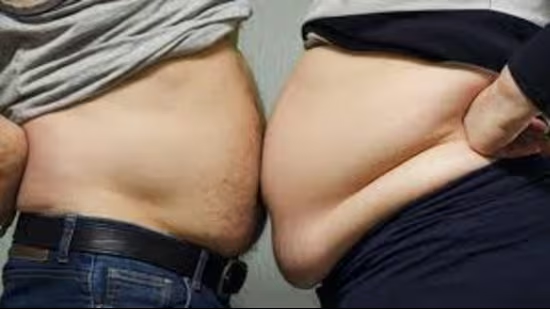
Chandigarh has emerged as the most obese in the country among men (48.5%), according to the National Family Health Survey (NFHS)-6 (2023-24) released on Friday. The women (41.9%) of the union territory are 11th on the chart. Punjab, with 37.5% obese men, ranked eighth in the country and second in north India while the state women (44.7%) ranked seventh nationwide but topped the chart in north India, the data showed. The survey paints a worrying picture of the state’s growing lifestyle and health crisis, with nearly every second woman in Punjab now classified as overweight or obese.The World Health Organization defines obesity as abnormal or excessive fat accumulation that presents a risk to health. A BMI of 25 or above is classified as overweight, while a BMI of 30 or above is considered obese.The study found that 44.7% of state women have a Body Mass Index (BMI) of 25 kg/m² or above, up from 40.8% recorded in NFHS-5 (2019-21). The prevalence is significantly higher in urban Punjab, where 47.7% of women are overweight or obese, compared to 42.8% in rural areas. Punjab’s figures are considerably higher than those of neighbouring states, such as Himachal Pradesh (38.2%) and Haryana (37.3%), and far exceed the national average of 30.7%.The World Health Organization (WHO) defines obesity as abnormal or excessive fat accumulation that presents a risk to health. A BMI of 25 or above is classified as overweight, while a BMI of 30 or above is considered obese.The survey also revealed a sharp rise in obesity among men. Punjab recorded an obesity prevalence of 37.5% among men, up from 32.3% in NFHS-5, marking an increase of 5.2 percentage points over the previous survey period. The state now ranks second in the country in male obesity, behind Chandigarh, which reported the highest prevalence at 48.5%.Punjab’s male obesity prevalence is more than 10 percentage points higher than the national average of 27.3%, indicating that excess weight has become a major public health concern across both genders in the state.The survey further highlights a growing burden of lifestyle-related diseases. More than one in five women in Punjab (21.3%) were found to have high blood sugar levels, compared to 14.7% in the previous survey. Health experts say the rising prevalence of obesity is closely linked to an increase in non-communicable diseases (NCDs) such as diabetes, hypertension and cardiovascular disorders.Dr RPS Sibia, director principal, Government Medical College and Rajindra Hospital, Patiala, attributed the trend to changing dietary habits and sedentary lifestyles. “People are increasingly shifting towards processed and ready-to-eat foods that are high in calories but low in nutritional value. The consumption of refined carbohydrates and saturated fats has increased significantly. There is also a growing culture of eating out, where food is often prepared using unhealthy oils,” he said.According to Sibia, physical inactivity, declining participation in outdoor activities and sports, poor sleep patterns and chronic stress are also contributing significantly to weight gain.Dr Ijyaa Singh, a public health expert associated with ReAct Asia Pacific, said it was due to growing consumption of processed and ultra-processed foods, influenced by westernised food habits. “Addressing this challenge requires strong societal action, including healthy lifestyle education in schools, mandatory nutritional labelling on packaged foods, and a shift towards traditional, nutritious diets based on millets and seasonal vegetables,” Singh added.
Chandigarh men most obese in country, Punjab ranks 8th, shows report
In north India, Punjab women at the top and men rank second, according to the National Family Health Survey (NFHS)-6 (2023-24); Rajindra Hospital’s director principal attributes the trend to changing dietary habits and sedentary lifestyles
548 words~2 min read