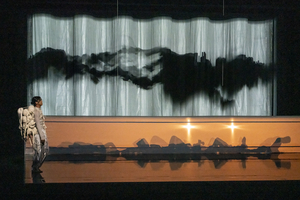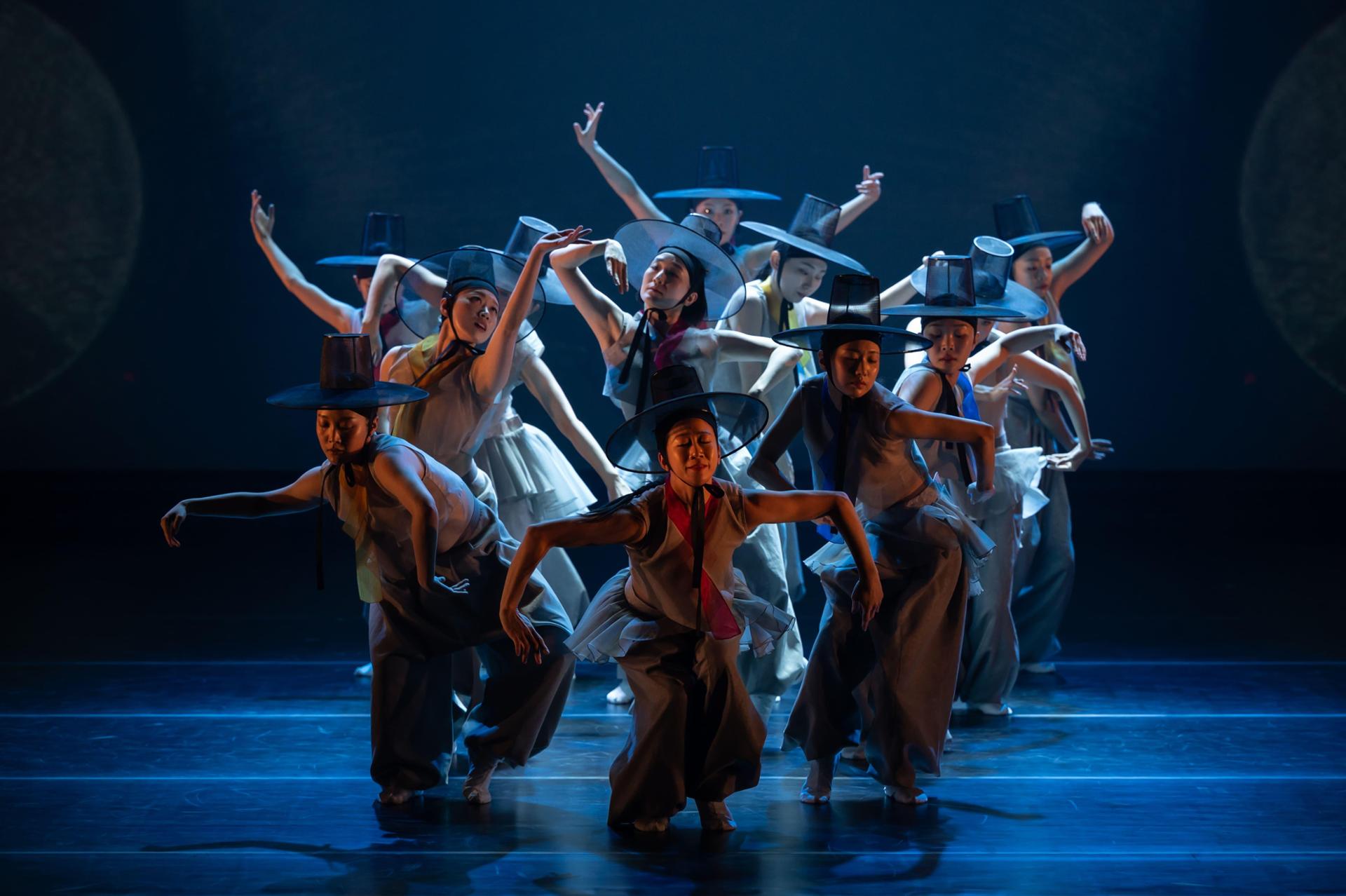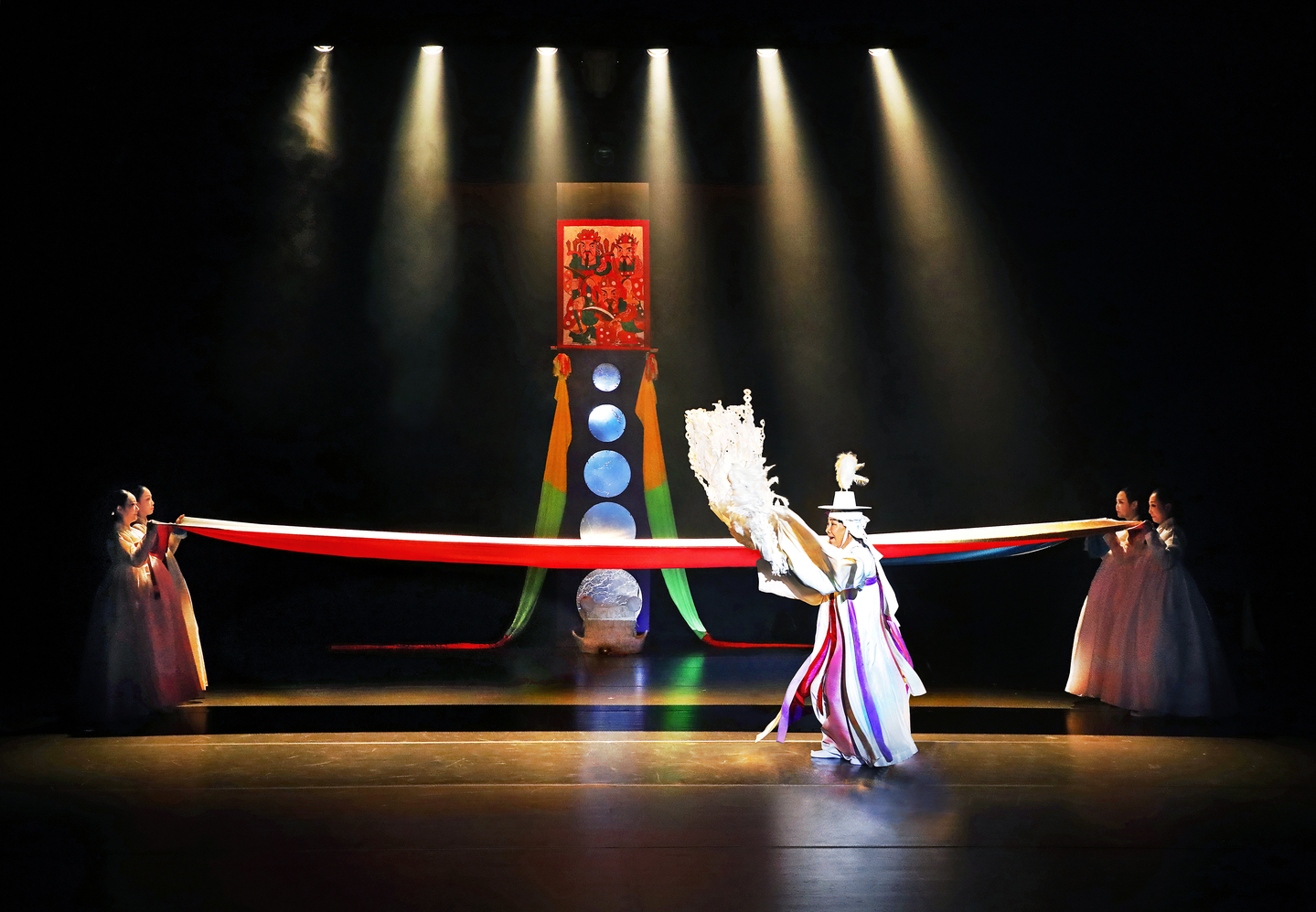
Choi Chang-deok’s “seungcheonmu,” or “dance of ascension,” is a traditional dance that artistically sublimates funeral songs from the Jeolla region and movements once performed by shamans in “ssitgimgut,” a ritual for cleansing the spirit of the dead. [PARK SANG-MOON]
[ZOOM KOREA]
The arc formed by the long sleeves of a
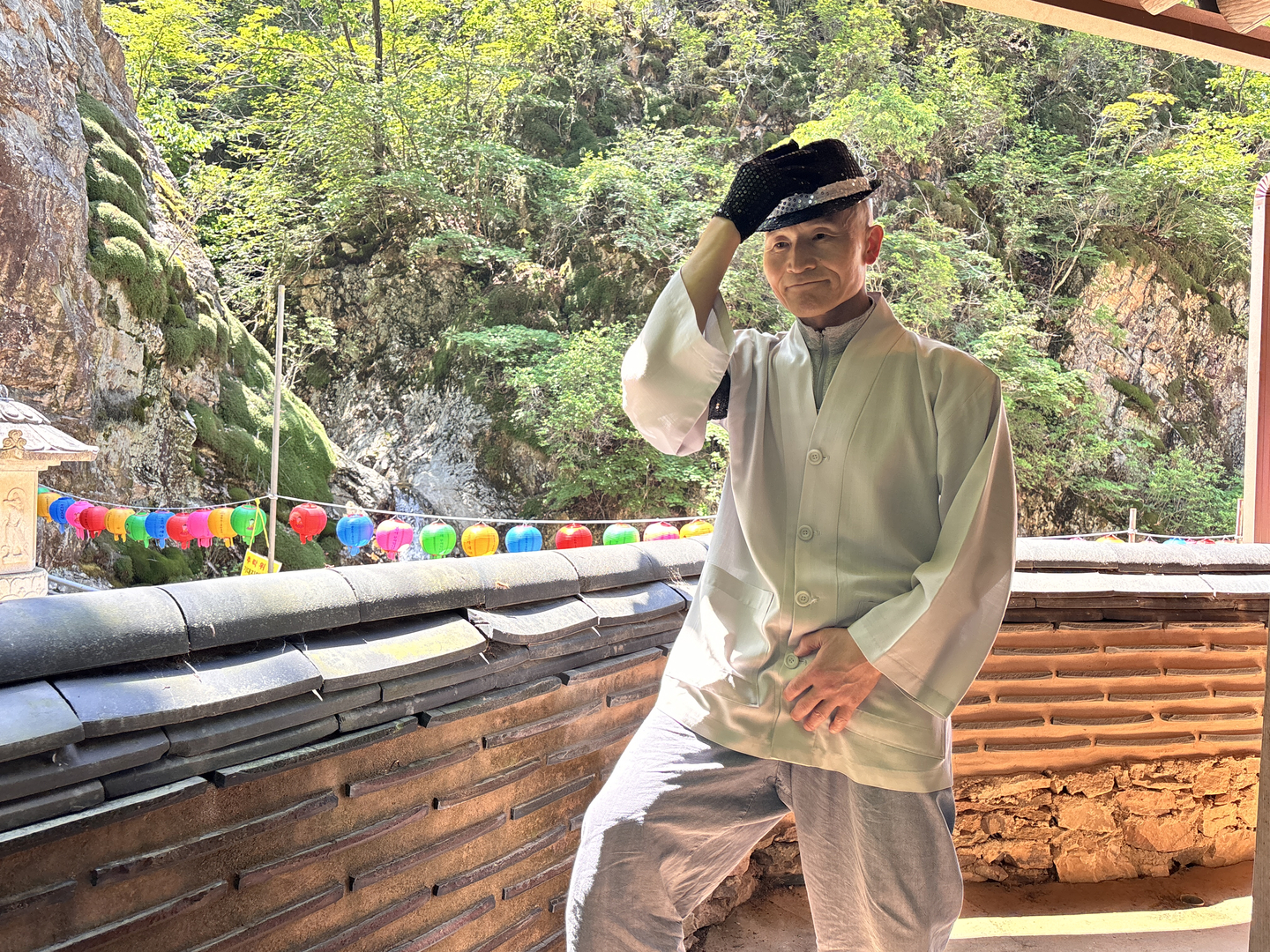
jangsam, a monk’s robe used in traditional Korean dances, cuts through the air in almost a devotional gesture. At the same time, the dancer clutches a white silk handkerchief and moves it as if it’s an extension of their own body. In traditional Korean dances, this tossing and gathering of the cloth often symbolizes holding something and letting it go, a cycle through which the inescapable sorrow in life constantly transforms.
Under Choi Chang-deok’s control, that grief never becomes overwhelming. Instead, through restrained breathing and movement, the veteran dancer brings the audience toward a calm that exists after sadness — and, at times, toward moments of ecstasy and climax.