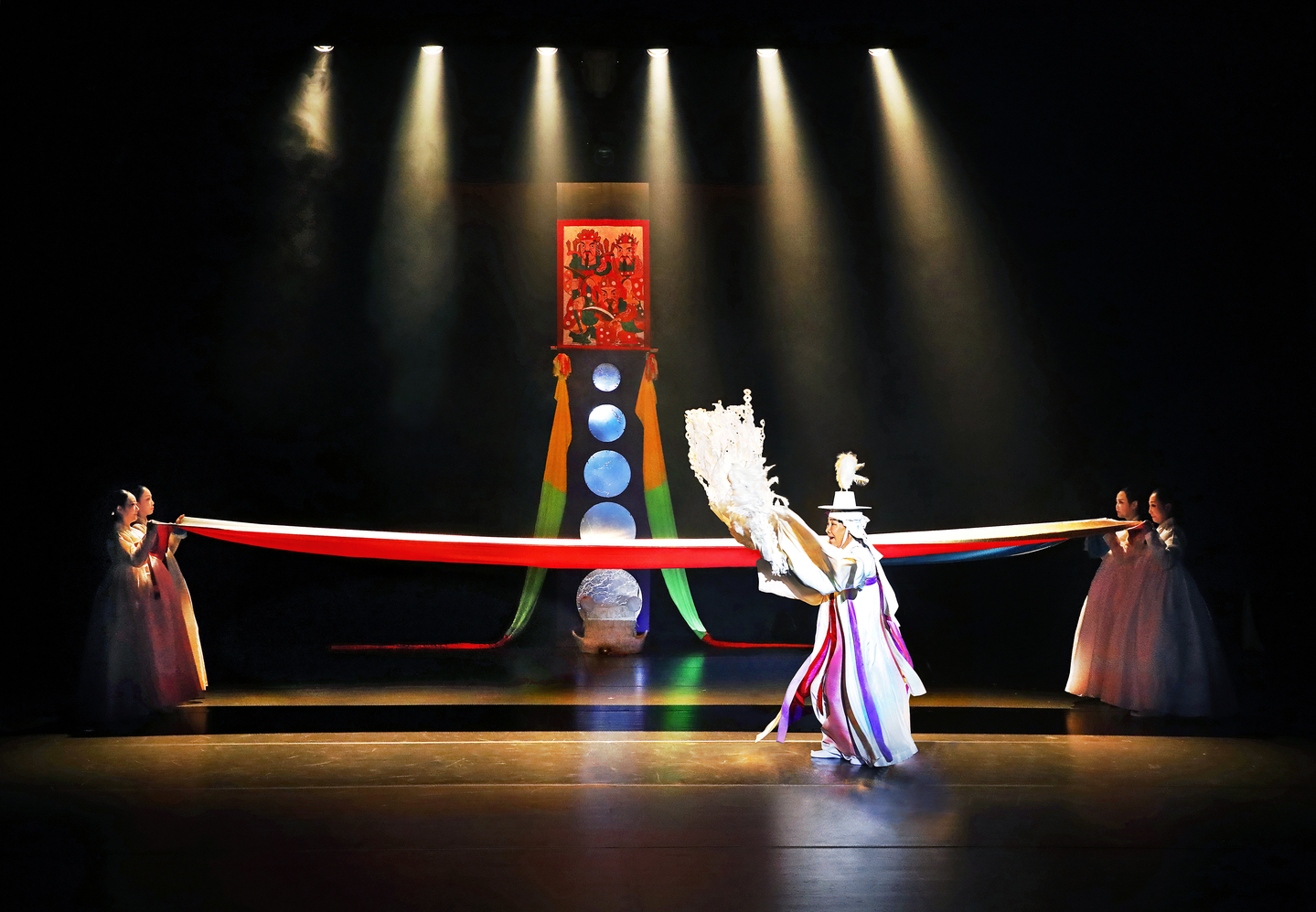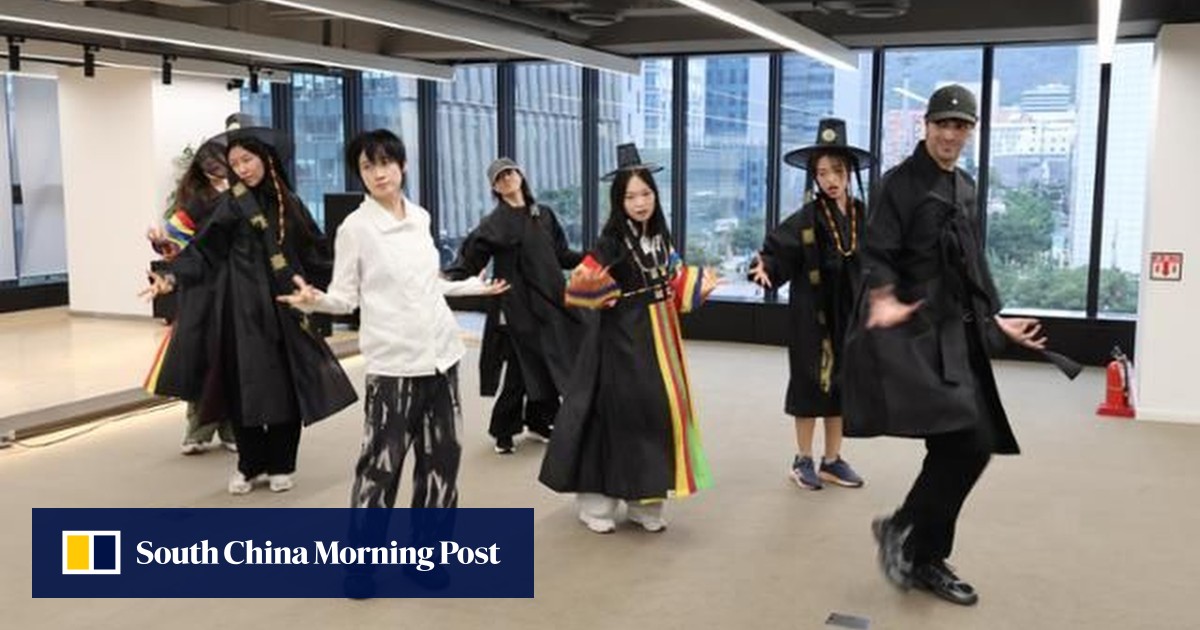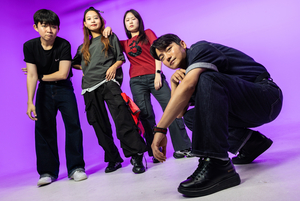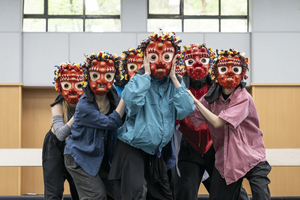
'Mask Off' heads to New York, Washington in October Dancers of the National Dance Company of Korea rehearse a scene from “Mask Off.” (National Dance Company of Korea) The dancers begin with the familiar rhythms and movements of Korean mask dance, swaying their shoulders in the playful spirit of traditional talchum. They bow low, toss their heads and stare into the distance. The eyes behind the masks are never seen, yet their invisible gaze feels all the more penetrating.Then the atmosphere shifts. As the pounding beat of the geomungo, a traditional Korean zither, blends with electronic dance music, the dancers reappear wearing LED masks. With each sharp turn of the head, a different digital face flashes across the mask.This is talchum reimagined for today.If the "street dancers" of the Joseon era were performing today, they might trade their drums for EDM and look something like the dancers in "Mask Off." The work imagines how one of Korea's oldest folk traditions might evolve in the language of contemporary dance.Premiered in 2024 as a 30-minute work, the production by the National Dance Company of Korea returns this week in an expanded 60-minute version with a richer narrative and heightened kinetic energy."Mask Off" will run Friday through Sunday at the National Theater of Korea's Daloreum Theater before traveling to New York and Washington in October. Dancers of the National Dance Company of Korea rehearse a scene from “Mask Off.” (National Dance Company of Korea) The Korean title, "Talbakkum," carries a double meaning. While the word refers to changing masks, it also evokes the idea of transformation.Lee Jae-hwa, the choreographer and a dancer with the National Dance Company of Korea, reimagines the rhythms, movements and spirit of traditional talchum in the language of contemporary movement."Mask dance is incredibly demanding and exhausting," Lee said during a recent group interview. You're constantly jumping, crouching down and getting back up again. You have to endure to keep dancing."For Lee, that idea of endurance became the starting point for the choreography."As dancers of Korean traditional dance, we were constantly told to 'be Korean,' but we were always questioning what that actually meant and how Korean dance should evolve for contemporary audiences," the 40-year-old said."For my generation, which has often been told simply to endure and accept pressure, that expectation itself came to feel so Korean. I wanted to begin with the body that endures and, from there, search for a new sense of hope for Korean dance."Rather than faithfully reproducing talchum, Lee twists and transforms its movement vocabulary.The flowing breath, grounded movement and suspended rhythms that define the traditional form are reimagined through contemporary choreography, drawing inspiration from regional mask dance traditions such as Gangnyeong Talchum, Bongsan Talchum and Goseong Ogwangdae.One of the production's striking updates is its LED masks. The 14 traditional masks from the 2024 version have been replaced, and the new versions can change expressions at the touch of a button. As the face shifts, so does the dancer's body, transforming into another character."During the process of choreographing the work, I visited the Andong Culture Center, where more than 100 traditional masks are on display," Lee said. "Each mask represents a different social class, and I realized that changing the mask completely changes the dancer's energy."The dancers say they experience that transformation firsthand.Lee Yo-eum, a company member, described herself as "extremely introverted" offstage but said wearing a mask changes her attitude."I somehow became more confident," she said. "I find myself portraying characters that are far more playful and daring than I would normally be."Fellow dancer Cho Seung-yeol said wearing a mask for more than half of the performance presents its own challenges."It does limit your vision and makes breathing more difficult," he said. "But depending on whether I'm wearing a Hahoe mask or a Gaksi mask, I feel my body naturally slipping into that character."Composer and music director Park Da-wool drives the performance with a five-piece live band, layering electronic music and contemporary sounds over traditional rhythms — a fitting soundtrack for a work that bridges centuries through movement. Dancers of the National Dance Company of Korea rehearse a scene from “Mask Off.” (National Dance Company of Korea) Dancers of the National Dance Company of Korea rehearse a scene from “Mask Off.” (National Dance Company of Korea) Dancers of the National Dance Company of Korea rehearse a scene from “Mask Off.” (National Dance Company of Korea) Dancers of the National Dance Company of Korea rehearse a scene from “Mask Off.” (National Dance Company of Korea)
Joseon-era street dance gets a hip makeover
The dancers begin with the familiar rhythms and movements of Korean mask dance, swaying their shoulders in the playful spirit of traditional talchum. They bow l
TL;DRAI
National Dance Company of Korea expanded "Mask Off" to 60 minutes with interactive LED masks blending traditional geomungo and EDM; touring New York and Washington in October. Real-time wearables demonstrate personalization architecture for experiential tech.
751 words~3 min read