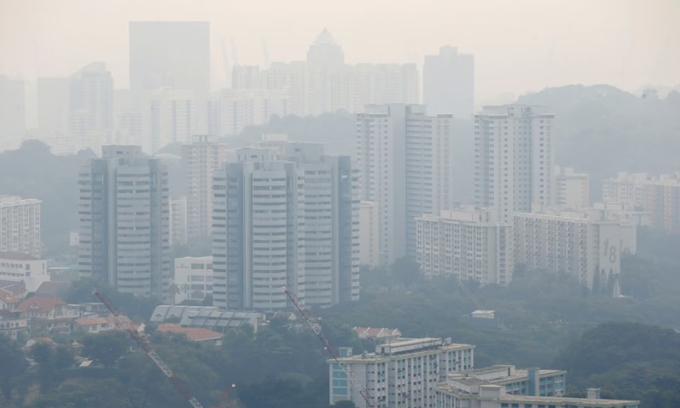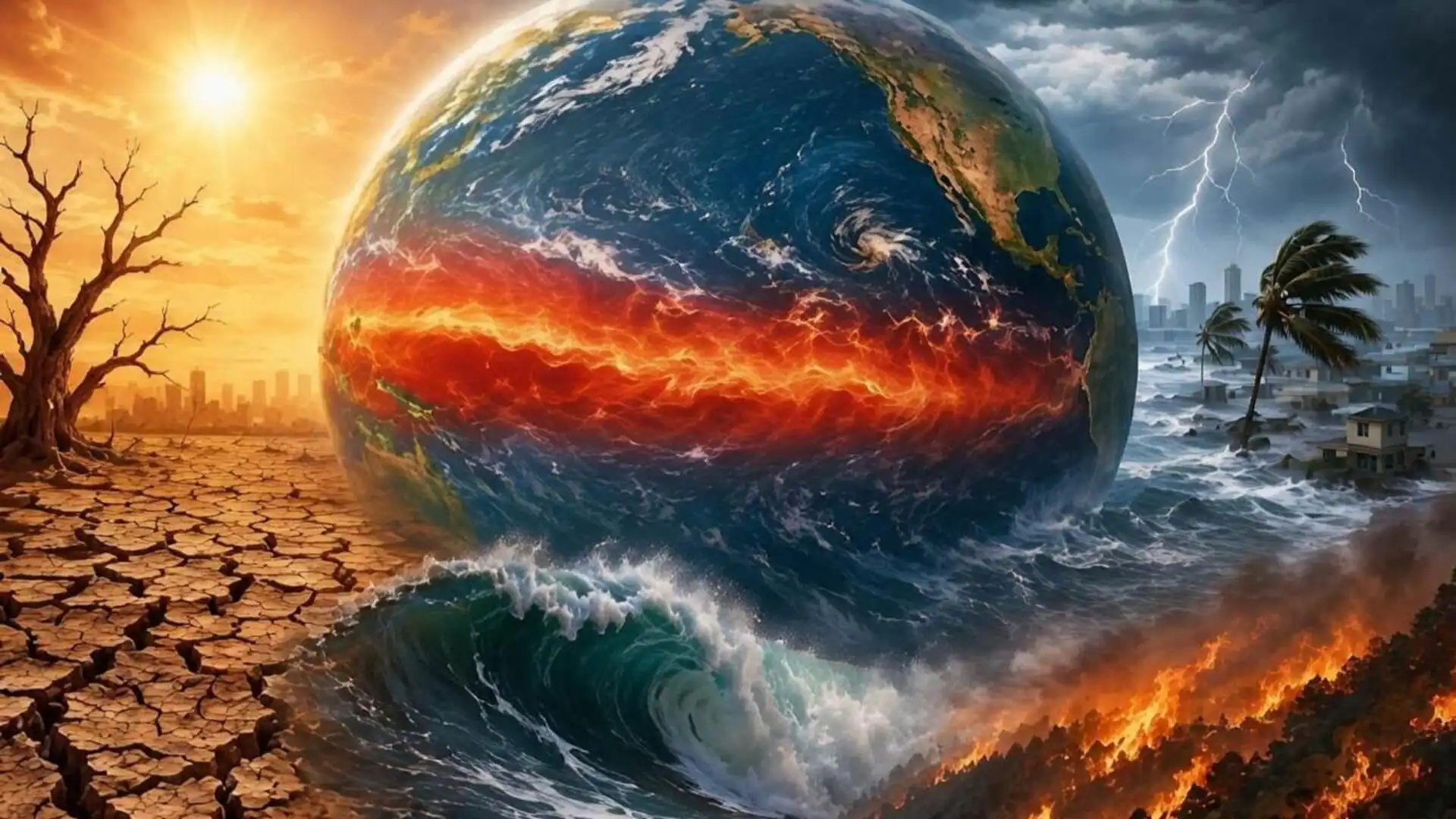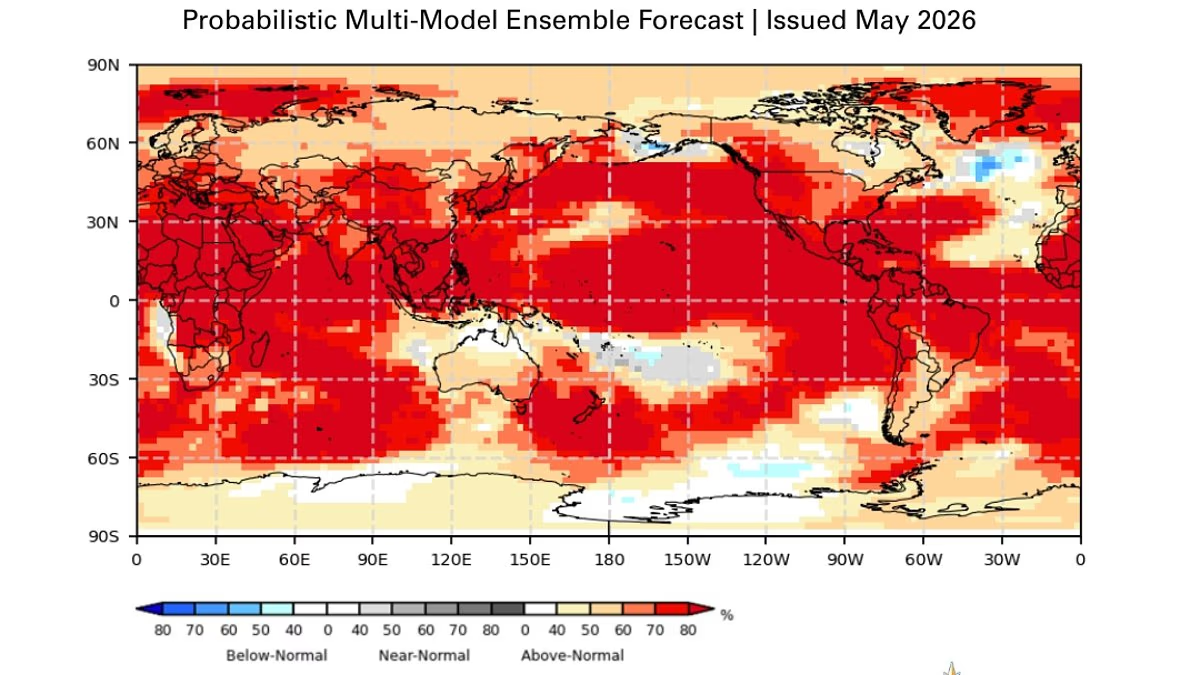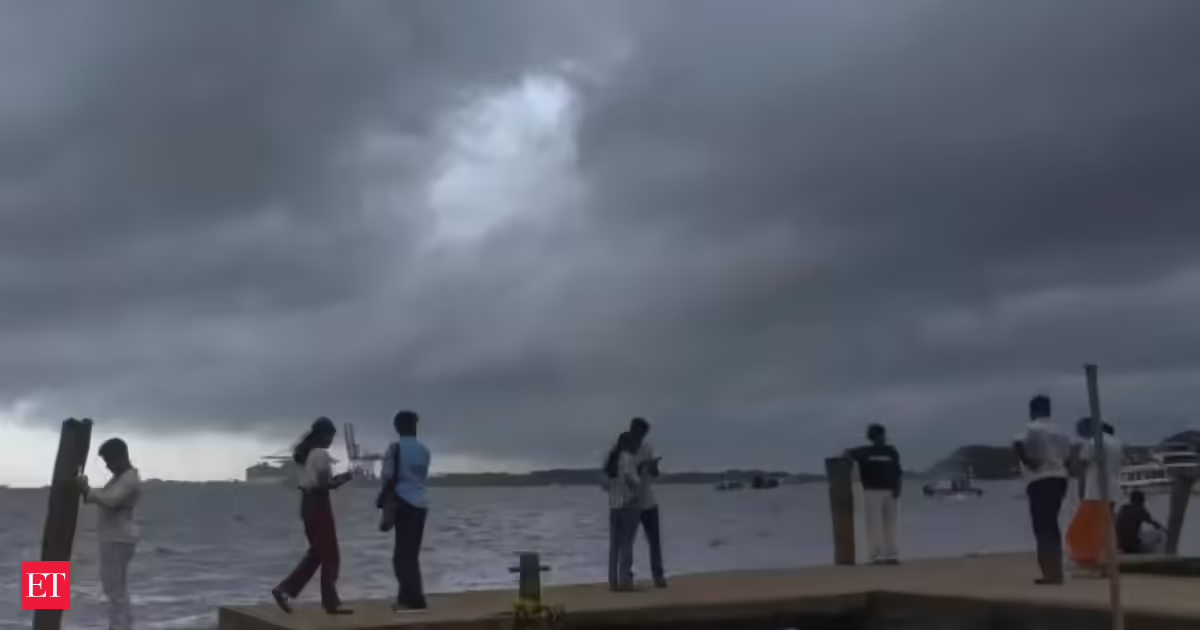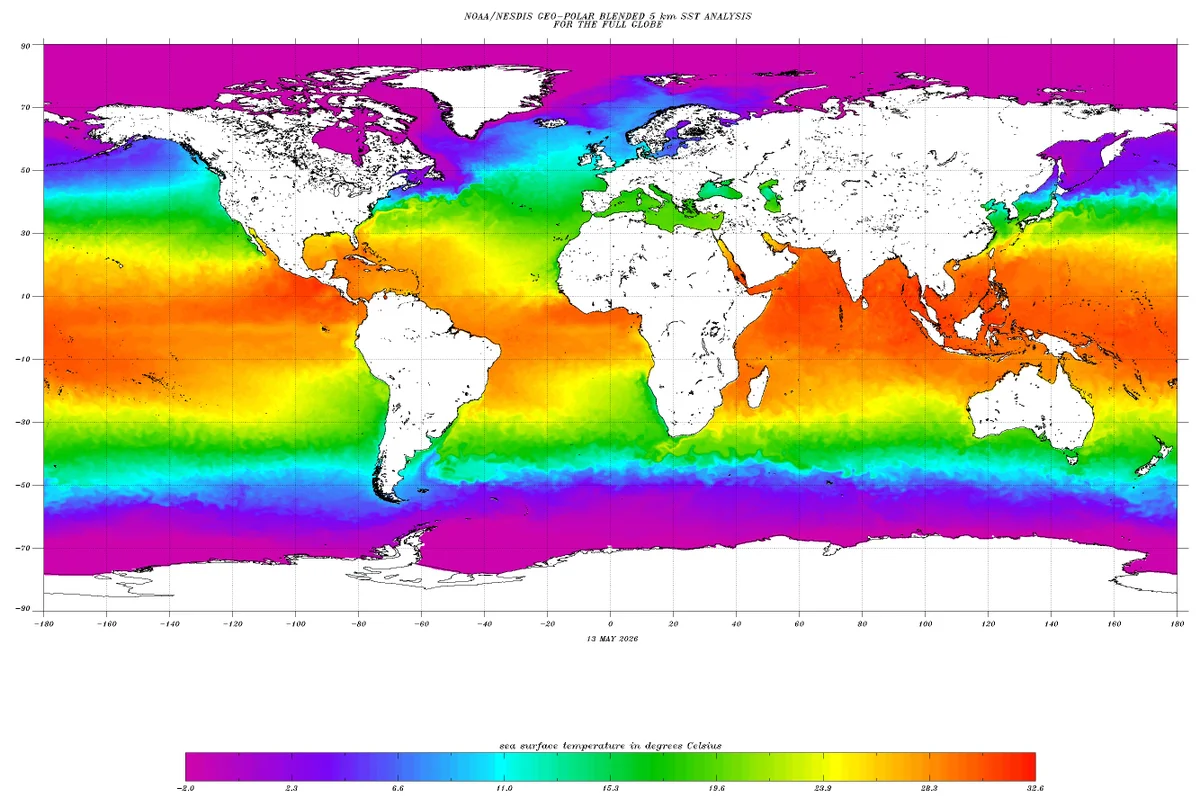
SINGAPORE: The Meteorological Service Singapore (MSS) on May 29 said that El Nino conditions are likely to develop between June and July.There is a more than 80 per cent chance of an El Nino event occurring in 2026, supported by key indicators such as warmer sub-surface ocean temperatures in the eastern tropical Pacific, MSS said in a media advisory.The most recent El Nino event occurred between 2023 and early 2024, before conditions shifted to La Nina, which contributed to wetter weather in the region through much of 2024 and into early 2026.The last strong El Nino event occurred between 2015 and 2016.
The Met Service also predicted that a positive Indian Ocean Dipole (IOD) event will develop between July and August.So what exactly are El Nino, La Nina and the IOD? And how do these climate phenomena affect Singapore and the surrounding region?CNA takes a closer look.What are El Nino and La Nina?El Nino and La Nina are opposite phases of a naturally occurring climate pattern in the Pacific Ocean called the El Nino-Southern Oscillation (ENSO). It can affect weather worldwide."ENSO has two opposite extreme phases: the warm phase, known as El Nino, and the cold phase, known as La Nina. Between these extremes lies a third state called ENSO-neutral," the World Meteorological Organization (WMO) said on its website."El Nino can typically last up to 18 months and La Nina up to three years."El Nino events typically occur every three to five years, disrupting global weather patterns, and often bringing hotter and drier conditions to Southeast Asia.The Spanish term El Nino was first used by fishermen along the coasts of Ecuador and Peru to refer to a warm ocean current that typically appears around December and lasts for several months, the United Kingdom's Royal Meteorological Society said on its website.El Nino can be translated as "little boy", and La Nina, on the other hand, means "little girl".What causes the different ENSO states?"During normal conditions in the Pacific Ocean, trade winds blow west along the equator, taking warm water from South America towards Asia," the National Ocean Service (NOS) of the United States National Oceanic and Atmospheric Administration (NOAA) said on its website."To replace that warm water, cold water rises from the depths – a process called upwelling."El Nino and La Nina … break these normal conditions."During an El Nino event, trade winds weaken, and warm water is pushed back east towards the west coast of the Americas, NOS said.When a La Nina event occurs, the opposite is true: stronger trade winds push more warm water towards Asia.During an El Nino event, the central and eastern tropical Pacific receive more rain while the western tropical Pacific sees less.Correspondingly, the central and eastern tropical Pacific receive less rain while the western tropical Pacific receives more during a La Nina event.During a neutral state, temperatures, winds, convection and rainfall across the tropical Pacific are near their long-term averages. This means that water is warmer in the western tropical Pacific and cooler in the eastern tropical Pacific, with more rain in the former compared to the latter.What is the Indian Ocean Dipole?The IOD is similar to ENSO, but events occur in the equatorial Indian Ocean and have a shorter duration.The IOD varies between three phases – positive, negative and neutral.A positive IOD event, which suppresses cloud formation over certain parts of the tropical Indian Ocean, typically brings drier and warmer conditions to many parts of southern Southeast Asia."Singapore and our surrounding regions tend to experience drier conditions as sea surface temperatures in the eastern Indian Ocean are cooler, resulting in less cloud formation," said MSS, noting that Singapore's driest year on record occurred in 1997 when both El Nino and positive IOD events occurred.When is an El Nino event declared?Singapore monitors ENSO conditions using the Nino3.4 index, which averages sea surface temperature anomalies in the central-eastern equatorial Pacific Ocean.According to the ASEAN Specialised Meteorological Centre, the threshold for an El Nino event in the Nino3.4 region is a figure of more than 0.65°C above normal, according to the index. The threshold for a La Nina event is a figure of more than 0.65°C below normal.What is the impact of El Nino on the weather in Singapore?During an El Nino event, Singapore and the surrounding region can expect hotter and drier weather."El Nino events tend to have the greatest influence on Singapore's rainfall during the southwest monsoon season from June to September, increasing the chance of dry conditions," the Met Service said."During the last strong El Nino event in 2015/2016, Singapore's total rainfall from June to September 2015 was about 35 per cent below the long-term average."Temperatures will also rise during such an event."El Nino events also bring warmer temperatures to Singapore. Impact to temperatures is the highest during the period the El Nino event weakens, which is typically in March to May the year following the start of the event," the Met Service said."During the decay of the last strong El Nino event in 2016, average temperatures in March (to) May were 29.2°C, or 1°C above the long-term average for that period."This made it Singapore's second-warmest March-to-May period on record, with 2016 remaining one of Singapore's hottest years on record, tied with 2019 and 2024, MSS added.It is, however, difficult to predict exactly how hot and dry the weather could get in Singapore, said Associate Professor Xianfeng Wang of the Asian School of the Environment and Earth Observatory of Singapore at Nanyang Technological University."There are two factors that limit our predictability. One, we don't know yet how strong the coming El Nino can be. And two, we also don't know how the El Nino event may interact with other weather phenomena," he told CNA."For example, the development of a positive Indian Ocean Dipole event may amplify the hot and dry conditions. On the other hand, the northeast monsoon later this year may relieve the harsh conditions a bit."Assoc Prof Wang said that climate models from international climate centres are currently showing a wide spread in predictions of how intense an El Nino event this year could be. However, "most of them do suggest it could be stronger than the 2023/2024 El Nino event"."We will have a better idea in the next couple of months, when more field observations can be available to calibrate climate model projections," he added.Should Singapore expect transboundary haze?The southwest monsoon period between June and September is typically the dry season for Singapore and the surrounding region.An El Nino event and a positive IOD event could raise the intensity of this dry season and extend it into October, increasing the risk that haze will impact Singapore."As drier and warmer conditions are conducive to the development of peatland and vegetation fires, the hotspot and smoke haze situation in the surrounding region could escalate from June 2026, particularly in fire-prone areas," the Met Service said."If fires develop in close proximity and prevailing southeasterly to southwesterly winds blow smoke haze from the fires towards Singapore, there is a risk of transboundary haze affecting Singapore."With an expected El Nino and potential positive IOD, the dry season this year could be more intense and prolonged compared to recent years, and extend into October."MSS also said that the 28 government agencies under the Haze Task Force, chaired by the National Environment Agency (NEA), are prepared to activate response plans if air quality deteriorates.Members of the public are advised to monitor the 1-hour PM2.5 readings for real-time air quality for planning immediate outdoor activities, and refer to the 24-hour Pollutant Standards Index (PSI) and accompanying health advisories for planning next-day activities.They are also encouraged to check that air purifiers are in working condition and to follow official advisories via NEA’s website, the myENV app and social media channels.Is climate change affecting El Nino?According to WMO, there is no evidence that climate change increases the frequency or intensity of El Nino events.However, it can amplify the impacts associated with El Nino, "because a warmer ocean and atmosphere increase the availability of energy and moisture for extreme weather events such as heatwaves and heavy rainfall".