The first time he saw the play “Peace” by Aristophanes was at Athens’ Herod Atticus Theater in the mid-1980s, in a production directed by the legendary Spyros Evangelatos, inspired by the atmosphere of cabarets.
The lead character of Trygaeus was played by Giorgos Michalakopoulos and the music was by Thanos Mikroutsikos, another legend. “I was studying at the Pedagogical Academy of Rhodes at the time and when the school wanted to put on a play, I said, ‘I saw ‘Peace’; let’s do that!’ A kid of 17 with no sense of danger. I called Mikroutsikos to ask him for the music. ‘You know, it’s written for a specific concept,’ he answered, ever so politely.”
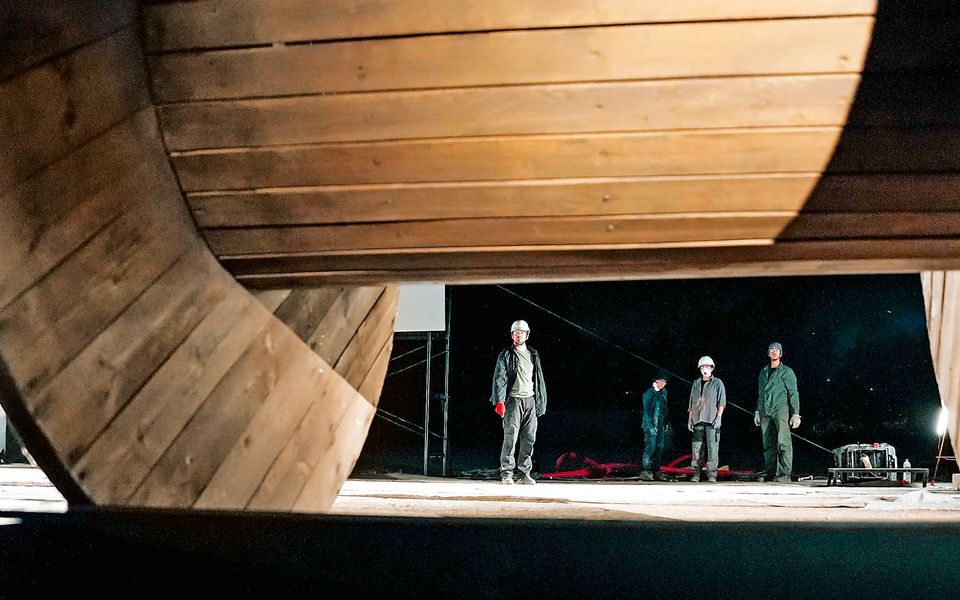
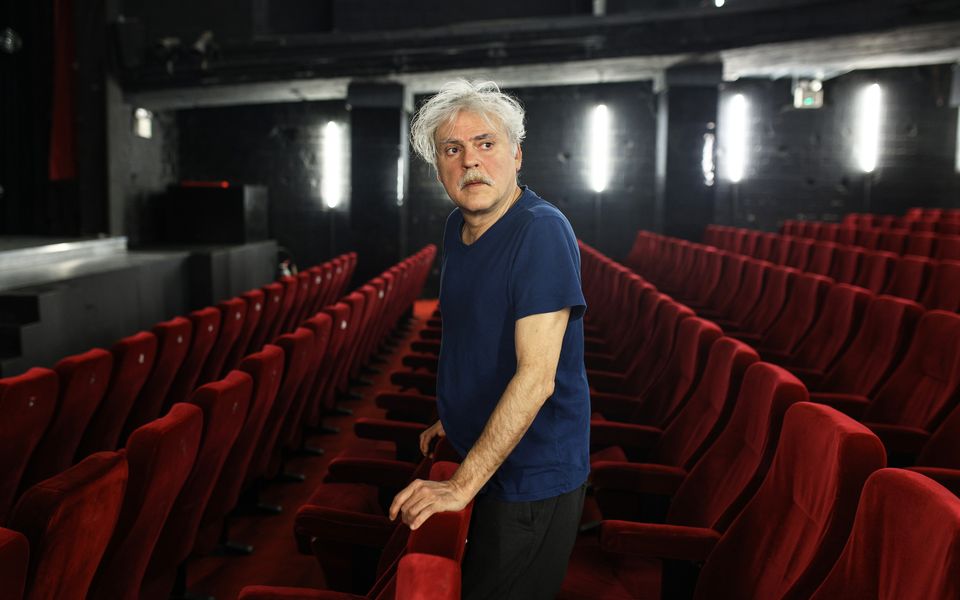
What kind of concept is stage director Nikos Karathanos now working on, 40 years after that courageous overture, as he gets ready to stage Aristophanes’ “Peace” at the Epidaurus Ancient Theater, as part of the annual summer Athens-Epidaurus Festival?
Written in 421 BC, just before the ratification of the Peace of Nicias treaty suspending hostilities between Athens and Sparta, the ancient Athenian comedy captures the people’s fatigue and frustration with the Peloponnesian War, which had been dragging on for a decade. Its hero, Trygaeus, is an ordinary Athenian man exhausted by the war, who tries to bring peace by liberating Irene (Peace in Greek), who has been trapped and buried in a pit by the gods.