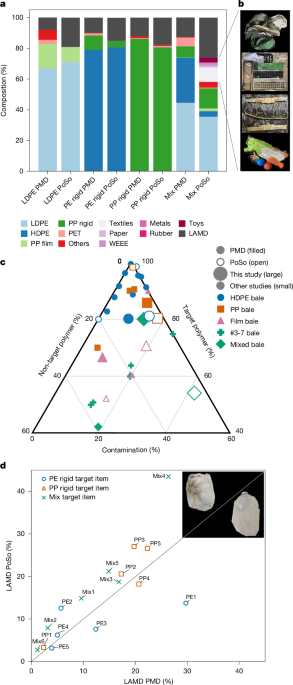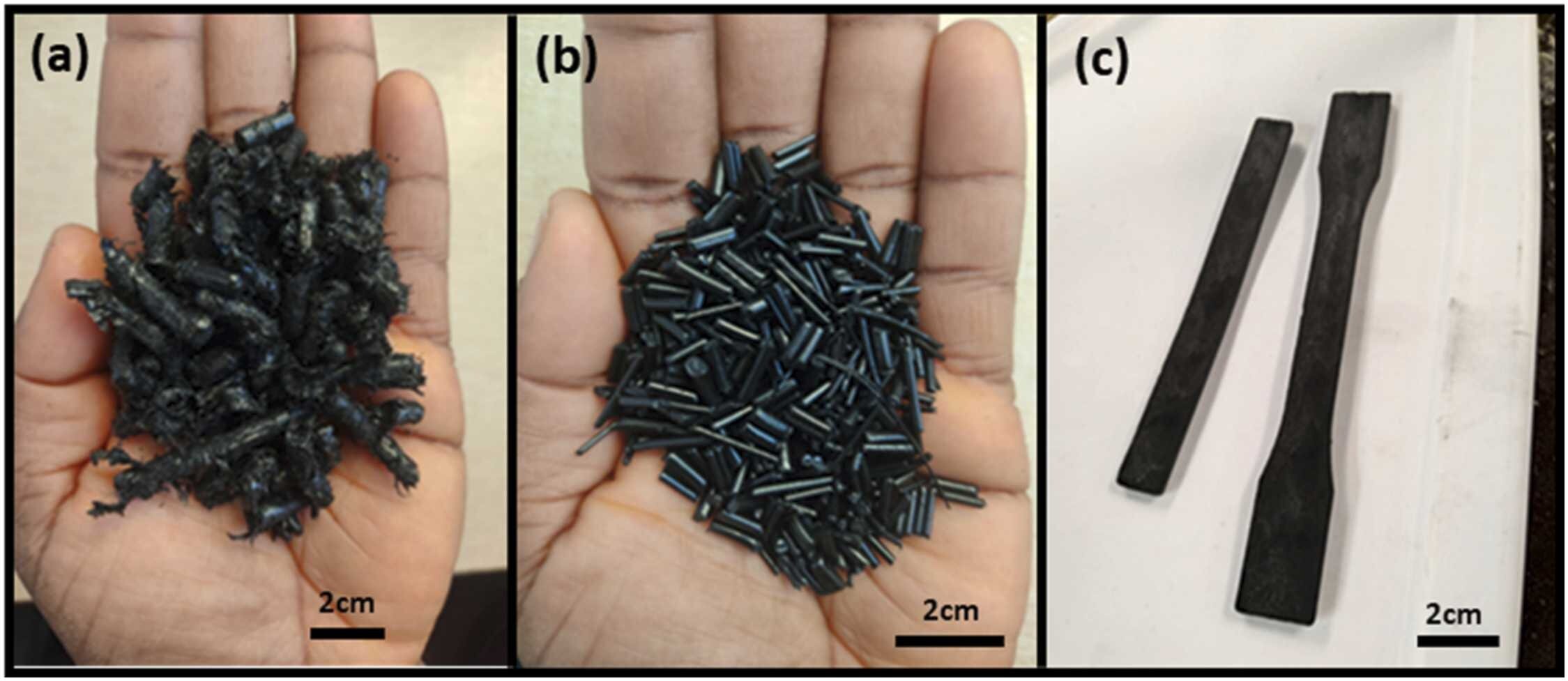
Images of the a). agglomerated mulch material run through the ring pellet mill, b). melt-blended extruded pellets to be used for Injection Molding, and c). Injection Molded tensile and flexural specimens for mechanical testing. Credit: Cleaner Waste Systems (2026). DOI: 10.1016/j.clwas.2026.100513
Nearly a billion pounds of plastic film mulch is used in American agriculture each year, and most of it is dumped into landfills. New research from Washington State University shows that recycling could be a feasible alternative, reducing reliance on fossil fuels and keeping plastics out of the waste stream.
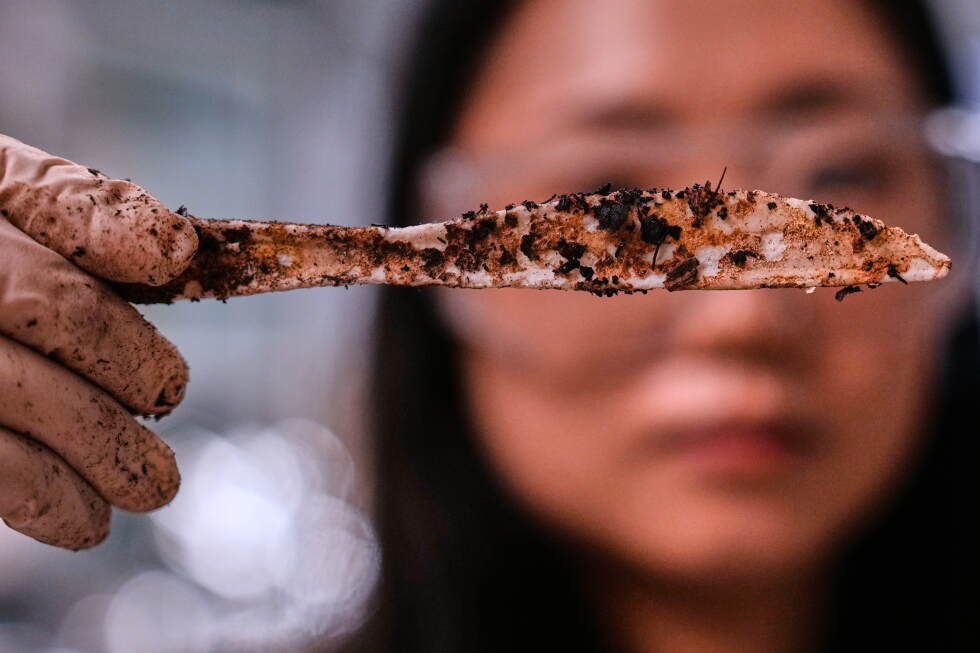
The researchers recycled plastic films from strawberry farms in four states—Washington, California, Nebraska and Florida—and found that the soil contamination and moisture varied greatly among regions, as did the structural characteristics of the recycled materials. However, so long as the films were properly cleaned in advance, they all produced "mechanically sound" recycled materials.
"Every site has different soil and the different soils bond to the plastic a little bit differently, creating a different contaminant load," said Karl Englund, a research professor of civil and environmental engineering in the WSU Composite Materials and Engineering Center, as well as the corresponding author of the new paper.