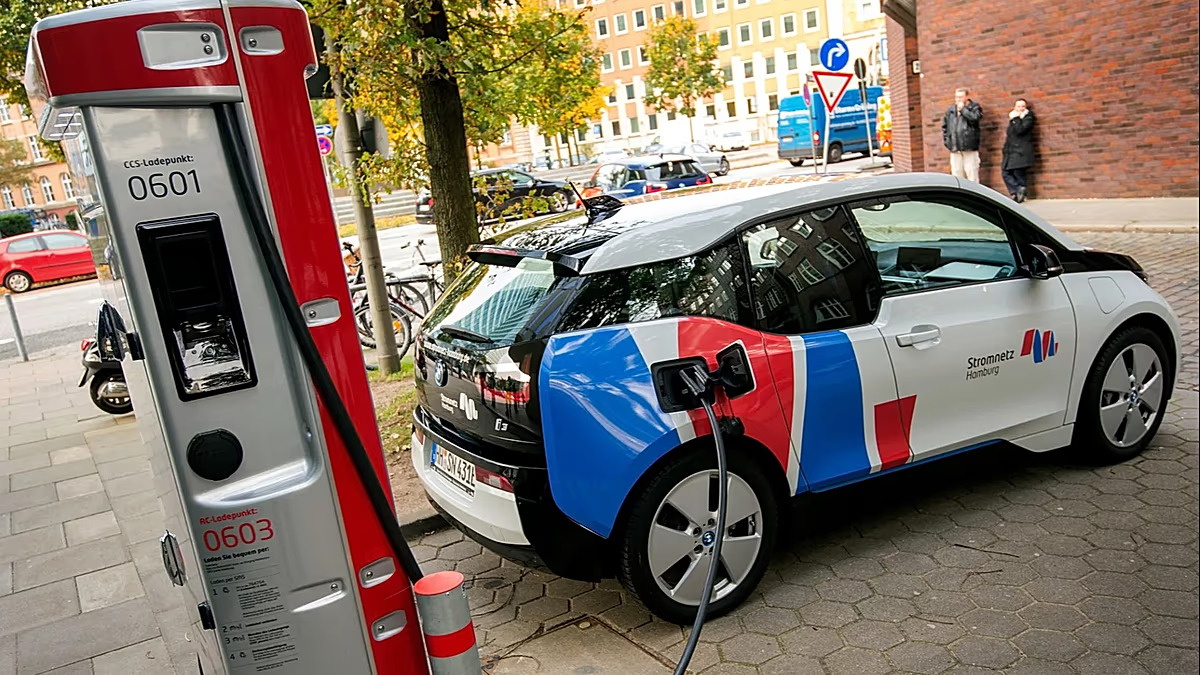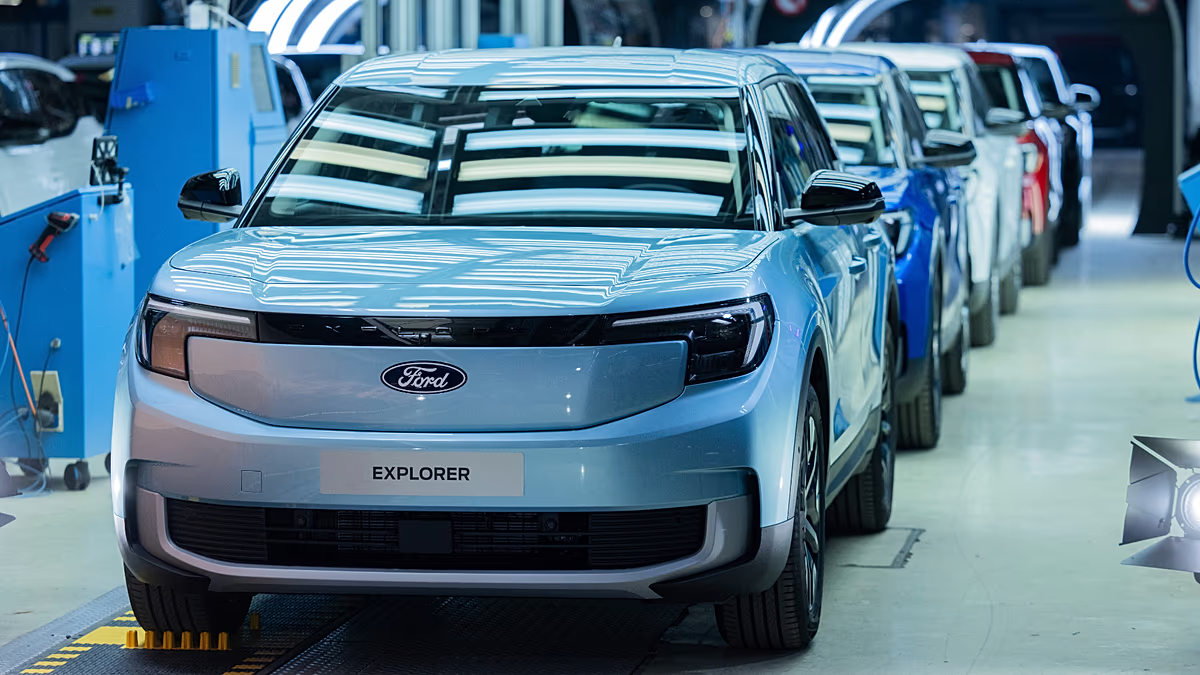
European Union leaders are increasingly championing electrification as the answer to some of the bloc's biggest challenges: high energy prices, industrial competitiveness and the transition away from fossil fuels. But achieving that goal will require massive investment in ageing power grids and energy storage systems, which many policymakers warn are not yet fit for purpose.
The urgency has only intensified following the US-led conflict with Iran, which sent energy prices soaring and exposed Europe's continued vulnerability to external shocks. The spike comes as the bloc is still grappling with the fallout from Russia's invasion of Ukraine, which triggered an energy crisis from which many European economies have yet to fully recover.
Even before tensions escalated in the Middle East, European industries had been urging Brussels to take stronger action on soaring electricity prices, which remain roughly twice as high as in the United States and China.
Business groups have warned that persistently high energy costs are undermining competitiveness, curbing investment and, in some cases, threatening factory closures.
While electrification is often presented as part of the EU's competitiveness agenda, it also sits at the heart of the bloc's climate strategy. Replacing fossil fuels with electricity can cut emissions, improve energy efficiency, reduce dependence on imported energy and help integrate growing volumes of renewable power into the economy.