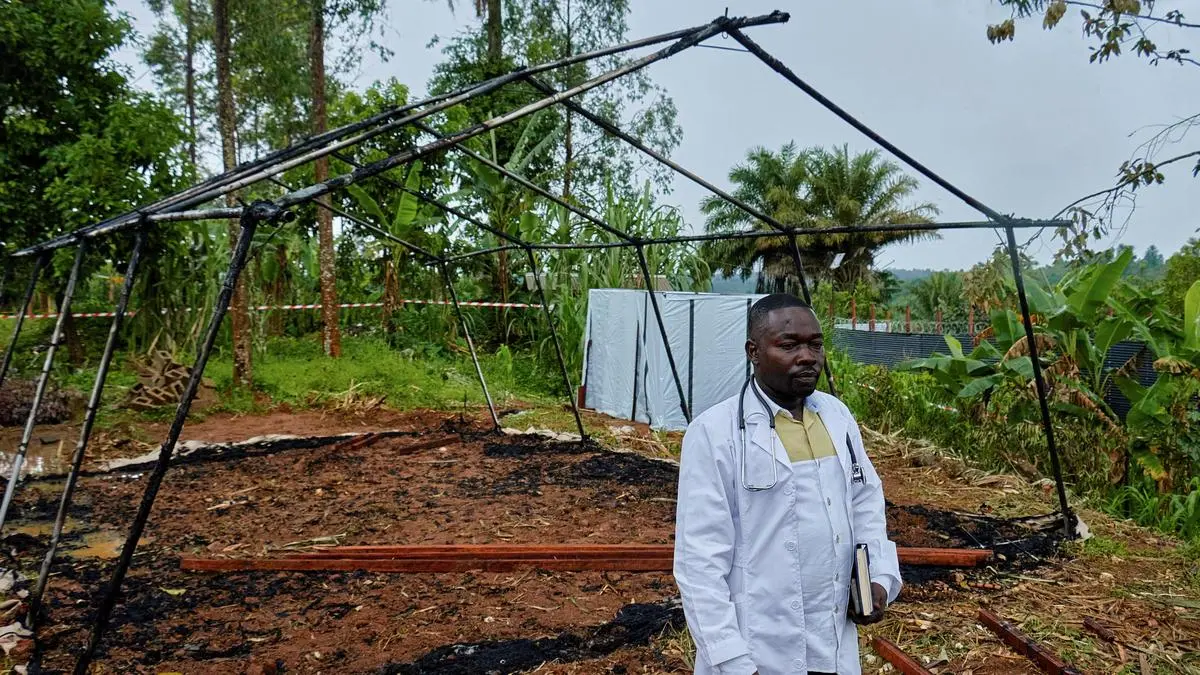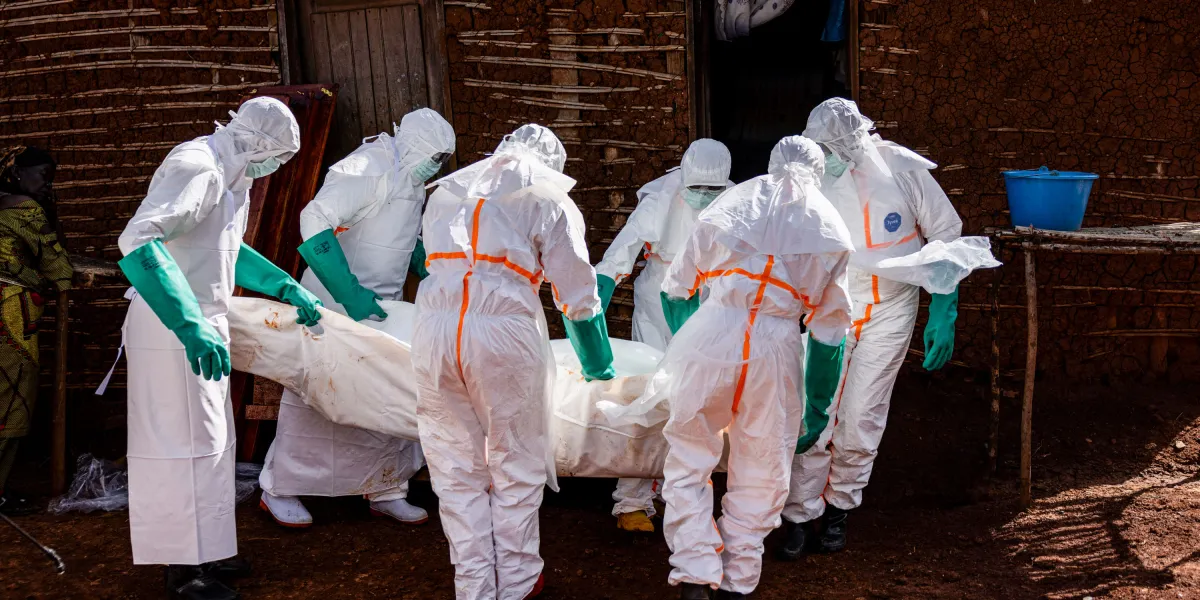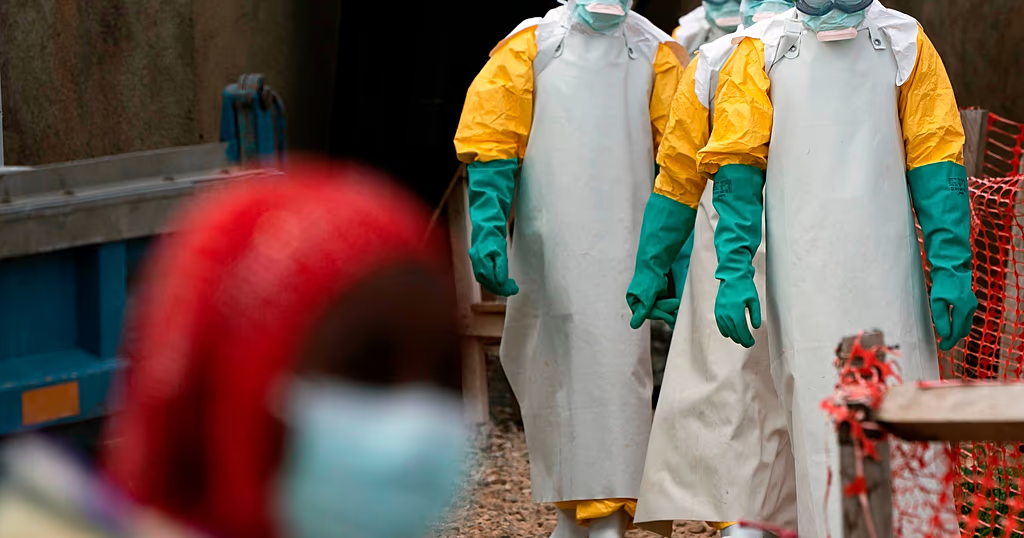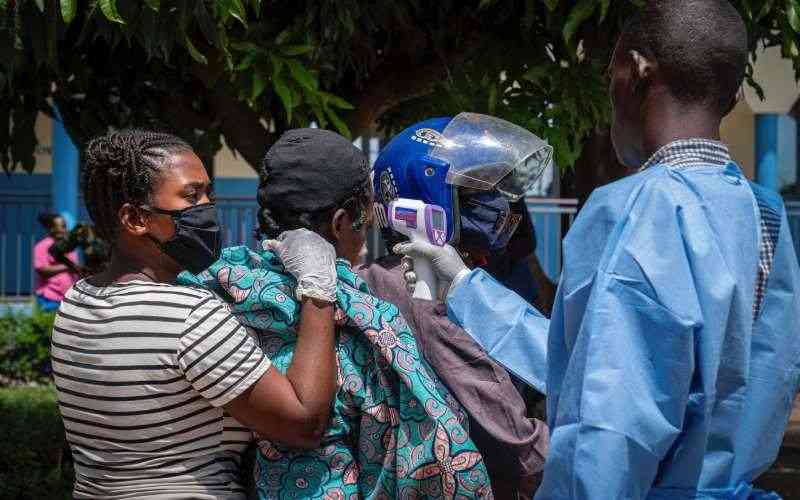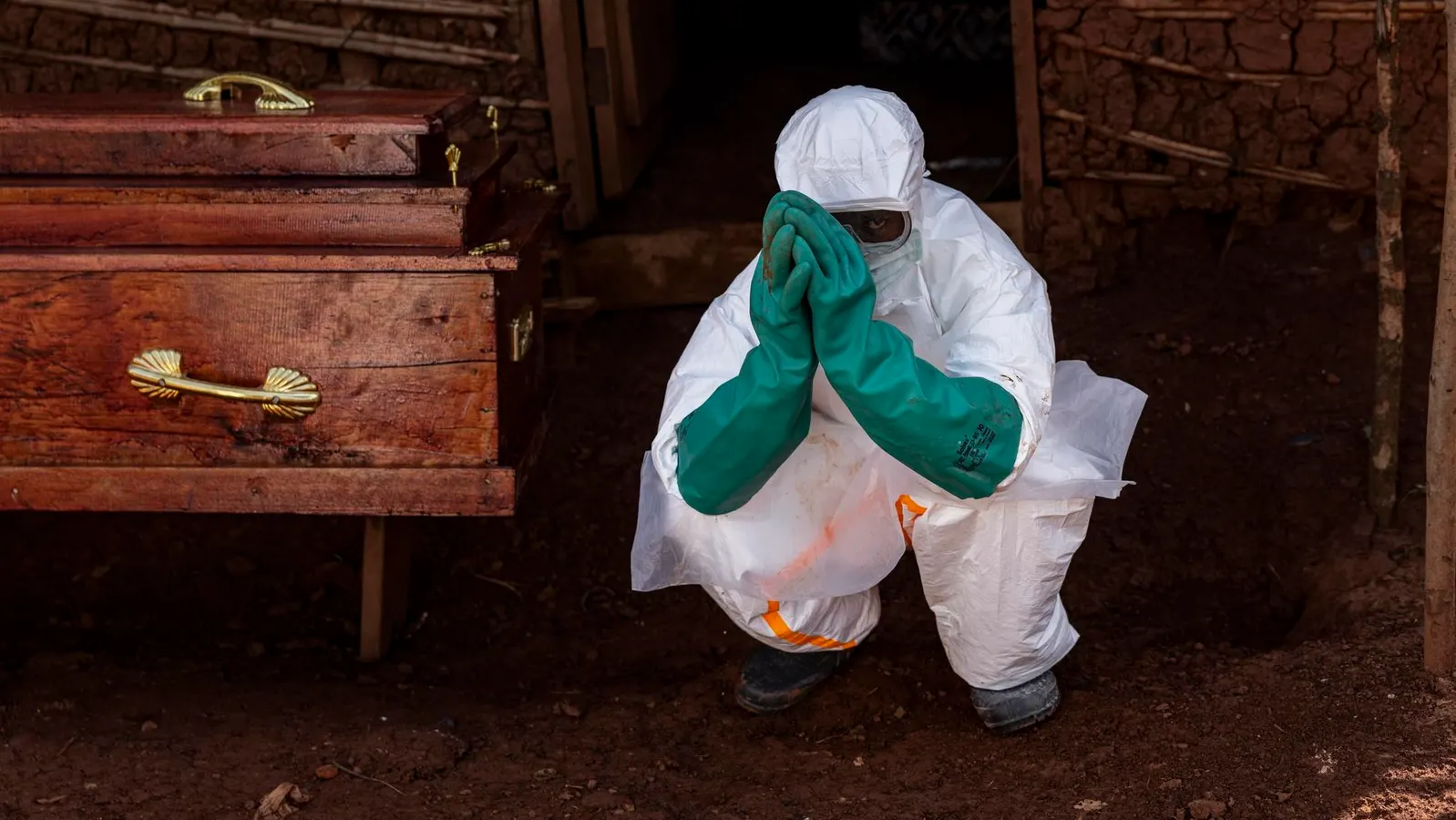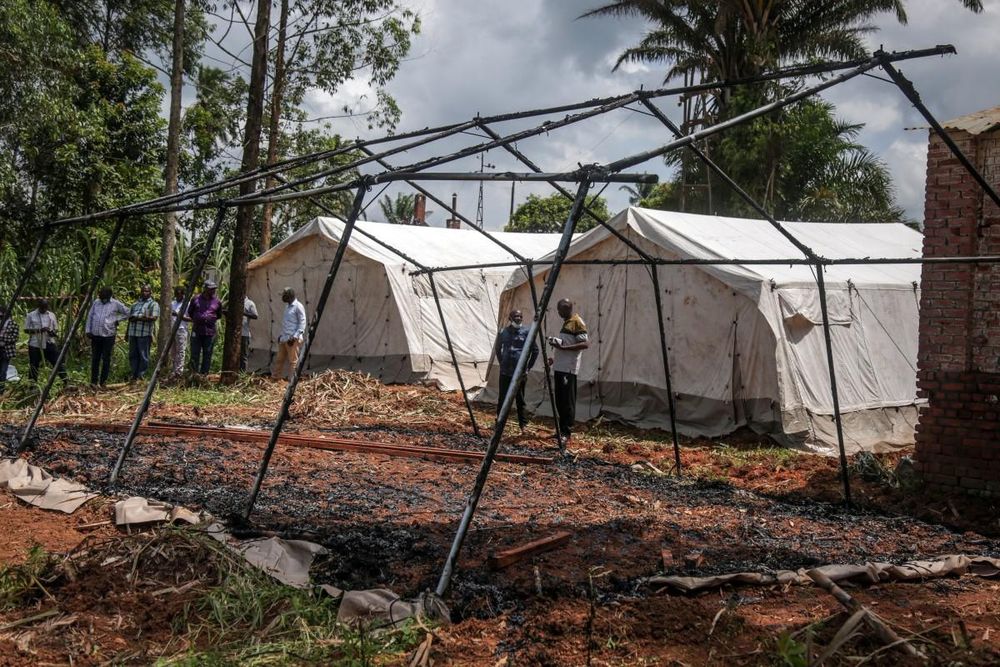
Residents gather to inspect the remains of a burnt medical tent at the General Referral Hospital of Mongbwalu in Mongbwalu, on May 23. The international response in eastern DRC will succeed or fail on its ability to implement emergency public health measures within the region’s long-standing social, political, and security quagmire, says the writer.
Dirk Druet
On May 15, 2026, the Democratic Republic of the Congo (DRC) confirmed its 17th recorded outbreak of Ebola in Ituri province.
Since then, the number of cases has risen to over 900, and the virus has crossed into Uganda and reached the provinces of North and South Kivu, now controlled by the Rwanda-backed M23. Initial reports suggested that the outbreak may have been circulating for weeks, and local health authorities were underprepared to swiftly mount a containment strategy.
As international concern grows that the deadly virus might be out of control, the mounting public health response is facing an even more challenging environment than during the last major outbreak in 2018.