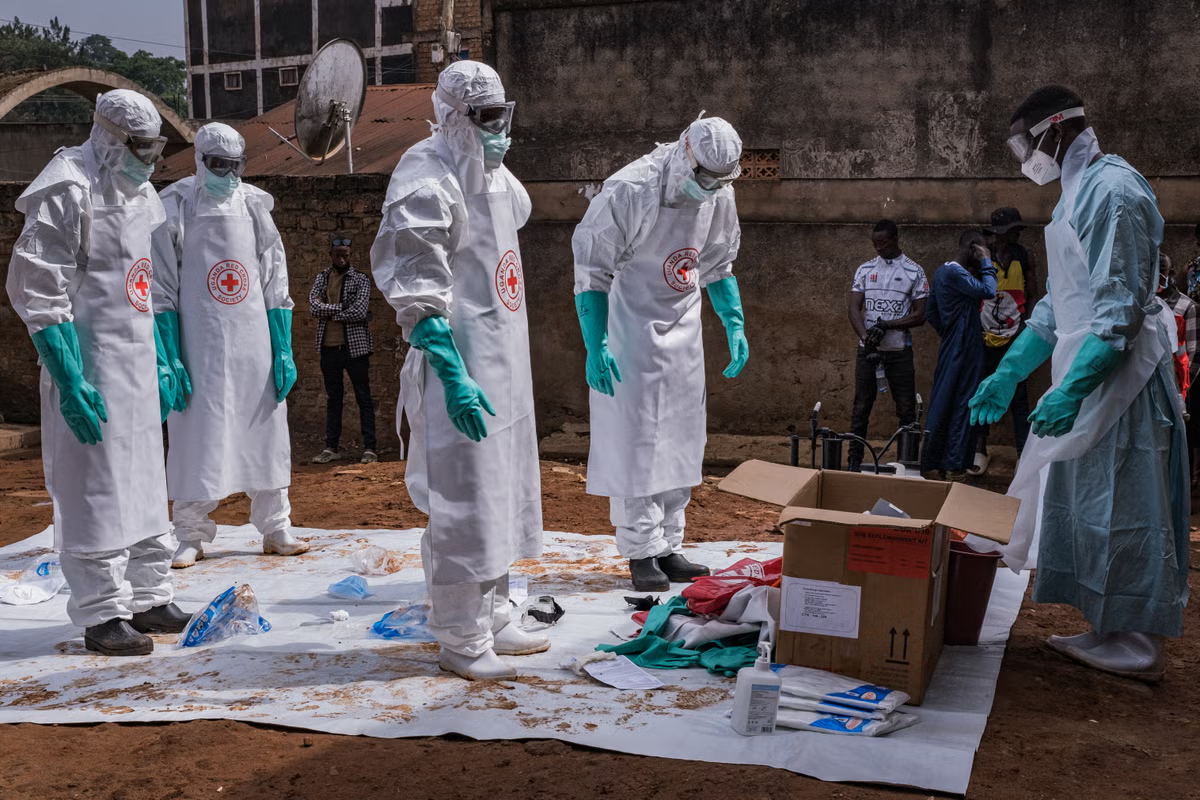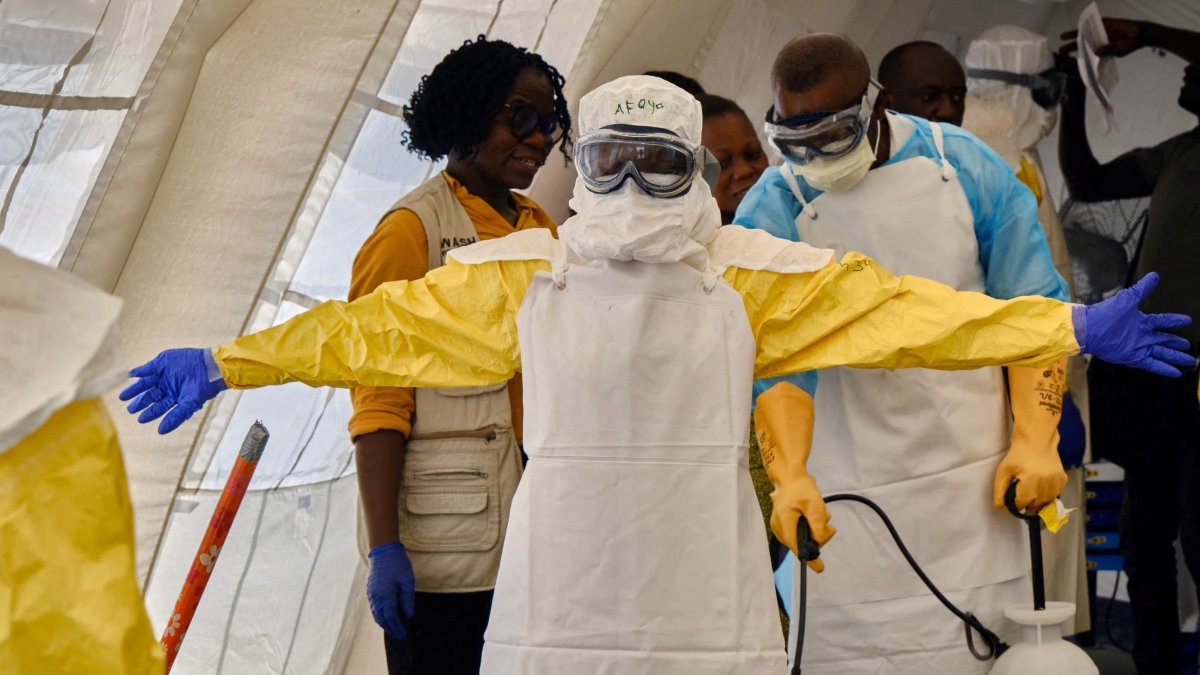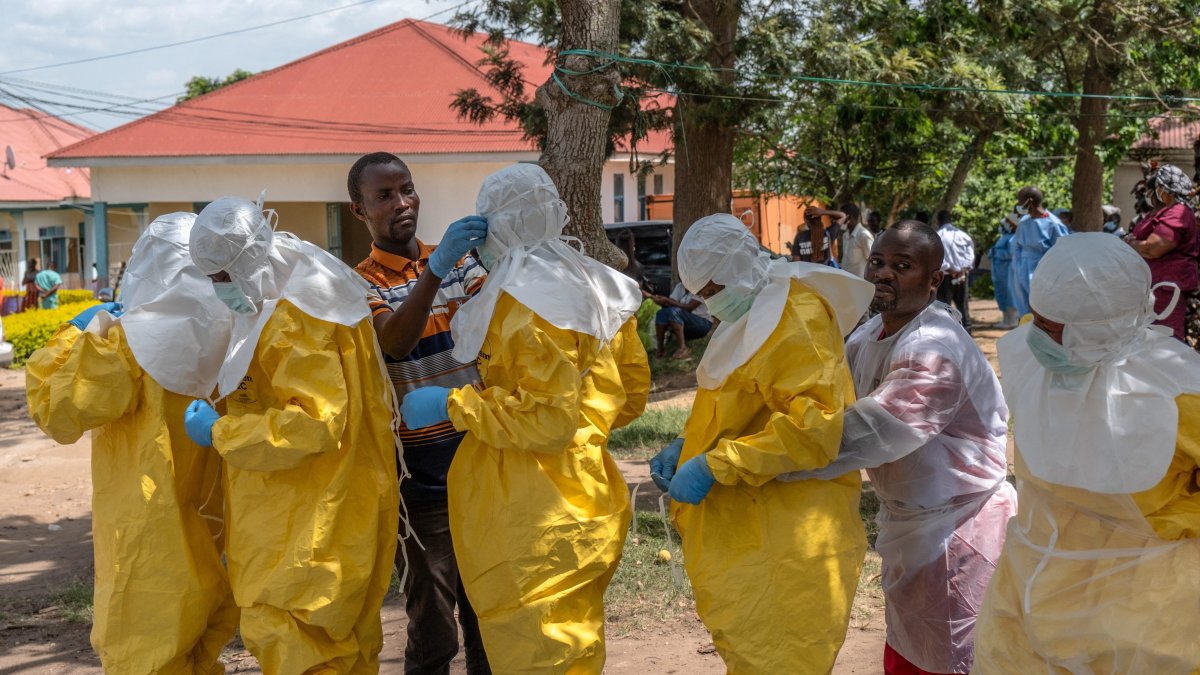
The deadly Ebola outbreak unfolding in eastern Democratic Republic of Congo is rapidly spiraling into a humanitarian disaster, with health officials warning that ongoing violence, mass displacement and deep mistrust of authorities are crippling efforts to contain the virus.
As fighting intensifies across Ituri province, overwhelmed medical teams are battling a fast-moving outbreak of the rare Bundibugyo strain of Ebola, a variant with no approved vaccine or treatment and a fatality rate that can reach 50%.
The World Health Organization says the outbreak has already claimed 10 confirmed lives, alongside more than 220 suspected deaths and roughly 900 suspected infections since Congolese authorities declared the outbreak on May 15.
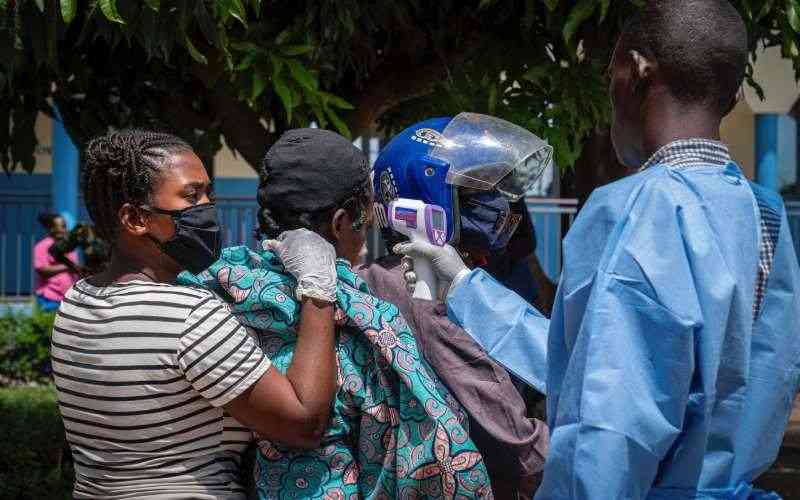
At the center of the crisis is Rwampara Hospital, where exhausted doctors and nurses are working around the clock in conditions shaped as much by conflict as disease. One recent arrival captured the scale of the emergency: a visibly ill young woman, bleeding from the nose and struggling to move, arrived clinging to the back of a motorcycle after a desperate journey from a rural community with little access to healthcare.
“She gave birth a month ago, and two weeks later she began to fall ill,” her sister told hospital staff, explaining that the family initially believed it was malaria. Like many families across Ituri, they first turned to tablets and traditional remedies before realizing the sickness was something far more dangerous.